One Simple Measurement Supercharges Quantum Computer Accuracy
A team of physicists has discovered a surprisingly easy way to make quantum bits— the building blocks of quantum computers— much more dependable. By adding a single, real‑time measurement that feeds back into the qubit’s control system, they were able to keep the qubit’s performance steady and dramatically cut error rates. In tests without this feedback, the qubit’s error rate hovered around 0.14% and varied wildly over time, making reliable calculations impossible. With the feedback loop turned on, the error rate fell to just 0.065%, a 54 % reduction overall and up to 77 % lower than the worst‑case errors seen without feedback. This improvement means the qubit can execute operations with far higher fidelity, bringing us a step closer to practical, large‑scale quantum computers. The technique works by constantly monitoring the qubit’s state, spotting tiny fluctuations, and instantly correcting them, essentially “listening” to the quantum noise and silencing it. While the research is still in the lab stage, the simplicity of the approach suggests it could be rolled out across many quantum platforms, helping to overcome one of the biggest hurdles in the race to build truly reliable quantum machines.
Read more
Breakthrough: Tiny Supercurrent Lets Scientists Read Qubits Without Wiping Them Out
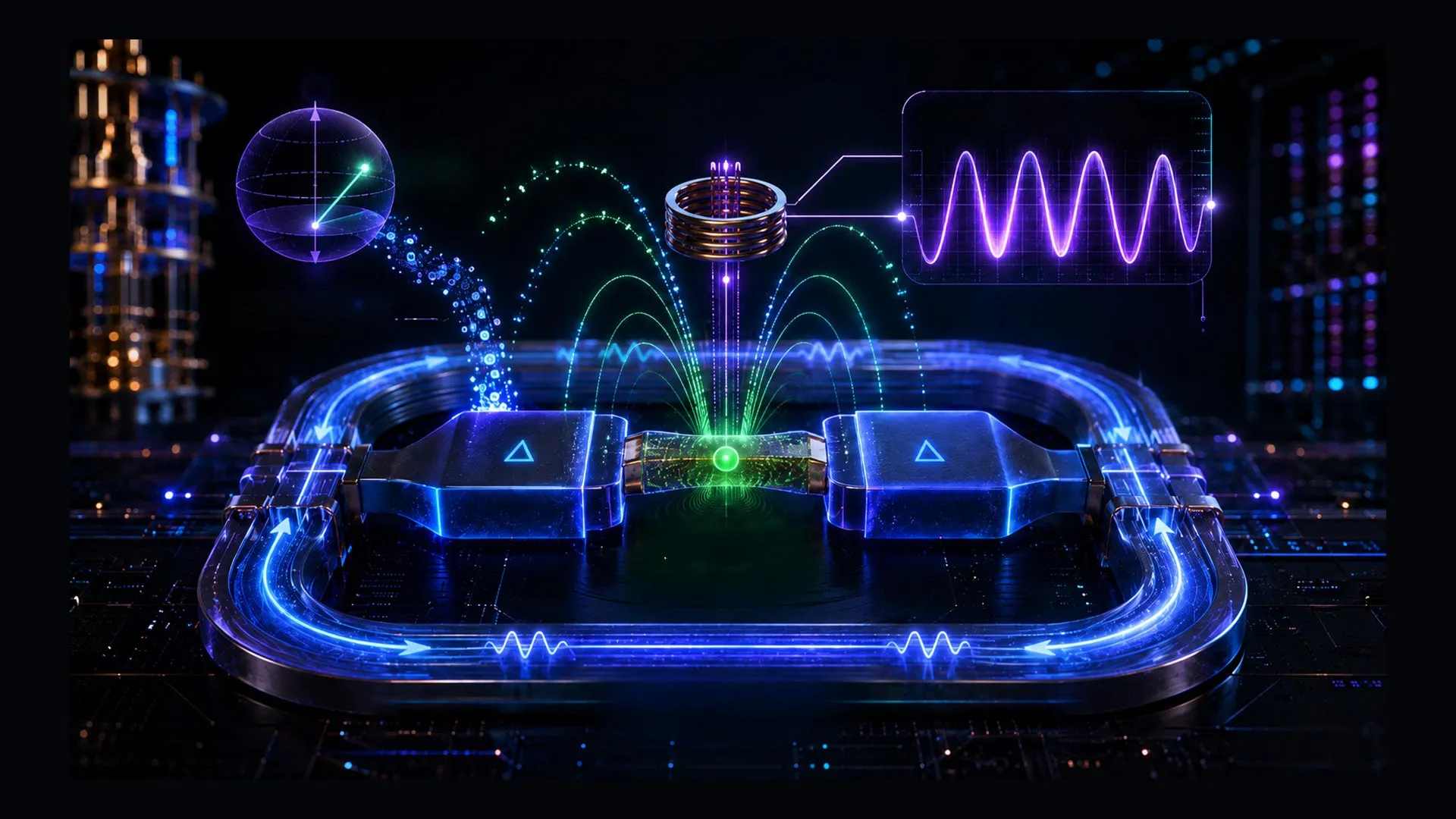
A team of physicists has unveiled a game‑changing way to peek inside a quantum bit (qubit) without destroying the fragile information it holds. Instead of using bulky auxiliary circuits or invasive measurement tricks, the researchers tap into a minuscule electric current—called an Andreev supercurrent—that naturally flows inside the qubit itself. By monitoring this tiny signal, they can infer the qubit’s state with astonishing precision. Computer simulations show the method can read the quantum information with up to 99.85 % accuracy while barely nudging the qubit, a stark improvement over conventional readout techniques that often collapse the quantum state. The approach promises to simplify quantum‑computer hardware, reduce error rates, and bring us closer to scalable, mass‑produced quantum processors. If experimental tests confirm the simulations, future quantum machines could be built with fewer components, lower power consumption, and faster operation cycles. This development marks a significant step toward practical quantum computing, where preserving quantum information during measurement is one of the biggest hurdles.
Read more
Inside China’s AI Boom: How Big Models and National Labs Are Shaping the Future (Oct 2026 Report)
A new research report released by the AtomGit AI Community dives deep into China’s rapid expansion of large‑scale artificial‑intelligence models and the country’s national laboratory innovation system. Using publicly available data up to October 2026, the study paints a detailed picture of how government‑backed labs, university partnerships, and private tech firms are collaborating to push AI capabilities forward. Key findings show a steep rise in the number of home‑grown foundation models, many of which now rival global leaders in language understanding, image generation, and scientific discovery. The report highlights the strategic role of national labs as hubs for data sharing, high‑performance computing, and talent development, creating a pipeline that accelerates research from theory to real‑world applications. The analysis also points to emerging policy trends—such as increased funding for open‑source AI platforms and stricter data‑security standards—that aim to balance innovation with national security concerns. In addition, the paper showcases practical projects built on Java SpringBoot and Vue, like a smart teaching system powered by generative AI, and tools that connect AI assistants (e.g., ChatGPT) to professional databases via the QVeris MCP framework. Overall, the report offers a clear, data‑driven snapshot of China’s AI ecosystem, illustrating how coordinated investment, academic‑industry collaboration, and cutting‑edge research are reshaping the global AI landscape.
Read more
CAS Academic Division Unveils 2026 Conference Line‑up and New Strategic Research Vision
The Chinese Academy of Sciences’ Academic Division has rolled out a fresh slate of expert commentaries, high‑profile conferences, and a forward‑looking research strategy aimed at boosting China’s scientific leadership by 2035. Recent expert pieces feature Bao Xinhe’s call for stronger disciplinary planning and self‑reliant tech, Yang Wei’s emphasis on data‑sharing platforms, and an interview with Academician Mei Hong on how the internet can revitalize traditional manufacturing. A packed conference calendar runs from late October to early November 2026, covering topics such as wide‑bandgap semiconductors in Beijing, China‑Europe marine science collaboration (via video from Paris), chemical biology innovations in Shanghai, and cutting‑edge quantum materials in Jiangsu. Other gatherings focus on digital Earth‑system science, precision detection, carbon‑neutral process industries, and the convergence of medicine and engineering. Each event is chaired by leading academicians, underscoring the division’s commitment to interdisciplinary dialogue. Strategically, the division highlights the emergence of new interdisciplinary frontiers and the need for a flexible disciplinary system that mirrors the evolving knowledge landscape. By aligning research priorities with societal challenges, the CAS aims to foster coordinated, sustainable scientific breakthroughs and cement its role as a global hub of innovation.
Read more
How Digital Twins and AI Are Revolutionizing Smart Warehouses
Imagine a warehouse that can see, think, and act like a living organism—anticipating bottlene‑bottlenecks, optimizing space, and preventing errors before they happen. That’s the promise of digital twins combined with artificial intelligence. A digital twin is a real‑time, virtual replica of a physical warehouse, continuously fed by sensors, RFID tags, and IoT devices. AI layers on top of this replica, analyzing massive streams of data to predict demand spikes, recommend the most efficient picking routes, and even schedule maintenance for robots and conveyor belts before a failure occurs. In practice, companies are using these technologies to cut order‑fulfillment times by up to 30 %, reduce inventory holding costs, and improve worker safety. For example, a major e‑commerce retailer created a digital twin of its fulfillment center, allowing AI to simulate thousands of layout changes in minutes and select the optimal configuration for seasonal peaks. Meanwhile, AI‑driven quality‑control models flag misplaced items or damaged goods instantly, sending alerts to staff and updating the twin’s status in real time. The result is a hyper‑responsive, data‑rich environment where decisions are automated, errors are minimized, and the warehouse becomes a strategic asset rather than a cost center. As cloud‑native platforms make deployment easier and sensor costs continue to fall, digital twins and AI are set to become standard tools for every smart‑warehousing operation.
Read more
Breakthroughs Shine at 2026 World Internet Conference: 20 Projects Win Top Tech Awards in China
On November 2, 2026, the historic town of Wuzhen in Zhejiang Province played host to the World Internet Conference (WIC) Awards, where 20 cutting‑edge projects were honored for their pioneering work in internet‑related science and technology. The ceremony highlighted a dazzling array of innovations, from the debut of the "Jiuzhang 4.0" photonic quantum computer to the launch of the "China9S Intelligent Computing Ecosystem Alliance," underscoring China’s rapid strides in quantum computing, artificial intelligence and aerospace information systems. The competition was fierce: more than 430 qualified entries poured in from 43 countries and regions, reflecting the global appetite for breakthroughs that can reshape the digital landscape. Since its inception in 2023, the WIC Awards have aimed to spotlight the most transformative achievements in the internet sector and to spark international collaboration among researchers, entrepreneurs and policymakers. Winners this year span frontier fields—quantum processors that promise unprecedented computing power, AI platforms that can learn and adapt in real time, and satellite‑linked data networks that enhance aerospace communications. Organizers said the awards not only celebrate technical excellence but also foster a shared vision for a more connected, innovative future. The event reaffirmed Wuzhen’s growing reputation as a hub for high‑tech dialogue and set the stage for the next wave of digital revolutions.
Read more