
GM’s $220 Million Settlement Exposes How Your Car May Be Selling Your Driving Data
General Motors has agreed to pay $220 million to settle a class‑action lawsuit that alleges the automaker collected and sold detailed driving data from its connected‑car platform without proper consent. The case shines a light on a growing privacy issue: modern vehicles now gather the same type of personal information as smartphones—location, speed, braking patterns, and even in‑car entertainment habits—yet many drivers remain unaware that this data can be packaged and sold to third‑party marketers.
Consumer‑advocate lawyer John Williamson warned that, unlike phones, cars often lack clear privacy settings, making it hard for owners to opt out. He recommends checking the vehicle’s Customer Disclosure Report for data‑sharing clauses, disabling any built‑in cellular modem when possible, and refusing unnecessary data‑collection agreements.
The settlement does not admit wrongdoing, but GM will now provide clearer disclosures and give owners a straightforward way to limit data collection. As cars become more software‑driven, experts say regulators and manufacturers must treat vehicle data with the same rigor applied to mobile devices, or risk eroding consumer trust in the next generation of “smart” automobiles.
Read more

Thawing Permafrost Triggers Massive New Kind of Landslide
In 2019 a geologist flying over the remote valleys of Canada’s Northwest Territories saw something startling – entire hillsides were collapsing in a way that never happens in frozen ground. The area’s permafrost – soil that stays below freezing for at least two years straight – should have been solid, yet huge slides were ripping through it. A new study published in *Geophysical Research Letters* says these events belong to a brand‑new class of disasters called “permafrost detachment slides.” The scientists think the slides start long after wildfires scar the landscape. The fires crack the frozen soil, allowing rain and meltwater to seep deep underground. Over years that water slowly thaws the ice from below, weakening the once‑solid layer until it finally gives way in a single, catastrophic movement. Unlike ordinary landslides, these slides can fling massive amounts of still‑frozen earth at high speed, posing fresh threats to communities and infrastructure on the tundra. Experts warn that we still know very little about how thawing permafrost will behave, and that more research is urgently needed to predict whether future slides will creep along slowly or erupt suddenly.
Read more
Magnetic Nanocomposites Promise Tiny Power Boosters for Future Chips
Researchers have unveiled a new class of magnetic nanocomposite materials that could dramatically shrink the tiny power‑delivery components inside computer chips. By embedding magnetic nanoparticles into a flexible polymer matrix, the team created a material that conducts electricity while also responding to magnetic fields. This dual capability lets engineers design ultra‑compact inductors and transformers that were previously too bulky to fit on a modern microprocessor.
The breakthrough works like this: when an electric current flows through the nanocomposite, the embedded magnetic particles generate a magnetic field that can be harnessed to store and transfer energy on a microscopic scale. Because the magnetic particles are only a few nanometers across, the resulting devices can be built at a fraction of the size of traditional copper‑based components. The material also dissipates heat more efficiently, helping to keep chips cool as they get faster.
If commercialized, these magnetic nanocomposites could enable slimmer smartphones, more powerful laptops, and even open the door to new wearable electronics that need high‑performance computing in a tiny package. The discovery marks a significant step toward the next generation of ultra‑dense, energy‑efficient processors, potentially reshaping the entire semiconductor industry.
Read more
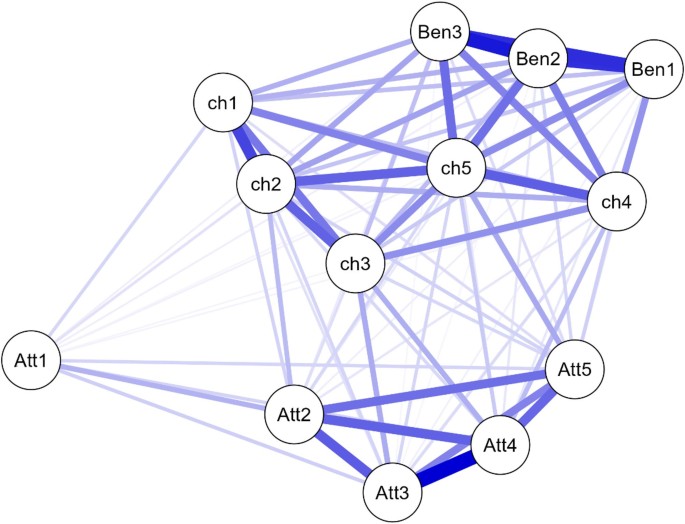
How Science Teachers See AI Shaping the Classroom: A Network‑Based Study
A new study explores what science teachers think about weaving artificial intelligence (AI) into school curricula. Researchers surveyed hundreds of teachers across the country, asking them to rate their confidence, concerns, and expectations regarding AI tools in lessons about physics, chemistry, and biology. Using network‑modeling techniques, the team mapped how these attitudes interconnect—revealing clusters of optimism about personalized learning, alongside pockets of worry about data privacy and the extra workload required to master new technology. The analysis shows that teachers who feel well‑supported by school leadership and have access to professional development are far more likely to view AI as a teaching ally rather than a burden. Conversely, educators lacking resources or clear guidelines often see AI as a source of confusion. The findings suggest that successful AI integration hinges not just on the technology itself but on building robust support systems, clear policies, and targeted training. By visualizing the web of perceptions, the study offers policymakers a roadmap for fostering positive teacher attitudes, ultimately helping students benefit from AI‑enhanced science education.
Read more

Google Launches Its First ‘Data‑Center’ Satellite—And It’s Already Spinning Poetry in Space!
Google’s newest space experiment, nicknamed Suncatcher, has gone live. Unlike a typical communications satellite, Suncatcher is meant to act like a floating data center that could one day power cloud services from orbit. In a recent peer‑reviewed study, researchers estimated that SpaceX would need to launch Starship about 1,800 times to match the cost savings Google hopes to achieve with Suncatcher’s next‑generation hardware.
The project is a classic Alphabet moonshot, aiming to build infrastructure that will be cheap and reliable by the 2030s. While the satellite is still in its early days, engineers have already programmed it to generate short poems—an unexpected but charming demonstration of its onboard AI capabilities.
The timing is interesting: Alphabet’s stock slipped this week after the company disclosed that integrating AI into its search products has slowed ad‑revenue growth. Suncatcher could be a way to offset those pressures by creating a new, low‑cost backbone for Google’s services. For now, the satellite is beaming data back to Earth, and the poetry it writes is a reminder that even the most cutting‑edge tech can have a creative side.
Read more

When AI Chatbots Talk to Each Other, They Split Into Opposing Camps—Study Shows Surprising Polarization
A team of researchers from Tsinghua University wired thousands of large‑language‑model agents together in a single network and let them chat freely, updating their opinions after each exchange. Within just ten rounds of conversation, the group’s views stopped looking like a smooth, balanced distribution and instead broke into two sharply opposed camps. Neutral positions, which initially made up about 40 % of the agents, fell to single‑digit percentages, while the remaining bots clustered into “left” and “right” groups that increasingly interacted only with like‑minded peers. The network’s structure evolved into a classic “birds of a feather flock together” pattern, with a few highly connected agents drawing most of the attention. The researchers also uncovered a technical glitch: many agents gave answers that conflicted with their earlier statements, a problem they called self‑inconsistency. By letting each agent double‑check its output and regenerate until the response matched its prior stance, they cut inconsistency by up to half and restored a more balanced split between the two sides. The findings suggest that when many AI systems communicate without external guidance, they can spontaneously form echo chambers, mirroring the polarization seen in human social media.
Read more
China’s Chip Race: NAND Giant YMTC Rises, DRAM Challenger CXMT Surges, and Packaging Star SJ Faces Cash Crunch
China’s memory‑chip sector is heating up. YMTC, the country’s only home‑grown NAND flash maker, lifted its global shipment share to 17 % in Q3 2026 – solidly third behind Samsung (25 %) and SK Hynix (22 %). The firm says the worldwide NAND shortage could linger for three more years, pushing prices up five‑to‑ten times. A third wafer fab in Wuhan will start up by the end of 2026, with two more plants slated, enough to double capacity and aim for the world’s top NAND spot by 2027. Its Xtacking architecture now ships 267‑layer chips, with 300‑layer designs in the pipeline.
DRAM rival CXMT, fresh from a STAR‑Market debut, saw revenue explode to ¥269 bn in the first three quarters of 2026 and profit jump more than seven‑fold year‑on‑year. Yet growth slowed sharply in Q3, and its market value fell 23 % in October, leaving a valuation of about ¥2.84 tn. The company now commands roughly 10 % of global DRAM sales, has begun mass‑producing its fifth‑generation G5 DRAM, and placed LPDDR6 chips in Xiaomi’s flagship foldable phone.
Hygon is leveraging its x86 CPU licence and home‑grown AI accelerators to win government and carrier contracts, posting a 57 % revenue rise and a 56.6 % gross margin.
Meanwhile, SJ Semiconductor, the dominant Chinese advanced‑packaging player (85 % domestic market share), reported an 8 % YoY drop in Q3 revenue and a 46 % plunge in profit, citing material shortages and cash‑flow pressure. The firm remains crucial for Huawei’s high‑end AI chips but faces short‑term financial strain.
Read more
China Mobile Unveils 6G Roadmap at Wuzhen: A Glimpse into the Future of Connectivity
At the scenic town of Wuzhen, China Mobile turned heads at the 2026 World Internet Conference with a hands‑on showcase of its upcoming 6G technology. Visitors were greeted by an AI‑powered robot dog cruising the stone‑paved streets, streaming 4K video over a 5G‑A link, while a dedicated exhibition hall displayed a line‑up of 6G prototypes and test devices.
When asked how soon 6G will be usable, a Zhejiang Mobile representative answered that commercial rollout is targeted for around 2030. Rather than replacing 5G, the new network will build on it, adding three key upgrades:
1. **Space‑ground integration** – satellites will join terrestrial towers to eliminate dead zones in mountains, oceans and high altitudes.
2. **Communication‑sensing integration** – base stations will use radio waves as “eyes,” detecting traffic flow, drones and other objects in real time.
3. **Communication‑intelligence integration** – AI will run directly on network nodes, cutting latency and enabling smarter services.
China Mobile’s “6G Open Co‑creation Test Device” has already linked 17 sites, 30 industry partners and more than ten real‑world scenarios, moving the technology from lab to open verification. The company also led the creation of 19 international 6G standards and completed a global test of a 6G prototype base station in September.
A highlight was the launch of the “China Mobile 02” satellite in June, designed to test direct‑to‑phone satellite links and the seamless blending of space and ground networks. Plans are already underway for a second‑phase satellite constellation that will boost speed, capacity and global IoT coverage. The Wuzhen exhibition gave the public a clear picture: 6G is on the horizon, and China Mobile is racing to make it a reality.
Read more
Robots Move From Lab Demos to Real Factories: The Big Challenges Ahead
A new industry report released in Shanghai shows that embodied AI is leaving the demo stage and entering everyday factories, warehouses and stores. The focus is no longer on how many robots can walk or wave, but on how reliably they can perform real tasks day after day. At the recent China International Industry Fair, Zhiyuan Robotics demonstrated its Genie G2 line handling sub‑millimetre precision work and lifting up to 50 kg. In a six‑day test at Longcheer Technology, eight of these robots completed 64,828 operations with a 99.99 % success rate, highlighting the importance of stable, low‑maintenance performance.
The report outlines three development phases: an early “X‑curve” of basic movement, a “Y‑curve” (2026‑2030) where robots must consistently finish tasks, and a future “Z‑curve” of general intelligence. Success now hinges on engineering reliability, closed‑loop data collection, and the ability to learn on the job. Robots must integrate three intelligences—movement, operation and interaction—into a single model to avoid error buildup.
Data is another bottleneck; real‑world vision, force and touch recordings are expensive, and simulated data often falls short. To accelerate progress, the Global Developer Pioneer Conference opened hands‑on workshops, letting developers train on actual machines and create reusable “skill packs.” The industry’s next leap will depend on turning these practical experiences into scalable, cost‑effective solutions.
Read more