New Pre‑Surgery Immunotherapy Shows Promise for Both Common and Rare Colon Cancers
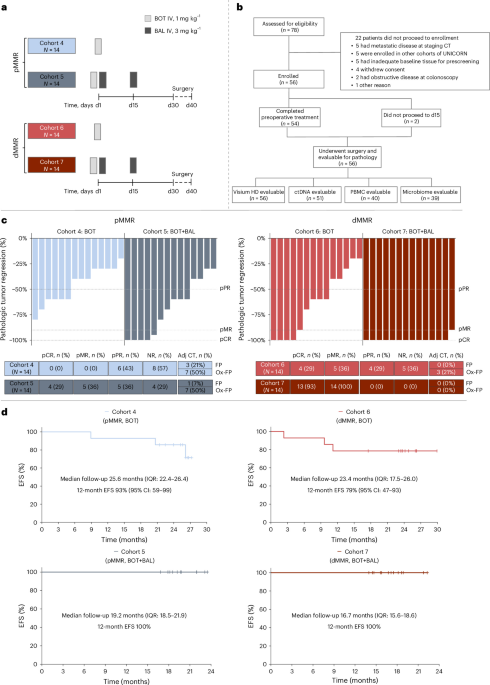
A recent phase‑2 study called UNICORN explored whether giving the immune‑boosting drugs botensilimab, alone or together with balstilimab, before surgery could improve outcomes for people with colon cancer. The trial included two groups of patients: those whose tumors have a normal DNA‑repair system (pMMR) – the most common type – and those with a defective system (dMMR), which usually respond better to immunotherapy. Researchers gave participants the drugs for several weeks before their planned operation and then measured tumor shrinkage, surgical success, and side‑effects. The results were encouraging: both drug combinations caused significant tumor reduction, and many patients were able to have less extensive surgery. Importantly, the treatment was well‑tolerated, with few severe adverse events. Patients also completed the QLQ‑CR29 questionnaire, a cancer‑specific survey that tracks symptoms like pain, bowel problems, and quality‑of‑life issues. Scores indicated that the pre‑surgery regimen did not worsen daily functioning and may even have eased some treatment‑related discomforts. While longer follow‑up is needed, UNICORN suggests that neoadjuvant immunotherapy could become a new option for a broader range of colon‑cancer patients, potentially lowering relapse rates and improving recovery after surgery.
Read more

Tiny Fat Particles Power the mRNA Revolution
A new wave of medicines is riding on the back of microscopic fat bubbles called lipid nanoparticles (LNPs). These tiny carriers have become the unsung heroes behind the success of mRNA vaccines for COVID‑19 and are now opening doors to treatments for everything from cancer to rare genetic disorders. The article explains how LNPs protect fragile mRNA strands, shepherd them safely into cells, and release their genetic instructions exactly where they’re needed. Recent breakthroughs in particle design—such as tweaking size, surface chemistry, and composition—have dramatically improved delivery efficiency and reduced side‑effects, making mRNA therapies more reliable and affordable. Researchers are also learning to fine‑tune LNPs so they can target specific organs, turning a one‑size‑fits‑all approach into personalized medicine. The piece highlights several clinical trials that are already testing LNP‑based mRNA drugs for heart disease, autoimmune conditions, and even organ regeneration. While challenges remain, including large‑scale manufacturing and long‑term safety monitoring, the consensus is clear: lipid nanoparticles are the key that could unlock a whole new class of medicines, turning the promise of mRNA technology into everyday health solutions.
Read more
Einstein’s Equations Reveal That Gravitational Fields Can Snap and Re‑join – What It Means for Black Hole Collisions
A new theoretical study shows that the fabric of gravity itself can break apart and stitch back together, a behavior predicted directly by Einstein’s general‑relativity equations. Researchers used advanced mathematical analysis to demonstrate that, under extreme conditions such as those found when two black holes spiral toward each other, the surrounding gravitational field can momentarily split before reconnecting, much like a rubber band snapping and then re‑forming. This insight challenges the long‑standing assumption that gravity’s field lines are always smooth and continuous. By incorporating this “break‑and‑reconnect” mechanism into computer models, scientists can produce more accurate simulations of black‑hole mergers, potentially refining predictions of the gravitational‑wave signals detected by observatories like LIGO and Virgo. The work also opens fresh avenues for exploring exotic phenomena such as wormholes or the early universe’s chaotic moments, where rapid changes in spacetime curvature could have played a pivotal role. While the findings are currently theoretical, they provide a compelling new lens through which to interpret the violent dance of massive objects and may guide future observational tests of Einstein’s legacy.
Read more
How Tech Is Unlocking Private Money for Saving Nature
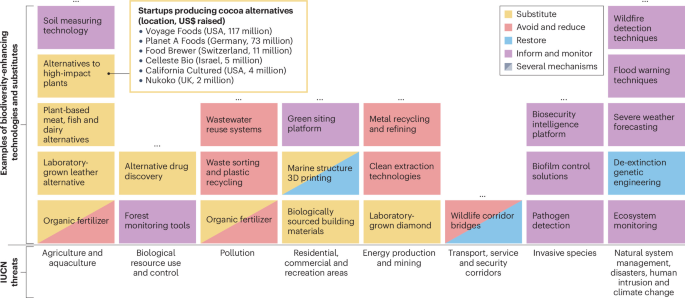
A new review explores how digital tools are turning the tide for biodiversity by attracting private investors. The authors explain that cutting‑edge technologies—such as satellite monitoring, artificial intelligence, blockchain‑based carbon credits, and online investment platforms—make it easier to measure, verify, and trade nature‑based outcomes. By providing transparent data and real‑time impact tracking, these tools reduce the risk that scares off businesses and wealthy individuals from funding conservation projects. The paper also highlights successful pilots where tech‑driven finance has supported forest restoration, coral reef protection, and wildlife corridors, showing that private capital can complement public funding. Key take‑aways include the need for standardized metrics, clear policy incentives, and collaborations between tech firms, scientists, and financiers. The authors argue that when technology delivers trustworthy evidence of ecological benefits, investors are more willing to commit money, creating a virtuous cycle of funding and results. Ultimately, the review calls for scaling up these digital solutions, shaping supportive regulations, and fostering cross‑sector partnerships to channel the trillions needed to halt biodiversity loss.
Read more

China’s Chip Comeback: 7 Homegrown Companies Powering AI Independence
China is stitching together its own AI‑chip supply chain, and seven homegrown firms are at the heart of the effort. Huawei’s HiSilicon is the design champion, proving that China can build world‑class AI processors. Its Ascend series now holds about 28% of the domestic data‑center AI‑chip market, closing the gap with Nvidia, while the new Kirin 9050 chips showcase a 41% boost in CPU efficiency and a 140% jump in NPU power.
SMIC, the country’s biggest foundry, posted a record $3 billion quarterly revenue and 93% capacity use, focusing on mature‑node production (N+1, N+2, N+3) that fuels most AI chips rather than chasing 2‑nm rivals.
Cambricon, spun out of the Chinese Academy of Sciences, turned a loss into a profit surge by supplying cloud‑AI acceleration cards.
The other players—Hygon (AI‑focused CPUs), YMTC (NAND flash), CXMT (DRAM), and SJ Semiconductor (advanced packaging and testing)—cover the remaining links of the chain: memory, packaging, and test services.
While political tensions have forced China to rebuild capabilities at every step, the rapid growth of these firms shows a clear move toward a self‑sufficient AI computing ecosystem.
Read more
China’s ‘Six Networks’ Blueprint: How Water, Power, Computing and 5G Will Power Everyday Life
China’s top leadership has rolled out an ambitious plan to build six interconnected infrastructure systems – water, new‑energy power grid, computing power, next‑generation communications (5G‑A and beyond), underground pipe networks, and logistics. The goal is to move from simply expanding size to boosting quality, efficiency and sustainability. Officials say the networks will act like a single, living organism: clean electricity fuels data centers, high‑speed 5G links those centers to factories and homes, and smart water systems use digital twins to cut waste. By 2030 the new power grid should be able to move more than 420 million kilowatts west‑to‑east, while the computing network will match AI chips to tasks in milliseconds, slashing costs. The communications rollout promises a trillion‑yuan boost to related industries, and the underground pipe network aims to upgrade 770,000 km of pipelines. Together, these “Six Networks” are expected to make everyday services faster, cheaper and greener – from a tap of water to a kilowatt‑hour of electricity, and from instant video calls to smoother deliveries. The integrated approach is billed as a “chemical reaction” that will drive China’s high‑quality growth throughout the 15th Five‑Year Plan.
Read more