
Eyes in the Sky: How Satellites Spot Shooting Stars to Shield Earth from Space Threats
Every night, countless tiny meteoroids blaze across the atmosphere, creating the spectacular fireballs we call shooting stars. While most burn up harmlessly, larger space rocks can pose a real danger to life on Earth. To catch these threats early, a growing network of military and civilian satellites now watches the sky like a giant, high‑tech security camera. The U.S. Space Surveillance Network, the European Space Agency’s Space Situational Awareness program, and private‑sector constellations such as Planet’s “Fireball Tracker” all share data in real time. Infrared sensors on defense satellites spot the heat signature of a fireball, while optical cameras on civilian platforms capture its bright trail. Advanced algorithms then calculate the object’s speed, size, and trajectory, instantly flagging any that might intersect Earth’s orbit. When a potentially hazardous object is identified, the information is passed to agencies such as NASA’s Planetary Defense Coordination Office and the U.N.’s International Asteroid Warning Network. These groups assess impact risk, issue public alerts if needed, and coordinate any future deflection missions. By turning the same satellites that monitor missiles and climate change into early‑warning eyes for space rocks, scientists and defense officials are building a global safety net—one that could give humanity precious weeks or even years to act before a dangerous asteroid reaches our doorstep.
Read more

Trump Administration Puts $5 B Behind Nuclear Power Boost for Big Tech Data Centers
The U.S. Department of Energy is ready to back Constellation Energy with up to $5 billion in loans to expand nuclear capacity at eight existing plants. The money will help "uprate" 11 reactors – essentially squeezing more power out of them – adding roughly 1.1 gigawatts of clean electricity. Most of that extra power has already been pre‑sold to the AI‑hungry giants Google, Amazon and Meta, which need massive, reliable energy for their data‑center farms. The eight sites include six reactors in Illinois (Braidwood, Byron, Clinton, Dresden, LaSalle and Quad Cities), one in Maryland (Calvert Cliffs) and one in Pennsylvania (Limerick). Google has locked in power from the Pennsylvania plant and four Illinois sites, Amazon is buying from Calvert Cliffs, and Meta is set to take the whole output of the Clinton plant. DOE officials say the loan will lower financing costs and support "affordable, reliable power" for American homes and businesses, but Constellation did not confirm whether consumer electricity rates will actually drop. The move reflects a growing scramble by hyperscalers to secure clean, steady power as AI workloads surge, turning energy into a competitive edge for the tech industry.
Read more

Scientists Unveil a Light‑Powered ‘On‑Off’ Switch for Brain Cells
A breakthrough in neurotechnology has given researchers a new way to control nerve cells with a simple flash of light. By engineering a tiny, light‑sensitive protein that can be inserted into neurons, scientists can now turn brain cells on or off at will, much like flicking a light switch in a room. The technique, rooted in the field of optogenetics, uses specially designed photons to activate or silence the modified neurons without any invasive electrodes. In laboratory tests, the light‑activated switch proved fast, precise, and reversible, allowing researchers to map neural circuits with unprecedented clarity. Beyond basic science, this technology holds promise for treating neurological disorders such as epilepsy, Parkinson’s disease, and chronic pain, where targeted modulation of specific brain pathways could restore normal function. The team demonstrated the method in mouse models, showing that brief light pulses could halt seizure activity and restore normal movement patterns. While still in early stages, the approach could eventually be adapted for human therapies, offering a non‑chemical, highly controllable way to intervene in brain activity. This development marks a significant step toward light‑based neuromodulation and opens new avenues for both research and clinical applications.
Read more

Digital Twins: A New Hope for Stopping Preterm Births
A team of scientists has created a groundbreaking “digital twin” model that could change the way doctors prevent babies from being born too early. The virtual replica mimics a pregnant woman’s immune system and the cascade of signals that trigger labor, allowing researchers to test how different medicines might safely delay delivery. By running countless computer simulations, the team can spot which drugs calm the immune response without harming the mother or baby, paving the way for truly personalized treatment plans. This approach sidesteps the risks of testing new drugs directly on pregnant patients and could dramatically cut the global rate of preterm births, which currently affect millions of families each year. The study, highlighted by Nature Medicine, shows that the digital twin framework not only speeds up drug discovery but also offers a safer, more precise way to protect vulnerable pregnancies. If adopted widely, this technology could give clinicians a powerful new tool to keep babies in the womb longer, improving health outcomes for both infants and their parents.
Read more
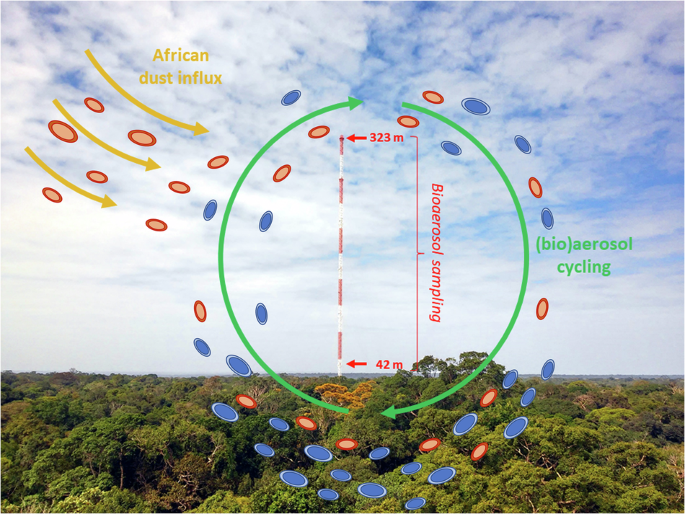
Saharan Dust Travels to the Amazon, Changing Its Airborne Microbes
A new study reveals that massive clouds of dust blowing from the Sahara Desert across the Atlantic Ocean don’t just bring sand – they also carry living microorganisms that settle over the Amazon rainforest. Researchers from the Max Planck Society, Brazil’s INPA and several European and Brazilian institutions tracked these dust plumes using high‑altitude monitoring stations and sophisticated DNA sequencing tools. They discovered that when African dust reaches the Amazon, it mixes with the forest’s own bioaerosol – the tiny bacteria, fungi and viruses that float in the air – altering its composition in measurable ways. The influx of foreign microbes can influence nutrient cycles, cloud formation and even the health of the forest’s own plant and animal communities. The findings highlight a hidden, trans‑continental link between two of the world’s most iconic ecosystems, showing that climate‑driven dust events can have far‑reaching ecological consequences beyond the obvious visual haze. Understanding this connection helps scientists predict how changes in desertification, wind patterns or climate change could ripple through the Amazon’s delicate atmospheric chemistry and biodiversity.
Read more
China’s Top Science Hub Breaks New Ground: Making Polymers in Extreme Conditions
The Chinese Academy of Sciences (CAS), the nation’s premier research institution, has announced a breakthrough in polymer science that could reshape industries ranging from aerospace to renewable energy. By engineering polymer materials that can be synthesized and function in “extreme environments” – such as ultra‑high pressure, intense radiation, or deep‑sea conditions – CAS scientists are challenging the long‑standing monopoly of traditional manufacturing methods. Founded in 1949, CAS operates under the unified leadership of the Communist Party and serves as a think‑tank and strategic force for basic and high‑tech research. Its sprawling network includes dozens of research institutes, three elite universities (USTC, UCAS, and ShanghaiTech), and regional branches across the country. The academy’s mission is to conduct mission‑oriented basic research, drive disruptive technologies, and translate discoveries into real‑world applications. The new polymer platform leverages cutting‑edge interdisciplinary collaboration, combining chemistry, materials science, and extreme‑condition engineering. Potential uses include lightweight, heat‑resistant components for next‑generation aircraft, durable coatings for offshore wind turbines, and resilient materials for deep‑sea exploration. CAS’s achievement underscores its role as a catalyst for national prosperity and highlights China’s growing influence in global scientific innovation.
Read more
Scientists Gather in Shanghai to Decode Biodiversity and Shape Conservation Future
From October 23‑25, more than 250 biodiversity experts from 114 Chinese universities and research institutes converged in Shanghai for the 8th Frontier Forum on Biodiversity and the editorial board meeting of the journal *Biodiversity Science*. Hosted by the Institute of Botany, Chinese Academy of Sciences, and co‑organized with the Shanghai Chenshan Botanical Garden, the three‑day event combined a frontier forum with a strategic planning session for the journal. The forum revolved around four big questions: how biodiversity patterns form and persist, how they respond to global change, and how scientific insights can be turned into concrete conservation, restoration, and governance actions. Thirteen plenary talks and 28 sub‑forum presentations spanned ecosystems from evergreen forests and Central Asian deserts to Arctic tundra, aquatic habitats, deep‑sea protists, and high‑altitude lakes. Researchers showcased cutting‑edge tools such as phylogenomics, citizen‑science platforms, digital twins, and AI‑assisted species identification, signaling a shift from merely cataloguing life to explaining and predicting it. Highlights included case studies on protecting Chinese horseshoe crabs, the Yangtze River fishing ban, coastal wetland restoration, and ex‑situ conservation in botanical gardens. The editorial board meeting, chaired by Editor‑in‑Chief Maoping, reviewed the journal’s recent progress, discussed challenges of a semi‑monthly publishing schedule, and plotted ways to engage young editors and broaden outreach. Outstanding graduate papers and poster presentations were recognized, and certificates of honor were awarded to contributors who helped advance biodiversity science in 2026.
Read more
Silicon Valley Scrambles for Power as China Races Toward Fusion ‘Artificial Suns’ by 2035
AI giants in Silicon Valley are in a hurry to secure enough electricity for their data centers, eyeing nuclear plants and natural‑gas projects that should be online by 2027. OpenAI is even traveling to the Middle East to strike energy deals, Microsoft is reviving the old Three Mile Island reactor, and Amazon has signed a 20‑year, 690‑megawatt contract with the Calvert Cliffs nuclear plant – though the grid hookup may not happen until 2031. Meanwhile, China is betting on a longer‑term solution: fusion reactors that could act like artificial suns. The country’s BEST park in Hefei aims to finish construction by late 2027 and start generating power around 2030, while a national team targets a demonstration reactor by 2035 and commercial use before 2050. Companies such as Taiyi Nuclear Energy and Blue Whale Star are pouring billions of yuan into stellarator and tokamak designs, backed by a new 1‑billion‑yuan fusion venture fund and a coalition of 130 financial institutions. In the U.S., tech titans are also dipping their toes into fusion. Google has agreed to buy 200 MW from a commercial fusion plant, Microsoft plans to receive 50 MW from Helion by 2028, and Nvidia and the Gates Foundation have helped fund the sector. Global fusion financing tops $14 billion, but China still leads with about $1.5 billion a year in public funds. The bottom line: while Silicon Valley is buying power now to keep AI humming, China is pouring money into the engineering challenges of fusion, hoping to light the future with artificial suns.
Read more
China Powers the Global Green Shift, Says Renewable Energy Agency Chief
In an interview at IRENA’s Abu Dhabi headquarters, the agency’s director‑general, Francesco La Camera, praised China for its outsized role in the worldwide move toward clean power. He said China’s relentless push to improve solar panels, wind turbines and battery storage has driven prices down, making renewable technology affordable for countries everywhere. By the end of July, China’s solar capacity hit 1.286 billion kilowatts – enough to overtake coal for the first time and become the planet’s largest source of installed power. La Camera highlighted that China not only exports cheap green‑tech but also pours massive investment into its own clean‑energy grid, expanding offshore wind farms and modernising transmission lines. Looking ahead, he warned that the next challenge is building flexible, interconnected grids that can handle the surge of renewable electricity. He urged richer and poorer nations to cooperate on technology, financing and infrastructure so that falling equipment costs translate into real‑world emissions cuts. In his view, China’s blend of rapid innovation and large‑scale deployment shows how the world can accelerate the energy transition while keeping costs low.
Read more