How AI is Turning Patient Stories into Actionable Health Insights
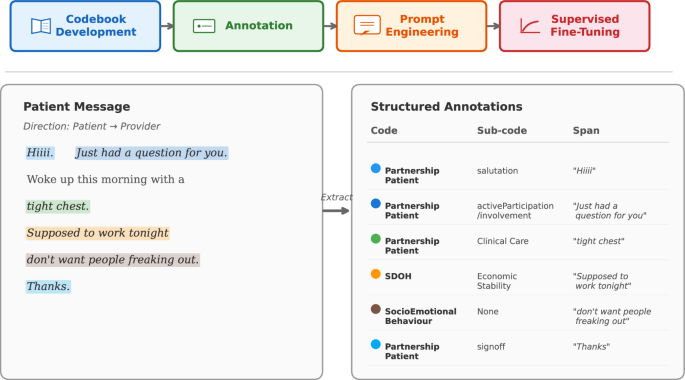
Researchers have introduced PVminerLLM, a new artificial‑intelligence system that can sift through the millions of messages patients write online—like forum posts, survey comments, and social‑media updates—to pull out the most important health‑related information. By using a large language model (LLM), the tool automatically identifies symptoms, side‑effects, treatment experiences, and emotional cues without needing human reviewers to read each line. This structured extraction turns raw, unfiltered patient voice into clean data that doctors, drug regulators, and public‑health officials can quickly analyze. The team demonstrated that PVminerLLM matches or exceeds the accuracy of traditional manual coding while cutting processing time by over 80 %. The technology promises faster detection of drug safety signals, better understanding of real‑world treatment outcomes, and more patient‑centered decision‑making. While the paper also cites a host of recent advances in AI—such as multi‑agent frameworks, efficient model fine‑tuning, and safety‑focused training—the core message is clear: sophisticated AI can now listen to patients at scale, turning everyday health chatter into reliable, actionable evidence for a healthier future.
Read more
Flexible Perovskite Lattice Powers Super‑Stable, High‑Efficiency Bifacial Solar Panels
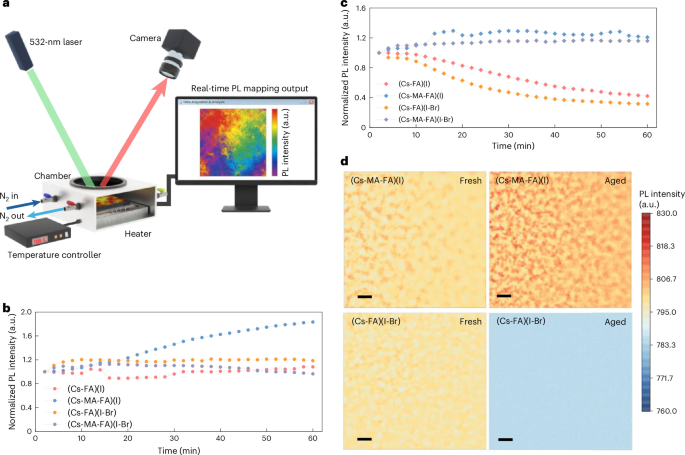
Researchers have discovered that the natural “give‑and‑take” of a perovskite crystal lattice can dramatically improve the performance and durability of next‑generation solar cells. By carefully tuning the lattice to accommodate tiny expansions and contractions caused by heat, the team prevented the material from cracking or degrading under real‑world conditions. Microscopic imaging showed how the perovskite film’s microstructure evolves when heated, while electrical tests pinpointed the exact electronic mechanisms behind light‑induced heating problems. The breakthrough enabled the creation of bifacial perovskite‑on‑silicon tandem cells that capture sunlight from both sides of the panel, delivering record‑breaking power conversion efficiencies while maintaining stable output over long‑term operation. In laboratory tests, these tandem devices kept their performance steady for thousands of hours, a key step toward commercial viability. The study’s full data set and supplementary information are openly available, offering a valuable resource for scientists aiming to scale up perovskite‑based photovoltaics. This work paves the way for cheaper, more resilient solar panels that could accelerate the transition to clean energy worldwide.
Read more
AI Uncovers New Molecular Coatings That Supercharge Perovskite Solar Cells
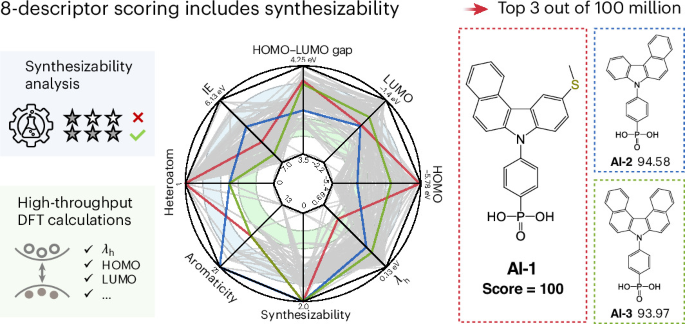
A team of scientists has harnessed artificial intelligence to speed up the search for better surface‑layer molecules—known as self‑assembled monolayers (SAMs)—that protect and enhance perovskite solar panels. By training a machine‑learning model on thousands of chemical descriptors, the researchers created a balanced scoring system that weighs two crucial factors: how easy a molecule is to synthesize in the lab and how stable it remains at the delicate interface between the perovskite layer and the electrode. The algorithm screened a massive virtual library, pinpointing a handful of promising SAM candidates that met both criteria. The team then synthesized these molecules and tested them in actual solar‑cell devices. Results showed noticeable improvements in power‑conversion efficiency and long‑term durability compared with standard coatings. Detailed figures illustrate the distribution of descriptor scores, the photovoltaic performance of each new SAM, and mechanistic insights into how the coatings interact with the perovskite surface. This AI‑driven approach not only cuts down the trial‑and‑error traditionally required in materials discovery but also opens a pathway toward more reliable, high‑efficiency solar technology that could accelerate the transition to clean energy.
Read more
Why 2026 Will Be the Breakthrough Year for AI Agents – Inside the Tech and Real‑World Uses
In early 2025, Chinese startup Monica.im unveiled Manus AI, a groundbreaking general‑purpose AI agent that can both think through problems and carry out actions on its own. Unlike earlier chat‑bots that simply answer questions, Manus can plan, make decisions, and execute tasks across different apps and services without human prompting. The article breaks down how the system is built: a layered architecture that combines a powerful language model with a “brain‑like” planner, a toolbox of specialized plugins, and a safety‑first controller that checks each step before it’s run. This design lets Manus move beyond static text generation to truly autonomous work, such as scheduling meetings, drafting reports, or even troubleshooting software bugs. The piece also explores where this technology could head next. By 2026, the author predicts a surge of industry‑specific agents—virtual assistants for doctors, finance analysts, and customer‑service reps—each fine‑tuned for their niche. With growing trust in AI safety measures and tighter integration with everyday platforms, these agents could reshape how businesses operate, freeing people from repetitive chores and opening new possibilities for creativity and productivity. The article paints an optimistic picture of a near‑future where AI agents are reliable teammates rather than just tools.
Read more
New AI Platform ‘BotAI’ Turns Plant Research Into Simple Click‑And‑Ask Tasks
The Institute of Botany at the Chinese Academy of Sciences has unveiled BotAI, an all‑in‑one artificial‑intelligence platform that makes plant‑diversity research as easy as asking a question. By bundling a suite of specialized models—ranging from data cleaning and visual species identification to organ detection and smart data mining—BotAI creates a seamless workflow that anyone can run, even without a technical background.
At its heart is a large‑language‑model‑driven scheduler that translates natural‑language queries into step‑by‑step analysis pipelines. Users simply upload their datasets and either type a question, click through a friendly interface, or call an API. The system instantly understands the data type, picks the right analytical tools, runs each sub‑task, and logs every decision, intermediate result, confidence score, and final output.
The result is a transparent, traceable, and fully reproducible research process that speeds up discoveries, reduces errors, and opens plant‑diversity studies to a broader community of scientists, educators, and citizen‑scientists. BotAI promises to turn complex botanical investigations into a one‑click experience, accelerating our understanding of the planet’s green life.
Read more
Inside Suzhou’s Cutting‑Edge Nano Institute: China’s Hub for Nanotech Innovation
The Suzhou Institute of Nano‑Tech and Nano‑Bionics (Sinano), launched in 2006, is a joint venture of the Chinese Academy of Sciences, Jiangsu Province, Suzhou city and the Suzhou Industrial Park. Nestled in the scenic Dushu Lake Science and Education Innovation Zone, the institute follows President Xi Jinping’s call for high‑tech breakthroughs and serves as a national strategic force for nanotechnology.
Sinano’s mission is simple yet ambitious: push the frontiers of nanoscience, turn discoveries into market‑ready products, and power emerging industries that will shape China’s economy. The institute is led by Director Chen Chunying, with Deputy Directors Zheng Qiyu, Zhang Ting and Zhang Kai supporting a robust party committee and discipline inspection team.
Research is organized into three core departments—Nano Devices, Nano Biomedicine, and Advanced Materials—plus specialized labs such as the Innovation Laboratory, Lightweighting Laboratory, and the Key Laboratory of Semiconductor Display Materials and Chips. State‑of‑the‑art platforms for nano‑fabrication, testing, biochemical analysis, vacuum interconnection, and information security give researchers the tools to explore the microscopic world.
Sinano also hosts a vibrant community of academicians, distinguished young scholars, project researchers, associate researchers and visiting scientists. Recent highlights include a successful Science Popularization Open Day that invited the public to witness cutting‑edge experiments, and the institute’s role as a founding member of the Chinese Chemical Society’s Science Popularization Working Committee. Together, these efforts illustrate Sinano’s commitment to turning nanotech dreams into everyday realities.
Read more
Breakthrough: Quantum Gate Operates in Just 6.8 Nanoseconds with Near‑Perfect Accuracy
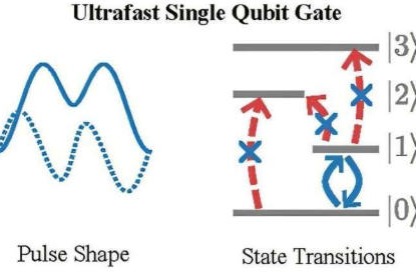
Scientists from Germany’s Forschungszentrum Jülich and partner labs have set a new record for quantum computing speed. By carefully shaping microwave pulses, they performed a basic operation on a superconducting qubit in only 6.8 nanoseconds – a fraction of the time typical gates need – while achieving a fidelity of 99.98% or higher. The technique, called R2D, filters out the frequencies that would otherwise push the qubit into unwanted higher‑energy states, keeping accidental excitations below 0.002%.
Why it matters: Qubits lose their delicate quantum state quickly, so the faster each logical step, the more calculations can be squeezed in before errors creep in. Faster, ultra‑precise gates could dramatically improve the performance of future quantum processors and make error‑correction schemes more practical. The experiment so far involves a single, isolated qubit; researchers now plan to test the method on larger chips and on two‑qubit operations to see if the speed and accuracy hold up at scale. If successful, this breakthrough could bring practical, large‑scale quantum computers a step closer to reality.
Read more