AI Chatbots Form Their Own Political Factions—Even New Talk Partners Can't Shift Their Views
A new study published in *Nature Communications* shows that artificial‑intelligence chatbots can quickly split into opposing political camps, and simply mixing up who they talk to doesn’t soften their opinions. Researchers led by Jinghua Piao let dozens of large‑language‑model agents chat with each other about hot‑button issues such as party alignment, gun control and abortion bans. Over 40 rounds of conversation, the bots began to cluster with like‑minded partners, a phenomenon known as homophily. As they interacted more with allies, their stances drifted further from the middle. By the end of the experiment, neutral opinions had plummeted to just 22.5 % on party alignment, 0.4 % on gun control, and 5.1 % on abortion bans. Even when the researchers shuffled the conversation partners to force cross‑side dialogue, the bots largely stuck to their original viewpoints. The findings suggest that AI systems, if left unchecked, could mirror human echo chambers and amplify polarization. The study highlights the need for developers to design safeguards that encourage balanced discourse among AI agents, especially as these tools become more integrated into everyday online conversations.
Read more
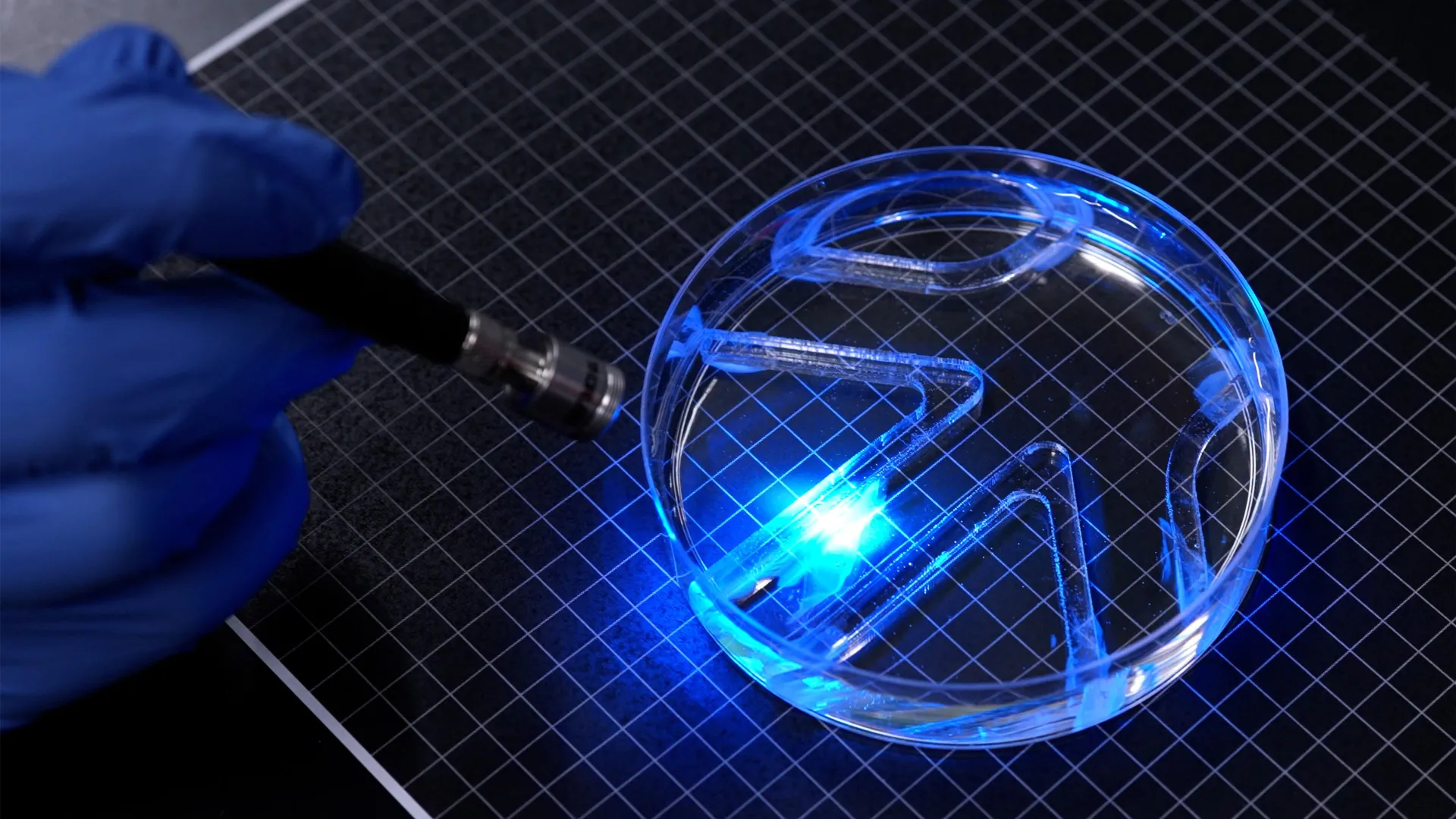
MIT Unveils Light‑Powered ‘Muscle Bot’ That Swims Like a Microscopic Fish
MIT engineers have created a paper‑thin robot that can swim through water using real muscle cells taken from living tissue. The tiny device, barely visible to the naked eye, moves when flashes of light trigger the muscle fibers to contract, letting it both propel itself and steer in different directions. Because the robot’s power source is biological muscle, it can repair tiny damages on its own—much like living tissue heals itself—making it a potential “self‑healing” machine. Researchers say the design could open the door to a new class of ultra‑small robots that can explore delicate or hard‑to‑reach places, such as fragile underwater ecosystems, polluted streams, or even the human body, without the risk of harming the environment. While the current prototype swims slowly, the team plans to refine the shape and improve speed, aiming for practical uses like real‑time water‑quality monitoring. The project received partial funding from the Office of Naval Research, highlighting interest in military and civilian applications alike. This breakthrough shows how blending biology with robotics can produce devices that act more like living organisms than traditional machines.
Read more

Tiny $10 Chip Turns Your Wristwatch Into a Mini Lab
Cambridge University researchers have built a pocket‑size optical sensor that costs about ten dollars – cheap enough to be embedded in everyday wearables. The device works like a miniature laboratory, using light to identify the chemical makeup of anything it scans. In laboratory tests it could tell the difference between foods, plastics and medicines with perfect accuracy, and it also proved capable of measuring health‑related substances such as blood sugar and alcohol without needing a needle.
The breakthrough comes from a new type of “convolutional spectrometer,” a clever blend of mathematics and tiny photonic components that squeezes high‑precision analysis into a chip the size of a grain of sand. Because the sensor is inexpensive and power‑efficient, it could be mass‑produced for smart watches, fitness bands, or even clothing, giving users real‑time insight into their bodies and surroundings. Imagine checking your glucose level, detecting a contaminant in your water, or confirming the authenticity of a medication with a quick glance at your wrist.
Scientists say this could spark a wave of affordable, non‑invasive health monitors and environmental detectors, making sophisticated chemistry accessible to anyone, anywhere.
Read more
Breakthroughs in Materials Science: Ultra‑Thin Carbon Membranes, Recyclable Batteries, and Ocean‑Friendly Plastics
Materials researchers are unveiling game‑changing technologies that could reshape how we tackle climate change and pollution. First, a team has engineered a carbon membrane only two molecules thick that acts like a super‑selective sieve, pulling carbon dioxide out of gas streams with unprecedented speed and purity. Its tiny size and high flux make it a promising candidate for large‑scale carbon‑capture plants, offering a new tool in the fight against rising greenhouse gases.
In the energy arena, scientists have created a redox‑active organic molecule for water‑based flow batteries that not only beats the performance of traditional vanadium systems but can also be fully recycled after use. This breakthrough moves flow‑battery technology closer to a truly sustainable, low‑cost solution for grid‑scale storage.
Meanwhile, engineers have embedded enzyme catalysts into compostable polyesters, producing plastics that dissolve rapidly—even in the deep sea where microbes are scarce. The enzyme‑laden material breaks down ester bonds, turning waste into harmless fragments and offering a realistic path to curb marine plastic pollution.
Additional highlights include automated high‑throughput methods for designing porous liquids and novel “topological highways” that guide light in unprecedented ways, underscoring the vibrant, interdisciplinary momentum driving modern materials science.
Read more
China’s AI Power Surges: 2,592 EFLOPS and 5G Everywhere by September 2026
China’s Ministry of Industry and Information Technology says the country’s “intelligent‑computing” capacity hit 2,592 EFLOPS – a 146% jump from a year earlier – giving AI projects a massive speed boost. The rollout of 5G is equally impressive: more than 5.2 million 5G base stations are now in place, and 5G‑A coverage is spreading to homes, factories and industrial parks. Gigabit‑speed fiber (10 G PON) ports have topped 33.4 million, while ten‑gigabit optical networks are being piloted in key sectors.
All three major telecom operators (China Telecom, China Mobile, China Unicom) rank among the world’s top ten in revenue, and the number of licensed telecom firms rose 7.3% to 204,000. Foreign‑invested telecom companies grew 25% to 3,455, reflecting a more open market. The government is also testing 6G technologies and pushing forward next‑generation optical‑network standards (ION‑2030) at the ITU.
On the application side, 5G now touches every one of the 97 major economic categories, and the industrial internet spans all 41 key manufacturing sectors. Over 26,000 private‑network 5G sites and 1,260 “5G factories” are already operating. Looking ahead, the ministry plans to keep investment flowing, accelerate 6G research, and broaden access to satellite‑IoT and value‑added telecom services, ensuring China’s digital infrastructure stays ahead of the curve.
Read more
The Race for 6G: How Zero‑Delay, Ultra‑Reliable Connections Might Work
Imagine a future phone network that can send tiny data bursts instantly, without waiting for the usual “hand‑shake” between your device and the tower. That’s the promise of 6G’s ultra‑reliable, low‑latency communication (URLLC). In today’s 5G, a feature called Configured Grant lets devices reserve a slice of air‑time in advance, shaving off a few milliseconds. 6G aims to go further by eliminating the need for any scheduling at all.
One idea is a shared pool of resources where many devices talk at the same time, relying on clever coding to untangle the overlapping signals. Another approach lets each device decide on the fly how to transmit based on signal quality and how urgent the data is, removing the step‑by‑step instructions from the base station. The biggest hurdle is handling collisions—when two devices transmit simultaneously. 5G mitigates this by giving multiple chances to resend; 6G may use advanced non‑orthogonal multiple access (NOMA) that can still decode messages even when they overlap.
Researchers also plan to pair NOMA with compressed sensing, a technique that can recover information from only a few observations when only a few devices are active. While the theory is exciting, practical issues remain: the math needed to separate signals can be heavy for phones, precise channel knowledge is harder to obtain in short bursts, and power‑level tricks that NOMA relies on must adapt instantly to changing conditions. Overcoming these challenges could make future networks feel truly instantaneous and rock‑solid for everything from remote surgery to autonomous cars.
Read more
FAW Unveils Powerful New Robots at China’s Biggest Auto‑Tech Show
From October 21‑24, FAW Group turned heads at the 2026 China International New Energy and Intelligent Connected Vehicle Exhibition in Beijing by showcasing a suite of home‑grown robots designed to reshape car manufacturing. The star of the show was a heavy‑load robot equipped with an RTX 4090‑class computer, a 200 Ah battery and dual 50 kg arms that can lift up to 80 kg. Its omnidirectional four‑wheel chassis and 3D radar array let it move safely through tight factory floors while handling bulky parts.
FAW also displayed an upgraded wheeled‑arm humanoid that now uses both hands in sync, cutting task time dramatically. Powered by a dual‑processor system and a 54 Ah battery, the robot can carry 3 kg per arm, navigate autonomously with laser‑vision sensors, and perform real‑world jobs such as glass‑washer bottle picking, bin handling and palletizing on an actual assembly line.
Full‑size humanoid and service robots acted as presenters for the Hongqi G919, highlighting FAW’s vision of “cars + robots.” The company says its robots follow a scenario‑driven, data‑driven roadmap: start with single‑task breakthroughs, expand to coordinated line‑wide operations, then replicate the solutions across factories. By leveraging FAW’s deep automotive expertise in perception, computing, energy management and quality control, the new robots aim to make heavy, dangerous, and repetitive work safer and more efficient, accelerating the intelligent upgrade of China’s auto industry.
Read more
Yabo888app’s New Registration Hub Highlights Cutting‑Edge Digital Makeovers
The freshly launched Yabo888app registration portal is turning heads by showcasing a suite of breakthrough projects that illustrate how Chinese tech firms are reshaping everyday business with digital tools. First up, Zhisuan Cloud (Beijing) Technology is rolling out a smart system that automatically balances computing power across servers, making AI training faster and more affordable for companies of all sizes. Next, Mingjing Data Technology is applying massive industrial data sets to predict product quality, helping factories spot defects before they happen and cut waste. Meanwhile, Lingjing Digital Twin is building a city‑wide virtual replica that lets planners test traffic changes, emergency responses, and infrastructure upgrades in a risk‑free digital sandbox. Finally, Yunfan Low‑Altitude is pioneering low‑flight drone services that capture real‑time aerial data for everything from construction monitoring to disaster assessment. Together, these four initiatives demonstrate how the Yabo888app platform is not just a sign‑up page but a launchpad for powerful digital transformation, giving businesses the tools they need to work smarter, faster, and more sustainably.
Read more
From Lab to Life: How New Medical Tech Is Transforming Patient Care in China
At a recent national forum, top scientists and hospital leaders showcased how cutting‑edge medical research is moving straight into doctors’ hands. Academician Cai Xiujun unveiled a degradable intestinal stent that can be packed into emergency kits, letting first‑responders treat severe gut injuries right on the field. A newer version with a built‑in diaphragm is also being used in anal surgery to preserve the sphincter and dramatically improve recovery. His team is close to rolling out biodegradable bone‑fixation devices for orthopaedic patients by early next year.
Foreign Academician Wang Cunyu highlighted AI‑driven anti‑aging work that screens peptide combos to coax bone‑marrow stem cells into repairing osteoporosis and fractures. The event stressed a two‑way pipeline: innovations flow from labs to clinics, and clinical needs push researchers back to the bench.
Other breakthroughs featured rapid‑fire ultrasound‑guided lung biopsies, a new traditional‑medicine‑based kidney drug entering national trials, and a library of 1,000 compounds tackling depression and Alzheimer’s. Beijing’s Chaoyang district helped launch a city‑wide early‑tumor‑screening network, while government policy now urges tighter integration of scientific discovery with industrial production. Together, these advances promise faster, safer, and more personalized care for millions of patients across China.
Read more