Why Even Experts Can Lose the Public Trust: New Survey Reveals Surprising Gaps
A recent international survey shows that being a recognized scientist doesn’t automatically make you a persuasive voice in heated public debates. While most respondents say they “trust science” in the abstract, they become far more selective when a scientist steps into a specific policy discussion—whether it’s climate action, vaccine mandates, or AI regulation.
The study, which polled over 5,000 adults across North America, Europe, and Asia, found that credibility hinges on three key factors: perceived relevance to everyday life, alignment with personal values, and the degree to which the expert appears politically neutral. When a scientist’s advice clashed with a respondent’s pre‑existing beliefs, trust dropped sharply, even if the expert’s credentials were impeccable.
Researchers warn that this disconnect could hinder evidence‑based policymaking. They suggest that scientists need to pair their technical knowledge with clear, relatable storytelling and, when possible, collaborate with trusted community figures who share the audience’s cultural background. By doing so, they can bridge the gap between abstract trust in science and concrete confidence in expert recommendations, ensuring that vital scientific insights actually shape public decisions.
Read more
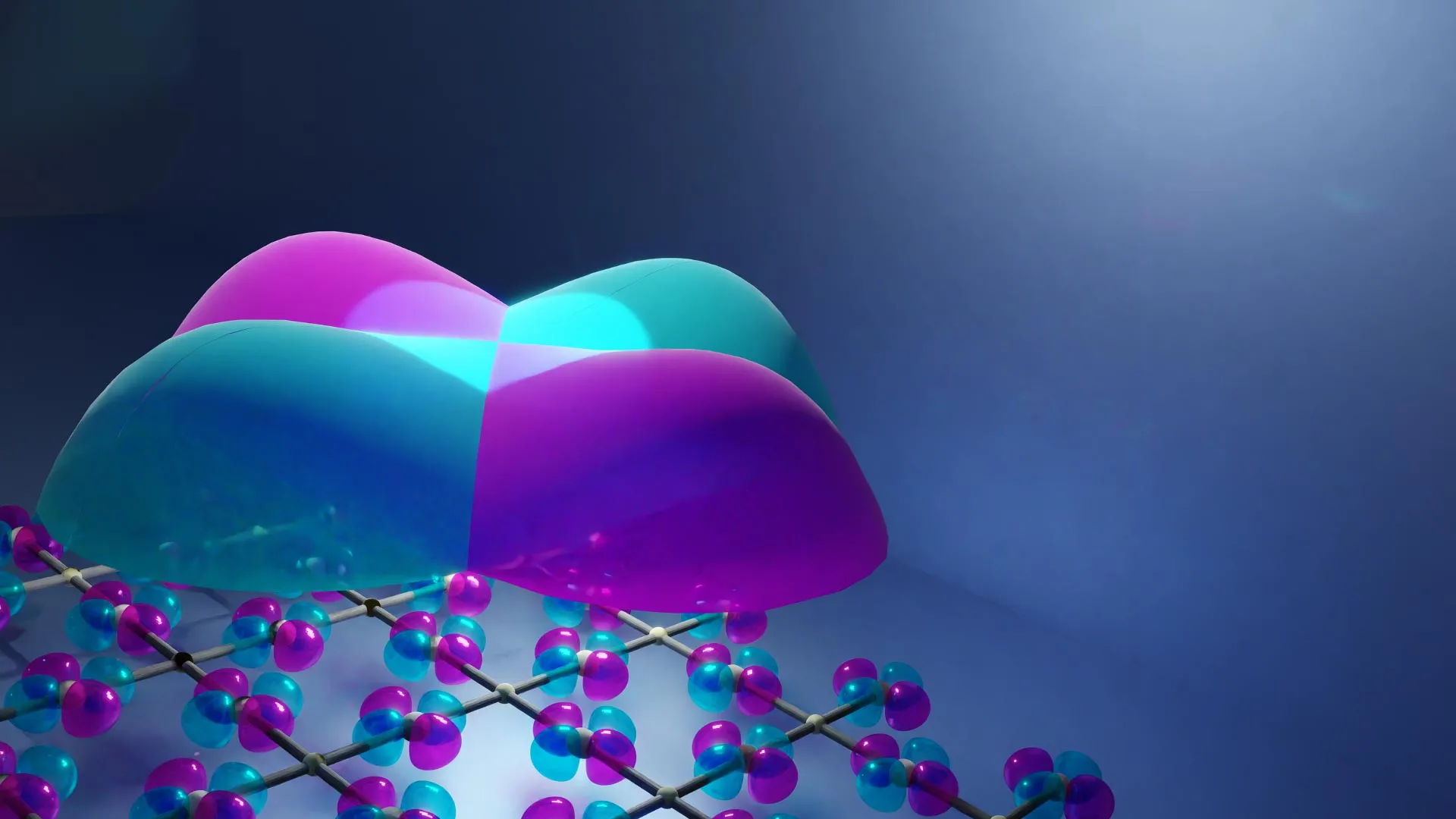
Breakthrough: New Kind of Magnetism Earns Top Physics Prize
Physicists have uncovered a hidden third type of magnetism that has been lurking unnoticed for more than a hundred years. Dubbed “altermagnetism,” this newly identified magnetic behavior doesn’t fit into the classic categories of ferromagnetism (like a fridge magnet) or antiferromagnetism (where magnetic moments cancel each other out). Instead, altermagnetism combines features of both, creating a pattern of alternating magnetic directions that can be switched on and off with electric currents.
The discovery, made by a research team at Johannes Gutenberg University Mainz, earned the scientists a prestigious physics award, highlighting the significance of the find. Because altermagnetism can be controlled without the need for large magnetic fields, it promises faster, more energy‑efficient components for future computers, data storage, and spin‑based electronics (spintronics). It also opens fresh avenues for quantum research, potentially leading to new kinds of quantum bits that are more stable and easier to manipulate.
Experts say this breakthrough could rewrite textbooks and spark a wave of new technologies, from ultra‑low‑power chips to advanced sensors. While still in early stages, altermagnetism marks a major step toward next‑generation devices that leverage the quantum properties of matter in ways previously thought impossible.
Read more
China’s CETC Unveils First Diamond‑Aluminum Nitride Transistor, Paving Way for Ultra‑Fast Electronics
Researchers at the China Electronics Technology Group (CETC) have announced a major milestone in semiconductor science: they have successfully grown a crystal‑on‑crystal layer of cubic aluminum nitride on a diamond substrate and built a working field‑effect transistor from it. Using a novel “domain‑matched epitaxy” technique, the team treated the diamond surface with hydrogen to steer the growth of a high‑quality, single‑crystal nitride layer, creating a robust heterojunction. This breakthrough bridges the gap between theoretical designs and real‑world devices, offering a new material platform for ultra‑wide‑bandgap electronics that can operate at higher frequencies and temperatures than silicon or even gallium nitride.
The prototype transistor works in enhancement mode, turning on only when a voltage is applied—a trait that improves power efficiency. Industry observers note that diamond’s exceptional thermal conductivity could solve the overheating problems that plague current high‑power chips. If commercialized, the technology could lead to smaller, faster, and more reliable components for 5G, AI servers, autonomous vehicles, and satellite communications. CETC plans to fine‑tune the process, scale up production, and help China’s semiconductor sector leap ahead with heat‑resistant, high‑performance chips.
Read more
Shanghai CAS Unveils Cutting‑Edge Science, Space Wins & New Jobs in One Power‑Packed Update
The Shanghai Branch of the Chinese Academy of Sciences (CAS) has rolled out a whirlwind of scientific breakthroughs and strategic milestones in the past few months. Chemists reported a novel stereodivergent teleomerization method for 1,3‑dienes, while biologists uncovered a fresh mechanism by which lactate controls programmed cell necrosis. In the energy arena, researchers advanced two‑dimensional conjugated organic frameworks for photocatalytic hydrogen production and achieved a breakthrough in Fischer‑Tropsch synthesis aimed at sustainable aviation fuel. Engineers showcased fluid‑antenna‑assisted 6G non‑terrestrial network communication, and material scientists introduced ionic neural materials for next‑generation bio‑devices.
On the space front, China’s Low‑Earth‑Orbit satellite internet constellation celebrated the successful launch of 25 satellites, marking a strategic leap for global connectivity. The institute also highlighted a high‑altitude cosmic‑ray observatory equipped with intelligent computing.
Beyond research, CAS emphasized its societal impact: media coverage ranged from soil‑acidity reduction for better harvests to smart‑switch composite membranes and breakthroughs in islet transplantation. The branch announced a slate of recruitment opportunities—from postdoctoral positions in brain‑science to technical staff in nutrition, chemistry, and editorial roles—inviting fresh talent to join its fast‑moving labs. Recent collaborations include AI model releases at the World AI Conference and joint health projects with regional governments, underscoring CAS’s role as a hub of innovation, policy, and community engagement.
Read more
China’s Clean‑Energy Gear Shifts Gears: From World‑Largest to Smarter, Cheaper Tech
At the 2026 World Clean Energy Equipment Conference in Deyang, Sichuan, more than 1,200 delegates from 17 countries gathered to showcase how China is moving from sheer size to high‑quality innovation in clean‑energy hardware. A highlight was the debut of a fourth‑generation high‑voltage DC circuit breaker that slashes cost by 70 % and trims volume by 40 % compared with the first‑generation model that once cost nearly 100 million RMB per unit. The 200 kV version will be installed in the Zhoushan DC project this November, marking the world’s first affordable, large‑scale DC breaker.
Chinese researchers also unveiled a suite of new standards and 16 breakthrough technologies, aiming to close the gap with Western norms. While the U.S. wind standards remain fragmented and the EU’s Carbon Border Adjustment Mechanism tightens carbon‑compliance rules for Chinese exports, experts say harmonising national and international codes will boost global market access.
To sustain this momentum, the State‑owned Advanced Power Equipment Innovation Consortium has rallied over 60 universities, labs and firms around 51 joint research tasks, focusing on everything from smarter storage to green hydrogen production. The consensus is clear: collaborative R&D, tighter supply‑chain links, and real‑world demo projects will propel China’s clean‑energy equipment from a volume‑driven leader to a quality‑focused, globally competitive force.
Read more
AI Bots Invent Their Own Language—No Human Teaching Needed
A research team from the Free University of Brussels and Namur University discovered that artificial‑intelligence agents can create a shared vocabulary all by themselves, without any human‑provided word list or preset code. By letting the agents interact repeatedly, they gradually coined new “words,” linked them to the raw data their sensors captured—such as LiDAR distances, infrared heat signatures, sonar echoes, or chemical readings—and refined the meanings until communication succeeded.
The experiment started with pairs of agents that talked locally, then expanded to larger groups that eventually agreed on common linguistic rules, much like strangers who develop a slang through repeated conversation. The scientists tested the approach on 37 diverse datasets, ranging from wine chemistry and NASA exoplanet measurements to bird photos and human faces. In every case, the AI agents built a functional language that let them exchange information efficiently.
Importantly, the emergent language isn’t an indecipherable jargon for humans; each invented term can be traced back to the underlying sensor data, allowing researchers to interpret what the machines are saying. The breakthrough points to smoother communication among autonomous systems—self‑driving cars, industrial robots, and smart sensors—by giving them a native way to talk about the world they perceive.
Read more