Science Roundup: AI, Green Tech, Space and More – Oct 2026 Highlights
This week’s science roundup packs a punch, from greener building methods to cutting‑edge AI breakthroughs. A new carbon‑calculator shows that screw‑pile foundations emit far less CO₂ than traditional concrete in two real‑world projects, offering a simple way to cut construction footprints. Meanwhile, researchers discovered a single crystal that, when warmed, releases two useful fuels at once, hinting at more efficient energy storage.
Artificial intelligence made headlines on several fronts: a fictional AI‑written story about a lighthouse keeper reminded us that machines can still echo old tropes, while large language models trained on frivolous internet content began to show “brain‑rot”‑like errors, underscoring the need for better data curation. Robots are getting smarter too—one AI system now predicts future scenes to guide its next move, and a new embodied arm called EmArm mimics human touch sensing.
Green energy advances continue with a next‑generation hydrogen process that captures its own carbon and a non‑noble‑metal electrode that slashes green‑hydrogen costs, tackling a major bottleneck. In health tech, mini‑brain organoids learned to read Braille, a step toward bio‑hybrid computing, while AI tools that clear cloud‑covered satellite images now deliver photo‑like clarity.
On the consumer side, shoppers are growing wary of AI‑driven pricing, and tech‑savvy banking users are taking more online risks despite positive security attitudes. Privacy concerns linger as AI agents become more personalized, and experts warn that hardware tampering could open doors to quantum‑computer attacks. Finally, Elon Musk hinted at gifting public‑owned SpaceX shares after Anthropic announced a public‑benefit fund, and Microsoft pulled out of a UK data‑center deal, a setback for the country’s AI ambitions.
Read more
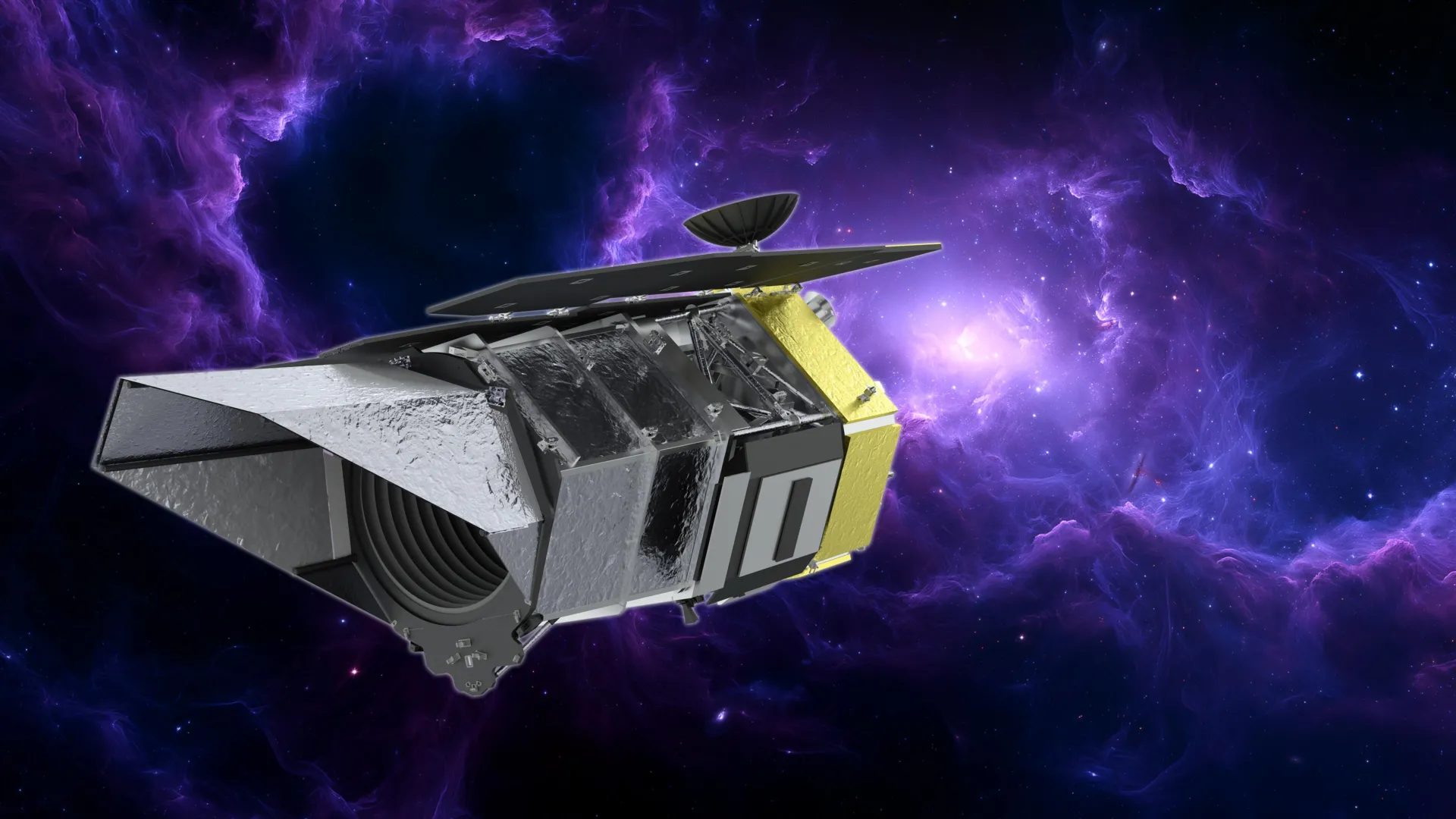
NASA’s Roman Telescope Delivers 30% Sharper Cosmic Images After Tiny Mirror Tweak
NASA’s Nancy Grace Roman Space Telescope has surprised scientists by delivering images that are almost a third clearer than anyone expected. The breakthrough came from a minuscule adjustment—moving one of the telescope’s mirrors by just one‑sixteenth of a human hair. That tiny shift realigned the instrument’s optics, allowing the Wide Field Instrument to capture far‑more detailed pictures of distant galaxies, nebulae, and other celestial wonders.
The improvement means astronomers can now map the universe with unprecedented precision, spotting faint structures and subtle color differences that were previously lost in blur. Researchers say the sharper view will accelerate studies of dark energy, the formation of stars, and the large‑scale structure of the cosmos. It also validates the engineering team’s meticulous approach to fine‑tuning space hardware, showing that even the smallest mechanical changes can have massive scientific payoffs.
With this performance boost, the Roman Telescope is set to become a workhorse for future sky surveys, complementing other observatories like the James Webb Space Telescope. The mission’s success underscores how careful engineering and a bit of patience can push the boundaries of what we can see beyond Earth’s atmosphere.
Read more
Google’s Quantum Leap: New ‘Magic State’ Technique Cuts Errors in Quantum Computers
Google’s quantum‑computing team has announced a big step toward making these ultra‑fast machines reliable. In a paper published in *Science*, the researchers describe a method they call “magic state cultivation,” a clever way to tame the error‑prone nature of qubits – the quantum version of computer bits.
Unlike ordinary bits that are either a 0 or a 1, qubits can exist in a fuzzy blend of both until they’re measured. This super‑position gives quantum computers their power, but it also makes them fragile: tiny disturbances can cause mistakes.
The new technique works like a high‑tech greenhouse. Instead of growing a whole field of “magic” quantum states and then picking a few perfect ones (the older “distillation” approach), Google’s engineers nurture a single state, pruning and refining it step by step. If the state goes off track, they discard it and start fresh, saving time and resources.
Experimental results show that this cultivated magic state can be used to perform universal logic operations on superconducting processors with far fewer errors than before. In plain language, the breakthrough turns a theoretical idea into a practical tool, bringing us closer to quantum computers that can solve real‑world problems reliably. The work marks a pivotal moment in the race to build scalable, fault‑tolerant quantum machines.
Read more
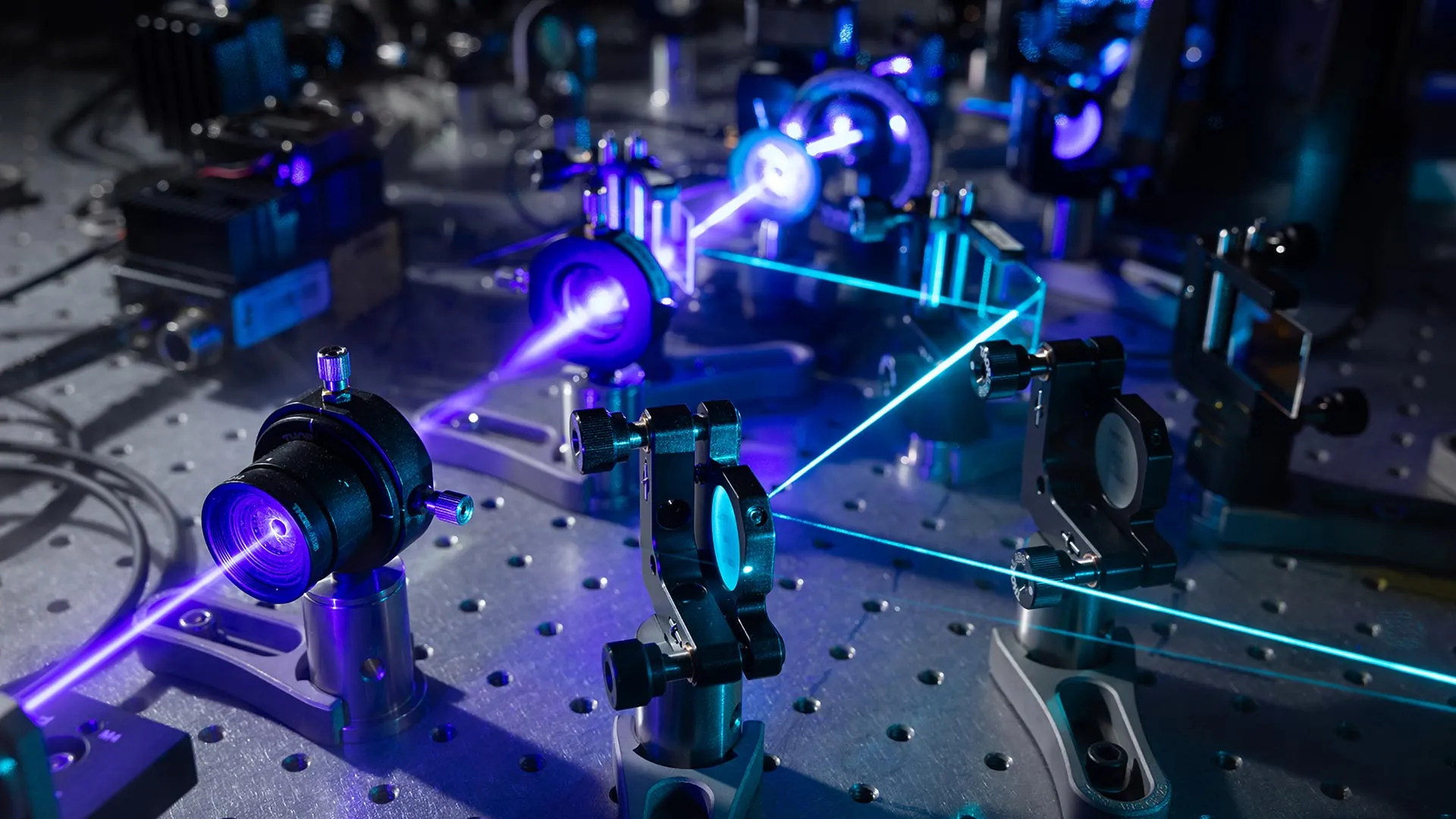
Stanford Unveils Ground‑Breaking Microscope That Watches Living Cells in Real Time
Stanford researchers have built a next‑generation microscope that can film the inner life of living cells without the need for fluorescent dyes that often disturb natural processes. By combining advanced optics with clever computational tricks, the device captures a full three‑dimensional map of individual molecules as they move, rotate, and interact inside a cell. This real‑time view lets scientists see how cancer cells grow, how viruses invade, and how medicines latch onto their targets—all in a way that’s closer to what actually happens inside the body. The technology sidesteps the usual trade‑off between resolution and speed, delivering high‑definition images fast enough to follow rapid cellular events. Because it avoids harsh labeling, the microscope reduces the risk of altering the very phenomena it aims to study, opening doors to more accurate drug testing and disease research. Early tests have already revealed surprising details about protein dynamics and cellular architecture that were invisible with older tools. If the platform lives up to its promise, it could become a staple in labs worldwide, accelerating discoveries in cancer, infectious disease, and neuroscience while making the invisible world of cells accessible to a broader range of scientists.
Read more
China’s AI Power Surges: 2,592 EFLOPS and 5G Boom Fuel Rapid Tech Growth
China’s digital backbone is expanding at break‑neck speed. By the end of September, the country had installed 5.25 million 5G base stations and rolled out 33.4 million gigabit‑speed optical ports, bringing ultra‑fast connectivity to homes, factories and industrial parks. This infrastructure underpins a staggering jump in intelligent‑computing power – 2,592 EFLOPS, a 146 % increase over last year – giving the AI sector a massive boost.
The three biggest telecom operators now rank among the world’s top ten in revenue, while 204,000 firms hold telecom licences, up 7.3 % YoY. Foreign‑invested telecom companies have risen by a quarter, reaching 3,455 enterprises, and satellite‑IoT pilots are already underway.
Research is racing ahead too. Active 6G trials are testing next‑generation technologies, and the ION‑2030 group is shaping future optical‑network standards at the ITU. On the application side, 5G has woven itself into all 97 major economic sectors, with more than 26,000 private 5G networks and 1,260 dedicated 5G factories driving the industrial internet forward.
Looking ahead, the Ministry of Industry and Information Technology will keep pouring investment into next‑gen networks, push 6G innovation, and open the market further for foreign players, ensuring China stays at the forefront of the global tech race.
Read more
Meet the Visionaries Driving China’s Humanoid Robot Revolution
China’s new wave of humanoid‑robot pioneers is reshaping how machines move, think and serve people. 1998‑born entrepreneur Jiang Zheyuan left academia early to build a full‑stack robot company that tackles motion performance and cost at once. He now aims for a closed‑loop system—from research to after‑sales—to deliver a "Chinese solution" for elder‑care and medical services.
At the Beijing Humanoid Robot Innovation Center, Xiong Youjun leads the open‑source "Tiangong" platform, a scalable, general‑purpose robot body that partners with Peking University, Huazhong University, UBTECH and others. The latest "Embodied Tiangong 3.0" stands 169 cm tall, weighs 62 kg and boasts 43 degrees of freedom, enabling it to climb 1‑meter obstacles, kneel, bend and interact with objects with millimetre precision. In 2025 it won the world’s first humanoid half‑marathon, and in 2026 it captured the 100‑meter sprint title at the World Humanoid Robot Games.
Former Unitree Robotics engineer Wang Xingxing turned a graduate‑project quadruped, XDog, into a viral sensation and later helped launch the humanoid‑focused startup Xingdong Jiyuan. Together with Tsinghua professor Chen Jianyu, they created the Denoising World Model Learning (DWL) framework, proving that skills learned in simulation can survive real‑world terrain. Their flagship robot, built almost entirely in‑house, now works 24/7 in logistics hubs for SF Express and China Post and assists manufacturers such as Geely, Renault and Samsung. These 20 leaders—spanning entrepreneurs, researchers and engineers—illustrate the diverse paths converging on a future where humanoid robots handle industry, warehouses, homes and healthcare with unprecedented agility and intelligence.
Read more
Smart Factories Unleashed: How Digital Twins and Edge AI Are Redefining Manufacturing
The article breaks down the ten pillars that make up modern smart manufacturing – from its technical complexity and cross‑industry integration to rapid innovation, real‑world problem solving, and autonomous, ecosystem‑driven growth. It shows why these traits are essential for companies seeking transformation and higher value.
A major focus is the power of digital twins. Real‑world examples from data centers, ultra‑high‑voltage substations and urban rail illustrate how virtual replicas give managers instant, visual control over assets, solving the “last‑mile” challenges of new infrastructure projects.
The piece also reviews the 2023 Digital Twin World White Paper, highlighting how IoT, big data and AI converge to enable city‑wide, industrial and water‑resource applications, and it maps the architecture, modeling and simulation capabilities needed for success.
A vendor snapshot compares six leading platforms – Zhongqu, Dassault Systèmes, Siemens, UINO, Microsoft and Aerospace Cloud – outlining their technical routes, core products and market gaps.
Looking ahead to 2026, ten trends are forecast: edge‑intelligence integration, low‑code development, AI‑driven modeling, city‑scale rollouts, DT‑as‑a‑Service, cross‑industry expansion, talent shortages, lightweight solutions for SMEs, standards for interoperability, and the rise of composite skill sets.
Finally, the article warns against common myths – such as treating a digital twin as a static 3D model or believing AI vision can replace all human inspection – and offers practical tips for pilot projects, data foundations and avoiding costly missteps.
Read more
IRENA Unveils ‘Energy Storage+’ Blueprint: Powering Grids, AI, Transport and Industry
The International Renewable Energy Agency (IRENA) has published a new report titled “Energy Storage+,” outlining how large‑scale storage can be woven into four key sectors – the power grid, artificial intelligence data centers, transportation and heavy industry. The paper argues that storage‑as‑a‑service can smooth renewable output, provide backup power, and enable innovative applications such as vehicle‑to‑grid (V2G) services, zero‑carbon micro‑grids for factories and islands, and AI‑driven load‑balancing for high‑performance computing. To unlock these benefits, IRENA calls for clear market rules that treat storage as an independent asset, harmonised technical standards across industries, and diversified revenue streams including energy arbitrage, capacity payments and ancillary services. The report also stresses the need for talent development, supply‑chain coordination and international regulatory cooperation.
In parallel, China’s National Energy Administration (NEA) and IRENA deepened their partnership at a steering‑committee meeting in Beijing. NEA Director Zhang Jianhua and IRENA Director‑General Francesco La Camera signed a memorandum to second officials to IRENA, discussed joint research projects and pledged to expand cooperation on policy design, project pilots and personnel exchanges. State Grid’s chairman Xin Bao’an also held a video dialogue with La Camera, reaffirming plans for a 2022 International Energy and Power Transition Forum. Together, these initiatives aim to accelerate China’s renewable rollout, support global carbon‑neutral goals and showcase how “Energy Storage+” can deliver systemic value across the economy.
Read more
AI Agents in Action: How 98 Chinese Companies Are Shaping the Future of Enterprise Tech
Artificial‑intelligence agents—software that mimics human decision‑making—are rapidly moving from pilot projects to real‑world use across Chinese enterprises. By combining natural‑language processing, knowledge‑graph reasoning and reinforcement‑learning, these agents automate tasks such as customer‑service chats, research analysis and workflow orchestration, delivering noticeable gains in speed and cost savings. Companies are tackling hurdles like output quality and response latency with layered defense mechanisms and hybrid model routing, while Retrieval‑Augmented Generation (RAG) gives agents a sharp edge on knowledge‑heavy jobs.
A standout development is Baidu’s ERNIE‑4.5‑VL‑28B model, a 28‑billion‑parameter multimodal system that slashes deployment costs to one‑eighth of traditional solutions thanks to 2‑bit lossless quantization. This breakthrough is reshaping the economics of enterprise‑grade AI.
A recent industry survey of 98 firms shows 39 % at a “partial intelligence” level, 18 % at core‑intelligence, and 8 % at high‑intelligence, with over 60 % reporting a 20‑39 % drop in product defects after adopting large‑model testing tools. While 78 % have rolled out AI and 75 % are using generative AI, most have yet to see a strong impact on earnings before interest and taxes. The biggest roadblocks remain talent shortages, uneven data quality and occasional hallucinations. Looking ahead, experts predict three trends: explosive market growth, the rise of “agent‑centric” architectures, and deeper penetration of AI into finance, manufacturing and other sectors, moving firms from simple tool use to truly intelligence‑native operations.
Read more