Space Eyes Spot Methane Like Never Before: Massive Test Shows Satellites Can Pinpoint Leaks
A groundbreaking field experiment at the Casa Grande test site has proved that satellites can now track methane leaks with unprecedented accuracy. Researchers repurposed Germany’s EnMAP instrument and other space‑based sensors to hunt for methane plumes under clear skies. The specialized EnMAP system caught between 62 % and 88 % of the releases, while the broader land‑scanning satellites from the U.S. and Europe detected only 29 % to 37 % of the same plumes, especially struggling with smaller leaks under 1,000 kg per hour.
The study, published in *Nature*, involved a year‑long blind test where scientists released known quantities of methane without telling the satellite teams where or how much was emitted. By comparing the satellite data to the ground truth, the team could evaluate how well current AI‑driven monitoring tools perform in real‑world conditions. The results highlight both the promise and the limits of existing satellite technology, suggesting that dedicated methane‑focused instruments are still needed for the smallest sources.
These findings are a big step toward more reliable, global monitoring of greenhouse‑gas emissions, offering policymakers and industry a clearer picture of where leaks occur and how to target reductions. The research underscores the growing role of space‑based observations in the fight against climate change.
Read more
Inside the AI Money Loop: How Nvidia and Others Are Funding the Boom—and the Risks
The AI explosion isn’t just about cutting‑edge models; it’s also powered by a tangled web of financing that keeps money flowing in circles. Big players like Nvidia wear three hats at once – they supply the chips that run the algorithms, invest in the startups that use those chips, and even lend cash to the same companies. This “circular money machine” can turbo‑charge growth, but it also means a stumble at one point can ripple through the whole ecosystem.
Take OpenAI, for example. The company’s reported revenue numbers have come under fire after the Financial Times suggested its annualized earnings were about $20 billion lower than the figure the firm had hinted at. When the news broke, OpenAI’s shares tumbled, highlighting how intertwined financial claims and market confidence have become.
Analysts warn that this tightly knit financing structure concentrates risk. If a major chip maker faces a supply shock, or an AI startup fails to meet lofty expectations, the fallout could spread quickly to investors, suppliers, and lenders—all of whom are often the same entities. Understanding this loop is crucial for anyone watching the AI boom, whether you’re a tech enthusiast, an investor, or just curious about where the next big breakthrough—and potential bubble—might surface.
Read more

How Niobia’s AI Is Stopping Costly Mistakes in Battery and Chip Factories
Scientists Gaurav Jha and Harveen Kaur, both PhDs in chemistry, founded Niobia after years of working on chips and batteries. They saw a hidden problem: tiny, pin‑hole defects that slip through traditional checks and end up costing manufacturers billions. Niobia’s solution is a clever mix of open‑source artificial‑intelligence models that they fine‑tune with proprietary data from the battery and semiconductor world. By teaching the AI to spot microscopic flaws, the system can flag problems before they become expensive recalls or production delays.
The company’s technology is a behind‑the‑scenes hero for everything that relies on chips and batteries—from the glasses you wear to the shoes on your feet. Because the data stays on Niobia’s secure servers, customers don’t have to worry about sensitive information leaking into public AI clouds. At TechCrunch Disrupt 2026, Niobia is a Battlefield finalist, highlighting how a niche, highly technical tool can protect a multibillion‑dollar industry. In short, Niobia’s AI takes the guesswork out of manufacturing, helping big players avoid some of the most costly mistakes in tech today.
Read more
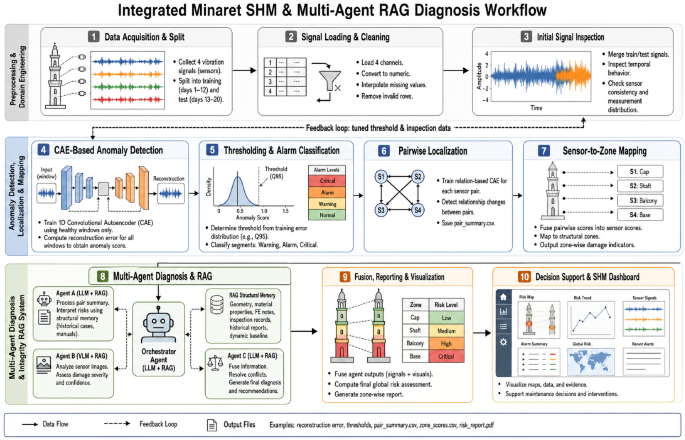
Smart AI System Keeps Ancient Walls Safe: How New Tech Monitors Historic Buildings
Researchers have unveiled an innovative AI‑driven platform that can continuously watch over centuries‑old brick and stone structures, spotting damage before it becomes a disaster. The system combines two cutting‑edge technologies: large language models (LLMs) that understand and explain data, and visual models (VLMs) that interpret images of the building’s surface. By linking these models with a "retrieval‑augmented generation" (RAG) engine, the framework pulls in relevant historical records, engineering reports, and sensor readings to give a clear, auditable picture of the structure’s health.
What makes this approach special is its "region‑aware" capability—different parts of a historic wall can be monitored separately, allowing engineers to focus on the most vulnerable spots. The multi‑agent design lets each AI component specialize (e.g., one analyzes cracks, another checks moisture levels) while they share findings in real time. The result is a user‑friendly dashboard that not only flags problems but also explains why they matter, making it easier for preservation teams, city officials, and the public to trust the data.
In tests on a centuries‑old masonry tower, the system detected tiny fissures and moisture ingress that traditional inspections missed, proving that AI can become a reliable guardian of our architectural heritage.
Read more
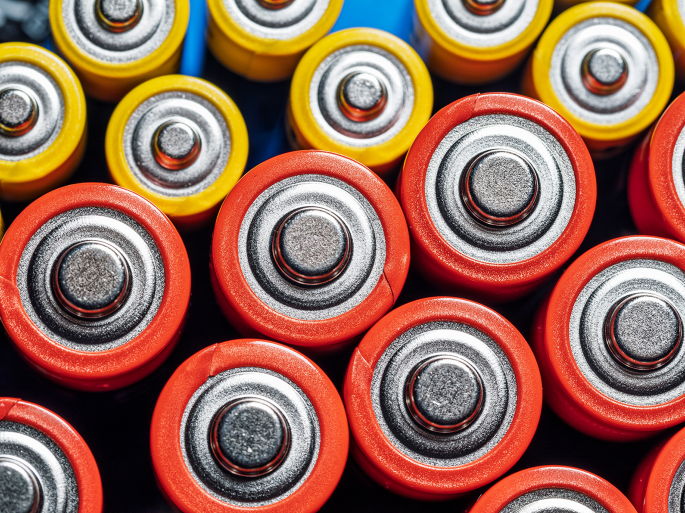
Smart Batteries Detect Dangerous Dendrite Growth Before It Happens
A new breakthrough in battery technology could make electric cars, smartphones, and renewable‑energy storage far safer. Researchers have developed a battery that can “feel” when tiny, needle‑like metal filaments called dendrites start to form inside it. Dendrites are a hidden menace: as they grow, they can pierce the separator that keeps the battery’s positive and negative sides apart, leading to short‑circuits, fires, or even explosions. The innovative system embeds ultra‑sensitive sensors that monitor subtle changes in voltage, pressure, and acoustic signals, alerting the battery management system the moment dendrite growth begins. This early warning lets the battery automatically adjust charging rates or shut down, preventing damage before it escalates. The technology works with common lithium‑metal and sodium‑metal chemistries, promising to extend the life and safety of next‑generation high‑energy batteries. Beyond consumer electronics, the approach could protect large‑scale grid storage and aerospace power packs, where failures are especially costly. By turning batteries into self‑diagnosing devices, the research paves the way for more reliable, longer‑lasting energy storage that consumers can trust.
Read more

China’s Chip Boom: $240 Billion in Sales Yet Only 6% of World Market – Why the Gap Matters
China’s semiconductor sector hit a record $240 billion in revenue in 2025, a 22% jump from the previous year. But when you look at global market share, China accounts for just 6% of total chip sales – far behind the United States (53%), South Korea (21%) and even Japan and the EU (about 7% each). The mismatch isn’t a mystery; it comes from two different ways of measuring the industry. The $240 billion figure adds up every step of the supply chain – design, manufacturing, packaging and testing – while the 6% share counts only chips sold by companies headquartered in China.
China has become a powerhouse in “mature” chip processes (28 nm and larger). It now supplies a third of the world’s basic logic wafers and is set to host almost half of all new capacity in this segment. Domestic equipment use in fabs has risen to 35%, and firms like NAURA rank among the global top five for certain tools.
The real bottleneck is advanced lithography. While Chinese factories can produce immersion DUV machines, they still lack EUV tools, which rely on ultra‑precise optics made by Germany’s Zeiss for Dutch firm ASML. Industry leaders disagree on the timeline – NVIDIA’s Jensen Huang bets on functional DUV‑based chips by 2030, whereas Zeiss predicts a 15‑year horizon for home‑grown EUV.
U.S. export controls have forced Chinese chipmakers to lean on home‑grown designs and equipment, turning policy pressure into a demand‑driven push for self‑sufficiency. The sector is at a turning point where market forces, not subsidies, will shape its next growth phase.
Read more
6G Will Turn Cars into Smart Team Players on the Road
While most car makers are still rolling out 5G‑connected models, the industry is already looking ahead to the next leap: 6G. Experts at Mobility Global say that by the early 2030s, 6G will change vehicle communication from a one‑to‑one data link into a real‑time, collaborative network that links cars, road infrastructure and the cloud.
The new network will shrink latency from the 10‑millisecond range of 5G to sub‑millisecond or even microsecond response times, allowing vehicles to instantly share raw sensor feeds—camera video, LiDAR point clouds, radar maps—and “see” around corners or through fog together. AI will be baked into the network itself, predicting traffic jams, prioritising safety‑critical messages and dynamically allocating bandwidth as cars move.
Base stations will double as eyes on the road, using integrated sensing to fill blind spots and improve safety in tunnels or bad weather. A space‑air‑ground mesh of satellites, high‑altitude platforms and roadside units will erase coverage gaps, keeping cars connected everywhere.
These capabilities will enable real‑time digital twins of vehicles and traffic, letting manufacturers predict failures, test software updates on the fly and offer new services such as AI co‑pilots, live HD‑map updates and usage‑based insurance. To keep up with fast‑changing standards, automakers are designing modular telematics units that can be upgraded remotely. By 2030, every new car will ship with a connectivity module, and the first 6G‑enabled solutions are expected to hit the market in the mid‑2030s.
Read more
Scientists Capture Quantum Computer’s Sudden Shift from Chaos to Order
A research team has demonstrated that a quantum computer can flip from a chaotic jumble to a well‑ordered state simply by tweaking how often it performs two key tasks. In their experiment they ran about 5,000 two‑qubit operations (the basic building blocks of quantum computing) and a similar number of “check‑and‑reset” steps that clean up errors. When the mixing operations dominated, the system behaved like a storm of random data. When the clean‑up steps were more frequent, the machine settled into a predictable, controllable pattern. Strikingly, when the two tasks were balanced, even a tiny change in their timing caused the system to jump abruptly from chaos to order—a phenomenon known as a phase transition. The researchers liken this to the butterfly effect, where a small tweak can trigger massive outcomes. Their findings show that existing quantum hardware can already orchestrate operations, measurements, and resets thousands of times, offering a new way to tame quantum chaos. However, building truly fault‑tolerant quantum computers will still require reliable, continuous error detection and correction throughout calculations.
Read more
Pioneering Green Power: A Research Fellow’s Quest for Breakthroughs in Biomass, Ocean and Geothermal Energy
At the forefront of sustainable energy research, a dedicated fellow is targeting two game‑changing milestones. First, the team aims to turn plant‑based waste into high‑value fuels and chemicals while scaling up biomass power plants that can feed entire grids. By pairing advanced conversion technologies with massive, farm‑sized facilities, they hope to make renewable biomass as reliable and affordable as traditional fossil fuels. The second milestone focuses on rolling out compact, independent renewable energy kits that can power remote villages, farms, or disaster‑relief sites without needing a central grid. These plug‑and‑play systems combine solar, wind, and storage to deliver clean electricity wherever it’s needed.
Beyond these goals, the researcher is deepening our understanding of natural‑gas hydrates—ice‑like crystals that trap methane beneath the seafloor—and how to tap them safely. Simultaneously, they are exploring the untapped power of the oceans and the Earth’s deep heat, developing technologies that could harvest wave motion and geothermal heat on a commercial scale. Together, these efforts could reshape how we produce and use energy, cutting carbon emissions and opening new economic opportunities worldwide.
Read more