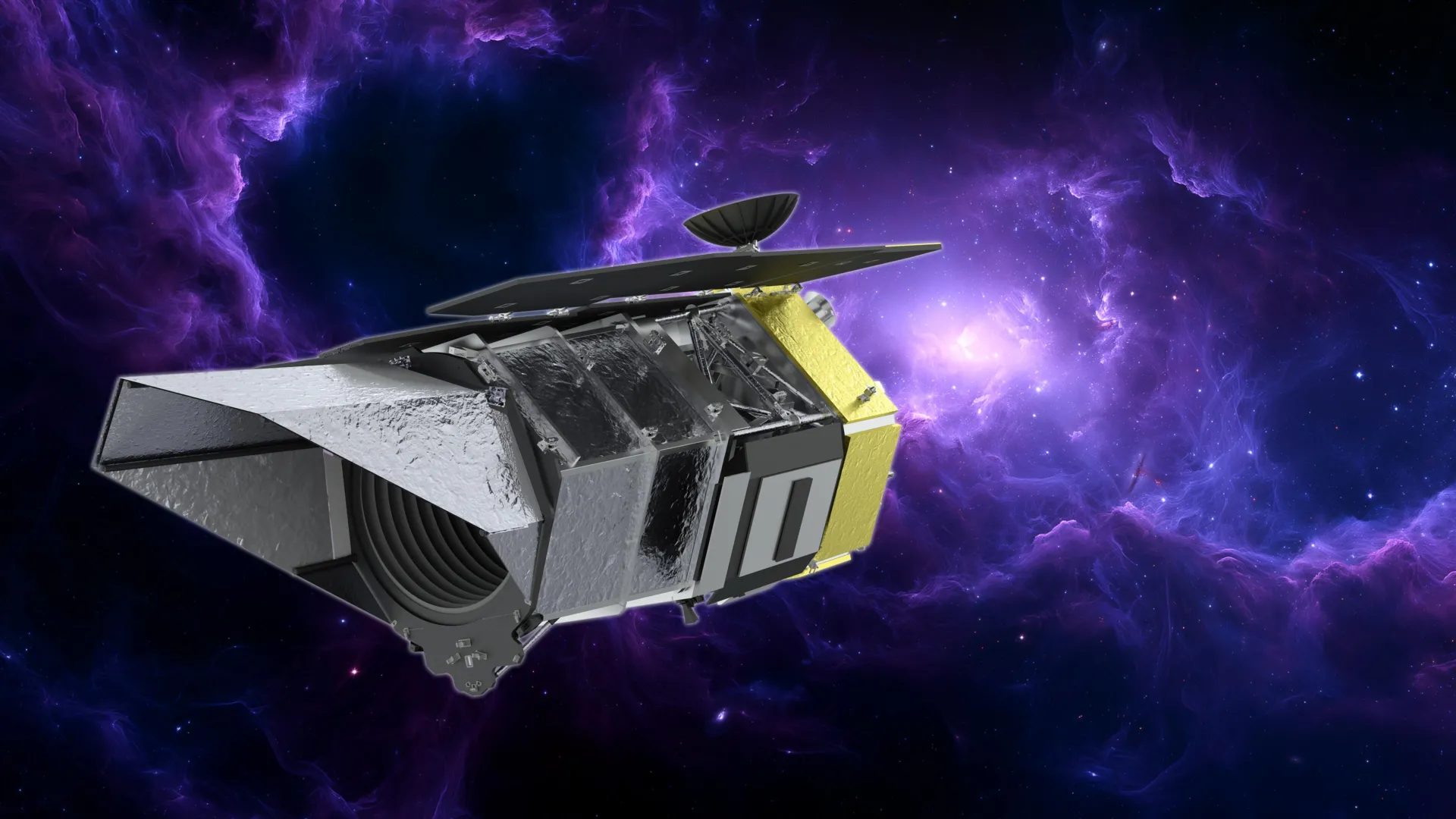
NASA’s Roman Telescope Gets a Tiny Tweak, Boosts Image Sharpness by 30%!
NASA’s Nancy Grace Roman Space Telescope, often called the “Roman” telescope, has delivered performance far beyond what engineers expected. The breakthrough came from a minuscule adjustment—shifting one of the telescope’s mirrors by just one‑sixteenth of a human hair. That tiny move aligned the Wide Field Instrument’s optics with near‑perfect precision, sharpening the images it captures by roughly 30 percent compared with the original design specifications.
The improvement means the Roman telescope can now map the distant universe with unprecedented clarity, spotting faint galaxies and subtle cosmic structures that were previously blurred. Scientists say this boost will accelerate studies of dark energy, the mysterious force driving the universe’s accelerated expansion, and help chart the distribution of dark matter across billions of light‑years.
The upgrade was achieved without major hardware changes; engineers used the telescope’s built‑in fine‑tuning mechanisms to make the adjustment while the observatory was in orbit. The success demonstrates how small, precise calibrations can unlock huge scientific returns. With its enhanced vision, Roman is set to begin a new era of wide‑field surveys, delivering data that could reshape our understanding of the cosmos.
Read more
Robotics Roundup: AI, Bio‑Hybrid Breakthroughs, and Greener Power Solutions
This week’s robotics roundup showcases a wave of innovations that could reshape everyday life. Researchers have fine‑tuned chemicals to push perovskite LED efficiency up to 37%, while greener chemistry brings low‑toxicity perovskite solar cells closer to market. In the energy arena, a nanoscale coating dramatically improves hydrogen‑cell durability, and up‑cycled battery materials have roughly doubled cell‑cycle life in lab tests. New trading‑power strategies promise to ease data‑center strain on the grid, and vapor‑clearing channels could keep high‑performance chips cool without risky short‑circuits.
Security‑focused work reveals a fresh cyber‑threat targeting water‑treatment systems, exposing limits of current encryption. Meanwhile, biometric security gets a boost: ultrasound‑based fingerprint scanners authenticate users without storing any digital biometric data. On the AI front, studies highlight how human learning drives success in human‑AI teams, and large language models display a human‑like double standard when judging others’ reasoning. AI agents are learning to anticipate their own software errors, inventing a rudimentary "artificial natural language" for complex data exchange, and a new detector can spot AI‑generated work by analyzing ideas rather than wording.
In bio‑hybrid tech, tiny brain organoids have learned to "read" Braille, a step toward living‑computer interfaces. A chip using ultrasound‑powered microbubbles can steer fluid flow in real time, and a novel spinning technique weaves electronic circuits directly into soft, washable fibers. Finally, an AI‑driven drone, equipped with just one camera and no GPS, outperformed former world champions, hinting at a future where minimalist hardware meets maximal performance.
Read more
Smart Solar Power: AI‑Driven Tracking Boosts Efficiency
Solar panels work best when they operate at their maximum power point, but changing sunlight, temperature, and shading make it hard to keep them there. Researchers Gouribhatla, Narahari, and Remala tackled this challenge by marrying two cutting‑edge technologies: deep neural networks and metaheuristic optimization. Their new MPPT (Maximum Power Point Tracking) system first trains a long‑short‑term memory (LSTM) network on real‑time solar data, allowing it to predict the optimal operating point even as conditions shift. To fine‑tune the network, they employ a hybrid bat‑and‑crow algorithm, a nature‑inspired metaheuristic that quickly finds the best set of neural‑network weights without getting stuck in local minima. Tests on a laboratory‑scale PV array showed the AI‑enhanced controller captured up to 3.5% more energy than conventional perturb‑and‑observe methods, especially during rapid cloud cover. The authors also explored how this smart MPPT can integrate with electric‑vehicle charging stations, improving overall grid stability. By demonstrating a practical, low‑cost way to boost solar yield, the study points to a future where renewable energy systems are not just passive collectors but intelligent participants in the power network.
Read more
Powering the Future: Fresh Breakthroughs in Energy Management and Clean‑Tech
A wave of new research is reshaping how we generate, store, and use energy. Engineers have created a clever system that links solar panels, batteries, and electric‑vehicle chargers at busy railway stations. By letting EVs soak up excess sunshine, the setup lifts solar self‑use by up to 20 % and boosts earnings by more than 55 %, all while keeping emissions near zero.
Policy makers are also getting smarter tools. Sector‑coupled energy models, which tie together electricity, heat, transport and industry, help governments weigh the impact of different clean‑energy strategies. Meanwhile, a study of climate‑change side events reveals a split: fossil‑fuel‑linked NGOs dominate renewable‑energy talks, whereas environmental groups lead the charge against fossil fuels.
On the ground, renewable‑energy cooperatives are sprouting, giving communities a stake in clean power. Researchers like Rahul Rajeevkumar Urs are releasing open‑source software that lets architects model how solar and wind can be woven into building designs.
Other highlights include new methods for measuring methane leaks in oil‑gas basins, a reminder that wind farms aren’t automatically low‑carbon unless built with strong recycling and rapid‑response policies, and a roadmap for China’s zero‑carbon steel industry that balances local resources with plant diversity. Together, these advances point toward a more resilient, low‑emission energy future.
Read more