
How Countries Are Tackling Climate‑Related Loss and Damage
Across the globe, nations are grappling with the growing reality of climate‑related loss and damage – the irreversible harms that climate change inflicts on communities, economies, and ecosystems. A new analysis published in *Nature Climate Change* breaks down how governments are measuring, reporting, and responding to these impacts at the national level. The authors highlight that many countries lack consistent data, making it hard to compare losses or allocate compensation fairly. To address this, the study proposes a standardized framework that blends satellite monitoring, local surveys, and economic modeling, giving policymakers a clearer picture of where and how damage occurs. It also examines case studies from vulnerable nations that have begun to integrate loss and damage into their climate strategies, showing early successes in securing international funding and building resilient infrastructure. The paper stresses that transparent accounting and robust legal mechanisms are essential for delivering justice to those most affected. By translating complex climate science into actionable policy tools, the research aims to empower governments to plan more effectively, protect at‑risk populations, and hold the global community accountable for supporting recovery and adaptation efforts.
Read more
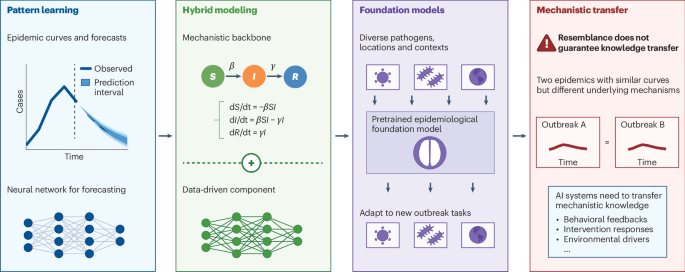
How AI Is Revolutionizing Disease‑Spread Modeling
Artificial intelligence is reshaping the way scientists predict and control epidemics. In this article, researchers explain how modern AI tools—ranging from machine‑learning algorithms to deep‑learning networks—are being woven into traditional epidemiological models to capture the complex, real‑time dynamics of disease transmission. By ingesting massive streams of data such as mobility patterns, social media chatter, and genomic sequences, AI can spot emerging hotspots faster than ever before and forecast the impact of interventions like vaccination campaigns or travel restrictions with unprecedented precision. The authors also discuss the pitfalls: data quality issues, algorithmic bias, and the need for transparent, interpretable models that public‑health officials can trust. Case studies illustrate successes, such as AI‑enhanced forecasts that helped curb a recent influenza wave and a COVID‑19 model that guided policy decisions in several countries. Looking ahead, the piece calls for stronger collaborations between computer scientists, epidemiologists, and policymakers, as well as robust ethical frameworks to ensure AI serves the public good. Ultimately, the marriage of AI and epidemiology promises faster, smarter responses to future health crises, turning raw data into actionable insight for a safer world.
Read more
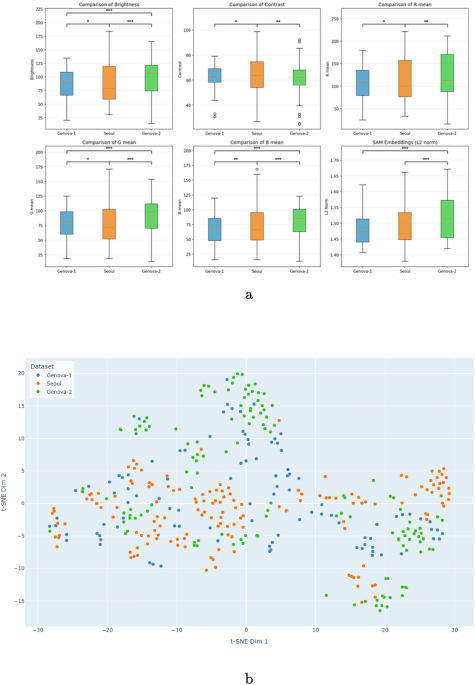
AI Breakthrough Helps Doctors Spot Voice‑Box Cancer Faster in Endoscopic Videos
A team of international researchers has adapted a cutting‑edge artificial‑intelligence tool called the Segment Anything Model (SAM) to automatically outline laryngeal squamous cell carcinoma (SCC) in endoscopic video frames collected from several hospitals. By training SAM on a diverse set of multicenter images, the scientists achieved highly accurate, consistent segmentation of cancerous tissue, even when video quality varied or lighting changed. The new approach speeds up the tedious manual work radiologists and surgeons normally perform, reducing the time needed to identify tumor boundaries and plan treatment. In tests, the AI‑driven method matched or exceeded expert performance, while also highlighting subtle lesions that could be missed by the human eye. The study suggests that integrating SAM‑based tools into routine laryngeal examinations could improve early detection, personalize surgery, and ultimately boost patient outcomes. The authors emphasize that the technology is designed to assist clinicians—not replace them—and call for larger clinical trials to validate its real‑world impact.
Read more

Meet H.E.R.O.: The Robot Aiming to Revolutionize Recycling
After years of coding for a London bank, founder Amy Ma noticed a simple but shocking truth: the office’s recycling bins were ending up in the trash. That eye‑opening moment sparked a mission to fix a broken system that still relies on people sorting waste by hand. Six years later, her Edinburgh‑based startup Danu Robotics has built a robot called H.E.R.O. that can sift through mixed recyclables faster, cheaper, and more accurately than traditional machines.
Unlike competitors that use suction, H.E.R.O. grabs items with a precise pincer claw, reducing errors and handling a wider range of materials. The real game‑changer is Danu’s AI‑driven software, which learns from each load and continuously improves its sorting decisions. The company’s approach is already gaining traction: it has letters of interest from two major customers, $500,000 in signed contracts, and a sales pipeline of over 200 prospects, tapping into a $20 billion market across Europe and North America. To fuel this growth, Danu recently closed a $5 million late‑seed round. With investors on board and a clear problem to solve, Ma’s robot could soon turn the tide on waste, making recycling a truly efficient, high‑tech process for businesses everywhere.
Read more
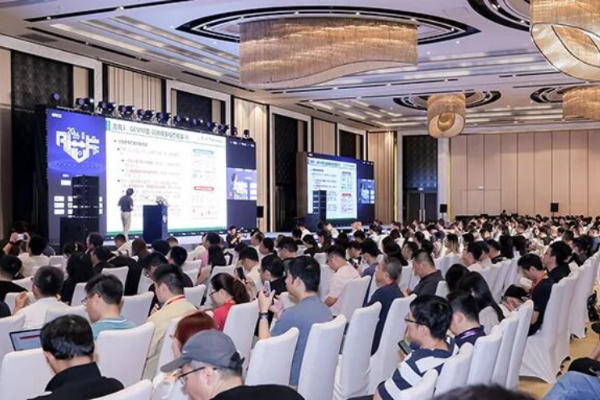
Inside the 2024 Shanghai AI‑Chip Summit: What’s Powering the Next Wave of Smart Machines
The 2024 Shanghai AI‑Chip Summit gathered more than a hundred industry players to map the future of artificial‑intelligence hardware. Speakers highlighted three big shifts. First, CPUs are staging a comeback. As AI agents become the norm, processors must handle context, security checks and tool calls, so Intel is rolling out ultra‑dense racks with up to 192 Granite Rapids CPUs that can run 50,000 agents at once.
Second, chip designers are moving beyond single‑die limits. Sun Yat‑sen University’s Wang Zhongfeng showed how tighter hardware‑software co‑design—using compression, low‑bit quantization and sparse Transformers—turns raw TOPS into real‑world performance for large models. Tsinghua’s Hu Yang added a wafer‑scale perspective, balancing compute, storage and networking to boost “token economics” while slashing power and cooling costs.
Third, new memory‑centric architectures are emerging. Houmo Intelligence’s Xin Xiaoxu unveiled a 3‑D Compute‑in‑Memory (CIM) solution that doubles compute density and cuts heat, already powering over 150 products. Meanwhile, Kuixin’s Wang Xiaoyang argued for hybrid memory stacks that pair high‑bandwidth HBM with custom flash (HBF) to keep latency‑critical data close while storing massive model weights affordably.
Together, these trends point to AI chips that are more collaborative, energy‑efficient and tailored to the exploding demand for on‑device intelligence.
Read more
China’s ‘AI+’ Drive Sparks Boom in Smart Robots, Cars and Gadgets
China has rolled out a sweeping new policy called the “AI+” initiative, aimed at weaving artificial intelligence into every corner of the economy. The plan, outlined in the recently issued “Opinions on Developing New Quality Productive Forces,” calls for AI‑powered upgrades to traditional factories, the rollout of smart, connected electric vehicles, and the next generation of AI‑enhanced smartphones, computers and even humanoid robots.
Industry insiders say the move will unlock a fresh wave of growth for what they call the “intelligent economy.” In 2025 China’s AI sector already topped 1.2 trillion yuan, a 40 % jump from the year before, with more than 6,600 AI firms—about 15 % of the world’s total. The government is backing this surge with new research hubs, stronger supply chains for chips, data and algorithms, and a safety net of risk‑monitoring and emergency response systems.
On the ground, factories are seeing humanoid robots shift from prototype to mass production, with companies like UBTECH and Qiyuan Robot planning to ship tens of thousands of units this year. At the same time, major phone makers are racing to launch AI‑driven devices featuring foldable screens, custom chips and built‑in digital assistants.
Experts predict three big wins: a faster, more open innovation cycle; a boost to manufacturing, agriculture and services through human‑machine collaboration; and the birth of new markets such as AI agents, industry‑specific models and data‑driven services. In short, the “AI+” push is set to turn cutting‑edge research into everyday reality, reshaping China’s economy and everyday life.
Read more
Chinese Robot Maker Wins Back‑to‑Back IROS Championships, Cementing Global Trust
From September 27 to October 1, the IEEE/RSJ International Conference on Intelligent Robots and Systems (IROS) took place in Pittsburgh, the world’s premier showcase for cutting‑edge robotics. For the second year in a row, university teams that competed in the legged‑robot challenge chose hardware from China’s Zhishen Technology, and both teams walked away with the top prize. In 2025, the University of Manchester used Zhishen’s Gangbeng L1 robot; in 2026, Nanyang Technological University (Singapore) raced with the newer Zhishen Tongchui M1. The M1 impressed judges by completing the entire course without any remote control – it sensed obstacles, plotted its own path, and even operated a robotic arm to finish tasks, all autonomously.
The repeat victories signal that Zhishen’s quadruped platform has become a reliable workhorse for researchers who need machines that can endure long, intense testing cycles. The company’s product line now includes the 15‑kg Gangbeng L1 series, an educational‑focused L1 Maker that can be taken apart and rebuilt over 30 times, and the next‑generation L2 series with a stronger alloy joint, 5.5‑hour battery life and IP66 protection for harsh environments. Zhishen boasts a full‑stack system – a “dual‑brain” architecture that separates navigation and decision‑making from motion control – allowing its robots to both understand and move through complex real‑world settings.
Beyond labs, Zhishen’s robots are already deployed in power‑line inspections, petrochemical plants, firefighting, security patrols and emergency response. With more than 15,000 units produced and a network of over 500 partners—including Huawei Cloud, Lenovo and Tencent – the company is turning prototype success into everyday industrial utility, positioning China as a key player in the global robotics market.
Read more
Smart Tech Powers Mega Hydropower: Zhongneng Shibei’s AI System Wins Top Innovation Award
A team of Chinese power companies, universities and tech firms has taken home the first‑place prize in the 2026 Power Innovation Award for a breakthrough AI‑driven system that makes huge hydropower plants easier to run and safer to operate. The project, called “Key Technologies and Applications of Holographic Perception and Intelligent Management for Mega Hydropower Projects,” combines a 3‑D digital twin of the plant with thousands of sensors, advanced data analytics and virtual‑reality training tools. The result is a “transparent” view of every turbine, generator and valve, allowing engineers to spot wear, predict temperature spikes and plan maintenance before a fault can cause a shutdown. In tests, the system cut fault‑handling time in half and improved temperature‑prediction accuracy by about 50 %. It also speeds up staff training, reducing learning cycles by 50 % and boosting repair accuracy by 40 %. Developed by Zhongneng Shibei Technology together with partners such as Tsinghua University and Dongfang Electric, the solution marks a major step toward fully digital, AI‑managed power grids and helps protect China’s critical energy infrastructure.
Read more
Deyang Hosts Global Clean‑Energy Expo: Smart Machines Power a Greener Future
From October 14‑16, the historic heavy‑equipment hub of Deyang, Sichuan, will welcome the 2026 World Clean Energy Equipment Conference. Branded “Green New Energy, Smart Manufacturing for a New Future,” the three‑day event aims to fuse cutting‑edge AI with clean‑power technology, showcasing everything from advanced turbines to next‑generation storage solutions.
Deyang isn’t just a backdrop – it’s a powerhouse. The city supplies roughly a quarter of China’s electricity generation equipment, producing the majority of the nation’s gas turbines, nuclear units, and hydropower gear. Its deep‑rooted industrial clusters and flagship firms such as Dongfang Turbine and Sinomach Heavy Industry give the conference a real‑world laboratory for innovation.
The agenda features five key pillars: (1) AI‑driven, end‑to‑end smart manufacturing; (2) forward‑looking tracks like hydrogen, fusion and novel storage; (3) open, international collaboration with experts and firms from Belt‑and‑Road nations; (4) a full‑chain ecosystem that links government, industry, academia and finance; and (5) a “conference + field‑visit” model that turns ideas into signed projects on the spot.
Attendees will hear breakthrough research, witness live demos, and tour Deyang’s flagship plants. By the close, the goal is clear – to accelerate China’s energy transition while positioning Chinese clean‑energy equipment on the global stage.
Read more