UAE’s New Space Lander Aims to Unlock Secrets of a Water‑Rich Asteroid – Launch Set for 2028
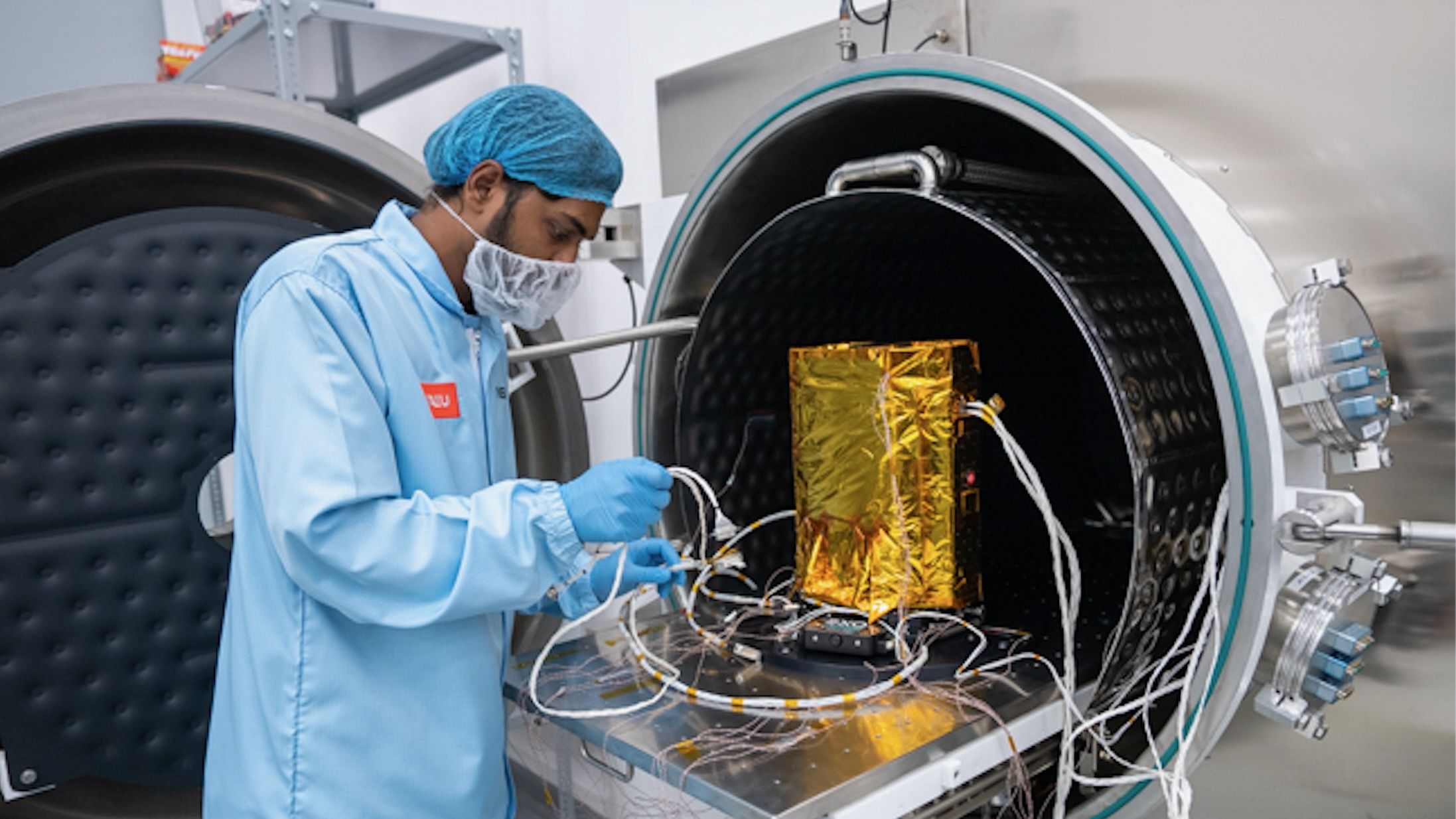
The United Arab Emirates has just revealed the centerpiece of its ambitious seven‑asteroid exploration program: a compact, solar‑powered lander that will touch down on a distant space rock in 2028. The target, a primitive asteroid thought to contain water‑bearing minerals and ancient organic compounds, could act like a time capsule, preserving the raw ingredients that formed the early Solar System.
During a lively press briefing, Elias Tsoutsanis, chief researcher at the Mohammed bin Rashid Space Centre’s propulsion and space‑research hub, emphasized the mission’s exploratory spirit: “We don’t know what we’re going to find—that’s exploration. We’re really excited.” The lander, equipped with high‑resolution cameras, spectrometers, and a drill capable of extracting subsurface samples, will map the asteroid’s surface, analyze its chemistry, and send data back to Earth.
Scientists hope the findings will shed light on how water and organic material were distributed as planets coalesced, offering clues about the origins of life‑building blocks. If successful, the mission could pave the way for future resource‑utilization projects and deepen humanity’s understanding of our cosmic neighborhood. The launch, slated for late 2028, marks a bold step for the UAE’s growing space program and for international asteroid research.
Read more

Fusion Startup Type One Energy Secures $200 Million to Power Up First Plant by 2034
Knoxville‑based Type One Energy, a fusion‑power startup founded in 2019, announced a $200 million Series B round that puts it on track to build a 400‑megawatt commercial fusion plant by 2034. Rather than building every component in‑house, the company is acting as an "integrator" – it designs the reactor and then taps a hand‑picked network of specialist suppliers to fabricate the parts. This approach, CEO Christofer Mowry says, slashes the capital needed compared with traditional, vertically‑integrated nuclear firms. The new funding will cover roughly half the cost of the first plant, which will be erected on the Tennessee Valley Authority’s Bull Run site. Infrastructure firm AECOM is handling engineering for the project, dubbed Infinity Two, while Type One will use high‑temperature superconducting magnets licensed from rival Commonwealth Fusion Systems as the reactor’s core. By leaning on external partners, Type One hopes to avoid the heavy overhead of owning factories and instead focus on assembling a working fusion power plant faster and cheaper than its competitors.
Read more
Germany’s New Climate Playbook: LOCC‑GER Maps Local Policies for a Greener Future
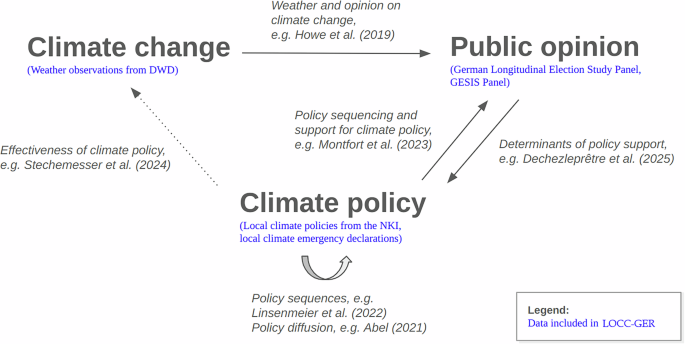
Researchers have launched LOCC‑GER, a groundbreaking, openly accessible database that pins down every local climate‑related policy across Germany on a map. By linking each ordinance, incentive, or sustainability plan to its exact municipality, the platform lets scientists, policymakers, and citizens see how climate action varies from city to city and region to region. The team compiled thousands of documents—from renewable‑energy subsidies in small towns to ambitious emissions‑reduction targets in major cities—standardising them into a single, searchable format. Users can filter by policy type, date, or geographic area, making it easy to spot trends, identify best practices, and spot gaps where more action is needed. LOCC‑GER also includes metadata on policy effectiveness, funding levels, and stakeholder involvement, offering a rare glimpse into what works on the ground. By turning scattered local decisions into a coherent, visual dataset, the database aims to accelerate Germany’s climate goals, support evidence‑based planning, and inspire other nations to adopt similar tools. The open‑access nature of LOCC‑GER ensures that researchers worldwide can build on the data, fostering collaboration and accelerating the transition to a low‑carbon future.
Read more
Scientists Move a One‑Centimeter Object Using Quantum Spin – First Time Ever!
In a breakthrough that blurs the line between the quantum realm and everyday objects, a team of physicists has for the first time nudged a centimeter‑sized piece of material using the tiniest of forces—quantum spins. While scientists have long been able to levitate tiny particles with laser beams or magnetic fields, scaling those tricks up to objects you could hold in your hand has proved stubbornly difficult. The researchers turned the problem on its head: instead of trying to shrink a big object, they started with a small, diamond‑embedded slab and used diamagnetic levitation— the same principle that lets maglev trains hover—to keep it afloat against gravity. Once suspended, they applied a carefully tuned quantum spin torque, a subtle twist generated by the spins of electrons inside the material. The result? The slab shifted a measurable distance, confirming that quantum‑level forces can influence objects visible to the naked eye. This experiment not only demonstrates a new way to control macroscopic objects with quantum mechanics, it also opens doors to ultra‑precise sensors, friction‑free transport mechanisms, and novel computing components that harness quantum motion on a human scale.
Read more
Decoding Antarctica’s Frozen Past: How Animal DNA Reveals Ancient Ice Sheets
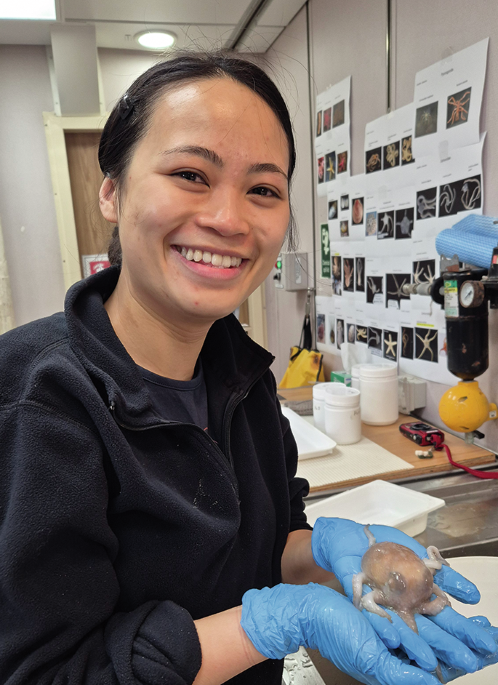
Scientists are turning to an unlikely source to piece together the history of Antarctica’s massive ice sheet: the DNA of the animals that call the continent home. By analyzing the genetic material preserved in the genomes of penguins, seals, and even tiny microbes, researchers can infer how climate conditions have shifted over thousands of years. Certain genetic changes act like time stamps, indicating periods when the ice was thicker, thinner, or when the coastline moved. This innovative approach complements traditional ice-core and geological studies, offering a living record that fills gaps in our understanding of past ice dynamics. The team behind the study mapped these genetic clues against known climate events, revealing surprising patterns of ice expansion and retreat that challenge existing models. Their findings suggest that the East Antarctic Ice Sheet has experienced more dramatic fluctuations than previously thought, with implications for predicting future sea‑level rise. By harnessing the power of animal genomes, the research opens a new window into Earth’s climate history, showing that even the smallest creatures can tell big stories about our planet’s icy past.
Read more
Why America’s Chip Industry Is at Risk – A New Report Reveals Hidden Supply‑Chain Weaknesses
A fresh study from the U.S. Semiconductor Industry Association (SIA) warns that the nation’s chip sector – the backbone of everything from smartphones and AI servers to cars and defense gear – is vulnerable because its supply chain stretches across the globe. While about 95 % of the $27 billion worth of equipment and materials used by U.S. fabs comes from firms in the United States, Europe and Japan, the actual production of those inputs is scattered worldwide, creating hidden choke points.
The report maps out the multi‑tiered network of raw materials, chemicals and sub‑components that feed chip factories and shows how disruptions in lower‑tier suppliers – such as rare‑earth minerals or specialized chemicals – can ripple up and stall entire production lines. It calls for a mix of short‑term and long‑term actions: building domestic capacity for the most critical inputs, creating strategic reserves, and forging stronger supply‑chain ties with trusted allies. It also urges the government and industry to boost R&D in materials science and recycling to lessen reliance on fragile overseas sources.
By coordinating policy, investment and international cooperation, the SIA believes the U.S. can shore up its chip supply chain, reduce strategic dependencies, and keep its leadership in the fast‑growing semiconductor market.
Read more
How AI and Quantum Computers Are Teaming Up to Revolutionize Healthcare
Artificial intelligence is already reshaping hospitals – it speeds up paperwork, reads medical images, and helps doctors triage patients. Yet AI still hits a wall when it needs to model the tiniest quantum‑level interactions that drive disease. That’s where quantum computers step in. By simulating molecules with unprecedented accuracy, quantum machines can predict how drugs bind to proteins, spot early disease signals, and keep health data ultra‑secure.
Recent breakthroughs illustrate the power of the partnership. IBM, the Cleveland Clinic and Japan’s RIKEN used a hybrid quantum‑classical supercomputer to model a protein‑ligand complex containing more than 12,000 atoms – a record‑breaking feat that could fast‑track new medicines. Meanwhile, Moderna teamed with IBM’s third‑generation quantum processor “Condor” to predict the folding of 60‑nucleotide mRNA strands, a key step for vaccine design.
When AI’s pattern‑recognition meets quantum’s precise simulation, the result is a faster, more personalized health system: AI‑driven tools streamline hospital logistics, while quantum‑enhanced models help discover tailored therapies and biomarkers. Together they promise earlier diagnoses, smarter drug design, and a resilient, secure digital backbone for the future of medicine.
Read more

China’s Science Sprint: From New Atomic Discoveries to AI‑Driven Cells, the Drive to Own Tomorrow’s Tech
China is turbo‑charging its basic scientific research to become a world‑class tech powerhouse, a priority highlighted repeatedly by President Xi Jinping. In the first year of the 15th Five‑Year Plan, the nation rolled out a series of high‑impact projects aimed at solving fundamental scientific puzzles and turning them into economic engines. Highlights include a newly operational high‑intensity heavy‑ion accelerator that uncovered a fresh element, Hafnium‑153, and a collaborative effort that confirmed the existence of the elusive "glueball" particle, solving a half‑century‑old physics mystery. Chinese engineers also built the world’s strongest 35.6‑tesla superconducting magnet, a breakthrough that will boost next‑generation MRI machines, while a cross‑disciplinary team succeeded in creating artificial cells with split functions, opening a new frontier in bio‑manufacturing.
These breakthroughs are feeding into strategic sectors such as 6G communications, new‑energy vehicles, advanced photovoltaics, and high‑speed rail, reinforcing China’s goal of high‑level technological self‑reliance by 2035. Coordinated policies across ministries, the National Natural Science Foundation, and the Chinese Academy of Sciences are streamlining talent development, funding, and inter‑regional collaboration to close gaps in long‑term basic research. The message is clear: solid scientific foundations are the launchpad for the skyscrapers of future industry, and China is building that foundation faster than ever.
Read more
How Digital Twin Cities Work: A Simple 5‑Step Blueprint and a First‑Look Prototype
Imagine a living, breathing replica of a city that updates itself in real time and helps officials make smarter decisions. That’s the promise of a Digital Twin City, and it can be built using a clear five‑layer framework.
1️⃣ **Perception & Acquisition** – Sensors, drones, buses and existing city systems feed raw data (traffic flow, air quality, building health) into the twin. Fixed sensors give steady, high‑quality streams, while mobile devices broaden coverage.
2️⃣ **Data Fusion & Governance** – All that data is cleaned, synchronized and stored in a unified City Information Model (CIM). Real‑time pipelines (Kafka, Flink) handle live streams, while batch jobs keep historical records. Version tags and timestamps keep everything consistent.
3️⃣ **Model Construction & Simulation** – Separate 3‑D geometry (what the city looks like) from semantic data (what each object is and how it behaves). This lets developers swap rendering engines or update attributes without rebuilding the whole model. Simulation engines then run “what‑if” scenarios, from traffic rerouting to emergency response.
4️⃣ **Twin Interaction & Visualization** – Users explore the virtual city via web or VR dashboards, seeing live sensor feeds, alerts and predictive analytics.
5️⃣ **Application Service & Decision** – The twin feeds insights to city managers, who can issue commands that flow back to the physical world—adjusting traffic lights, dispatching crews, or optimizing energy use.
Putting these layers together into a minimum viable prototype shows how a digital twin can turn messy city data into a powerful decision‑making tool, improving safety, efficiency, and quality of life for residents.
Read more