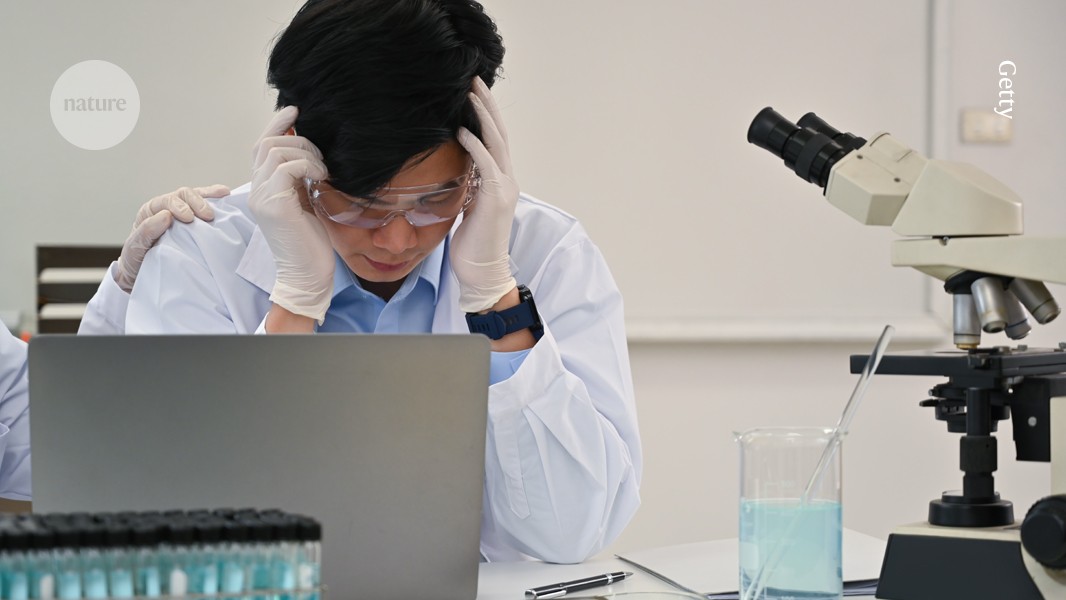
Researchers Fear AI Could Steal Their Discoveries – A Looming Science Crisis

Researchers Fear AI Could Steal Their Discoveries – A Looming Science Crisis

Two weeks after Anthropic announced that its Claude AI agents had spotted a viral DNA pattern that mirrors the repeats used in CRISPR gene‑editing, a Copenhagen PhD student raised the alarm. Mario Rodríguez Mestre, who has been studying those same DNA motifs for years—often with Claude’s help—has not yet published his findings. He worries that data his team fed into Anthropic’s tools may have silently entered the model’s training set, effectively giving the AI a shortcut to a discovery he was still working on. Anthropic insists its model isn’t trained on user transcripts, but the episode has sparked a broader trust crisis. Across the globe, auditory cognitive scientist Samuel Mehr at the University of Auckland is taking a hard line. He has drafted an AI‑use policy that bans students from uploading any protected information to commercial large language models and warns against relying on these tools for any part of the research workflow. “Handing out your intellectual property to an unknown third party is incredibly risky,” he says. The incident highlights a growing dilemma for scientists: while AI can accelerate breakthroughs, it also blurs the line between collaboration and appropriation, raising urgent questions about data ownership, credit, and the future of open research.

Read more

How Chatbot Networks Can Split Into Opposing Camps – New Study Reveals

A recent study published in *Nature Communications* shows that when large‑language‑model (LLM) agents interact in a network, they can spontaneously develop polarized groups, much like political factions in human societies. Researchers from Tsinghua University, the Beijing National Research Center for Information Science and Technology, and Tianjin University built a simulated community of LLM agents that exchanged opinions on a series of topics. By tweaking how often agents communicated and how much they trusted each other’s responses, the team observed the emergence of distinct clusters that consistently reinforced opposite viewpoints, even though the agents started with no built‑in biases. The findings suggest that the very mechanisms that make AI assistants useful—sharing information and learning from peers—can also lead to echo‑chamber effects if not carefully managed. The work was funded by China’s National Key Research and Development Program and the National Natural Science Foundation, which had no influence over the study design or conclusions. The authors argue that understanding these dynamics is crucial for designing safer, more balanced AI systems that interact with each other and with humans in the future.

Read more