When AI Updates Feel Like Breakups: Study Shows Mood Swings After Chatbot Changes
A new study reveals that sudden updates to AI companions can trigger emotional reactions similar to a breakup. Researchers examined nearly 55,000 public Reddit posts surrounding two real‑world changes: Replika’s abrupt removal of erotic role‑play in February 2023 and OpenAI’s pre‑announced rollout of GPT‑5 in August 2025. Using an AI tool to sort the posts, the team hand‑checked 350 of them for accuracy and then surveyed 1,452 people to gauge how they felt about losing or “changing” their digital friend.
The findings show that users who treat AI chatbots as friends or romantic partners experience heightened sadness, anxiety, and a sense of loss when the AI’s personality shifts without warning. These users were also more likely to mention mental‑health concerns. In contrast, updates that were rolled out gradually or that allowed users to keep access to older versions caused far less distress.
The researchers suggest that developers should consider giving users a heads‑up before major changes and offering the option to revert to previous versions. Doing so could soften the emotional impact and keep the relationship between people and their AI companions healthier and more enjoyable.
Read more

From Space to the Frontlines: How Satellites Expose War Crimes and Save Lives
For decades, scholars and human‑rights groups have tried to track wars by reading news stories and interviewing survivors. Those methods are valuable, but they leave blind spots—especially when governments block reporters or spin the narrative. A new study led by political scientist Valerie Sticher of the University of Zurich shows that satellites can fill those gaps.
By constantly snapping high‑resolution images of the Earth, satellites capture the physical footprints of conflict: burned villages, displaced populations, and the movement of troops. Because the data comes from orbit, it isn’t subject to the same censorship or bias that can affect media reports. In places like Myanmar, where journalists were barred from the most affected regions, satellite imagery was the first reliable source that alerted the world to ethnic‑cleansing operations.
The researchers built a massive, 40‑year database of war events and then layered it with automated satellite analysis. The result is a faster, more objective way to spot atrocities as they happen. Conflict expert Hannes Mueller notes that while authoritarian regimes can hide information on the ground, they can’t hide from the sky. This space‑based watchdog could give the international community a crucial early warning system, helping responders act before human suffering spirals out of control.
Read more

Rocket Lab Sends Secret Spy Satellite into Space – Who’s Behind It?
Rocket Lab’s Electron rocket lifted off on September 11, 2026, in a mission dubbed “Happily Ever Faster.” The 59‑foot launch vehicle carried a single, undisclosed commercial satellite into a 500‑kilometer low‑Earth orbit. While the customer’s identity remains under wraps, the company confirmed the payload is an Earth‑observing craft, and space‑watchers suspect it could be a BlackSky Gen‑3 satellite—known for its razor‑sharp imaging that can spot objects as small as 14 inches on the ground.
This was Rocket Lab’s 16th launch of the year and the 13th using the Electron platform, which specializes in delivering small satellites to space. The company also ran three HASTE sub‑orbital flights this year, testing customer hardware in hypersonic conditions. All 16 missions in 2026 have been successful, though Rocket Lab chose not to livestream this particular flight or reveal the buyer’s name, posting only a brief update on X about 80 minutes after liftoff.
The mystery has sparked speculation across the space community, with many pointing to BlackSky, a geospatial‑intelligence firm that frequently uses Rocket Lab’s services. As the satellite begins its orbit, it will likely start delivering high‑resolution imagery for its secret client, adding another chapter to the growing market for rapid, on‑demand space data.
Read more

SK Hynix Mulls Partnering with Intel to Build U.S. Memory Chips – A Boost for American AI Hardware
South Korean chip giant SK Hynix told TechCrunch that talks with Intel about making memory chips in the United States are still in the exploratory stage and no firm decisions have been made. The company, which has ridden a wave of demand for high‑bandwidth memory (HBM) used in AI data centers, is already investing $3.8 billion in an advanced‑packaging and research plant in West Lafayette, Indiana, slated to start mass production in 2029. That facility will package DRAM wafers sourced from Korea into HBM modules.
Recent reports suggest SK Hynix and Intel are weighing two main options for a U.S. memory operation: leasing space at Intel’s upcoming Ohio fab or forming a joint venture that could also involve cloud‑service providers. Details on the exact type of RAM that might be produced in Ohio remain vague.
The talks come as the United States grapples with a global chip shortage and the Biden‑Trump administration pushes for more domestic semiconductor manufacturing. In January, the White House signaled it could raise tariffs on imported chips while offering relief to firms that invest locally. SK Group chairman Chey Tae‑won has publicly backed U.S. production, and the company recently listed American depository receipts on Nasdaq to broaden its investor base. While the partnership is not yet finalized, a U.S. memory plant could strengthen SK Hynix’s global competitiveness and help close the supply gap for AI‑driven workloads.
Read more
Breakthrough Cancer Vaccine Shows Promise: How Personalized Shots Train the Immune System to Fight Tumors
A new personalized anti‑cancer vaccine created by Merck and Moderna has just cleared a pivotal Phase III trial, signaling a major step forward for tumor immunotherapy. Unlike traditional vaccines that prevent disease by teaching the immune system what a virus or bacterium looks like, this therapy is therapeutic—it trains the body to recognize and attack a patient’s own tumor. The process starts by extracting a sample of the tumor, sequencing its DNA, and identifying unique protein markers, or “fingerprints,” that distinguish the cancer cells. Scientists then craft a custom‑made vaccine that presents these fingerprints to the immune system, effectively issuing a personalized “wanted notice.” Once primed, T‑cells hunt down and destroy any remaining cancer cells that share the same markers.
Academician Zhang Zemin of the Chinese Academy of Sciences, who spent 16 years in biopharma before returning to academia, stresses that the true worth of research lies in moving discoveries from the lab to the clinic. He sees the vaccine’s success as proof that data‑driven, precision medicine can finally deliver real benefits to patients. While the breakthrough does not mean cancer is conquered, it offers hope that tailored immunotherapies could become a standard weapon against the disease.
Read more
China Pushes Small Nuclear Reactors Forward, Calls for Global Teamwork
At a special gathering in Vienna on Sept. 14, China used the platform of the International Atomic Energy Agency’s 70th General Conference to champion small modular reactors (SMRs) as a clean‑energy game changer. The side event, called “Gathering Strength for SMR Innovation, Co‑creating a Beautiful Nuclear Future,” brought together scientists, industry leaders and policymakers to discuss how these compact, factory‑built nuclear units could help the world cut carbon emissions while keeping power supplies reliable.
China’s nuclear chief, Shan Zhongde, said the country sees nuclear power as a key pillar of its new‑energy mix and a shortcut to reaching its 2030 carbon‑peak and 2060 carbon‑neutrality targets. He highlighted China’s full‑stack capability—from research and design to manufacturing and talent development—that makes it a pioneer in building and operating SMRs.
The Chinese delegation also unveiled a “Global Initiative for SMR Innovation Cooperation,” inviting other nations to share technology, set common standards and train specialists together. IAEA representative Huang Wei praised the proposal and pledged the agency’s support for any country that wants to join.
By pooling expertise and resources, the initiative aims to speed up SMR deployment worldwide, offering a flexible, low‑carbon power source that could power everything from remote villages to large cities, and play a vital role in the fight against climate change. China also pledged to use its extensive nuclear supply chain and research institutions to train the next generation of SMR engineers, and to work through multilateral forums such as the IAEA to harmonise safety standards worldwide. The move signals Beijing’s ambition to position itself as a leader in the next wave of clean‑energy technology, while offering developing nations a scalable option to meet growing electricity demand without adding to greenhouse‑gas emissions.
Read more
Quantum Leap: How a Cloud‑Based Quantum Computer Is Redefining Credit Risk Checks
Researchers at the Chinese Academy of Sciences and partner institutions have turned a quantum‑computing cloud service into a practical tool for banks. Using the Quafu quantum‑cloud platform, which links several types of quantum processors, they built the first “Quantum Finance Cloud Platform V1.0.” The system passed rigorous testing by China’s Software Testing Center and is now being trialed by major banks such as Huaxia Bank. Its most striking achievement is a hybrid quantum‑classical neural network that can evaluate a borrower’s credit risk with only a handful of data points—a task that normally requires large datasets. The experiment ran on the ScQ‑P21 superconducting processor housed in the ultra‑low‑temperature lab at the Comprehensive Extreme Conditions Experimental Facility. In addition to credit scoring, the platform demonstrated success in fraud detection, interest‑rate pricing, customer‑sentiment analysis and market‑news interpretation, often reaching accuracy scores above 0.94 with just a few hundred training examples. By offering a single login portal that lets financial firms tap superconducting, photonic and ion‑trap quantum machines, Quafu lowers the barrier for banks to experiment with quantum algorithms. The project has already generated four patent filings, six software copyrights and more than a dozen research papers, and pilot programs are underway at several fintech companies. This breakthrough shows quantum computers moving from the lab into real‑world finance.
Read more
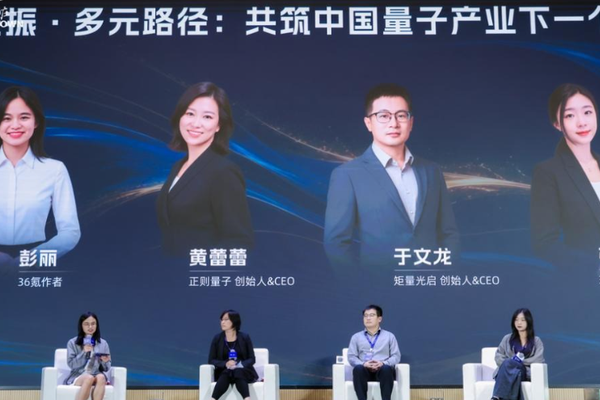
China’s Quantum Leap: Industry Leaders Map the Next Decade at 2026 Future Conference
At the 2026 Industrial Future Conference in Beijing, top executives from China’s emerging quantum‑computing firms gathered for a lively roundtable titled “Quantum‑Intelligence Resonance.” The three speakers—Huang Leilei of Zhengze Quantum, Yu Wenlong of Juliang Guangqi, and Gong Chao of Boson Quantum—each explained the strengths of their chosen technology paths: photonic chips that work at room temperature, superconducting processors that are moving quickly toward commercial use, and a hybrid “coherent‑photonic” approach that solves problems by mimicking physical processes. All agreed that the industry is shifting from pure lab research to real‑world applications. Instead of counting qubits, the new yardstick for success will be how many concrete business problems a quantum system can solve faster or cheaper than classical computers. Companies are already fielding requests from manufacturers, finance firms, and logistics providers eager to test quantum‑enhanced solutions. The panel highlighted two key goals for the next three to five years: prove measurable efficiency gains in at least one vertical market, and build a repeatable, scalable model that can be rolled out across similar industries. The discussion underscored a growing confidence that China’s quantum sector is ready to move from theory to profit‑driving technology.
Read more
Inside China’s Premier Microbiology Hub: Cutting‑Edge Discoveries & Global Partnerships
The Institute of Microbiology at the Chinese Academy of Sciences is fast becoming a world‑wide hub for microbial research and data sharing. This year the institute’s International Cooperation Program for Microbial Big Data was officially recognized as a flagship initiative of the International Decade of Sciences for Sustainable Development, underscoring its role in linking scientists across borders to tackle pressing health and environmental challenges. In August 2026, a team of researchers unveiled a detailed structural and mechanistic atlas that maps how antibodies target the N‑terminal domain of SARS‑CoV‑2, revealing how the virus can dodge immune defenses. Just weeks earlier, in July 2026, another breakthrough showed that the CRISPR‑Cas system acts like a multi‑layered security network for bacteria, offering fresh insights into microbial immunity. Looking ahead, the institute will host a high‑profile seminar on “Unusual Enzyme Reactions in Natural Product Biosynthesis” led by Prof. Ikuro Abe on January 20, 2025, inviting experts to explore novel biochemical pathways. These initiatives highlight the institute’s commitment to pioneering science, fostering international collaboration, and translating complex microbiological findings into solutions for a sustainable future.
Read more