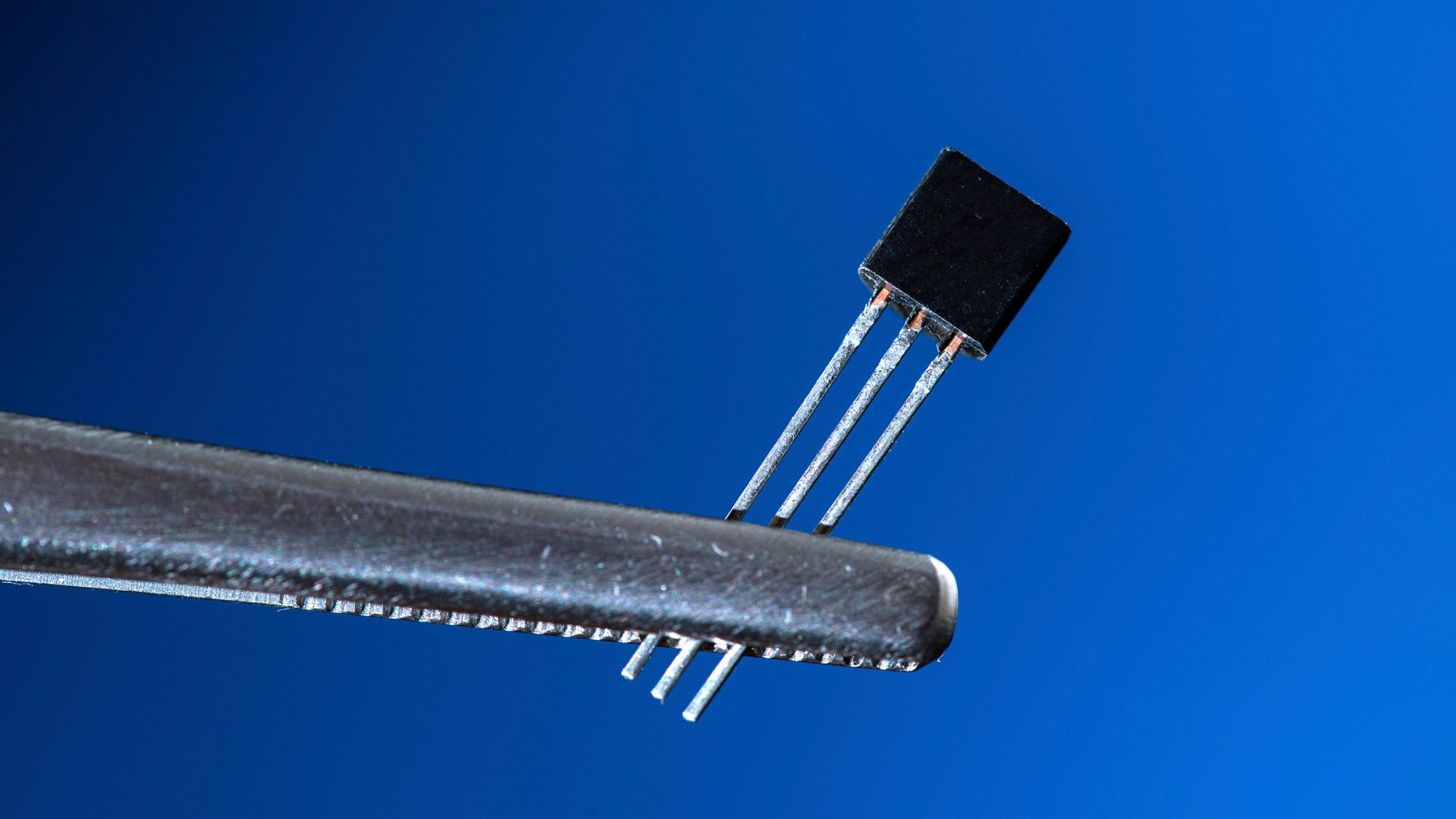
Tiny Titans: The Quest to Shrink Transistors to Their Limits
When you open a computer or smartphone, you’ll see a printed circuit board dotted with chips. Inside each chip lies a thin slice of silicon, and etched into that silicon are millions of microscopic switches called transistors. These tiny components turn electricity on and off, forming the building blocks of every digital device. For decades engineers have been squeezing more transistors onto a single chip, because more switches mean faster, more powerful computers. Today, the rise of artificial‑intelligence workloads has turned this into a high‑stakes race: manufacturers are pushing the size of each transistor down to the atomic scale. Researchers at places like Georgia Tech explain that the goal is to make transistors “as small as possible while we can still control the physics and keep it affordable.” As dimensions approach just a few nanometers—only a handful of atoms wide—quantum effects and heat become major hurdles. Yet the industry keeps innovating with new materials, 3‑D stacking, and exotic designs to keep Moore’s Law alive. The big question remains: will shrinking transistors forever deliver the performance boost we expect, or will we soon need a completely different computing paradigm?
Read more

OpenAI Says It Cracked the Navier‑Stokes Puzzle—Scientists Push Back
OpenAI has announced that an internal AI model has produced a solution to the legendary Navier‑Stokes problem, one of the seven unsolved Millennium Prize challenges. The claim sparked a heated debate in the mathematics community. Researchers Brian Buckmaster and his collaborator, Alpöge, say they discovered that OpenAI had been quietly monitoring their own work on the problem and then redirected massive resources toward it. Buckmaster alleges the company accessed their Codex logs without permission, though OpenAI maintains the model never “looked up user data.”
In a surprising offer, OpenAI reportedly suggested publishing a paper that credits the breakthrough to its AI while omitting Alpöge’s name. The company’s mathematician‑AI researcher, Sébastien Bubeck, told a press briefing that the effort began on Aug. 28, deploying more than 1,000 AI agents that collectively spent over 50 hours tackling the equations. By Sunday morning the team claimed to have a complete, Lean‑formalized proof—Lean being a language used to verify mathematical arguments.
Buckmaster, Alpöge, and rival AI lab Anthropic have not responded to requests for comment. The episode raises fresh questions about academic credit, data privacy, and the role of AI in solving some of the world’s toughest scientific riddles.
Read more

AI Startup Nscale Hunts $3.5 B to Power Lightning‑Fast IPO
British AI‑infrastructure firm Nscale, barely two years old, is gearing up for a public debut as early as this month. To fuel that push, the company is in talks to pull in a massive $3.5 billion before it even hits the stock market. The plan splits into two parts: about $1.5 billion will come from convertible notes – essentially a loan that can later turn into shares – and another $2 billion is expected from a fresh financing deal with chip‑giant Nvidia.
Nvidia isn’t a stranger to Nscale. It joined the startup’s Series B round in March, a $1.1 billion raise led by investment fund Aker that Nscale proudly billed as the biggest Series B ever in Europe. The earlier Series A, closed in December 2024, brought in $155 million to get the company off the ground.
The cash haul would give Nscale the runway to expand its data‑center capacity, attract more AI developers, and lock in a spot on a public exchange before the AI‑compute market heats up even further. In short, Nscale is betting big on a fast‑track IPO, and it’s looking for heavyweight investors to back the gamble.
Read more

Google Secures $1.9 B Federal Loan to Revive Iowa Nuclear Plant for AI Data Centers
The U.S. Department of Energy has approved a $1.9 billion loan to help bring the dormant Duane Arnold Energy Center back online, a move that could reshape how tech giants power their AI workloads. Deputy Secretary of Energy James Danly said the plant’s restart, slated for 2029, is expected to push electricity prices down, though he offered no specifics on the cost‑saving mechanism.
Google, which plans to build up to six new data centers near the former nuclear site, sees the revived plant as a reliable, low‑carbon power source for its rapidly expanding AI infrastructure. The plant will allocate about 50 megawatts to the local cooperative, NextEra’s NextEra Energy, covering roughly 18 % of Iowa’s electricity demand growth since 2021—the year ChatGPT debuted.
Duane Arnold stopped operating in 2020 after a severe rainstorm caused damage, and its owner, NextEra Energy, chose to mothball the facility rather than repair it amid a flood of cheap natural‑gas power. The fresh loan marks the second sizable federal financing for nuclear revival, following a $1 billion loan to Constellation Energy for the Three Mile Island reactor. Both deals signal bipartisan confidence that modernized nuclear plants can supply the clean, steady energy tech companies need as AI and data‑intensive applications continue to surge.
Read more
AI Uncovers Thousands of Rare ‘Hot Subdwarf’ Stars in Gaia Survey
A multinational team of astronomers has harnessed artificial intelligence to sift through the massive Gaia Data Release 4 catalog, pinpointing thousands of elusive hot subdwarf stars that were previously hidden among millions of celestial objects. Led by Professor Ana Ulla of the University of Vigo—who has spent three decades studying these compact, high‑temperature stars—the project combined machine‑learning algorithms with traditional astrophysical expertise to flag the distinctive signatures of hot subdwarfs.
The researchers discovered that many of these stars are part of binary systems, where a close companion can dramatically alter a star’s evolution and ultimate fate. By mapping the binary relationships on a scale never before possible, the team hopes to answer long‑standing questions about how such stars shed their outer layers and become the stripped‑down cores we observe today.
Beyond the scientific breakthroughs, the initiative has served as a training ground for early‑career scientists across Europe and beyond, fostering collaboration between data engineers, theoreticians, and observers. The findings, published in September 2026, demonstrate how AI can accelerate the hunt for rare stellar objects, opening new windows onto the life cycles of stars and the complex dance of binary companionship that shapes our galaxy.
Read more
Nuclear Boom: Over 10 Stocks Hit Daily Limit as China Approves Massive New Power Projects
On August 3, China’s A‑share market saw an unprecedented rally in nuclear‑energy stocks. Within seconds of the opening bell, Libote and Zhongyan Dadi surged to their daily price caps, and more than ten related companies—including China Nuclear Engineering, Baili Electric, Jiangsu Shentong and Rongfa Nuclear Power—followed suit, all hitting the limit‑up ceiling.
The surge was sparked by a State Council decision announced at the July 31 executive meeting, which approved four new nuclear‑power projects covering eight new reactor units in Zhejiang, Guangdong, Liaoning and Shandong. The projects are estimated to require over 170 billion yuan in investment, injecting fresh capital into the entire nuclear supply chain.
Analysts say the approvals confirm China’s commitment to large‑scale, normalized nuclear construction under the 15th Five‑Year Plan, guaranteeing a steady flow of orders for equipment makers, engineering firms and power operators. With China already operating 59 reactors (about 62.5 GW) and aiming for 200 GW by 2040—roughly 10 % of the nation’s electricity mix—the country is set to become the world’s largest nuclear power producer before 2030.
The approved units will use the home‑grown Hualong One technology, now in its 2.0 version, which offers enhanced safety, modular construction and lower costs. With 10 Hualong One reactors already in commercial service and dozens more under construction, the sector’s medium‑to‑long‑term growth outlook is strong, promising higher earnings for operators and a boost to thousands of upstream suppliers.
Read more
Kaiyun’s Twin Smart Factories Win 2026 Demo Spot – AI and Digital Twins Lead China’s Factory Upgrade
China’s Ministry of Industry and Information Technology has announced the 2026 Smart Manufacturing Demonstration Factories, and Kaiyun Official Entrance Co., Ltd. made a splash by getting two of its plants on the list – a rare “dual‑factory” achievement. Unlike earlier selections that only highlighted robots replacing workers, the new list rewards factories that embed intelligence across the whole value chain – from research and development to production, supply‑chain management and after‑sales service.
Since 2022 Kaiyun has pursued a “digital‑first” strategy, earmarking a slice of its annual sales for smart‑factory upgrades, data infrastructure and industrial‑software R&D. The company has rolled out AI‑driven vision systems, digital‑twin simulations, intelligent scheduling, real‑time quality inspection and energy‑use analytics across its precision‑machining and flexible‑assembly lines.
By connecting machines to a unified data gateway, creating 3D virtual replicas of the shop floor, and training deep‑learning models to spot micron‑level defects before they happen, Kaiyun has shifted from post‑production checks to preventive action. The demonstration‑factory program signals that advanced, data‑rich manufacturing is no longer a luxury for only the biggest players; it can be a practical, cost‑effective upgrade for ordinary factories willing to adopt proven AI and digital‑twin tools.
Read more
How Fujian’s ‘Digital Province’ Is Paving the Way for a Smarter China
China’s push to become a fully digital nation is gaining real‑world momentum, and Fujian province is emerging as a showcase of what can be achieved. Since 2020 the province’s digital economy has jumped from about 2 trillion yuan to more than 3.4 trillion yuan, driven by a twin strategy: building home‑grown tech industries such as chips and artificial intelligence, while simultaneously digitising traditional sectors like agriculture, manufacturing and services. This blend of “digital industrialisation” and “industrial digitalisation” is boosting productivity and creating new, high‑quality jobs.
The government side is also transforming. A single online portal, “Min Zhengtong,” lets citizens handle many public services with a few clicks, turning data into a public‑service engine that reduces paperwork and speeds up decision‑making. In culture, Fujian is preserving ancient architecture, murals and crafts through 3‑D scanning and virtual tours, making heritage accessible to anyone with a smartphone.
Digital tools are also reaching remote mountain villages and islands, delivering tele‑medicine, online education and smart‑city services that improve everyday life. At the same time, the province is using data‑driven monitoring to cut pollution, manage forests and track carbon emissions, linking digital progress with green development. Looking ahead, China’s 15th Five‑Year Plan calls for even deeper data market reforms, stronger protection of privacy, and breakthroughs in core technologies, all aimed at turning the digital wave into a lasting engine for economic growth and social wellbeing.
Read more
China’s Chip‑Powered mRNA Cancer Vaccine: AI Meets Organ‑on‑Chip to Personalize Treatment
A joint team from Southeast University, Nanjing Drum Tower Hospital and Belun Biotechnology has unveiled a new way to make personalized cancer vaccines. While Western firms such as Moderna and Merck have just celebrated a Phase III success with a melanoma‑targeted mRNA vaccine, the Chinese researchers are tackling the far more common non‑small‑cell lung cancer (NSCLC). Their platform combines two cutting‑edge tools: artificial intelligence to sift through a patient’s tumor DNA and pinpoint up to 34 “neo‑antigens” that can trigger an immune response, and an organ‑on‑chip system that uses the patient’s own cells to create a tiny, lab‑grown immune organ. This chip lets scientists test the custom‑made mRNA vaccine in a human‑like environment before it ever reaches the patient, dramatically cutting the time needed for safety checks.
The process begins with whole‑exome and RNA sequencing of the removed tumor, feeds the data into deep‑learning models that predict the most promising antigen targets, then synthesizes a single mRNA strand wrapped in lipid nanoparticles. When re‑infused, the vaccine trains T‑cells to hunt residual cancer cells. Although still early‑stage, the approach promises a “one‑patient‑one‑drug” future, especially for lung cancer, which accounts for over a million new cases in China each year. If successful, it could reshape how personalized immunotherapies are developed worldwide.
Read more
AI Boom Fuels Chip Designers’ Surge: STAR Market Mid‑Year Highlights
On September 8, the STAR Market held a semi‑annual briefing for its chip‑design firms, drawing 29 listed companies such as Lianxin Micro, Hongwei Technology and Dongwei Semiconductor. Investors fired off nearly 200 questions about each firm’s business plans, AI projects and R&D progress.
The first half of 2026 has been a breakout period for semiconductors. Rapid growth in artificial‑intelligence computing, electric‑vehicle powertrains and data‑center demand has lifted sales across the board. According to Wind data, more than 80 % of the 74 STAR‑Market chip‑design companies reported higher revenue than a year ago, and roughly 70 % turned a profit. Yutai Micro, for example, posted a 46 % revenue jump to 324 million yuan, driven by strong orders from networking and automotive customers.
Companies highlighted AI‑related breakthroughs. Hongwei’s GaN 650 V chip cleared certification for AI data‑center power supplies and is moving toward volume production, while Dongwei is expanding into server‑power modules as data‑center construction accelerates. Lianxin disclosed two new product lines—AI‑server power chips and micro‑energy‑harvesting circuits—both heading toward commercial rollout.
R&D intensity remains high, with over half of the firms spending 20‑50 % of revenue on research. Lianxin’s R&D ratio sits at 23.75 %, and JieJieTe now offers more than 4,200 active product models, with another 5,000 in development. While AI sales still represent a modest slice of total revenue, executives say the sector’s long‑term upside is clear, though they caution that mass‑production timelines depend on customer adoption and technical validation.
Read more