
Australia’s Red Soil Could Power the Future – Hidden Hydrogen Generator Uncovered
Scientists from Edith Cowan University have uncovered a surprising source of clean energy buried in Australia’s iconic red soils. Their new study, published in the *International Journal of Hydrogen Energy*, shows that magnetite – a common iron‑oxide mineral – can produce hydrogen gas naturally when exposed to hot, water‑rich conditions deep underground. The key, researchers say, lies in the mineral’s crystal geometry, which controls how water and heat interact to split molecules and release hydrogen without any fossil fuels or electricity.
This “hydrothermal natural hydrogen” process works like a tiny, self‑sustaining power plant, turning the Earth’s heat into a fuel that can be captured and used for everything from fuel‑cell vehicles to grid‑scale electricity storage. Because magnetite is abundant in the red‑soil regions of Western Australia, the discovery opens the door to a massive, low‑cost hydrogen supply that could dramatically cut carbon emissions.
If scaled up, this technology could complement solar and wind, providing steady power even when the sun isn’t shining or the wind isn’t blowing. The researchers stress that further field tests are needed, but the findings hint at a game‑changing, earth‑derived energy source that could help meet global climate goals while tapping a resource that’s already under our feet.
Read more
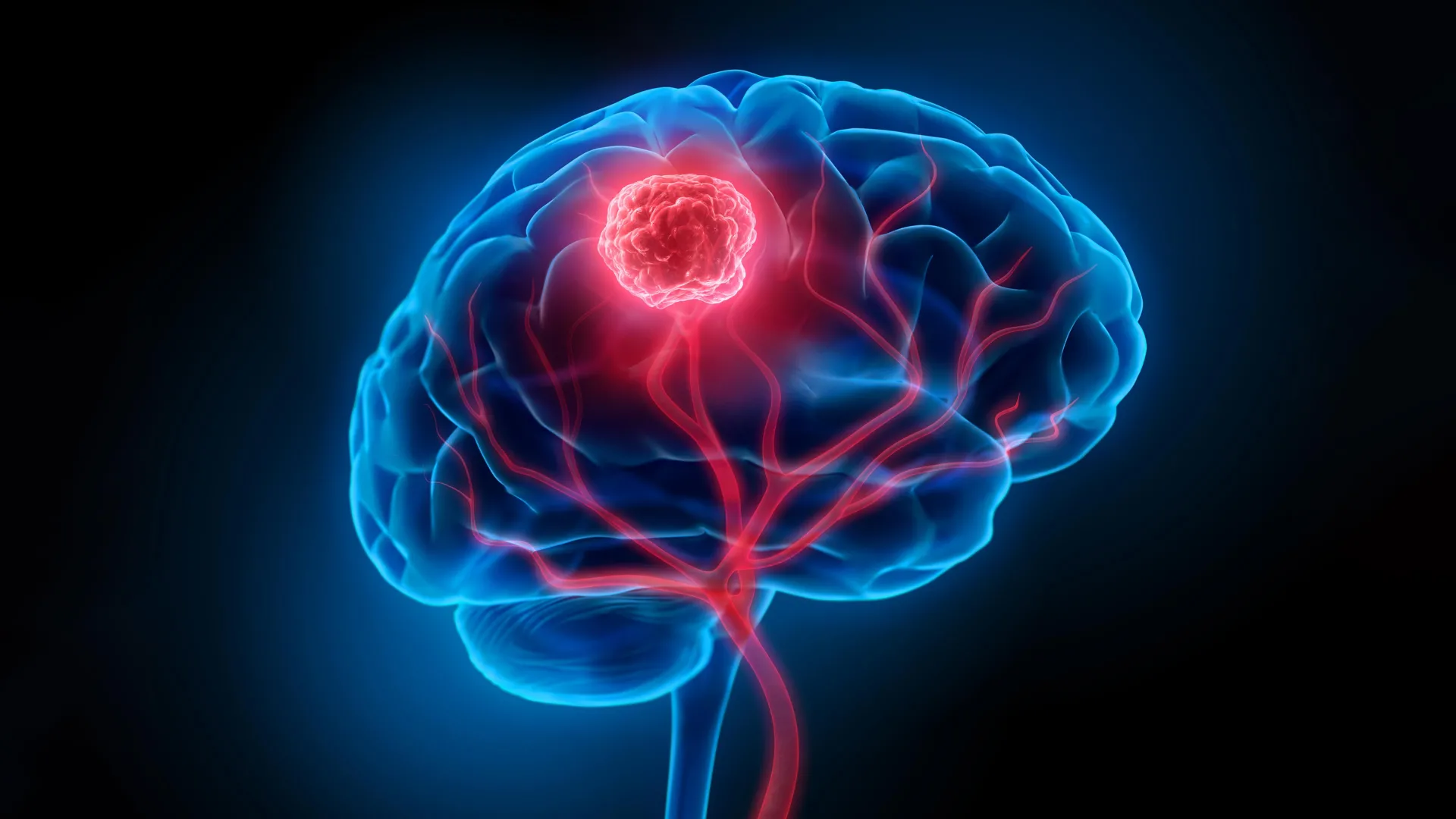
Glow‑In‑The‑Dark Nanoparticles Help Surgeons Spot and Zap Hidden Brain Tumors
Scientists at the University of Technology Sydney have engineered tiny, “smart” particles that act like a flashlight and a missile for brain cancer. When injected into mice with glioblastoma, the particles home in on cancer cells and glow under a special camera, letting surgeons see tumor spots that are usually invisible during an operation. After the surgeon removes the visible tumor, the same particles release a drug that kills any cancer cells left behind. In mouse experiments, this two‑step approach dramatically reduced tumor size and cut the chance of the cancer returning, a major hurdle for patients with this aggressive brain tumor. The researchers say the technology could eventually give surgeons a clearer view of the disease during surgery and provide an extra line of defense against hidden cancer cells, potentially improving survival rates. While the results are still in early‑stage animal testing, the team is hopeful that, after further safety studies, the glowing nanoparticles could become a powerful tool in the fight against glioblastoma.
Read more

Cyberattack Roundup: Top Threats & Headlines from TechCrunch (Page 13)
This week’s cyber‑security roundup reads like a thriller. The U.S. Justice Department has just indicted five members of the Chinese hacking outfit APT41 for a string of attacks on American firms, underscoring the growing geopolitical stakes of digital espionage. Meanwhile, a critical flaw in SonicWall’s cloud platform left corporate networks exposed, reminding businesses that even trusted security vendors can become attack vectors.
COVID‑19‑related scams continue to evolve, with cyber‑criminals exploiting pandemic fatigue to launch phishing and ransomware campaigns. In a surprising move, Cloudflare is donating its security suite to U.S. political campaigns, aiming to shield the electoral process from interference. Homeland Security has warned companies to brace for a wave of Iranian‑backed cyber assaults, while an Israeli venture capital firm highlighted the need for greater diversity and caution in cybersecurity investments.
U.S. experts conceded China’s lead in 5G infrastructure, calling for public funding to close the gap. A newly uncovered hacking group is zeroing in on energy and telecom operators, and Microsoft has alerted 10,000 victims of state‑sponsored intrusions. Additional threats emerged: a backdoor in Optergy could shut down smart buildings with a single click, a denial‑of‑service incident disrupted a U.S. energy provider, and the notorious Triton malware gang resurfaced. Finally, a UK report slammed Huawei for network‑security shortcomings, adding another layer to the global debate on tech trustworthiness.
Read more

Don’t Let AI Search Fool You: Why You Still Need Human Skepticism
AI‑powered web searches can feel like magic—type a question and watch a polished answer appear instantly. But that convenience can be dangerous. Unlike a traditional Google or Bing query, where you see a list of sources and decide which ones to trust, an AI chatbot often stitches together a single response and presents it with unwarranted confidence. If the internet has little or no reliable information on your topic, a classic search will show you a blank page or a handful of vague results. An AI, however, may pull fragments from its training data, fill in gaps, and deliver a seemingly authoritative answer that’s actually a hallucination. The key is to stay skeptical: double‑check facts, compare multiple sources, and remember that the AI is doing the heavy lifting for you, not the critical thinking. The article also notes that Ziff Davis, Popular Science’s parent company, sued OpenAI in 2025 over alleged copyright misuse in AI training—another reminder that the technology isn’t flawless. In short, enjoy the speed of AI, but never skip the habit of verifying the information yourself.
Read more
Xiaomi Unveils Three Cutting‑Edge Chips in One Blow, Aiming for Full‑Stack Tech Independence
On August 24, Xiaomi announced the simultaneous launch of three home‑grown processors that together cover smartphones, edge‑AI devices and autonomous‑driving systems. The lineup includes the Xuanjie O3, a 3 nm flagship SoC with 24 billion transistors that smashed the 5 million‑point benchmark on third‑party tests, delivering a 67 % performance jump over its predecessor. The Xuanjie O100 is a high‑bandwidth AI accelerator built with a world‑first wafer‑on‑wafer 6 nm stack, offering 3.5 GB of AI‑specific memory and a staggering 1.22 TB/s memory bandwidth—about 16 times faster than current smartphone LPDDR5X. Finally, the Xuanjie D100 targets intelligent‑driving applications, packing a 20‑core CPU, a 16‑core NPU and up to 160 GB of memory while consuming roughly 84 % of the power of comparable chips.
Xiaomi’s rapid progression—from the first 3 nm SoC in 2025 to three diverse chips in just over a year—highlights its growing design prowess and massive R&D push, backed by more than 21 billion yuan in investment and a team of over 3,000 engineers, most with advanced degrees. The move signals a broader push by Chinese tech firms to build a self‑reliant semiconductor ecosystem, reducing dependence on foreign suppliers and showcasing how domestic collaboration can accelerate innovation across the entire “human‑vehicle‑home” ecosystem.
Read more
Breakthroughs in “Artificial Sun” Fusion Power: Industry Teams Up to Overcome Key Hurdles
At the 2026 Fusion Energy Conference and Fusion Week, scientists announced that fusion devices around the world are finally reaching the dense‑plasma milestones that were once only theoretical. This shift marks the move from pure research to real‑world engineering and industrial‑scale projects. Yet three stubborn problems still block a commercial “Artificial Sun”: keeping the plasma burning on its own, finding materials that can survive the extreme environment for long periods, and mastering the tritium fuel‑cycle that powers the reaction.
To crack these challenges, companies across the entire supply chain are joining forces and pouring fresh capital into the field. A Chinese consortium led by China Fusion Energy Inc. has pledged to build the world’s first 25‑tesla high‑temperature superconducting magnet line by 2028, with a prototype ready before 2030. The news sparked a rally in related stocks such as Rongfa Nuclear Power, Zhefu Holding and Jiangsu Yongding, which all hit daily limits.
The State‑owned Assets Supervision and Administration Commission (SASAC) is also stepping in, launching a talent‑training program that blends fusion research with artificial‑intelligence tools. Meanwhile, start‑up Xinghuan Fusion closed a 500 million‑RMB financing round, bringing its total funding past 2 billion RMB to accelerate the construction of a Shanghai experimental base, a new tokamak device, and the mass production of fusion‑grade superconducting magnets.
Overall, the sector attracted 1.237 billion RMB of net institutional inflows in the past month, lifting the controllable nuclear‑fusion concept index by nearly 3 percent. The combined push of technology, talent and money suggests that the long‑awaited “Artificial Sun” may finally move from science‑fiction to everyday energy.
Read more
China’s Quantum Leap: Expert Says Breakthrough Computing Could Arrive Within 5 Years
China’s top quantum scientist, Academician Ding Hong, says the country is on the brink of a new computing revolution. Building on a century‑old “first quantum revolution” that gave us transistors and lasers, the “second quantum revolution” is now turning quantum quirks—like superposition and entanglement—into real‑world tools. Backed by strong government policies in the 15th Five‑Year Plan and a flood of venture capital, China’s quantum research has entered the world’s elite tier, especially in quantum communication. Ding predicts that within the next three to five years quantum computers will reach an “AlphaGo moment,” where they solve practical problems that classical machines can’t touch. These problems include designing new materials, discovering drugs, forecasting weather, and pricing complex financial assets. He stresses that quantum computers won’t replace everyday laptops; they’ll act as a “special‑forces unit” for tasks beyond classical reach, while still relying on traditional computers for routine work. Success, however, hinges on a supportive ecosystem—trained talent, diverse funding, and a smooth lab‑to‑company pipeline. Ding also warns that powerful quantum machines could break current encryption, underscoring the need for quantum‑safe security measures as the technology matures.
Read more
China’s ‘Huashan’ AI System Passes First Full Month in Space, Boosting Satellite Self‑Care
China’s aerospace researchers have hit a milestone: the AI‑driven health‑management module named “Huashan” has spent a full month operating aboard the Chenguang‑1 demonstration satellite and successfully completed all on‑board tests. Developed by Zhongke Tianta, the commercial arm of the Chinese Academy of Sciences’ Xi’an Institute of Optics and Precision Mechanics, Huashan is a vertical‑domain large‑model AI that can read telemetry data, spot anomalies, predict trends and even make autonomous decisions about a satellite’s health.
Unlike the traditional approach where ground stations train AI models and then only use them for inference in orbit, Huashan closes the loop in space. It gathers raw data, retrains its neural networks on‑board, issues risk warnings and assesses the satellite’s condition without needing to downlink massive data streams. This reduces the burden on limited space‑to‑ground bandwidth and speeds up response times.
During its month‑long trial, the system ran stable, completing training, evaluation and prediction tasks for several neural‑network architectures and delivering strong performance on key prediction metrics. Engineers say the success proves that satellites can move from “passive control” to “active defense,” a generational leap that could make future mega‑constellations cheaper and more reliable. The team plans to fine‑tune the algorithms and integrate the technology into larger satellite fleets, paving the way for smarter, self‑healing space assets.
Read more
AI Moves From Tool to Research Partner: How It’s Transforming Science
At a two‑day “Scientific Intelligence” conference in Beijing (Aug. 21‑22, 2026), the Chinese Academy of Sciences highlighted the rapid rise of AI‑driven scientific research, often called AI for Science (AI4S). A new “Panshi 100” model system was unveiled, showcasing how AI is shifting from a simple assistant that answers questions to an autonomous partner that can design experiments, crunch massive data sets, and even write up results. According to the AI for Science Innovation Atlas 2026, papers on AI4S have more than doubled in the last five years, with a 30 % yearly growth in fields like aerospace, quantum tech, and materials science. What used to take researchers months of literature hunting now takes a few hours, and calculations that once required days can be completed in seconds. Researchers such as Li Linjing of the Institute of Automation note that AI expands scientists’ vision, uncovers novel phenomena, and frees them from repetitive tasks. Nations are racing to embed AI in their research agendas: China’s “AI+” policy, the U.S. “Genesis Plan,” and the EU’s coordinated AI‑R&D strategy all aim to accelerate breakthroughs by pairing human insight with machine speed. The consensus is clear—AI is becoming a true research partner, reshaping how discoveries are made worldwide.
Read more