
Run Your Own AI Assistant at Home – A Simple, Low‑Cost Guide
If you’ve ever wished you could have a personal AI helper without paying hefty subscription fees, you can now set one up yourself. The guide walks you through using two free, open‑source tools—OpenClaw and Open WebUI—to host an AI agent on your own hardware or a cheap cloud server. While the software itself costs nothing, you’ll still need to pay for the underlying language model if you run it in the cloud; those charges are based on token usage and are typically a fraction of what fully managed AI platforms bill per task. The article breaks down the steps: install the tools, connect them to a cloud‑based model (or run a local model if you have the compute), configure your public display name, and start creating automated jobs. It also highlights the cost advantage: you only pay for the model’s API calls, avoiding the per‑job fees that managed services charge. Written by tech journalist Ritoban Mukherjee, the piece is aimed at non‑technical readers who want a hands‑on, budget‑friendly way to experiment with AI assistants in their own environment.
Read more

NASA Backs 18 Bold Ideas, Including a Swarm of 10,000 Mini‑Satellites to Saturn
NASA’s Innovative Advanced Concepts (NIAC) program has just awarded Phase I grants to 18 cutting‑edge projects, sharing a total of $3.2 million in development funds. The program’s goal is to nurture breakthrough technologies that could power the agency’s next generation of missions, from deep‑space exploration to new ways of traveling through the solar system.
Among the selected concepts is a daring proposal to launch a fleet of 10,000 ultra‑small “femtosats” toward Saturn. Each femtosat would be only a few centimeters across, yet together they could create a massive, low‑cost sensor network to study the planet’s rings, atmosphere, and magnetic environment in unprecedented detail.
Other funded ideas range from advanced propulsion systems and novel spacecraft materials to AI‑driven mission planning tools and innovative habitats for long‑duration stays on the Moon or Mars. By supporting these high‑risk, high‑reward studies, NASA hopes to spark the breakthroughs that will make future spaceflight faster, cheaper, and more capable.
The Phase I awards mark the first step in a multi‑year development path, giving researchers the resources to build prototypes, run simulations, and demonstrate feasibility. If any of these concepts prove successful, they could graduate to larger Phase II and Phase III programs, eventually becoming real hardware on upcoming NASA missions.
Read more

Global Team Cracks Deadly Blood Cancer: How East‑West Collaboration Won the 2026 Shaw Prize
The Shaw Prize, created in 2004 to honor Hong Kong philanthropist Run Run Shaw’s belief that science can unlock the universe’s secrets, has once again highlighted a breakthrough that could change cancer treatment. This year’s Life Science and Medicine award went to three researchers – Anne Dejean, Hugues de The and Zhu Chen – who joined forces across continents to tackle acute promyelocytic leukaemia (APL), a fast‑moving form of blood cancer.
Instead of relying solely on surgery, radiation or traditional chemotherapy, the team explored a concept called “differentiation therapy.” Inspired by ideas in Western literature and the philosophy of Traditional Chinese Medicine, they aimed to coax malignant cells to mature into harmless ones rather than simply killing them. By blending cutting‑edge molecular research from the West with the holistic, transformation‑focused thinking of TCM, they uncovered a new treatment pathway that has already given APL patients renewed hope and may pave the way for therapies against other cancers.
The laureates say their success proves that scientific breakthroughs thrive when borders disappear, and the Shaw Prize’s recognition underscores how collaborative innovation can improve health worldwide.
Read more
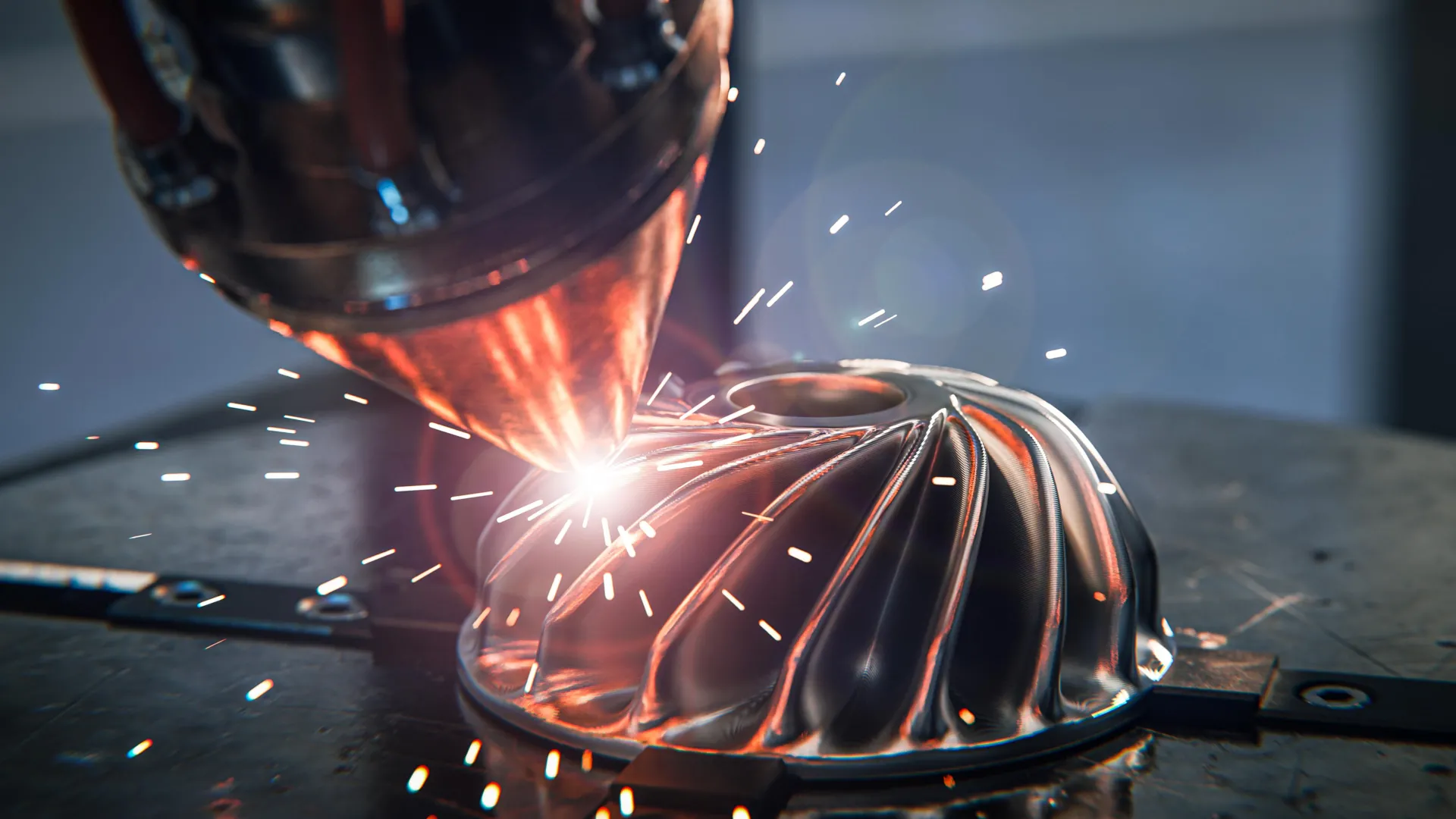
AI Cracks 100‑Million‑Try Puzzle, Slashes Cost of 3D‑Printing NASA Rocket Metal
A team of researchers at Washington State University has used artificial intelligence to dramatically simplify the way a high‑performance alloy used in NASA rockets is 3D‑printed. The alloy, known as GRCop‑42, is prized for its strength and heat‑resistance but has been notoriously expensive and difficult to produce because it normally requires specialized, high‑power printers.
Instead of manually testing countless printer settings, the AI system combed through more than 100 million possible combinations in a virtual “sandbox.” After just 40 real‑world experiments, the algorithm pinpointed six viable printing recipes, one of which succeeded at a record‑low power level of only 500 watts. This breakthrough means that the alloy can now be printed on far more common, lower‑cost equipment, opening the door to cheaper, faster production of rocket components.
The discovery not only cuts manufacturing expenses but also speeds up the development cycle for future space missions. By showing how AI can rapidly explore massive design spaces, the study highlights a new path for engineers to tackle other complex material‑processing challenges without the need for costly trial‑and‑error.
Read more
China’s New ‘Space‑Computer’ Constellation: Turning Satellites into Flying Super‑Servers
In May 2025 China will lift off the world’s first “space‑computing” satellite constellation, dubbed **Xingsuan** (Star Compute). The initial fleet of 12 microsatellites will each carry a compact, high‑performance computer and a laser‑link system that lets them talk to one another, turning the orbiting network into a floating data‑center.
Think of it as launching a laptop into the sky: instead of beaming raw sensor data down to Earth for processing, the satellite can crunch the numbers on‑board and send back only the results. This promises faster response times for applications such as Earth‑observation, autonomous navigation and real‑time disaster monitoring.
Why move computing to space? The sun provides endless clean power, and the frigid vacuum offers superb heat‑dissipation – two big advantages over ground‑based data centers that wrestle with electricity costs and cooling. Researchers even dream of linking many such satellites into a massive “space super‑computer” that could span kilometers and deliver virtually limitless processing power.
The challenges are equally daunting. Without air, heat must be radiated away through large surfaces, and high‑energy particles constantly bombard the hardware, threatening reliability. Overcoming these hurdles will be the key to turning the vision of a space‑based computing cloud into reality.
Read more
Chinese Researchers Boost Visible‑Light Laser Power to 3.2 W Using Gallium Nitride Crystals
A team from the Key Laboratory of Semiconductor Display Materials and Chips, part of the Suzhou Institute of Nano‑Tech and Nano‑Bionics (Chinese Academy of Sciences), has pushed the performance of gallium‑nitride (GaN) photonic‑crystal surface‑emitting lasers (PCSELs) to a new record. By fine‑tuning the crystal growth, photonic‑lattice design, and resonator size, they reduced optical losses and lowered the threshold current, enabling a room‑temperature, electrically injected device that emits a bright, single‑color beam at 430.5 nm with a peak output of 3.2 watts—three times the previous world best. The laser operates in a single‑mode regime up to 22 A, after which it shifts to multi‑mode. These visible‑light PCSELs promise breakthroughs in next‑generation displays, 3‑D printing, underwater and inter‑satellite communications, compact atomic clocks, deep‑space probes, and laser‑based medical tools. The findings were published in *Laser & Photonics Reviews* and were supported by several national research programs. This achievement marks China’s transition from the first electrically injected GaN PCSEL to watt‑level output, laying the groundwork for high‑power, compact visible‑light laser technologies.
Read more
China’s State‑Owned Giants Gear Up for 6G: New Tasks, Tech Breakthroughs and Supply‑Chain Goldmines
On August 24, the State‑owned Assets Supervision and Administration Commission (SASAC) held a high‑level meeting to launch a “6G future industry” plan for China’s central enterprises. The directive makes it clear that these state‑backed firms must lead the country’s push toward the next generation of mobile networks, slated for wide rollout around 2030.
Key take‑aways from the meeting include:
• Central enterprises are to align tightly with national, regional and industry roadmaps, fast‑tracking research on core 6G technologies and closing existing technical gaps.
• A major focus will be on “integrated sensing and communication” – a hallmark of 6G that blends ultra‑fast data links with radar‑like positioning and motion‑sensing on the same hardware and spectrum.
• To make this work, base‑station antennas will need a leap forward: moving from centimeter‑ and millimeter‑wave bands to terahertz frequencies, expanding bandwidth, and deploying dense massive‑MIMO arrays that can generate separate communication and sensing beams.
• The plan calls for building a secure, stable supply chain, strengthening innovation platforms, nurturing talent, and forging international partnerships to boost China’s global voice in 6G standards.
Analysts at CICC and Huaxi Securities say the integrated‑sensing capability opens fresh investment opportunities across the hardware, chip and antenna supply chain. The meeting therefore signals a strong push for both technological breakthroughs and commercial roll‑outs, positioning China’s state‑owned firms at the forefront of the 6G race.
Read more
China’s Power Grid Charts Bold Path to Green Energy Dominance
On August 14, the China Southern Power Grid (CSG) hosted its 2026 Energy Development Forum in Guangzhou under the theme “Smart Energy Convergence, Innovating the Future.” Experts unveiled a suite of new reports covering market reforms, investment trends, and regional renewable growth. Professor Jiang Xiaojuan highlighted China’s shift into a “native globalization” era, urging domestic firms to adopt global strategies while calling on the government to fine‑tune policies that enable cross‑border resource allocation.
Academician Li Ligen stressed that a true energy powerhouse will see wind and solar supplying more than half of total power, making the modern grid the backbone for conversion, transmission, and distribution. The forum also emphasized that energy transition is as much a systemic, regional‑cooperation challenge as a technical one, according to Mekong Institute Dean Su Layan Wichalakham.
Key takeaways from the released reports:
- In 2025, market‑based electricity trading hit 6.6 trillion kWh, covering 64 % of national consumption, with over 1.09 million participants.
- Green power trading surged 40.6 % year‑on‑year, while green‑certificate volumes doubled from 2024.
- The first market‑based DC transmission‑rights trade was completed, showcasing the value of scarce transmission corridors.
- Total power‑industry investment slipped 4.7 % to ¥1.73 trillion, but grid spending rose 5.1 % to ¥639.5 billion, driven by large‑scale wind, solar and UHV‑DC projects.
These developments signal China’s accelerating push toward a low‑carbon, high‑efficiency power system and set the stage for deeper domestic and international energy cooperation.
Read more
China Rolls Out New Rules to Boost Renewable Energy Use Across Industries
China’s top regulators have launched a set of “Implementation Measures” that force high‑energy‑consuming firms to use more renewable power and to tap non‑electric renewable sources such as heat, hydrogen, ammonia and methanol. The policy introduces two linked targets: a minimum share of renewable energy that designated users must consume, measured through green‑certificate trading for electricity and heat‑unit accounting for non‑electric uses; and a provincial‑level “absorption responsibility weight” that obliges each region to take in a set amount of renewable electricity. By tying consumption and absorption together, the rules aim to turn renewable power into a real demand driver rather than a paperwork exercise.
Officials say the new framework opens fresh pathways for industries like steel, which traditionally rely on coal‑based heat and fuel. Companies can now blend waste‑heat recovery with solar or wind boilers, replace gray hydrogen with green hydrogen in metallurgy, and use green ammonia or methanol as reducing agents or fuel. This multi‑channel approach eases peak‑generation pressure, creates stable demand for green fuels, and reduces the financial burden of buying certificates alone. While the measures are expected to accelerate China’s green‑hydrogen and green‑ammonia production, experts note that supporting mechanisms—such as financing and technology standards—still need to catch up.
Read more