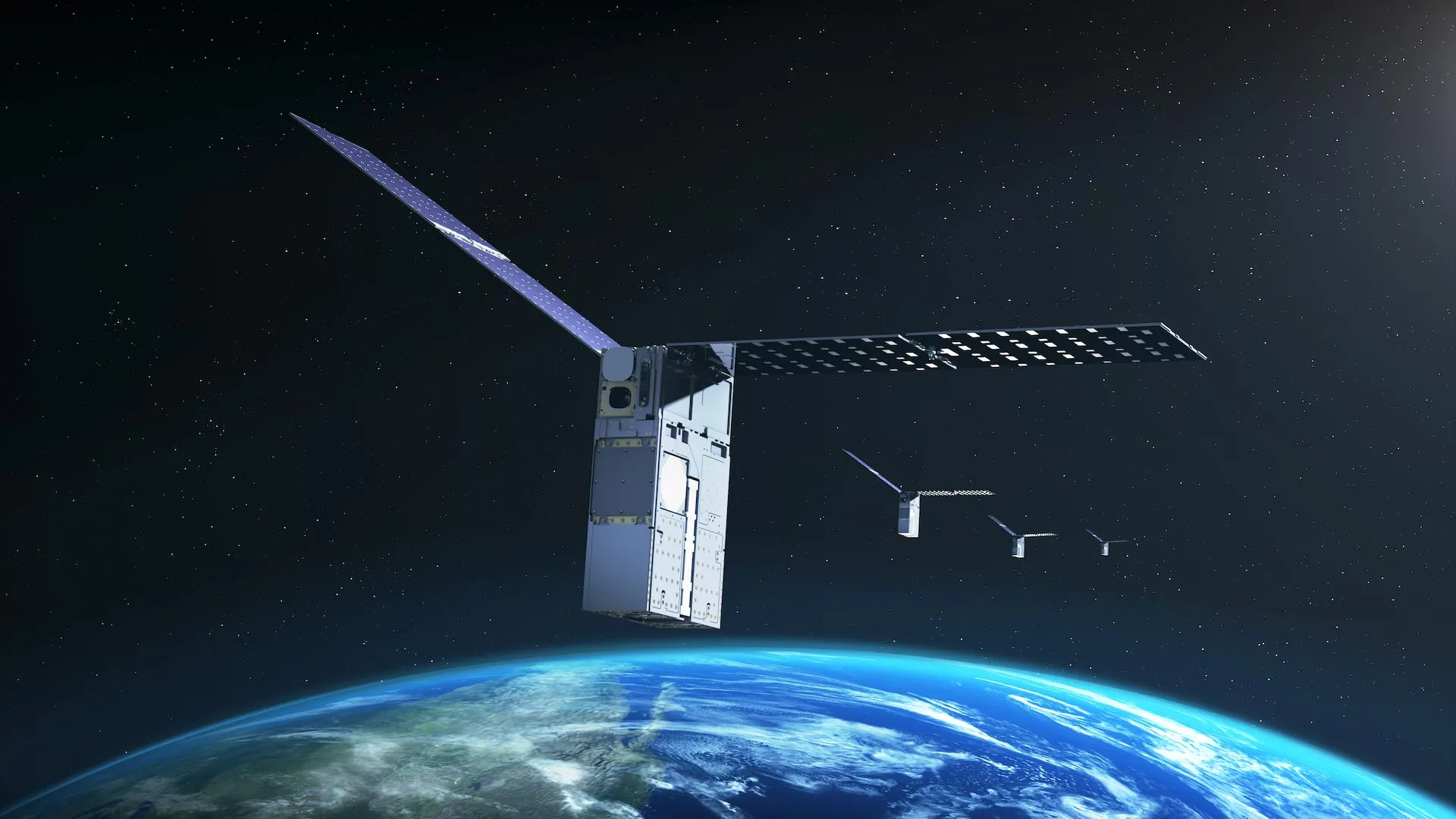
NASA’s GPS‑Free Space Navigation: Satellites Use Space Junk as Landmarks
NASA has pulled off a breakthrough that could change how we steer satellites. In a three‑day test, the agency’s FALCON experiment showed that a satellite can figure out its exact position without relying on GPS. Instead, it treats other orbiting objects—working spacecraft and even bits of debris—as reference points, much like a sailor uses distant islands to chart a course. By comparing the relative motion of more than 200 pieces of space junk, the system automatically updated their orbital data, sharpening the picture of what’s up there and helping avoid potential collisions.
The technology started as a university SmallSat partnership and has now been turned into a commercial product called Era‑Core, which provides the software and hardware needed for autonomous navigation. NASA’s Starling mission, launched in 2023, will take the experiment further later this year. Four Starling spacecraft will share tracking information with each other, creating a collaborative “crowd‑sourced” map of their positions that gets better with every observation.
If successful, this approach could cut our dependence on ground‑based tracking stations, speed up updates for space traffic management, and enable future missions that need precise, synchronized measurements across multiple satellites—all without a single GPS signal in sight.
Read more
Robot Minds Poised for a ‘ChatGPT‑Style’ Breakthrough by 2027, Says ACE Robotics CEO
ACE Robotics, a fast‑growing Chinese startup that builds humanoid robots, says its next generation of robot brains will experience a turning point comparable to the surge in popularity of ChatGPT. CEO Wang Xiaogang told Reuters that by the end of 2027 the company expects a "ChatGPT moment" for embodied intelligence, driven by advanced world‑model technology and massive real‑world data capture.
The firm’s open‑source Kairos‑4B model, with just four billion parameters, is already topping public benchmarks, beating larger rivals such as Nvidia’s Cosmos 3 and Ant Group’s Lingbot. Kairos‑4B blends perception, multi‑modal understanding, physical simulation and action planning, allowing robots to predict minutes‑long video sequences and plan complex movements.
ACE Robotics, founded in July 2025 and backed by Ant Group and SenseTime, has raised more than $100 million this year and is eyeing an IPO as soon as regulations permit. The company joins other players like Unitree and X Square, all racing to build better embodied AI models. However, CEOs acknowledge that gathering high‑quality, real‑world training data remains the biggest hurdle. If ACE’s timeline holds, we could see robots that think, learn and act with a fluidity that mirrors today’s conversational AI breakthroughs.
Read more
AI Breakthrough Reveals Hidden DNA Methylation Patterns, Paving Way for New Treatments
A team of researchers at the Leibniz Institute on Aging – Fritz Lipmann Institute in Jena has unveiled a powerful new artificial‑intelligence tool that can spot subtle, previously invisible changes in DNA methylation. Dubbed metilene3, the software uses advanced machine‑learning algorithms to automatically compare methylation data across dozens of experimental conditions and flag regions that differ significantly – the so‑called differentially methylated regions (DMRs).
In a paper published in *Nature Communications*, lead author Zhihan Zhu and colleagues demonstrate how metilene3 can sift through massive epigenomic datasets, classify patterns without human bias, and generate fresh hypotheses about how gene regulation is altered in aging, disease, or drug response.
"Our method opens up new possibilities for discovering hidden biological relationships and therapeutic approaches," says Steve Hoffmann, a senior scientist on the project.
By making the complex landscape of epigenetic marks easier to read, the tool could accelerate research into cancers, neurodegenerative disorders, and other conditions where DNA methylation plays a key role.
The authors stress that the software is openly available, inviting scientists worldwide to apply it to their own data and potentially uncover novel treatment targets.
With metilene3, the gap between raw sequencing data and actionable biomedical insight narrows, promising a future where precision medicine is guided by a deeper, AI‑enhanced understanding of our genome’s regulatory code.
Read more
Scientists Capture 3D Snapshots of Atoms, Uncover Surprising Shortcut to Crystal Growth
A team of physicists has taken the first three‑dimensional “pictures” of individual atoms as they come together to form a crystal, and the images reveal a surprising twist in the way matter organizes itself. Using cutting‑edge atomic‑scale tomography, the researchers watched tiny clusters of atoms—called nuclei—approach each other in a liquid. To their amazement, many of these nuclei were already almost perfectly aligned before they finally merged into a larger crystal seed.
“This alignment suggests the atoms are following a lower‑energy route, a kind of hidden shortcut that nature uses to build ordered structures more efficiently,” said lead scientist Miao. The discovery challenges the traditional view that crystals grow through random collisions and gradual adjustments. Instead, it points to a coordinated dance that could be harnessed to design stronger, lighter, or more conductive materials.
The implications stretch beyond pure science. Engineers could use this knowledge to fabricate better batteries, more resilient aerospace components, or ultra‑precise optical devices. By understanding the preferred pathways of atomic assembly, manufacturers may be able to steer the process, reducing waste and cutting production costs. The work opens a new chapter in materials research, showing that even at the smallest scales, nature often follows clever, energy‑saving routes that we are only beginning to uncover.
Read more
Spin Qubits: The Dark Horse Racing Toward Practical Quantum Computers
A multinational team of researchers—including scientists from the University of Science and Technology of China, Southern University of Science and Technology, the Chinese Academy of Sciences, and Origin Quantum—has pushed spin‑qubit technology to a new milestone. By using electric fields to steer electrons in silicon‑germanium quantum dots, they achieved spin‑flip speeds over 1.2 GHz, the fastest ever recorded for semiconductor quantum dots.
The breakthrough also came with a dramatic drop in noise: the team cut interference to one‑tenth of previous levels and swapped bulky copper wiring for thin, superconducting cable ribbons. This reduces heat and frees up space, a crucial step as future machines may need tens of thousands of qubits.
Spin qubits still lag behind superconducting and neutral‑atom platforms in sheer numbers—current prototypes host only a dozen or so qubits versus hundreds or thousands elsewhere—but they boast two key advantages. First, they can be built with existing silicon‑chip factories, promising cheaper mass production. Second, their coherence times can stretch to seconds, far longer than the millisecond lifespans of many competing qubits.
Error rates are falling fast: recent papers report single‑qubit error rates as low as 0.02 % for an 18‑qubit processor and 0.3 % for a 53‑qubit system. While still early‑stage, these gains suggest spin qubits could become the low‑error, scalable workhorse that finally makes practical quantum computers a reality.
Read more
Pioneering Green Power: Breakthroughs in Biomass, Ocean and Geothermal Energy at Guangzhou Institute
The Guangzhou Institute of Energy Conversion, a research hub of the Chinese Academy of Sciences, has set its sights on two bold, game‑changing goals. First, it aims to turn everyday plant waste—everything from agricultural residues to forestry leftovers—into high‑value fuels and chemicals, while also proving that small, community‑scale renewable energy systems can run independently and reliably. Imagine villages powering homes and farms with locally produced bio‑energy, cutting dependence on distant power plants.
Second, the institute is diving deep into the science of gas hydrates—ice‑like crystals that trap methane beneath the seafloor—and exploring how to safely harvest this hidden resource. At the same time, researchers are unlocking the massive, untapped power of the oceans and the Earth’s deep geothermal heat. By developing technologies that capture wave motion, tidal flows, and the steady warmth from deep underground, they hope to deliver clean, constant electricity to millions.
These parallel research tracks are not just academic exercises; they promise real‑world solutions for a greener, more resilient energy future. If successful, the breakthroughs could lower carbon emissions, create new jobs in renewable sectors, and give remote communities the energy independence they need to thrive.
Read more