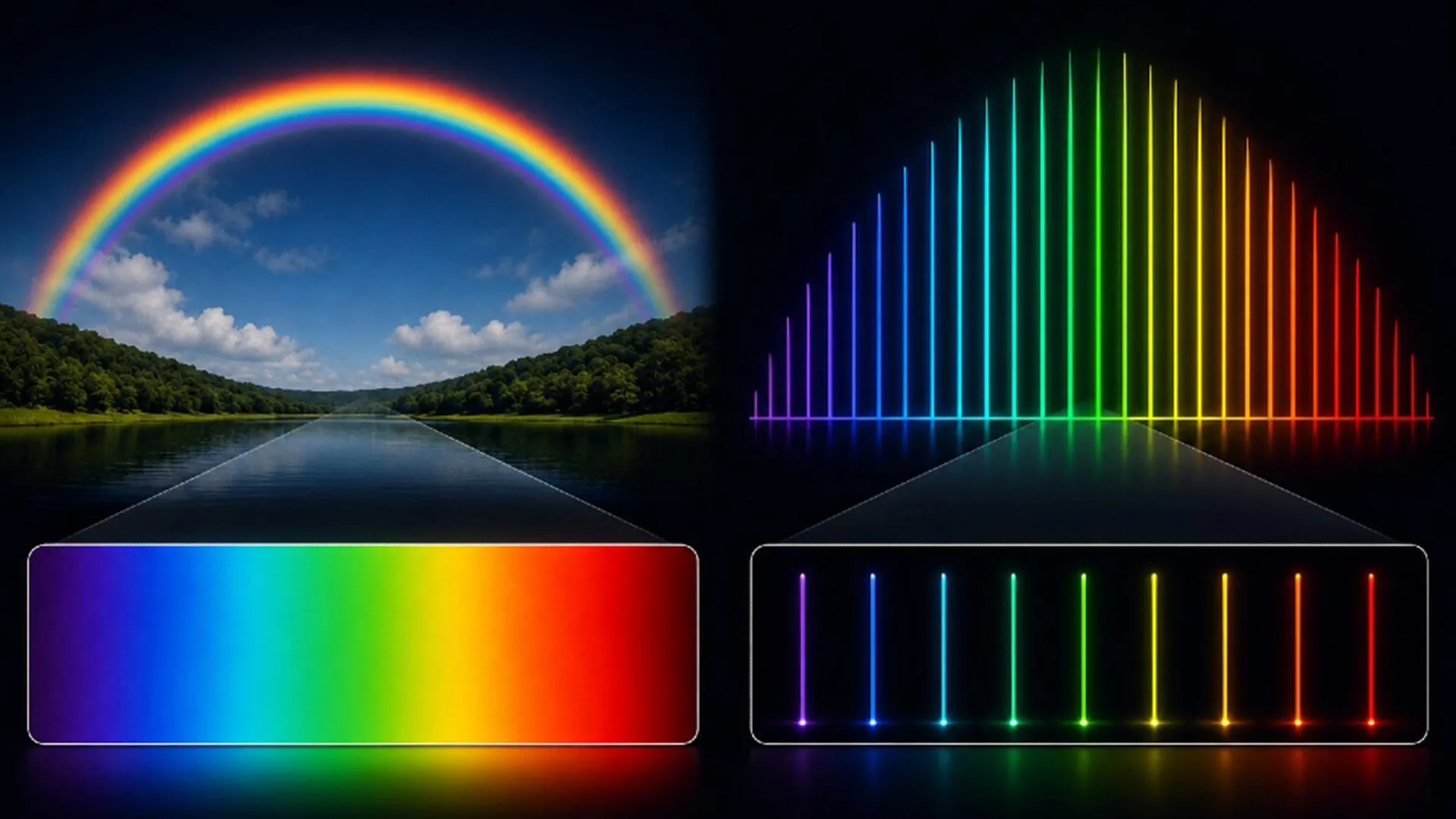
Rainbow Chip Promises Lightning‑Fast 6G Connections and More
Researchers at Loughborough University have unveiled a microscopic chip that emits a steady “rainbow” of light—multiple colors at precisely controlled frequencies—all from a single, tiny device. This multicolour light source can generate several high‑frequency signals at once, a capability that could dramatically increase the data‑carrying capacity and speed of future 6G wireless networks. By packing many channels onto one chip, network operators may be able to deliver ultra‑fast, low‑latency connections for everything from immersive virtual reality to autonomous‑vehicle communication. Beyond telecom, the chip’s extreme timing accuracy makes it a strong candidate for quantum‑clock applications, high‑precision navigation, advanced radar systems, and even space‑based technologies where weight and size are at a premium. The breakthrough relies on a specially engineered metasurface that manipulates light at the nanoscale, turning a flat slab of material into a versatile optical engine. While still in the laboratory stage, the team believes the technology could be integrated into commercial hardware within the next few years, potentially reshaping how we think about wireless communication and a host of other high‑tech fields.
Read more
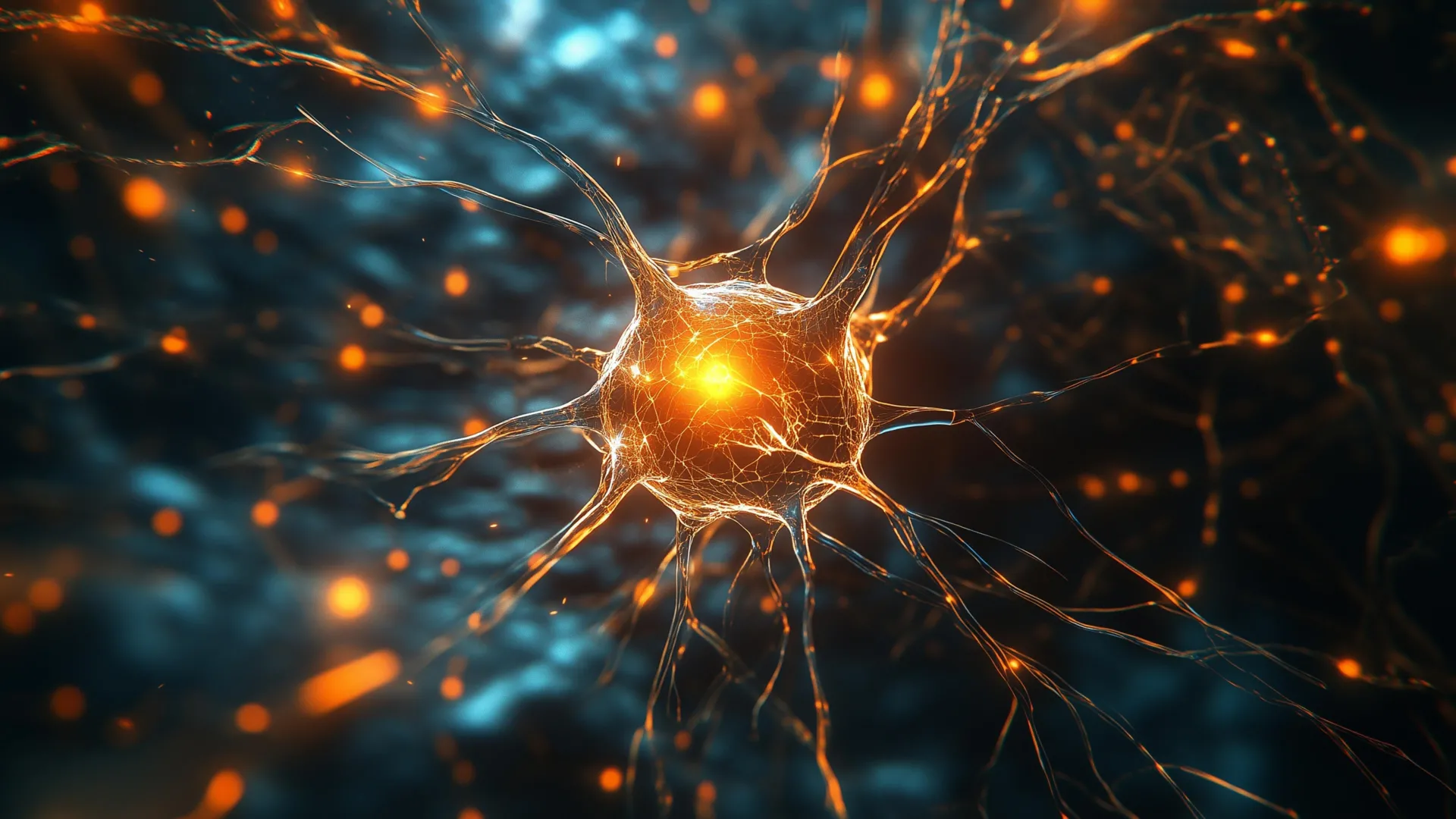
AI‑Crafted Tiny Antibodies Offer Hope for Alzheimer’s, Parkinson’s and ALS
Scientists at the University of Essex have used artificial intelligence to redesign ordinary antibody fragments, turning them into ultra‑small “intrabodies” that can operate inside human cells. By applying software created by Nobel laureate David Baker’s team, the researchers gave these fragments the right electrical charge and exceptional stability, allowing them to survive the harsh environment inside neurons. The breakthrough means that millions of antibodies generated over decades of research could be repurposed as powerful tools for studying, and eventually treating, brain‑degenerative diseases such as Alzheimer’s, Parkinson’s, Huntington’s and motor‑neuron disease (ALS). Instead of starting from scratch, existing antibodies can now be reshaped to target disease‑causing proteins directly within cells. Dr. Wright, who led the study, says this approach could dramatically speed up the search for new therapies that reach the heart of neurodegeneration. Experts see the work as a key step toward combining intrabody technology with emerging gene‑therapy methods, offering a realistic path to drugs that hit precise molecular targets inside neurons.
Read more
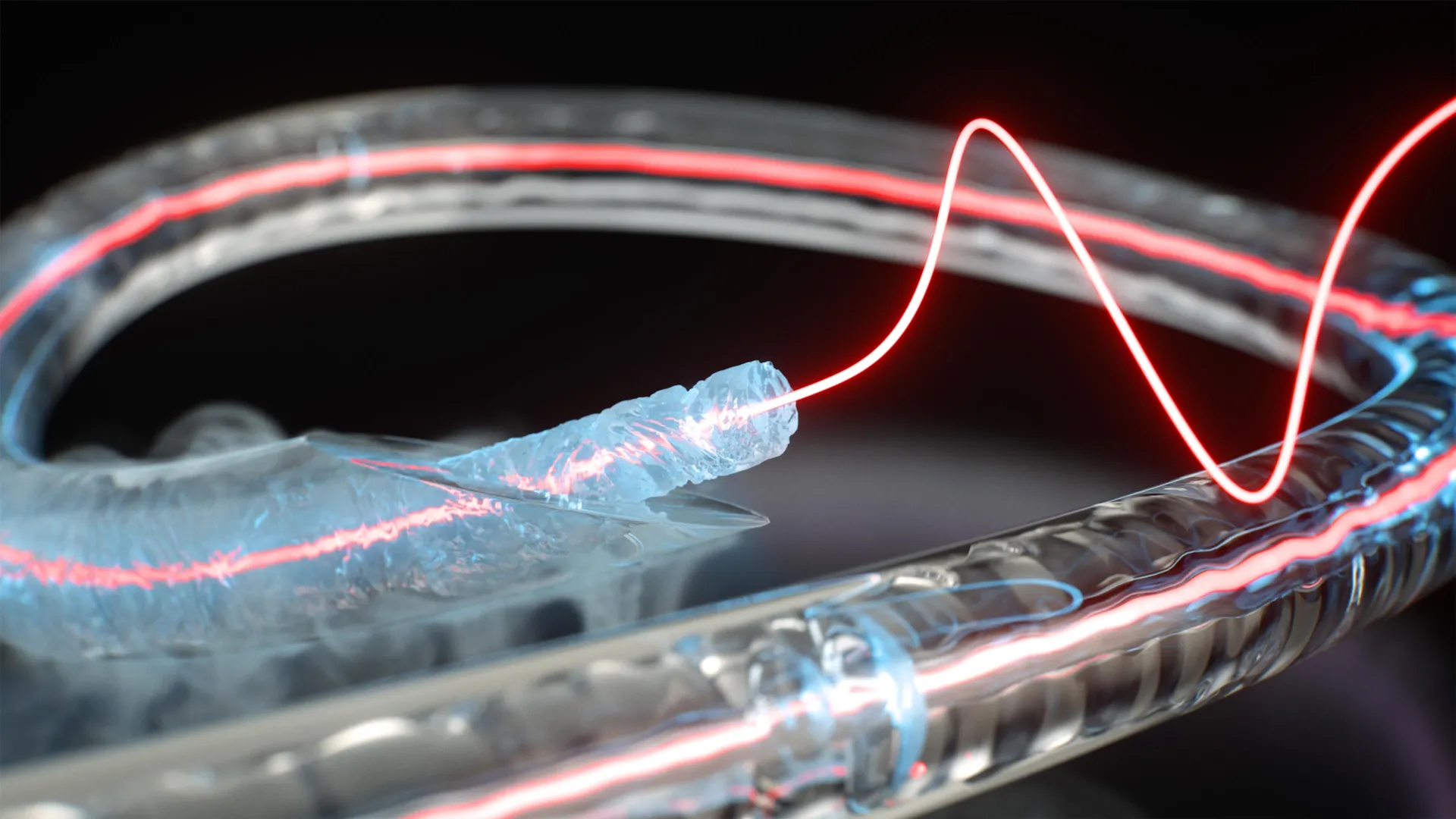
Frozen Fiber Supercharges Light‑Sound Interaction—1000× Boost Opens Door to Ultra‑Fast, Low‑Power Photonic Memory
Scientists at the Max Planck Institute for the Science of Light have discovered a surprisingly simple trick to make light and sound talk to each other far more intensely than ever before. By cooling the liquid core of a standard optical fiber until it turns into a solid, they created a “frozen fiber” in which the two waves become tightly coupled—over a thousand times stronger than in ordinary fibers. In this icy environment, a pulse of light can launch a tiny acoustic ripple, and that ripple can instantly reshape the light that follows. The team harnessed this effect to store a brief burst of information as an acoustic echo, demonstrating a new kind of opto‑acoustic memory that could be written and read with far less energy than current photonic devices. Because the interaction is so strong, the memory works at room‑temperature speeds while consuming only a fraction of the power needed for electronic chips. Researchers say the discovery could accelerate the development of ultra‑low‑energy photonic computers, improve signal processing in fiber‑optic networks, and even help build more robust quantum‑communication links. The frozen‑fiber technique is simple, inexpensive, and compatible with existing fiber‑optic infrastructure, making it a promising building block for the next generation of high‑speed, energy‑saving technologies.
Read more
How Star Power and Geometry Are Shaping the Future of Fusion Energy
Scientists are turning the secrets of the stars into a new kind of power plant on Earth. The upcoming NSTX‑U facility will serve as an international testbed where universities, national labs, and private companies can try out cutting‑edge materials and components inside a super‑hot plasma. What makes NSTX‑U special is its spherical tokamak design – a doughnut‑shaped magnetic chamber that mimics the way the Sun contains its own fusion fire. This geometry offers tighter magnetic fields and better stability, promising higher energy output with less material stress. Beyond hardware, researchers are building trusted artificial‑intelligence tools that can read the torrent of sensor data in real time, automatically adjusting magnetic fields to keep the plasma steady. The goal is to prove that these AI‑driven controls can keep a fusion reaction running safely and efficiently, paving the way for commercial power plants. The project brings together public and private partners, all eager to accelerate the transition from experimental reactors to reliable, carbon‑free electricity. If successful, the star‑like power of fusion could become a practical, everyday energy source, reshaping how we generate and use electricity worldwide.
Read more

Every Pill You Take Could Be Rewiring Your Gut—and the Changes May Last Years
A new Estonian Research Council study of more than 2,500 adults shows that everyday medicines can leave a lasting imprint on the gut’s microbial community. While antibiotics have long been known to disrupt gut bacteria, the researchers discovered that a wide range of other drugs—including antidepressants, beta‑blockers for heart conditions, acid‑reducing proton‑pump inhibitors, and even anti‑anxiety benzodiazepines—also shift the balance of microbes. Remarkably, many of these alterations were still measurable years after participants stopped taking the drugs. The findings suggest that a person’s medication history may be a hidden driver of their current gut health, potentially influencing digestion, immunity, and even mental well‑being. The study highlights the need for doctors to consider long‑term gut effects when prescribing common drugs and opens the door for future strategies to restore a healthy microbiome after medication use. In short, the pills we pop today could be reshaping the tiny ecosystem inside us for a long time to come.
Read more
Xiaomi Unveils Three New Chips, Paving a Home‑Grown Road for China’s Semiconductor Future
Xiaomi has announced the simultaneous launch of three new semiconductor chips, marking a bold step toward a more self‑reliant and diversified technology strategy. The move is being hailed as a benchmark for Chinese tech firms that want to build their own chip‑making capabilities rather than rely on foreign suppliers.
The three chips cover a range of applications, from high‑performance mobile processors to specialized AI accelerators. One of the mobile chips has already broken the 5‑million‑score barrier in benchmark tests, putting it on par with leading global offerings. Xiaomi also introduced a new vertical‑stacking protocol that it designed in‑house, allowing multiple layers of circuitry to be packed more tightly and efficiently.
Financially, the company says the new chip portfolio could boost its semiconductor‑related revenue from roughly 19 billion yuan in the previous generation to an estimated 24 billion yuan. Analysts view this as a clear signal that Chinese manufacturers are closing the gap with established players in the global chip market.
By taking charge of design, production, and integration, Xiaomi aims to create a more controllable supply chain and reduce vulnerability to external pressures. The launch positions the firm among the top tier of China’s semiconductor research community and underscores the country’s broader push for home‑grown technology leadership.
Read more
Breakthrough Magnetic Material Powers Faster 5G, EVs and AI Chips
Modern electronics—from 5G/6G networks and AI data centers to electric‑vehicle power trains—are pushing for components that work at higher frequencies, deliver more power, stay tiny, and waste less energy. Soft magnetic materials sit at the heart of these devices, but traditional options lose efficiency as frequency climbs.
Scientists have turned to amorphous‑based soft magnetic composites, which combine the high electrical resistance of glassy alloys with strong magnetic response. However, three big hurdles have kept them from real‑world use: limited iron content in micron‑sized powders, performance‑diluting non‑magnetic coatings, and a multi‑step manufacturing process that can damage the delicate structure.
A research team led by Ke Haibo and Wang Weihua at the Chinese Academy of Sciences has now solved these problems with an “in‑situ magnetic oxide interface” technique. By engineering a nanometer‑thin oxide layer directly on Fe‑B amorphous particles, they boost saturation magnetization while keeping losses low even at very high frequencies, and they simplify production into fewer steps. The breakthrough, published in the Journal of Materials Science & Technology, promises smaller, more efficient power converters for the next generation of communications, AI hardware, and clean‑energy vehicles.
Read more