Why Scientists Say Our Ancient Relatives Should All Be Called ‘Homo’
A new study from Monash University is shaking up the way we label our ancient relatives. Published in the *American Journal of Biological Anthropology*, the research argues that every hominin species that lived over the past four to five million years – from the famous “Lucy” to lesser‑known Australopithecus fossils – belongs in the same genus, *Homo*. Lead author Ian Towle and his team examined a wealth of new fossil material, advanced dating techniques, and comparative anatomy, finding that the differences between these early ancestors are far less stark than traditional classifications suggest. By grouping them together, the scientists say we get a clearer picture of a smooth, branching family tree rather than a series of disconnected side‑branches. The proposal isn’t just academic; it could rewrite textbooks, museum displays, and public understanding of what it means to be human. If adopted, the change would mean that names like *Australopithecus afarensis* would be replaced with *Homo afarensis*, emphasizing continuity with modern humans. While the idea has sparked lively debate among paleoanthropologists, the study highlights how fresh discoveries and modern methods can prompt us to rethink long‑standing scientific labels.
Read more

Why Google Messages’ RCS Feature Is Glitching on Some Samsung Phones – and a Simple VPN Hack Can Save the Day
If you’ve ever wished texting could do more than just send plain messages, you’ve probably tried Google Messages’ RCS (Rich Communication Services). RCS adds things like read receipts, typing indicators, larger photo sharing and end‑to‑end encryption—basically a modern upgrade to old‑school SMS. Lately, however, a growing number of Samsung owners have reported that RCS simply won’t turn on. Users of the latest Galaxy Z Fold 8 and Galaxy S26 Ultra have taken to Reddit and other forums to complain that their messages stay stuck in the gray “SMS” bubble, even though the app shows RCS as enabled.
The exact cause is still murky, but many suspect a hiccup in the carrier‑to‑carrier handshake that RCS relies on. While Samsung works on a software fix, there’s a quick workaround that’s already helping some people. By turning on a VPN (any reputable free or paid service will do) and connecting for a few minutes, the phone forces a fresh network route, which often resets the RCS handshake and restores the fancy features. After the VPN is turned off, RCS usually stays active.
It’s not a permanent solution, but it’s a handy trick until an official update lands. If you’re stuck with plain‑text messages, give the VPN method a try and you may be back to sending animated stickers and seeing when your friends read your texts in no time.
Read more
The Hidden Bias in Your Social‑Media Feed: Why Democrats See More Unwanted Posts
A new study reveals that the algorithms powering platforms like X (formerly Twitter) are more likely to push content that users find objectionable, and the effect is especially pronounced for self‑identified Democrats. Researchers discovered that Democrats tend to react more strongly to posts they disagree with, creating a feedback loop that tells the algorithm to serve up even more clashing material. As a result, the content shown to Democratic users is more than four times more misaligned with their preferences than the content shown to Republicans.
The findings suggest that the way we interact with posts—liking, sharing, or commenting—feeds the system a signal that it interprets as “interest,” even when the reaction is negative. This amplifies polarizing material and can make feeds feel increasingly hostile.
The study also points to a possible remedy: alternative social‑media algorithms that down‑rank polarizing posts and prioritize balanced, factual information. Such tweaks could help users form more accurate opinions and reduce the emotional temperature of online discussions. The research highlights the need for platforms to rethink how they measure engagement and to design systems that promote healthier, less divisive conversations.
Read more
Our Tiny Stowaways: Human Microbes Might Survive at the Moon’s Dark South Pole
When NASA sends robots to the Moon, they give the hardware a 400 °F bake‑out to kill any hitch‑hiking germs. Astronauts, of course, can’t be sterilized the same way, and that raises a new kind of contamination worry as crews head for the permanently shadowed craters at the lunar south pole. In a recent study published in *Science Advances*, researchers measured exactly what Earth‑origin microbes astronauts could be bringing to that frozen, ultra‑dark environment. They argue that before any scientific digging begins, we need a clear baseline of human‑derived microbes so future missions to the Moon—or even Mars—won’t mistake our own biological leftovers for native life or ancient chemistry. The team found that some hardy microbes can survive the extreme cold and radiation of the polar shadows, meaning they could linger long after the astronauts leave. While this poses a challenge for keeping lunar samples pristine, the scientists also see an opportunity: the Moon could become a living laboratory for studying how life endures in the harshest corners of the solar system. Understanding this microbial persistence will be essential as humanity builds a permanent foothold on the Moon and prepares to venture farther out.
Read more
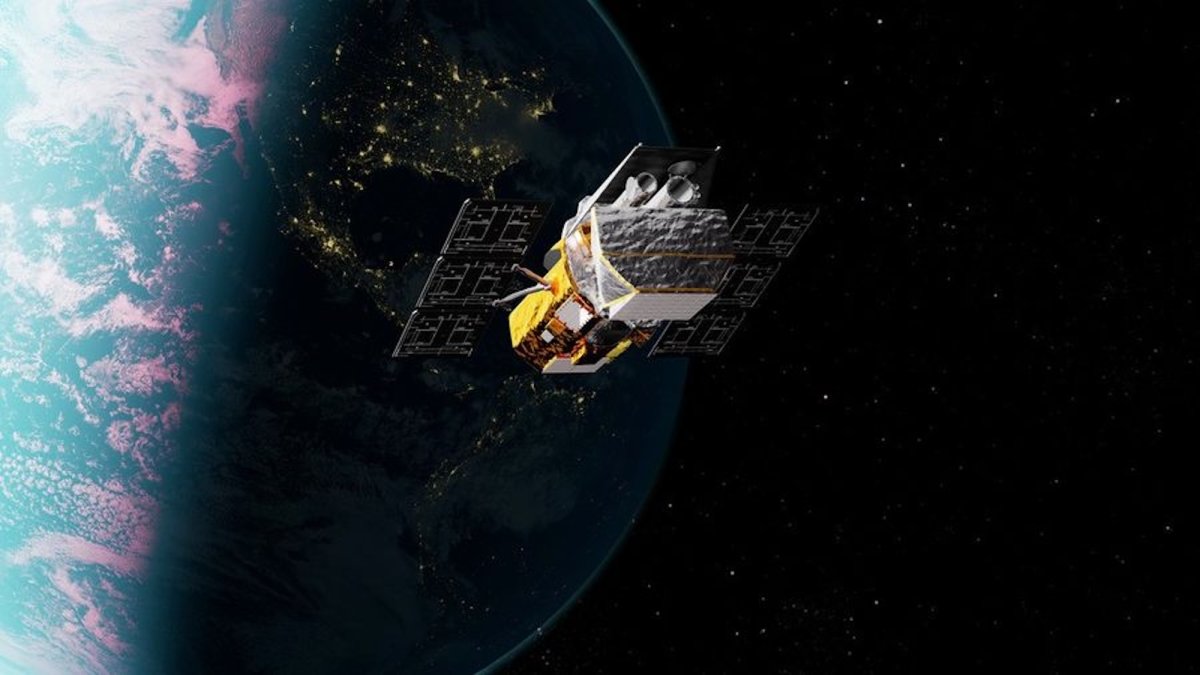
NASA Calls Off Risky Rescue, Lets Aging Swift Telescope Burn Out
NASA has made the tough decision to stop trying to save its Swift space observatory, a satellite that has been watching the cosmos for over two decades. Engineers discovered that a critical power‑distribution component was overheating and could spark a catastrophic fire that would end the mission abruptly. While a daring repair mission was technically possible, the cost, risk to crewed spacecraft, and the telescope’s dwindling scientific return made the rescue impractical. Instead, NASA will let Swift continue its work until the fault worsens, then safely de‑orbit the satellite to burn up in Earth’s atmosphere. The move underscores a broader shift in NASA’s strategy: focusing resources on newer missions like the James Webb and Artemis programs while gracefully retiring older hardware. Swift’s legacy includes groundbreaking discoveries of gamma‑ray bursts and helping astronomers pinpoint the origins of distant explosions. Though fans of the aging observatory are disappointed, officials stress that safety and budget realities outweigh sentimental attachment. The decision also highlights the growing importance of “digital twins” – virtual models that help engineers predict failures without sending humans into danger.
Read more

China’s AI Boom: Scientists Take the Driver’s Seat in a New Era
When OpenAI released ChatGPT in late 2022, the world saw a research prototype turn into a daily tool overnight, gaining a million users in just five days. The surprise was that a tiny tweak in a model’s ability instantly changed the user experience—better reasoning, richer language, smoother coding help. Chinese tech giants felt the pressure and moved at “wartime speed.” Within months Baidu unveiled ERNIE Bot, Alibaba launched Qwen, and Tencent introduced Hunyuan, each pushing massive language models straight to customers and enterprises.
The flood of models turned a niche academic topic into a corporate strategy. Start‑ups like Moonshot AI (with founder Yang Zhilin, a former Tsinghua researcher) and DeepSeek packaged cutting‑edge research into products such as Kimi and DeepSeek‑V2, slashing training costs by over 40% and boosting speed dramatically. Investors, who once chased user numbers, now value papers, model architecture, and training expertise, pouring cash into teams led by scientists in their 30s and 40s.
At the same time, the role of researchers shifted. Tencent dissolved its decade‑old AI Lab in 2026, moving scientists directly into the Hunyuan product line under chief AI scientist Yao Shunyu. Research is no longer a distant R&D silo; it now sits at the heart of business decisions, with model choices directly affecting computing costs, product performance, and market competitiveness. In China’s AI landscape, scientific insight has become the new engine of power.
Read more

Glass Power: How Hunan’s Lens Technology Is Revolutionizing Chip Packaging for AI
The surge in AI‑driven computing is pushing chip makers to look beyond traditional plastic packaging, which can warp under heat and limit performance. Lens Technology, the Hunan‑based firm best known for its ultra‑thin smartphone glass, is turning that challenge into an opportunity. By developing a proprietary Through‑Glass Via (TGV) substrate—essentially a glass plate riddled with microscopic, perfectly aligned holes—Lens can create chip packages that stay cool, stay flat, and support far more connections than organic materials.
During a recent showcase, the company displayed everything from foldable‑phone glass to aerospace‑grade flexible panels, all built on the same glass foundation. The TGV technology demands drilling holes every 10 micrometres with a "zero‑defect" rate, then filling them with copper and adding protective layers—an engineering feat that Lens has honed over three decades of glass processing.
In July, Lens announced a strategic partnership with Intel to combine its glass‑substrate expertise with Intel’s semiconductor design know‑how, aiming to meet the exploding demand for AI data‑center chips and specialized processors. A 30,000‑square‑metre factory dedicated to TGV production is slated to start output by the end of 2026.
With a client list that includes Apple and a portfolio spanning glass, metal, ceramics and more, Lens Technology is positioning itself as a key supplier for the next generation of high‑performance, energy‑efficient chips that will power everything from smart phones to satellites.
Read more
China Leads Global Push for Quantum Tech Standards, Boosting Future Industries
Quantum technology is moving fast from the lab to the marketplace, and China is now at the forefront of shaping the rules that will govern this emerging field worldwide. On August 17, the State Administration for Market Regulation reported that, during the fifth plenary session of the Joint Technical Committee (IEC/ISO JTC3) on Quantum Technology, several key international standard proposals led by Chinese experts received green lights.
First, a proposal titled “Overview and Analysis of Quality and Testing Methodology for Quantum Entropy Source Randomness” was approved for development, marking China’s first major step in setting global standards for the core devices that generate true random numbers—essential for secure communications and advanced computing. A second joint effort with the United States and Canada, “Survey of Metrology Standards and Potential Recommended Measurement Practices for Single‑Photon Device Characterization,” also won approval, paving the way for consistent testing of the ultra‑sensitive detectors that power quantum networks.
In addition, two exploratory projects on “Quantum‑Classical Converged Computing” led by China cleared the review stage, promising new guidelines for hybrid systems that blend classical and quantum processors. Altogether, China now leads all three quantum standards already published by ISO and IEC and is steering five more under development.
By actively shaping these standards, China aims to break technical barriers, speed up commercial adoption, and share its expertise with the global quantum community, ensuring that the next wave of high‑tech innovation benefits everyone.
Read more
How Digital Twins Are Shaping the Physical AI Revolution: Simulations, Synthetic Data, and World Models Explained
Digital twins—virtual replicas of real‑world objects, processes, or environments—are moving from niche engineering tools to the backbone of a new "Physical AI" era. In this era, AI systems no longer rely solely on static datasets; they learn from dynamic, high‑fidelity simulations that mirror reality in real time. The latest research highlights three key pillars driving this transformation.
First, advanced simulation engines now generate ultra‑realistic virtual worlds where physical laws, material properties, and sensor feedback are faithfully reproduced. Engineers can test designs, predict failures, and optimize performance without ever touching a physical prototype.
Second, synthetic data—artificially created but statistically indistinguishable from real measurements—feeds AI models with abundant, bias‑free training material. This solves the chronic data‑scarcity problem in sectors like autonomous driving, robotics, and smart manufacturing.
Third, world‑model technical systems integrate these twins into a unified framework that lets AI agents reason, plan, and adapt as if they were operating inside the actual environment. By continuously syncing the digital twin with live sensor streams, the system maintains an up‑to‑date “mental map” of the world.
Together, these advances promise faster product cycles, safer testing, and smarter, more resilient AI that can anticipate and respond to real‑world changes before they happen. The era of Physical AI is arriving, and digital twins are the engine powering it.
Read more