
Anthropic’s Secret AI Model Cracks a Legendary Math Puzzle
A hidden AI system built by Anthropic has taken a big step toward solving one of mathematics’ most famous unsolved riddles. Two of the company’s own mathematicians double‑checked the result and then recorded the proof in Lean, a free, open‑source tool that lets researchers write and verify mathematical arguments step by step.
This breakthrough is the latest in a wave of discoveries where large language models—software that can read, write, and reason with text—are being used as virtual mathematicians. Earlier this year, AI programs tackled several of Paul Erdős’s famous problems, and OpenAI recently unveiled a set of ten major theorems proved by its internal “Astra” model. Anthropic itself has already knocked down another long‑standing question, the Jacobian conjecture, showing how quickly AI is moving from curiosity to genuine research partner.
What makes this development exciting for everyday readers is the glimpse it offers into a future where computers can help solve puzzles that have stumped human minds for decades. As these models get more powerful and more widely available, we may soon see AI‑driven breakthroughs in fields ranging from cryptography to climate science—turning once‑impossible challenges into solvable tasks.
Read more

Giant Black Hole Blasts Energy Across 300,000 Light‑Years of Space
Astronomers have spotted a colossal outburst from a supermassive black hole that is sending a torrent of high‑energy particles and radiation far beyond its host galaxy. Using a combination of radio, X‑ray and optical telescopes, researchers traced a powerful jet that stretches roughly 300,000 light‑years—about three times the distance from the Sun to the edge of the Milky Way. The black hole, which sits at the heart of a distant galaxy, is feeding on surrounding gas and dust, converting a portion of that material into an enormous beam that pierces the surrounding intergalactic medium.
The discovery is significant because it shows how black holes can influence their cosmic neighborhoods on truly gigantic scales, heating gas, shaping star formation, and even regulating the growth of entire galaxy clusters. The energy output rivals that of millions of supernovae combined, and the jet’s reach suggests that black holes are not just local powerhouses but can affect the structure of the universe over vast distances. Scientists plan to keep monitoring the jet’s evolution, hoping to learn more about the physics that launch such extreme streams and what they mean for the life cycles of galaxies.
Read more
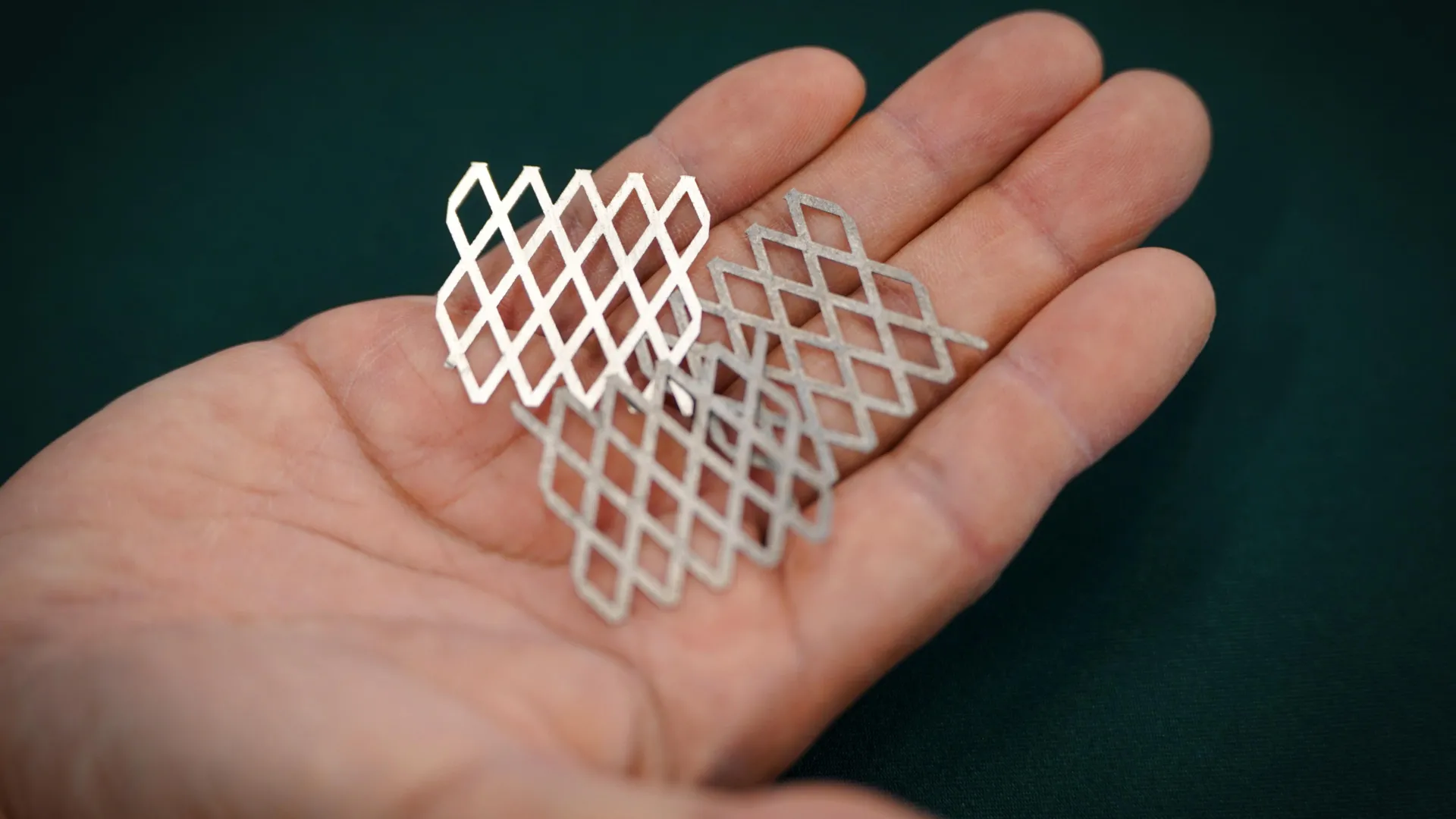
Super‑Strong, Super‑Cheap: New ‘Super Steel’ Could Power Green Hydrogen at a Fraction of the Cost
Scientists in Hong Kong have unveiled a new type of stainless steel—dubbed SS‑H2—that could dramatically lower the price of green hydrogen. The alloy resists the harsh, salty environment inside water‑splitting machines (electrolyzers) just as well as expensive titanium, but it costs only a fraction of the price. In tests using seawater, SS‑H2 performed on par with titanium components, keeping the electrolyzer running smoothly while cutting material costs dramatically.
The breakthrough is more than a lab curiosity. The research team has already teamed up with a mainland factory to produce tons of SS‑H2 wire, a key step toward commercial‑scale production. If the steel proves reliable in real‑world hydrogen plants, it could make renewable‑energy‑driven hydrogen—often called "green hydrogen"—far more affordable, opening the door to wider use in clean transportation, industry, and power storage.
Professor Ming‑Xin Huang says the new steel brings together high corrosion resistance and low cost, two ingredients essential for scaling up green hydrogen from seawater. The development could accelerate the shift to a low‑carbon economy by providing a cheaper, durable material for the heart of the hydrogen‑making process.
Read more
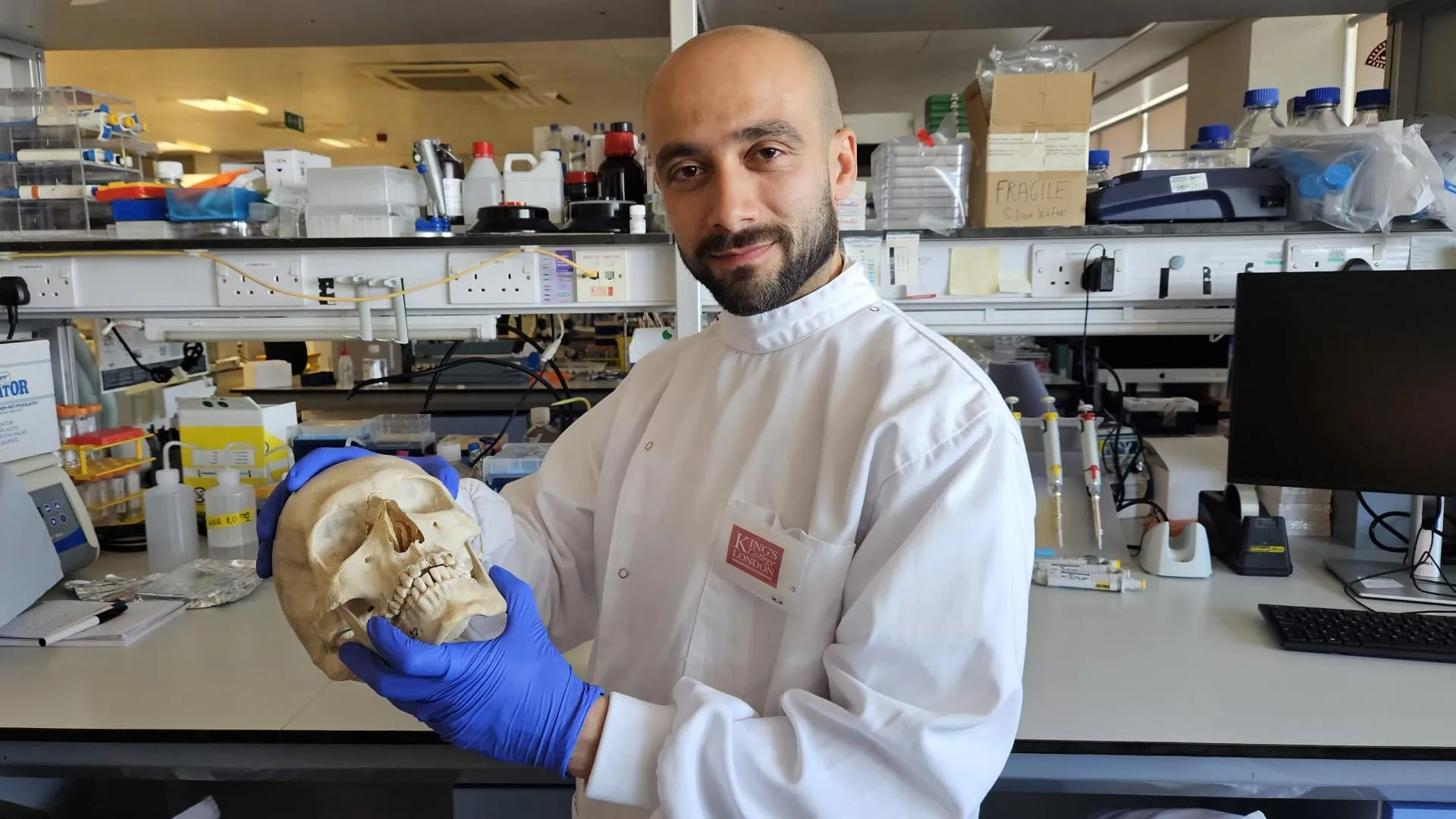
Sheep’s Wool Turns Into Bone‑Healing Scaffold: A New Hope for Fracture Recovery
Researchers at King’s College London have discovered a surprising new use for an everyday farm by‑product: sheep’s wool. By extracting the protein keratin from raw wool fibers, the team created a porous, sponge‑like material that can be placed into a broken or damaged bone. In animal tests, this wool‑derived scaffold guided new bone cells to grow in a highly organized pattern, producing tissue that closely resembles healthy bone. Compared with the standard collagen‑based scaffolds currently used in regenerative medicine, the keratin scaffold yielded stronger, more structured bone repair and reduced scar‑like tissue formation.
Because wool is abundant, inexpensive, and renewable, the new material could dramatically lower the cost of bone‑healing treatments and make advanced therapies accessible to more patients. The scientists envision future applications ranging from speeding recovery after sports injuries to helping elderly patients heal fractures more reliably. Ongoing work will focus on refining the scaffold’s shape, testing its safety in larger animal models, and eventually moving toward human clinical trials. If successful, this humble wool could become a cornerstone of next‑generation orthopedic care, turning a simple agricultural waste into a life‑changing medical breakthrough.
Read more

Full‑Fat Dairy Beats Low‑Fat Myths: New Study Finds No Weight Gain and Better Blood Pressure
A 12‑week Canadian trial challenges the long‑standing advice to pick low‑fat dairy. Researchers recruited 74 adults who were overweight or obese and randomly placed them into three diet groups. One group followed a low‑dairy, calorie‑restricted plan; a second ate a calorie‑balanced diet that included three servings of full‑fat dairy each day; the third followed an unrestricted diet but also consumed three daily servings of full‑fat dairy. All participants received guidance based on Canada’s Food Guide, and those in the dairy groups were provided with the milk, cheese, and yogurt they needed.
At the end of the study, the participants who ate three servings of full‑fat dairy showed no meaningful increases in weight, body fat, cholesterol, or insulin resistance. In fact, their blood pressure improved, and they consumed more calcium, protein, and vitamin D than the low‑dairy group. The findings suggest that the complex structure of dairy—its proteins, minerals, and vitamins—may matter more for health than the saturated fat it contains.
Researchers conclude that a simple, balanced approach—eating a variety of foods and not over‑indulging—remains the best advice. This study adds fresh evidence that full‑fat dairy can fit into a healthy diet without the feared weight‑gain side effects.
Read more
AI Office Assistants Enter Fierce Battle: Tech Giants Roll Out Unified Super‑Agents
The race to dominate the AI‑powered office‑assistant market has shifted from a scatter‑shot of niche plugins to a head‑to‑head showdown of full‑stack platforms. Since early 2026, China’s biggest tech firms—Tencent, Alibaba, Baidu, 360 and ByteDance—have merged their fragmented AI tools into single flagship products aimed at government and enterprise users.
Analysts say the move reflects a new “systemic competition” where success depends on a blend of powerful large‑model foundations, tight data‑security controls, cross‑department collaboration features and industry‑specific skill libraries. For example, Tencent’s WorkBuddy logged nearly 21 million monthly visits in June, while 360’s Nano Work targets SMEs with a security‑first engine. Alibaba’s Tongyi Office and ByteDance’s integrated Doubao‑Feishu suite focus on medium‑to‑large firms, offering end‑to‑end workflow automation across documents, meetings and projects. Baidu’s Dazi suite has added design and finance modules to broaden its reach.
Despite soaring user traffic—over 60 million monthly visits across 17 platforms in June—commercial rollout still faces hurdles. Companies worry about return on investment, data privacy and the reliability of multi‑step AI tasks. Pricing models vary widely, and smaller firms remain reluctant to pay for premium services. Experts stress that vendors must prove concrete efficiency gains and provide auditable, white‑box data handling to win the trust of large enterprises and state‑owned entities. The coming year will likely decide which super‑agent becomes the industry standard.
Read more
Unitree Hits 18,000 Humanoid Robots Produced – China Leads Global Surge
Unitree Robotics announced on August 12 that it has now built and delivered roughly 18,000 humanoid robots. The company says it shipped more than 5,500 units in 2025, and about 12,500 units so far this year, putting the total at the impressive 18,000 mark. A recent market study from California‑based Smart Analytics Global shows that Chinese makers dominate the sector: Zhiyuan shipped 8,400 robots (44% of the world’s total) while Unitree contributed 5,900 units (31%). Together, the two firms account for the bulk of global deliveries, far outpacing U.S. players such as Tesla, Figure AI and Agility Robotics.
Globally, half‑year shipments of humanoid robots jumped to around 19,100 units – more than three times the figure for the same period last year – and analysts expect the total for 2026 to reach about 60,000, climbing to half a million by 2030. Chinese manufacturers now make up over 97% of worldwide output, thanks to strong government backing, deep supply chains and lower costs. While mass production is now a reality, experts say the next hurdle is improving the robots’ ability to handle a wide range of tasks. With rapid advances in computing power and data, they believe this challenge will be overcome, opening the door to broader commercial use.
Read more
Zhejiang’s High‑Tech Surge: Space AI Satellites, Humanoid Robots and a 100‑Ton Unmanned Ship
Zhejiang province is turning into a powerhouse of frontier technology. In Hangzhou, the Zhijiang Laboratory has launched two new computational satellites for its “Three‑Body Computing Constellation,” now testing AI models in orbit and laying the groundwork for a thousand‑satellite network. Meanwhile, the Ningbo Humanoid Robot Innovation Center is fine‑tuning robots that can sew custom garments, with a plan to mass‑produce 2,000 units. At Zhoushan’s dock, China’s first fully domestic 100‑ton unmanned vessel “6081” has completed long‑distance sea trials, and engineers are sharpening its autonomous control system to handle 30‑degree rolls. The province’s innovation engine is backed by a robust ecosystem: four consecutive years ranking fourth nationwide in regional innovation capacity, over 15,000 specialized SMEs, and AI industry revenue of 713 billion yuan in 2025 – a 20 % jump year‑on‑year. Massive research hubs such as Zhijiang and Yongjiang Laboratories, plus partnerships with top universities, create a “lab‑to‑factory” pipeline that turns breakthroughs into commercial products. Zhejiang’s “Double‑12” policies tie talent recruitment, incubation and industrial scaling together, ensuring that cutting‑edge science quickly fuels real‑world manufacturing, from high‑precision CNC tools to AI‑driven robotics. The result is a three‑dimensional innovation network that attracts talent, accelerates tech transfer, and positions Zhejiang as a leader in next‑generation industries.
Read more
Robots That Learn Like Babies: The Rise of Embodied AI
Embodied AI is the next frontier of artificial intelligence – machines that don’t just think, but act, learn, and adapt in the real world. Unlike traditional AI that stays behind a screen, embodied AI closes the loop of perception, decision‑making, action, and feedback, allowing robots to handle tasks from precise factory work to navigating rugged terrain.
Think of a newborn: it discovers the world by touching, grasping, falling and trying again. Its brain, body, and environment are inseparable, and intelligence emerges from that interaction. Embodied AI copies this process with three core parts – sensors (vision, touch, force), a decision engine, and actuators (arms, wheels, drones). The system builds an internal “world model,” merges data from many senses, reasons about cause and effect, and generates actions that are continuously refined by real‑world results.
Recent advances in algorithms, computing power, and multimodal data have turned this concept into large‑scale engineering. Yet challenges remain: making models explainable, running them fast on edge devices, and bridging the gap between virtual simulations and reality.
When mastered, embodied AI could turn factories into intent‑driven ecosystems, where robots act as digital inspectors, optimize production on the fly, and provide full‑process visibility. In short, the shift from “thinking” to “doing” promises smarter, more adaptable machines that learn the way humans do.
Read more