
AI‑Powered Hunt for the Next‑Gen Chip Material Gets $9M Boost
A fresh startup called Discovered Materials is turning the search for better computer chips into a high‑tech game of whack‑a‑mole. Using swarms of artificial‑intelligence agents, the team scans countless chemical combinations to spot materials that could make future GPUs faster, cooler, and more energy‑efficient. When a promising candidate pops up, the company plans to file patents on how the material can be used in chip manufacturing and then license the breakthrough to major silicon makers.
Founded by Stanford‑trained materials scientist Akash Ramdas and AI veteran Sridhar—who previously built agents at Persona AI and Luma Labs—the venture just closed a $9 million seed round led by Lightspeed India Partners, with backing from Peak XV Partners and notable angels like Paul Graham, Gokul Rajaram, and Thariq Shihipar. The founders say they expect to have patent‑worthy materials within the next year, potentially reshaping the way integrated circuits are built. By marrying cutting‑edge AI with deep materials expertise, Discovered Materials hopes to give chipmakers a new toolbox for squeezing more performance out of ever‑smaller silicon footprints.
Read more

Waymo’s CEO Confirms: Cameras Alone Won’t Drive Fully Autonomous Cars
In a candid interview, Waymo’s chief executive explained why the company believes a camera‑only approach can’t deliver truly driverless vehicles. After years of real‑world testing with dozens of robotaxis across several U.S. cities, the CEO said the data made it clear that visual cameras, while essential, struggle to perceive depth, weather‑related obscurities and rapid changes in lighting as reliably as lidar or radar sensors. He recounted specific incidents where camera blind spots led to near‑misses, prompting the team to double‑down on a multi‑sensor stack that fuses high‑resolution imaging with laser‑based ranging and radio‑frequency detection. The CEO emphasized that safety is the non‑negotiable foundation for any fully autonomous system, and that relying on a single technology creates unacceptable risk. He also noted that Waymo’s latest robotaxi fleet now runs on a hybrid sensor suite, delivering smoother rides and higher confidence in complex urban environments. Industry observers see this admission as a pivotal moment, reinforcing the consensus that the path to Level 5 autonomy will likely require a blend of cameras, lidar, radar, and advanced AI processing rather than a single‑sensor shortcut.
Read more
Midlife Brain Reset: Why Your Memory Cells Change After 50
A new NIH‑backed study has uncovered a surprising transformation that takes place in the brain around the age of 50. Researchers found that the hippocampus – the region responsible for forming and retrieving memories – loses many of its long‑standing immune cells, known as microglia, and replaces them with a fresh batch that is more inflammatory in nature. This hidden “brain shift” appears to be a normal part of aging, but it may also lay the groundwork for later development of Alzheimer’s disease and other forms of dementia.
The team examined brain tissue from adults of various ages and observed a clear turnover: the original, protective microglia gradually disappear, while newer, more reactive cells take over. These newer cells release higher levels of inflammatory signals, which can disturb the delicate balance needed for healthy memory function. Although the change itself is not a disease, the heightened inflammation could make the brain more vulnerable to the buildup of harmful proteins that characterize Alzheimer’s.
Understanding this midlife overhaul opens new doors for early‑intervention strategies. If scientists can find ways to support the original immune cells or calm the inflammatory newcomers, it might be possible to slow or even prevent the cascade that leads to cognitive decline later in life.
Read more
Hidden Switch in Silver Nanocatalysts Could Supercharge Green Hydrogen and Power
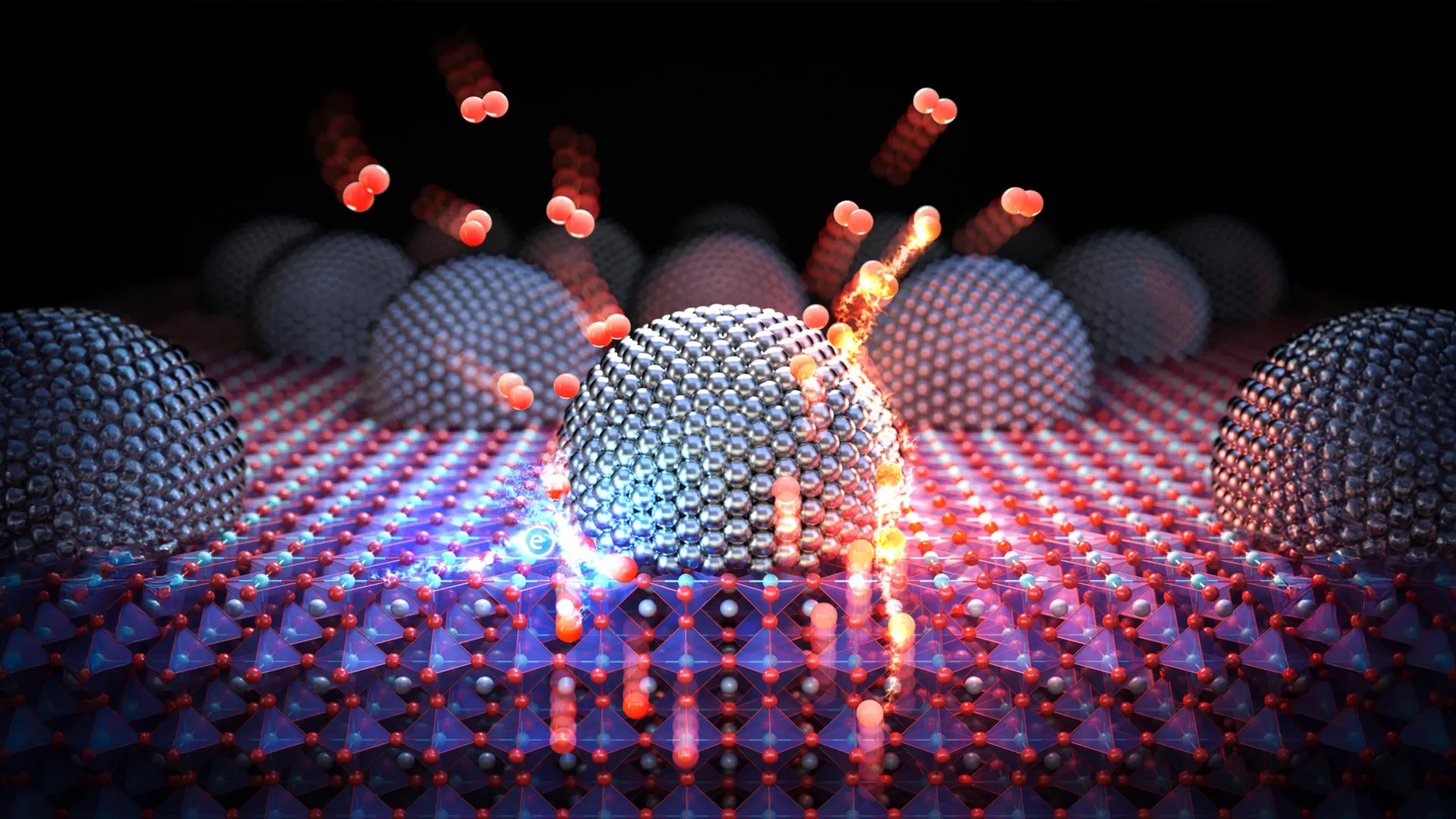
Researchers at Seoul National University have uncovered a surprising “switch” inside tiny silver particles that act as catalysts. These nanoscopic silver catalysts can flip between two distinct modes, changing where and how they speed up chemical reactions. By toggling this hidden switch, the catalysts become far more efficient at converting electricity into clean hydrogen fuel and at boosting electricity generation from renewable sources. The discovery opens a new route to design smarter, adaptable catalysts that can be fine‑tuned on the fly, reducing energy loss and cutting production costs for green hydrogen—a key player in the transition to carbon‑free power. The team demonstrated that the switch can be triggered by subtle changes in the particle’s environment, such as temperature or electric field, allowing precise control over reaction pathways. This breakthrough could accelerate the rollout of hydrogen‑based energy systems, improve the performance of solar‑driven water‑splitting devices, and inspire a new generation of nanomaterials engineered for maximum efficiency. While the findings are still in the laboratory stage, they point toward scalable technologies that could make renewable energy cheaper and more reliable for everyday use.
Read more
Scientists Engineer First 2‑D Material That’s Both a Semiconductor and a Magnet
A research team led by Huang Qing at Yongjiang Laboratory, together with scientists from the Ningbo Institute of Materials Technology and Engineering (NIMTE), Zhejiang University and other partners, has created a brand‑new two‑dimensional (2‑D) material that combines two properties never seen together before: semiconducting behavior and ferromagnetism. The breakthrough was achieved by a novel “sublayer chemistry” approach, in which lanthanide atoms—elements known for their unique electronic structures—are inserted directly into the crystal lattice of MXenes, a family of layered compounds already prized for their conductivity and tunable surfaces. Traditional “top‑down” methods of making MXenes struggle to incorporate lanthanides because the necessary precursor materials are scarce and the elements tend to evaporate during processing. By building the material from the bottom up, the researchers avoided these hurdles and succeeded in embedding the lanthanides without loss. The resulting MXene sheet conducts electricity like a semiconductor while also exhibiting magnetic ordering, opening a new design pathway for devices that need both electronic and spin‑based functions, such as advanced sensors, memory chips and quantum technologies. The findings were published online in *Nature*, marking a significant step toward custom‑designed 2‑D materials for next‑generation electronics.
Read more
Breakthroughs and Buzz at China’s Leading Nano‑Tech Hub: SiNano’s 2026 Highlights
The Suzhou Institute of Nano‑Tech and Nano‑Bionics (SiNano), part of the Chinese Academy of Sciences, kicked off a bustling 2026 with an annual work conference and a string of high‑impact research announcements. Teams led by Zhang Ting and Zhang Xuetong published in *Nature Communications* and *Nature Energy*, unveiling a skin‑hydrogel interface that enables long‑term, high‑fidelity electrophysiological monitoring and an organic photovoltaic cell that stays stable through extreme humid‑heat and cold‑heat cycles. Another breakthrough from Zhang Qichong’s group introduced low‑voltage, self‑contracting artificial muscle fibers, while Sun Qian’s team showcased ultra‑low‑threshold 2D semiconductor lasers. SiNano also reported anti‑freezing, ultra‑low‑power deionization devices and advanced gallium‑oxide power components. Beyond the labs, the institute opened new funding calls for organoid and semiconductor research, hosted the ACS Nano Summit on cross‑disciplinary innovation, and ran safety inspections, AI‑focused training, and data‑management workshops. Public outreach flourished with a children’s science lecture by Academician Chen Chunying, a “Women in Science” month, and a garden‑style community event. Altogether, SiNano’s 2026 agenda blends cutting‑edge nanotech advances with education, collaboration, and open‑science initiatives, positioning the institute as a catalyst for the next wave of nano‑driven breakthroughs.
Read more