Laser‑Powered Light Sails Could Soon Carry Probes to Distant Stars
Scientists are getting closer to turning science‑fiction into reality with a new propulsion concept that uses the pressure of light itself. By attaching an ultra‑light, mirror‑like sail to a tiny spacecraft, a powerful laser beam can push the craft forward—no fuel needed. To reach a significant fraction of the speed of light, the laser would have to be massive, delivering tens of gigawatts of power. Rather than a single monstrous laser, researchers envision a coordinated array of many smaller lasers working together to produce a single, coherent beam. This “photon push” could accelerate a probe to relativistic speeds within minutes, allowing it to zip across interstellar distances in a human lifetime. Recent laboratory experiments have demonstrated that such sails can be built and tested, while theoretical work is ironing out challenges like beam‑spreading, sail stability, and heat management. If the technology matures, future missions could send gram‑scale probes to nearby star systems such as Proxima Centauri, opening a new era of cheap, fast interstellar exploration. The breakthrough promises to reshape how we think about traveling beyond our solar system, turning distant stars from unreachable dreams into attainable destinations.
Read more
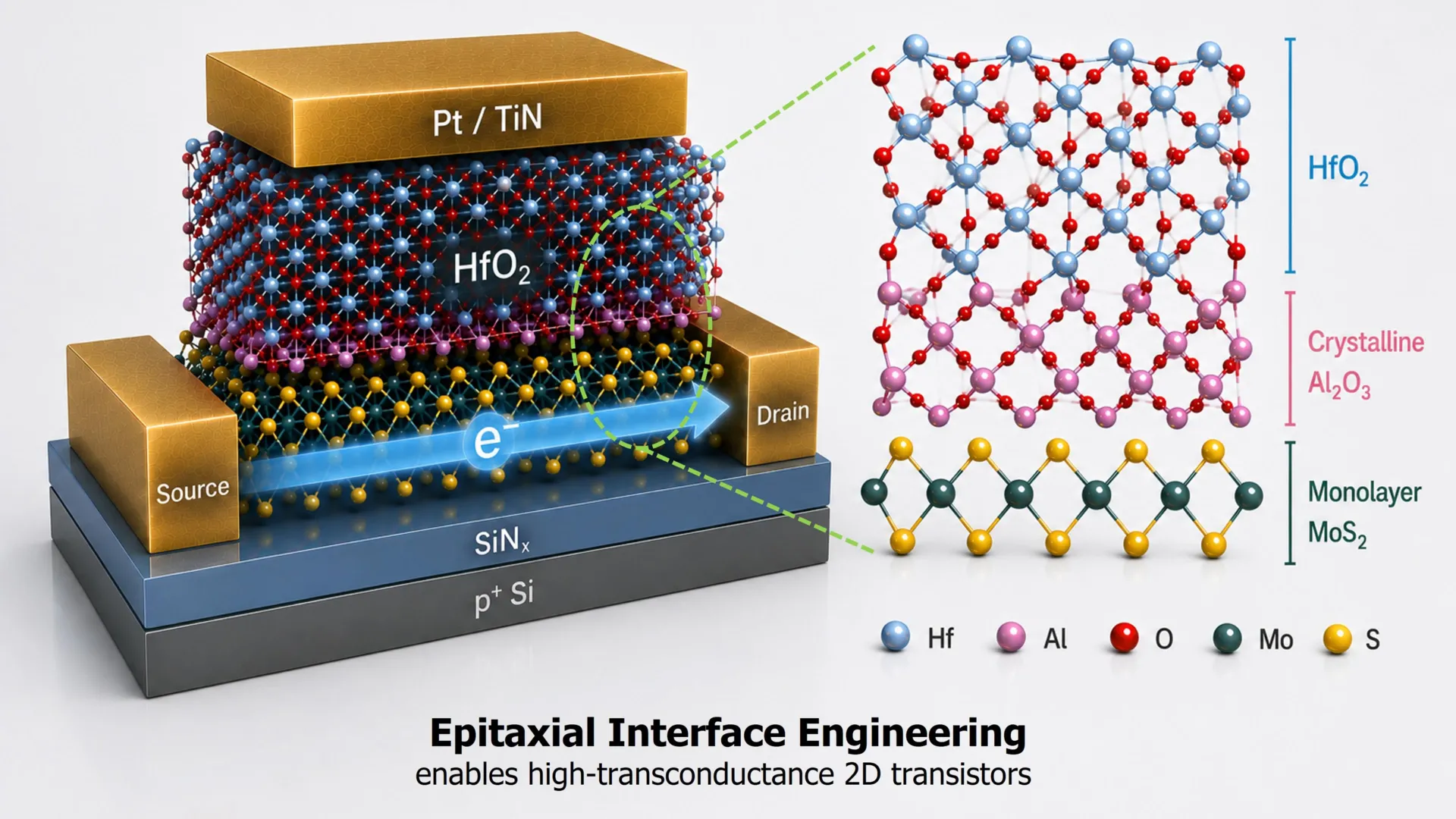
Tiny 0.42‑Nanometer Trick Could Supercharge Future Chips
Researchers at National Yang Ming Chiao Tung University have discovered a way to make computer chips much smaller and more efficient by perfecting the ultra‑thin layer that separates the active parts of a transistor. By engineering a 0.42‑nanometer‑thin atomic interface, they protected the flow of electrons while still allowing an extremely thin insulating layer to work. This breakthrough lets the transistor keep strong electrical control and high performance at the same time—something that has been hard to achieve with atomically thin materials.
The team used a chemically grown monolayer of molybdenum disulfide (MoS₂), a two‑dimensional semiconductor, instead of the fragile flakes traditionally used in labs. This approach brings the technology a step closer to large‑scale manufacturing, because the material can be produced in wafer‑size batches. The new transistors showed a rare combination of ultra‑thin dielectric scaling, robust electrostatic control, and sustained carrier transport, promising a path beyond the limits of silicon‑based chips. If the method can be scaled up, it could usher in a new generation of ultra‑compact, power‑saving devices for everything from smartphones to data‑center servers.
Read more

Ultra‑Durable Fuel‑Cell Catalyst Promises Clean Power for Data Centers
A team of engineers led by Professor Gang Wu at Washington University in St. Louis has unveiled a new fuel‑cell catalyst that could change how data centers get their electricity. The breakthrough centers on a nanostructured carbon material that lets the cell run at low temperatures while using only a tiny amount of expensive platinum. The result is a catalyst that stays stable and efficient for far longer than current designs.
Because data centers consume massive amounts of power, they often strain local electric grids. Wu’s team believes that hydrogen‑powered fuel cells equipped with this catalyst could generate electricity on‑site, easing the load on the grid and cutting carbon emissions. The technology isn’t limited to servers; it could also be adapted for electric vehicles and other high‑energy applications.
The research, published on August 6, 2026, in Nature Nanotechnology, involved collaborators from Brookhaven National Laboratory, Lawrence Berkeley National Laboratory, Northeastern University, and the University of Pittsburgh. Wu has already filed a patent, and the project was funded by Washington University. If the concept scales up, it could offer a practical, greener alternative to traditional power sources for the world’s most energy‑hungry facilities.
Read more
Scientists Capture Electrons Re‑Arranging Themselves in a Quantum Material
Researchers have taken a close‑up look at how electrons in a thin crystal of erbium tritelluride organize themselves into two distinct patterns, or "charge‑density waves," that can coexist side by side. Using ultra‑fast laser pulses and a technique called time‑resolved photoemission, the team watched the material cool down and observed two surprising behaviors. The dominant pattern re‑forms smoothly across the whole sample, indicating a gradual, continuous transition. In contrast, the weaker pattern appears in isolated patches that grow and merge, a hallmark of a sudden, first‑order transition. This dual‑phase dance shows that electrons can switch between different collective states depending on subtle changes in temperature and energy. Understanding how these competing phases emerge and interact could help scientists design new quantum materials with tunable properties, such as exotic superconductors or ultra‑fast electronic devices. The findings, originally reported by MIT researchers, provide a vivid snapshot of the dynamic world inside quantum crystals, where electrons constantly assemble, dissolve, and re‑assemble in ways that could shape future technologies.
Read more
China’s AI Boom: Robots, Open‑Source Models and a $1.2 Trillion Industry
China’s artificial‑intelligence sector is surging ahead at breakneck speed. In the first half of 2026, the country’s core AI market topped 1.2 trillion yuan and now hosts more than 6,200 specialized firms. A key driver is the explosion of open‑source large models – global downloads have passed the 10 billion mark, and Chinese models account for 41 % of new traffic on platforms like Hugging Face.
The focus is shifting to AI agents that can plan tasks, call tools and operate across platforms, with new features such as ultra‑long context windows, multimodality and adaptive reasoning. The Mixture‑of‑Experts architecture is becoming the go‑to design for these multi‑task agents.
China also leads in embodied intelligence: over 400 complete humanoid robots are on the market, representing more than half of the world’s total, while humanoid and quadruped units make up 80 % of global sales. Advances in vision‑language‑action models and full‑body control are turning voice commands into real‑world actions in factories and services.
Regulators are keeping pace, with nearly 1,000 generative‑AI services filed and new rules covering agents, humanoid robots and digital humans. The industry is growing faster than 30 % year‑on‑year, with smart wearables seeing sales double. Analysts predict the AI‑related economy could exceed 10 trillion yuan by the end of the 15th Five‑Year Plan, cementing AI as the engine of China’s next wave of high‑quality growth.
Read more
How Terahertz Waves and Smart Surfaces Will Power the Next‑Generation 6G Internet
China’s 6G research is no longer a distant dream – it’s racing from the lab into real‑world trials. While 5G focused mainly on faster data rates, 6G aims to overhaul the whole way networks operate. The breakthrough comes from two key technologies: terahertz‑band communication and reconfigurable intelligent surfaces (RIS). Terahertz frequencies, sitting above millimetre‑wave bands, can carry massive data streams, enabling ultra‑high‑definition video, holographic calls and real‑time digital twins of physical objects. Meanwhile, RIS are thin, programmable panels that can steer, focus or even amplify signals on demand, turning walls, ceilings and street furniture into active parts of the network.
Together, these tools let the network sense its own health, re‑configure routes instantly and adapt coverage to user needs without human intervention. A digital twin of the entire communication ecosystem predicts traffic spikes, prevents outages and helps operators intervene before problems arise. The result is a self‑evolving, ultra‑responsive internet that could boost everything from autonomous vehicles to remote surgery, while also cutting energy use. In short, 6G isn’t just faster – it’s smarter, more flexible, and ready to reshape how we live and work.
Read more
AI Revolution Fuels China’s Factories, From Humanoid Robots to Smart Production Lines
China’s top leaders have rolled out an ambitious “AI+” plan, turning artificial intelligence from a buzzword into a powerhouse for the nation’s economy. By 2025 the country’s core AI sector was valued at more than 1.2 trillion yuan, with rapid advances in large‑scale models, AI chips and humanoid robots – over 100,000 of them are slated for production this year.
The 2026 World Artificial Intelligence Conference in Shanghai showcased this momentum, spreading across 100,000 sq m, featuring 1,100 companies and 300 product launches. Two main tracks – intelligent computing and embodied AI – each attracted more than 200 exhibitors, highlighting how AI is being woven into everyday industry.
Manufacturing is the front line. AI tools now touch more than 30 % of large‑scale factories, and humanoid robots are beginning to work side‑by‑side with human crews. China Mobile unveiled a “flexible manufacturing island” that uses digital twins to instantly re‑configure production for small‑batch, multi‑process orders, while China Unicom demonstrated robotic arms that mimic real‑hand dexterity on a smart line that mirrors the entire phone‑making process. The result? Faster design‑to‑production cycles and a 30 % cut in trial‑and‑error costs for a leading enterprise. In short, AI is reshaping Chinese industry, delivering higher efficiency, lower waste and a new era of intelligent factories.
Read more
Fusion Power’s Next Leap: China’s Industry Gains Momentum and New Business Opportunities
As the world races to replace fossil fuels, nuclear fusion is being hailed as the ultimate clean‑energy solution. Recent breakthroughs in key technologies—especially in magnetic‑confinement tokamaks—are turning the long‑standing scientific dream into a commercial reality. In China, the pace is accelerating. The government’s latest work report officially labeled “future energy” as a strategic industry, bundling fusion with hydrogen, nuclear and biomass projects, and pledging risk‑sharing mechanisms to attract investment.
Chinese labs have hit impressive milestones: the EAST “artificial sun” held a 100‑million‑degree plasma for over 1,000 seconds, while the Honghuang‑70 superconducting tokamak achieved a record 335‑second steady‑state pulse. Parallel efforts such as the compact BEST device and the CRAFT “Kuafu” test platform are expanding the technology toolbox.
These scientific wins are spilling into the market. A wave of funding poured into domestic fusion startups in 2025, with companies like CFS, Helion, Xinghuan Fusion Energy and Xingneng Xuanguang raising billions of yuan collectively. Supply‑chain firms—from superconducting magnet manufacturers to specialized optics producers—are seeing fresh orders as the industry moves from labs to pilot plants. Analysts predict a “hundred‑billion‑yuan” fusion manufacturing cluster could emerge within the next five years, offering investors and workers alike a glimpse of a new, low‑carbon energy economy.
Read more
China’s Offshore Wind Boom Powers Millions of Homes and Fuels Evening Energy Surge
A massive offshore wind farm off the coast of Yancheng, Jiangsu, is now generating more than a billion kilowatt‑hours a month – enough electricity for over 2.6 million local households. The 800‑MW Three Gorges project, with 98 turbines placed 80 km out in the Yellow Sea, is the country’s furthest‑reaching offshore wind installation. Because sea breezes are strongest in the evening, the farm supplies high‑quality “peaking” power that helps cities such as Shanghai and Suzhou meet their evening demand.
During the current 15th Five‑Year Plan, China aims to boost offshore wind capacity in Yancheng to 13.5 GW, while also expanding distributed solar power to 530 GW – a jump from 30 % to 44 % of the nation’s total PV capacity. Rooftop solar is popping up in factories, highways, public buildings and villages. For example, a 12‑MW rooftop system in Suzhou Industrial Park now sells electricity directly to nearby factories, cutting their bills and turning idle roofs into profit centers.
Highways are being turned into solar power stations, with more than 700 MW already installed and a virtual power plant that stores daytime solar energy for night‑time charging stations. In Beijing, a glass‑facade solar array at Huaxia Bank’s headquarters generates one million kilowatt‑hours a year, covering half the building’s electricity use.
Rural areas are also benefitting. In Zhejiang’s Pingyang County, a wind‑power project funded by the “Wind Power in Thousands of Townships and Villages” program is raising village incomes and attracting tourists. New‑generation TOPCon solar modules add about 3 % more output in low‑light mornings and evenings, translating into millions of yuan extra revenue for a 1‑GW plant each year.
Read more