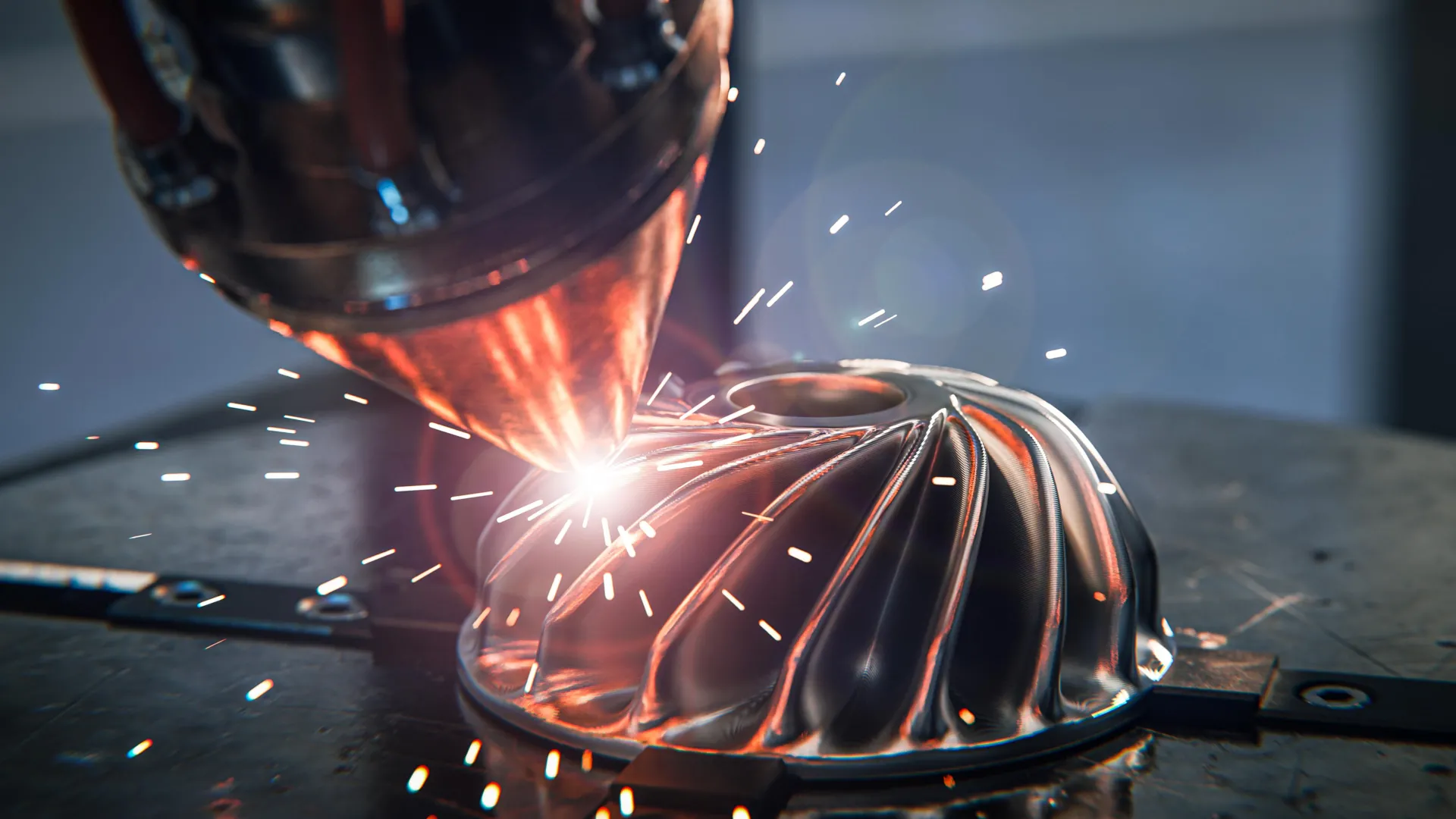
Breakthrough: Researchers 3D‑Print Ultra‑Hard Tungsten Carbide Using Less Material
A team of scientists from Hiroshima University and Mitsubishi Materials Hardmetal Corporation has unveiled a new 3‑D printing method that can create one of the toughest metals on the planet—tungsten carbide‑cobalt—while using far less of the costly cobalt ingredient. Instead of fully melting the powder, the researchers gently softened it, allowing the material to fuse layer by layer without forming cracks or other defects. The result is a flawless, industrial‑grade block that matches the hardness of traditionally forged tungsten carbide. This innovation could reshape how high‑performance tools, cutting blades, and wear‑resistant components are manufactured, cutting both material waste and production time. By slashing the amount of expensive cobalt needed, the process also promises a greener, more cost‑effective route to making the metal that powers everything from mining drills to aerospace parts.
Read more
Scientists Capture Atomic‑Scale Secrets of Materials for the First Time
In a breakthrough that could reshape everything from smartphones to space rockets, researchers have, for the first time, watched how a material’s most important traits behave at the level of individual atoms. Using a cutting‑edge microscope that combines ultra‑fast lasers with quantum‑enhanced detectors, the team was able to see how electrons move, how bonds stretch, and how tiny defects form—all in real time. This atomic‑by‑atomic view lets scientists pinpoint exactly why some metals stay strong under extreme heat while others become brittle, and it reveals hidden pathways for heat and electricity that were previously invisible. The discovery opens the door to designing next‑generation alloys, semiconductors, and batteries with unprecedented precision, potentially leading to longer‑lasting phones, faster computers, and safer aircraft.
Read more

Scientists Unlock ‘Twist‑and‑Turn’ Method to Build Bigger, Better Electronics Materials
A research team at North Carolina State University has discovered a way to grow large sheets of twisted oxide crystals while precisely lining up their atomic layers. By gently rotating each layer as it forms, the scientists can control the material’s internal structure on a scale that was previously only possible in tiny lab samples. The new technique lets these “twisted” crystals be produced over wide areas and then moved onto different surfaces, opening the door for practical applications of twistronics – a field that exploits the unique electronic properties that emerge when layers of material are misaligned. This breakthrough could pave the way for faster, more energy‑efficient chips, flexible electronics, and novel sensors that take advantage of the exotic behavior of twisted crystals.
Read more

Scientists Uncover Secret Force Behind the Universe’s Hottest Liquid
Physicists have discovered that a hidden push—called acceleration—plays a crucial role in the behavior of quark‑gluon plasma, the ultra‑hot, soup‑like state of matter that existed just moments after the Big Bang and can be recreated in particle‑collider experiments. By charting this extra dimension, researchers hope to turn exotic, non‑inertial quantum effects into clear signals that detectors can actually pick up. The finding means that when the plasma is slammed together at near‑light speeds, the rapid change in motion itself shapes how quarks and gluons interact, potentially altering its temperature profile and sound speed, offering a more detailed picture of how matter formed in the first fractions of a second after the Big Bang.
Read more
How Earth‑Science Gear Could Unlock Everyday Superconductors
Scientists are borrowing tricks from deep‑Earth research to crack one of physics’ biggest puzzles: making superconductors that work at normal temperatures and pressures. In a recent breakthrough, researchers turned ordinary platinum into a superconductor, but only at a chilling 2 K—just above absolute zero. By squeezing the material in a tiny test chamber with hydrogen sulfide sandwiched between graphene sheets, they hope to lock in the superconducting state without extreme cold or crushing forces. While early, the approach could pave the way for practical, room‑temperature superconductors that would revolutionize power grids, magnetic levitation, and medical imaging.
Read more
China’s AI Leap: From Data‑Heavy Models to Smarter, Self‑Learning Machines
AI experts say the era of massive, static data sets is ending. 2024 Turing Award winner Richard Sutton warns that traditional models can only mimic what they’ve been fed, while reinforcement‑learning agents that learn by interacting with the world can keep improving on their own. Zhu Songchun of the Beijing Academy of Artificial Intelligence adds that simply adding more parameters won’t create true general intelligence; today’s large‑language models are still just probability matchers lacking real reasoning or moral judgment. To close that gap, China is betting on four pillars: raw computing power, smarter algorithms, autonomous agents, and high‑quality data. Industry leaders call for faster AI chips, massive‑scale clusters (including a home‑grown 100,000‑card supercluster), and ultra‑high‑bandwidth memory to train trillion‑parameter models. At the same time, firms like Dreame are pushing algorithmic efficiency, giving robot vacuums the ability to see and understand their surroundings in real time. Government ministries are coordinating power, network, and energy resources to build a tiered, nationwide computing fabric, aiming for “millisecond computing” that can power real‑world, embodied AI. The combined push for better hardware, smarter software, and richer data is set to turn AI from a virtual curiosity into a practical, interactive force across industry, science, and daily life.
Read more
China’s Tech Surge: From Giant AI Models to Disaster‑Rescue Robots
In July, Chinese AI start‑up Moonshot AI unveiled Kimi K3, a massive open‑weight model with 2.8 trillion parameters that Reuters says rivals the most advanced U.S. systems. The launch, along with new models from Zhipu and MiniMax, is reshaping the view that Chinese AI lags behind the West. At the 2026 World Artificial Intelligence Conference, a parade of robots captured global headlines, prompting the Center for Strategic and International Studies to label China a fast‑emerging leader in robotics and embodied AI, thanks to its huge manufacturing base and deep supply chains. Beyond the lab, breakthrough applications are appearing. Nature reported the first Chinese implantable brain‑computer interface approved to restore hand movement in severely paralyzed patients, and researchers are already pairing the device with advanced AI algorithms. When floods hit Guangxi, a motorized floating bridge—dubbed a “real‑life Transformer”—and delivery drones helped evacuate about 6,000 students, showcasing how high‑tech tools can save lives in emergencies. In the clean‑energy arena, BYD is accelerating its own automotive‑chip R&D, while CATL expands from power‑battery performance to sodium‑ion cells, marine vessels and AI data‑center storage. International outlets such as the Financial Times, Reuters and Switzerland’s Neue Zürcher Zeitung now acknowledge China as a major source of cutting‑edge innovation, urging the world to view the country as a technology partner rather than a laggard.
Read more
Breakthrough Chip Processes Brain‑Like Signals in Under 10 ms, Says Chinese Academy of Sciences
Scientists at the Chinese Academy of Sciences have unveiled a new neuromorphic chip that can perform brain‑inspired computations in less than ten milliseconds—a speed that rivals the reaction time of human neurons. Unlike conventional processors that shuttle data back and forth between memory and the CPU, this chip integrates memory and computing units on the same silicon, dramatically cutting latency and energy use. Built with a novel in‑memory architecture, the device mimics the way biological synapses adjust their strength, enabling it to learn and adapt on the fly without the heavy power draw typical of today’s AI accelerators. In laboratory tests, the prototype handled pattern‑recognition tasks, such as visual and auditory signal processing, with a 70 % reduction in energy consumption compared to leading GPUs, while delivering responses in under 10 ms. Researchers say the technology could accelerate edge‑AI applications—from autonomous drones and smart cameras to wearable health monitors—where rapid, low‑power decision‑making is crucial. The team plans to scale the design, integrate more neuron‑like circuits, and collaborate with industry partners to bring the chip from the lab to commercial products within the next few years.
Read more
China’s Race to 6G: Building the Brain of the Digital Age
China is turning its massive 5G rollout into a springboard for the next‑generation 6G network, which promises to be more than just faster data—it will act like a nervous system for a fully connected, AI‑driven society. By the end of June, the country had installed over 5.1 million 5G base stations and 32.86 million gigabit‑speed fiber ports, linking factories, hospitals, and emergency services across 94 key economic sectors. More than 26,000 "5G + Industrial Internet" projects are under construction, and over a thousand specialized 5G factories are already operating. On the innovation front, Chinese researchers have filed 40 % of the world’s 6G patents and built a portfolio of more than 300 core technologies, from integrated sensing to space‑air‑ground communication. The nation is now shaping global standards, developing low‑earth‑orbit satellite constellations, and nurturing talent that blends communications expertise with artificial‑intelligence know‑how. The goal is clear: move from a "mobile internet" era to a "mobile intelligent connectivity" era where humans, devices, and autonomous agents interact seamlessly. By weaving this dense digital‑intelligent fabric, China aims to lead the future of manufacturing, healthcare, and disaster response, securing a strategic advantage in the global race for the next digital revolution.
Read more
Quantum Leap: How Shenzhen’s Summit Is Turning Lab Breakthroughs into Real‑World Tech
From August 3‑5, Shenzhen hosted a three‑day showcase that brought together scientists, industry leaders, and investors to figure out how the newest quantum discoveries can become everyday products. The event, called the 5th CCF Quantum Computing Conference and the Greater Bay Area Quantum Science Forum, focused on three hot topics: quantum communication, quantum computing, and ultra‑precise measurement tools. Speakers highlighted that China’s quantum research is moving beyond the lab, with promising uses in medicine, energy, finance and materials. Notable announcements included a thousand‑qubit cloud‑computing platform, a quantum‑enhanced AI model for drug design, and a low‑latency control system for quantum hardware. Eight pilot projects were launched on the spot, ranging from ultra‑secure city‑wide data links to new battery materials and AI‑driven gene analysis. The summit also rolled out a matchmaking portal that links government, universities, startups and venture funds, aiming to turn scientific ideas into market‑ready solutions. Parallel workshops discussed the need for common standards, with Huawei and other firms urging a coordinated global approach. In short, the Shenzhen summit served as a catalyst, turning quantum theory into tangible innovations that could reshape everyday life in the coming decade.
Read more