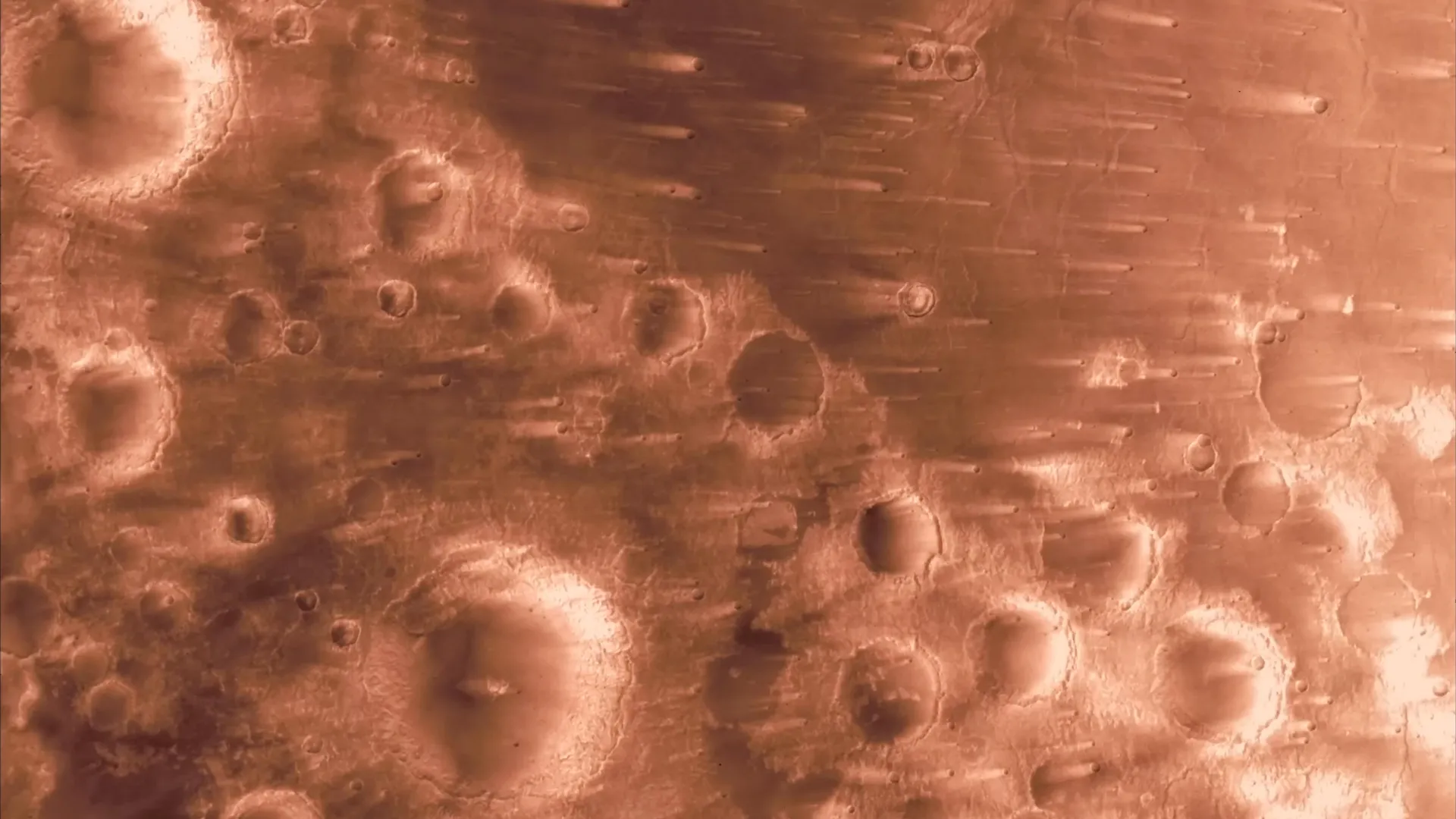
NASA’s Psyche Spacecraft Snags Jaw‑Dropping Timelapse of Mars Flyby
NASA’s Psyche probe, on its long journey to the metallic asteroid Psyche, swung by Mars this week and treated scientists to a breathtaking timelapse video of the Red Planet. The spacecraft, originally built to study a distant asteroid, used its high‑resolution camera to sweep past Mars at a blistering speed, stitching together thousands of images into a smooth, fast‑forward view that shows the planet’s swirling clouds, bright surface features, and the thin blue haze of its atmosphere.
The flyby, planned as a gravity‑assist maneuver to boost Psyche’s speed toward its final destination, turned into a public‑relations win, offering a vivid reminder of how robotic explorers can capture beauty while gathering data. Engineers highlighted how the video demonstrates the probe’s precise navigation and the robustness of its imaging system, even after months of deep‑space travel.
Fans and educators worldwide are already sharing the clip on social media, sparking excitement about upcoming missions. While Psyche’s primary goal remains the study of a metal‑rich asteroid that could reveal clues about Earth’s core, this stunning Mars cameo shows that every step of a space mission can deliver awe‑inspiring moments for both scientists and the public.
Read more

Could Inflammation Be Behind Those Unwanted Out‑of‑Body Episodes?
A new line of research suggests that chronic inflammation in the brain might be a hidden driver of persistent out‑of‑body experiences, also known as depersonalization‑derealization (DPDR). Scientists have observed that inflammation can disrupt the neural circuits that help us stay anchored to our bodies and surroundings, potentially leading to the unsettling feeling of watching oneself from a distance. While DPDR is considered rare, experts warn it is likely under‑diagnosed because many sufferers lack the language to describe their symptoms. Psychologist Dr. Lani Lanius emphasizes that understanding altered states of consciousness is essential for grasping broader mental‑health conditions. Neurologist Dr. Dilkes adds that “so many people experience this, but no one has the words or knowledge of what it is.” The findings are still preliminary, and researchers stress the need for larger studies to confirm whether anti‑inflammatory treatments could alleviate dissociative symptoms. If future trials succeed, targeting inflammation might become a novel therapeutic avenue for those struggling with chronic dissociation, offering hope where traditional psychiatric approaches have fallen short.
Read more

We’ve Been Scanning Millions More Stars for Alien Signals Than We Thought!
A fresh look at old SETI data shows that astronomers have actually examined far more of the Milky Way for extraterrestrial technosignatures than previously believed. By cross‑referencing a 2022 SETI survey—originally thought to cover 1,327 telescope pointings—with the Gaia star catalog, researchers discovered that the survey likely brushed past about 6.1 million stars, not just the 288,000 identified earlier. This dramatic jump comes from a new galactic model that accounts for stars hidden behind dust and those outside the catalog’s bright‑star limit.
The finding, highlighted by astronomer Dr. Mason, reshapes our sense of how much of the sky has already been “listened to.” “One of the most exciting things about this work is realizing that we’ve surveyed many more stars than initially thought,” she said, underscoring that the search for alien radio beacons may be far more extensive than assumed.
The implication is twofold: first, the odds of catching a faint, distant signal improve simply because the net is wider; second, it suggests that many regions of the galaxy—especially those we rarely monitor—could still be hiding whispers from other civilizations. As SETI projects expand and new telescopes come online, this broader baseline will help prioritize where to point our ears next, turning the hunt for alien life into a truly galaxy‑wide endeavor.
Read more

Why Britain’s £2 billion Quantum Plan Is About More Than Money
The United Kingdom has announced a £2 billion quantum‑technology programme, but the real story isn’t the headline figure – it’s the way the money is being spread across an entire ecosystem. Quantum computing is being treated as a national strategic asset, sitting alongside AI, advanced chips and next‑generation communications. That means the UK isn’t just buying faster processors; it’s funding the whole supply chain: research labs, software tools, networking hardware, manufacturing facilities, and the talent pipelines needed to keep the technology moving.
The plan also backs quantum‑sensing and secure‑communication projects, recognising that breakthroughs in these areas can deliver immediate benefits in fields like healthcare, defence and finance. By investing in training programmes and creating dedicated labs, the government hopes to nurture home‑grown expertise and keep Britain at the forefront of the global race.
In short, the £2 billion figure is a launchpad for a coordinated push that links hardware, software, skills and infrastructure. If the UK can build a deep, interconnected quantum ecosystem, it will secure a lasting competitive edge far beyond the initial cash injection.
Read more
China’s Ultra‑Fast 5G‑10G Network Boom Powers the New Digital Era
China’s latest communication infrastructure is moving beyond a simple upgrade – it’s laying the ‘digital main arteries’ for an intelligent future. By mid‑2026 the country has rolled out more than 5.1 million 5G base stations, covering over 330 cities, and installed 32.86 million 10‑gigabit fiber ports that bring gigabit‑speed internet to factories, mines, and rural homes. Over 80,000 private 5G networks and 1,260 ‘smart factories’ are already online, while 94 industry sectors are tapping the high‑speed links for everything from AI‑powered smartphones to intelligent robots and AI‑enabled toys. A space‑air‑ground network is taking shape, with satellite internet expanding and a 6 GHz band earmarked for 6G trials. The government is urging faster commercialization, urging firms to turn laboratory breakthroughs in ultra‑high‑speed optics, submarine cables and satellite tech into mass‑produced equipment. Analysts forecast the new‑generation network could generate about 7 trillion yuan in economic output over the next five years, cementing China’s competitive edge in the global digital economy. The push aims to turn the network’s raw speed into real‑world applications that boost productivity, lower latency for remote control and AI‑driven quality checks, and ultimately connect every device, person and industry in a seamless digital ecosystem.
Read more
China’s Science Powerhouse: How the Academy is Driving the Quest for Interstellar Exploration
The Chinese Academy of Sciences (CAS) is the nation’s premier research institution and a key engine behind China’s push into deep‑space and interstellar science. Founded in 1949, CAS has spent more than seven decades building a massive network of research institutes, universities, and specialized bureaus that cover everything from basic physics to high‑tech engineering. Its core mission is to conduct mission‑oriented basic research, develop disruptive technologies, and turn scientific breakthroughs into real‑world benefits for the country.
CAS’s organizational chart reads like a map of modern science: a General Office oversees bureaus for innovation, basic research, strategic high‑tech projects, major national initiatives, sustainable development, and international cooperation. Branches spread across major cities—Shenyang, Shanghai, Wuhan, Guangzhou, Chengdu, and more—while affiliated schools such as the University of Science and Technology of China, the University of Chinese Academy of Sciences, and ShanghaiTech nurture the next generation of innovators.
Beyond education, CAS runs a suite of national awards, high‑impact journals, and special‑project platforms that accelerate cutting‑edge work, including the kind of frontier research needed for interstellar exploration. By uniting talent, funding, and policy under one roof, CAS aims to keep China at the forefront of scientific discovery and to turn the dream of traveling beyond our solar system into a realistic, long‑term goal.
Read more
China’s Top Science Hub Boosts Satellite Vision with Cutting‑Edge Imaging Tech
The Chinese Academy of Sciences (CAS), the nation’s premier research institution, is rolling out a new wave of high‑resolution satellite sensors that promise dramatically sharper pictures of Earth from space. Founded in 1949, CAS has long served as China’s scientific think‑tank, driving breakthrough research in everything from basic physics to advanced engineering. Its sprawling network of research institutes, universities, and regional branches works under a unified mission: to turn bold ideas into practical technologies that fuel national prosperity and protect security.
In its latest push, CAS scientists are integrating next‑generation optics, AI‑driven image processing, and ultra‑light materials into satellite payloads. The result will be clearer, faster, and more reliable Earth‑observation data for weather forecasting, disaster response, agriculture, and urban planning. The initiative reflects CAS’s broader strategy of mission‑oriented research—combining fundamental science with real‑world applications—to keep China at the forefront of global innovation. With over 70 years of history, a roster of Nobel laureates, and a commitment to nurturing talent, CAS continues to turn ambitious concepts into tangible benefits for everyday life.
Read more
U.S. Unveils $125 Million UCLA Chip Hub, Uniting Tech Giants to Power the AI Revolution
In May, the United States launched its first large‑scale semiconductor research center at UCLA’s Samueli School of Engineering, backed by a $125 million investment. The effort brings together industry heavyweights—Broadcom, Applied Materials, GlobalFoundries, Meta, and Synopsys—into a five‑year partnership aimed at fast‑tracking next‑generation AI chips.
The hub’s mission is three‑fold: accelerate breakthrough AI‑focused chip technology, shore up America’s lead in the global semiconductor market, and close the domestic talent gap for high‑end chip engineers. By pooling resources across the entire chip supply chain—materials, design software, wafer fabrication, equipment, and cloud infrastructure—the consortium hopes to dissolve the traditional divide between academic research and commercial production.
Research will target four priority areas: tightly integrated AI hardware‑software systems, ultra‑wideband high‑speed data links, energy‑efficient chips with advanced thermal management, and cutting‑edge packaging methods. The work also explores edge‑AI inference, self‑optimising data centers, and future communication tech such as terahertz and optical links.
If successful, the innovations could transform autonomous vehicles, robotics, environmental monitoring, and aerospace, boosting industrial resilience, security, and worldwide connectivity while reinforcing the United States’ strategic semiconductor supply chain.
Read more
How China’s Top Science University Is Turning Research Into Real‑World Innovation
At the end of 2025, the Chinese Academy of Sciences helped the University of Science and Technology of China (USTC) launch the nation’s first “demonstration zone” that tightly weaves together education, scientific research and talent development. The goal is to move beyond simply housing labs and classrooms and create a true “chemical reaction” where breakthroughs, training and commercialization feed each other.
A flagship of the zone is the newly opened Hefei Advanced Light Source, a synchrotron facility that acts like a powerful microscope for material science. Its history dates back to 1989 when a youthful team built the original Hefei Light Source in record time, a legacy that now powers cutting‑edge work in quantum information, high‑temperature superconductivity and space exploration.
USTC has reshaped its research culture: long‑term funding replaces yearly quotas, peer‑review replaces performance reports, and success is measured by solved problems, not paper counts. This environment helped scholars solve long‑standing mathematical puzzles and, with AI, crack a half‑century‑old catalysis mystery.
Students are part of the research engine from day one. An 18‑year‑old team won a national AI competition by creating a natural‑language tool for early Alzheimer’s screening. Freshmen attend seminars taught by academicians, rebuild Nobel‑prize experiments, and join integrated science‑education programs that turn classroom learning into real‑world problem solving.
Together, the demonstration zone showcases how a focused, supportive ecosystem can turn basic science into tangible innovations while training the next generation of world‑class scientists.
Read more