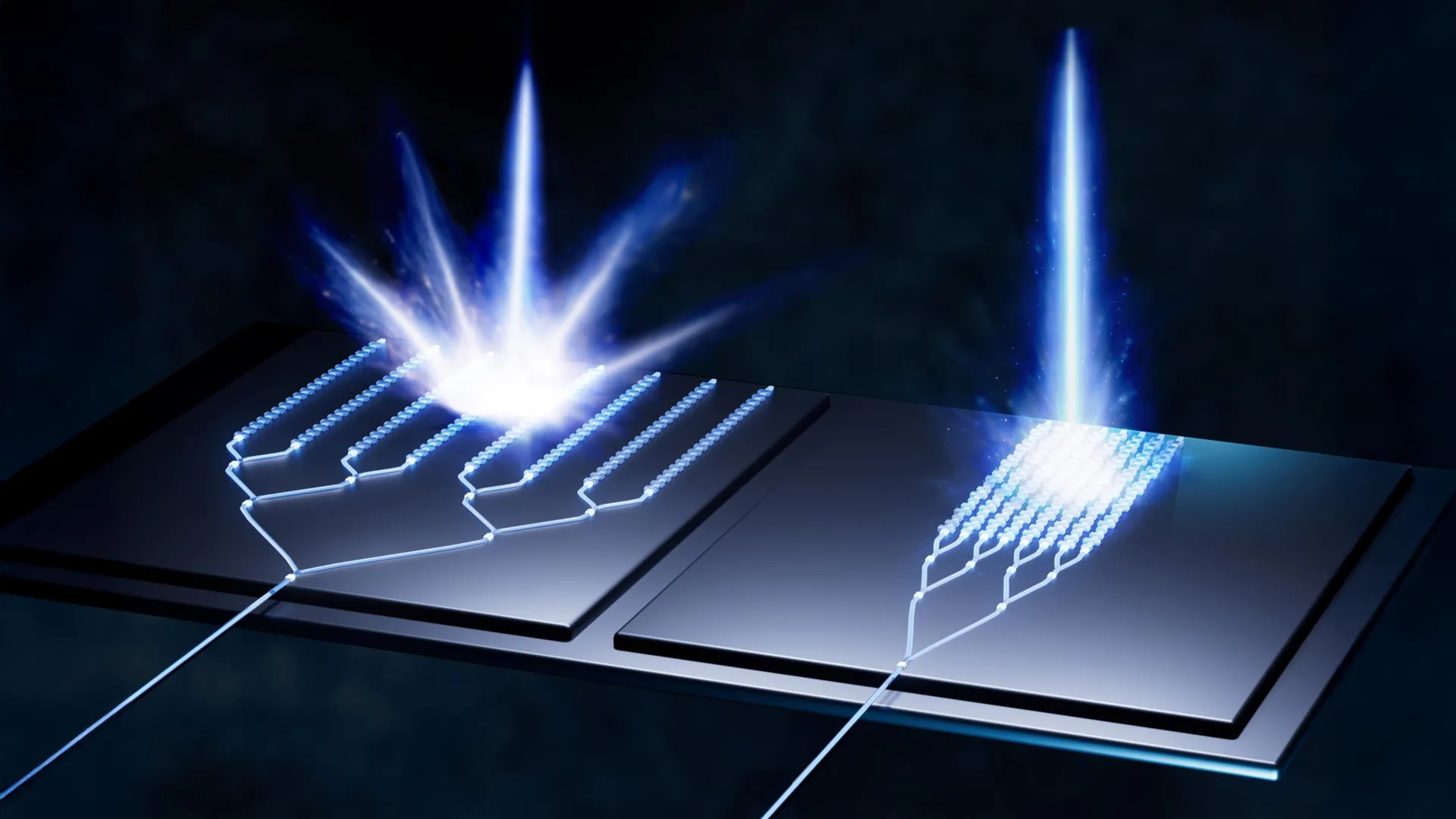
MIT Unveils Tiny Lidar Chip That Gives Self‑Driving Cars a Panoramic Eye
MIT researchers have announced a breakthrough in lidar technology—a compact, rugged chip that dramatically widens the field of view for autonomous vehicles, drones, and industrial robots. The new sensor, built on a silicon‑photonic platform, can capture high‑resolution 3‑D data across a 360‑degree horizon while fitting into a fraction of the space required by current lidar units. Its solid‑state design eliminates moving parts, making it far more resistant to shock, vibration, and harsh weather—key challenges for cars that need to see clearly in rain, snow, or dusty environments.
The project was funded by a coalition of public and private sponsors, including the Semiconductor Research Corporation, the National Science Foundation, a MIT MathWorks Fellowship, the U.S. Department of Defense, and the MIT Rolf G. Locher Endowed Fellowship. Much of the work took place in MIT’s nano‑fabrication cleanroom, MIT.nano, where engineers integrated advanced photonic circuits with custom electronics to boost range and speed.
If commercialized, the chip could shrink lidar packages, lower costs, and enable tighter integration with vehicle electronics, paving the way for safer, more reliable self‑driving cars and smarter autonomous systems across a range of applications.
Read more
How China’s ‘Inclusive’ AI Vision Is Closing the Global Tech Gap, Says Foreign Media
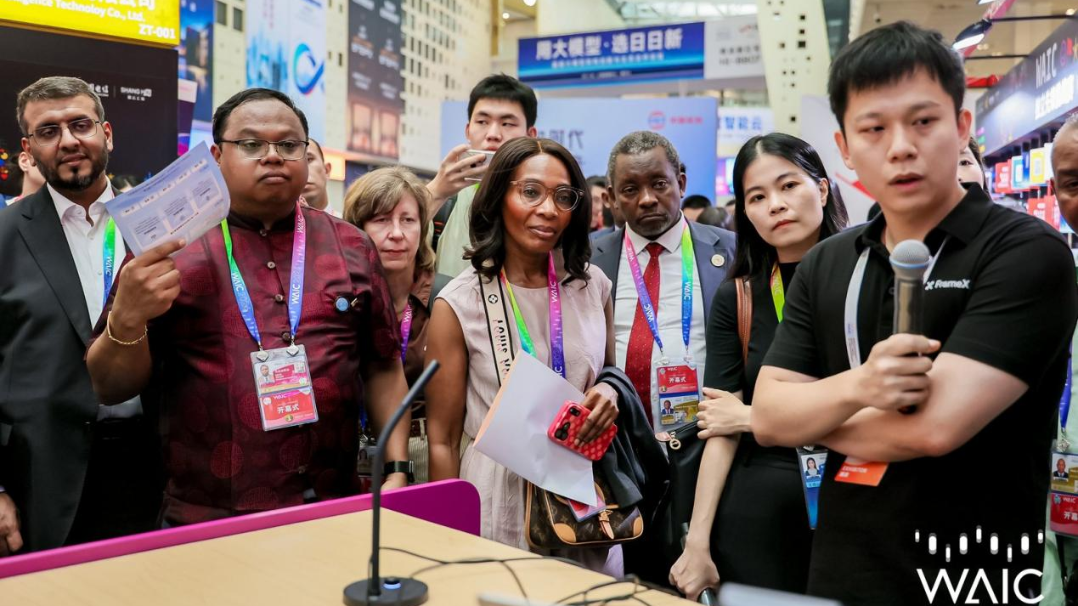
Foreign reporters are praising China’s new “inclusive” approach to artificial intelligence, saying it could narrow the widening gap between high‑tech powerhouses and the rest of the world. At the heart of the strategy are Chinese tech firms that are releasing large‑language models as open‑source projects, inviting developers everywhere to tinker, improve and deploy them without hefty licensing fees. The move is being framed as a win‑win: it gives China a foothold in the fast‑moving AI race while handing developing nations affordable, cutting‑edge tools for education, healthcare, agriculture and small‑business innovation. Analysts note that China’s policy mix—state‑backed research funding, relaxed data‑sharing rules and a push for cross‑border collaboration—creates a fertile ecosystem that rivals the more closed‑off models of the West. In practice, the open‑source models are already being adapted for local languages, low‑resource settings and industry‑specific tasks, helping countries that lack the resources to build AI from scratch. Observers say the inclusive model could reshape global tech dynamics, turning AI from a luxury of a few into a shared engine for worldwide development.
Read more
WAIC 2026 Recap: 15 AI Trends Shaping the Future
The World Artificial Intelligence Conference (WAIC) 2026 turned Shanghai into a buzzing showcase of the next wave of AI. Over three days, our team walked more than 70,000 steps, visited 500+ booths and distilled the event into 15 clear trends.
1. **AI‑powered phones** are moving from add‑on features to devices built around native intelligent agents, promising a new OS experience.
2. **Smart wearables**—glasses and ear‑buds—are getting lighter, longer‑lasting batteries and focused functions like translation and fitness tracking.
3. **Intelligent agents** have become the backbone of AI, appearing in everything from banking to power‑grid operations as virtual “AI colleagues.”
4. Big tech giants (Alibaba, Tencent, Baidu, JD.com) are betting on all‑in platforms that bundle chips, super‑nodes, large models and embodied AI.
5. New **large language models** are exploding: Kimi K3 (2.8 T parameters) went open‑source, Alibaba previewed Qwen 3.8 (2.4 T), and MiniMax is set to release a 2.5‑3 T model soon.
6. The “Six Little Tigers” of Chinese AI are diversifying—StepStar into AI phones, Moonshot into design, MiniMax into full ecosystems, 01.AI with personality‑test bots, and Baichuan focusing on AI healthcare.
7. **Domestic chip and computing** solutions now claim 100 % localization, with super‑nodes, optical and quantum computing entering the race.
8. AI chip makers displayed end‑to‑end stacks from silicon to cloud services.
9. **Tokens** are replacing FLOPS as the unit of AI compute, turning infrastructure providers into “token factories.”
10. China now ships nearly 70 % of the world’s quadruped robots and over half of humanoid units, marking the year robots entered real‑world work.
11. Current robot demos still struggle with heat and battery limits, but the focus is shifting to smarter “brains, eyes and hands.”
12. **Embodied intelligence** is forming a closed loop of hardware, models and data, with startups racing to improve tactile perception and fine‑motor control.
13. Companies like Xinuoweilai, Rikaiwu, Mogan Technology and Yimu Technology (valued > ¥100 bn) are attracting fresh funding for agile‑hand tech.
14. Physical AI data remains scarce; collection via real‑world training, simulation and wearables is becoming a prized resource.
15. In health and science, AI continues to boost diagnostic accuracy and accelerate research in life sciences, critical materials and climate studies.
Overall, WAIC 2026 signaled a shift from raw model size battles to practical, agent‑driven AI that integrates hardware, software and real‑world applications.
Read more
China’s Robots Are Winning Overseas: From Cheap Machines to Smart Solutions at WAIC 2026
From July 17‑20, 2026, Shanghai hosted the World Artificial Intelligence Conference (WAIC) and a high‑level AI‑governance summit, where more than 150 robots took center stage. The event marked a turning point for China’s robot industry: instead of selling low‑cost hardware, Chinese firms are now exporting complete supply‑chain solutions and services. Companies such as Runkee, Fourier and Matrix Super Wisdom demonstrated robots that can thread needles, perform band‑style dances, lift 16 kg loads, and even serve coffee as humanoid baristas.
Runkee’s centaur‑shaped robots, built for steel plants, nuclear sites and oil‑field inspections, now source over 95 % of core parts domestically, cutting total costs to 30‑50 % of comparable foreign models. Fourier’s dual‑arm robot GRW tackles heavy‑load tasks in warehouses, factories, and elder‑care settings, while Matrix Super Wisdom showcases general‑purpose humanoids that interact emotionally with people.
The newly released 2026 Robot White Paper projects the global robot market to swell from about 400 billion yuan in 2025 to 2.12 trillion yuan by 2035. Chinese companies already account for more than 80 % of commercial service‑robot shipments worldwide and lead in humanoid‑robot patents. The shift from “product export” to “capability and ecosystem export” is driving rapid growth, positioning China as a dominant force in the next decade of robotics.
Read more
China’s New Renewable Energy Roadmap: Ambitious Targets for 2030
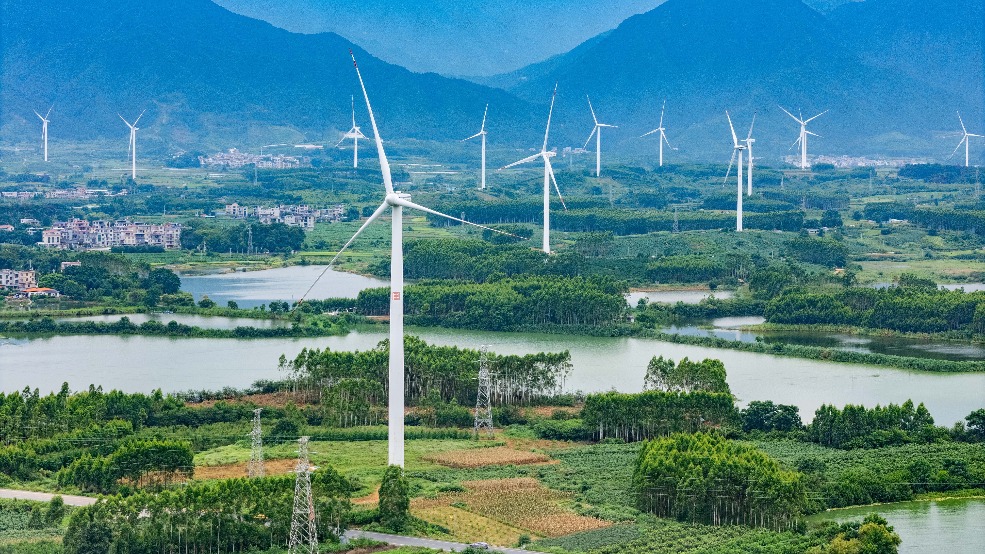
On July 23, officials from the National Development and Reform Commission and the National Energy Administration explained China’s freshly released Renewable Energy Development “15th Five‑Year Plan.” The plan sets out a bold vision for the next five years, aiming to boost both the amount and quality of clean power while making it a reliable substitute for coal and gas.
Key goals for 2030 include:
• Renewable energy consumption reaching roughly 1.8 billion tons of standard coal.
• Installed renewable power capacity hitting about 3.5 billion kilowatts, with wind and solar alone exceeding 2.8 billion kilowatts—over half of total capacity.
• Annual renewable electricity generation climbing to around 6 trillion kilowatt‑hours, and wind‑solar output surpassing 4 trillion kilowatt‑hours.
• Non‑electric uses of renewables (like heating and industry) expanding by 1.5 times the 2025 level.
• Reliability targets such as an 8 % average confidence output for wind and solar and more than 20 % of evening‑peak electricity supplied by these sources.
The plan stresses three guiding principles: integrating multiple energy types, coordinating grid and generation, and prioritising efficiency and cost‑effectiveness. It calls for stronger market mechanisms, clearer regulations, and better land‑sea resource guarantees. By meeting these milestones, China hopes to secure energy supply, cut carbon emissions, and cement renewables as the backbone of its future power system.
Read more