China’s AI Push Shifts From Power‑Hungry Chips to Cost‑Smart Computing
At the 2026 World Artificial Intelligence Conference, China’s AI industry announced a new direction: instead of racing to build the most powerful chips, the focus is now on making computing cheaper and more energy‑efficient. The government even added “computing‑power coordination” to its work report, signalling a policy push to lower the cost of AI inference – the step where a model turns data into answers.
The change is driven by a massive surge in AI usage. Daily token consumption jumped from 100 billion in early 2024 to 140 trillion by March 2026 – a thousand‑fold increase. With such scale, every watt of electricity and every cent spent matters. The new performance yardstick is not peak speed but how many useful AI results can be produced per unit of power and cost.
Chip makers are being asked to design hardware that matches real‑world tasks – from automatic coding to customer‑service bots – rather than just chasing raw horsepower. China’s huge market of smart devices gives it a unique advantage to shape chips that fit its own applications.
At the same time, domestic chip development is seen as a way to cut costs and protect security amid global supply‑chain uncertainties. The message from WAIC is clear: the next decade of competition will be won by affordable, secure, and scenario‑ready computing power that can power AI across every industry.
Read more
China Supercharges 5G‑A Gigabit Uploads and Rolls Out 6G, Satellite Links, and Smart‑Industry Networks
China’s telecom giants are turbo‑charging the country’s digital backbone. In Beijing, China Mobile, ZTE and Huawei have equipped more than 1,000 base stations with 5G‑A “Super Uplink” technology that can push upload speeds up to 1 Gbps – a first for commercial networks and a game‑changer for data‑heavy services like autonomous driving, AI‑driven apps and ultra‑HD live streams. By the end of March, the 5G‑A network reached 330 Chinese cities, putting the nation ahead of the world in coverage, user base and technical know‑how.
While 5G‑A spreads, China is already testing 6G. The first phase of 6G trials is complete, with over 300 key technologies secured and a dedicated 6 GHz trial band approved. The Zijinshan Laboratory now hosts the world’s inaugural 6G communication‑sensing field‑test network, and a government‑led pilot aims to deliver independent 6G solutions by 2029.
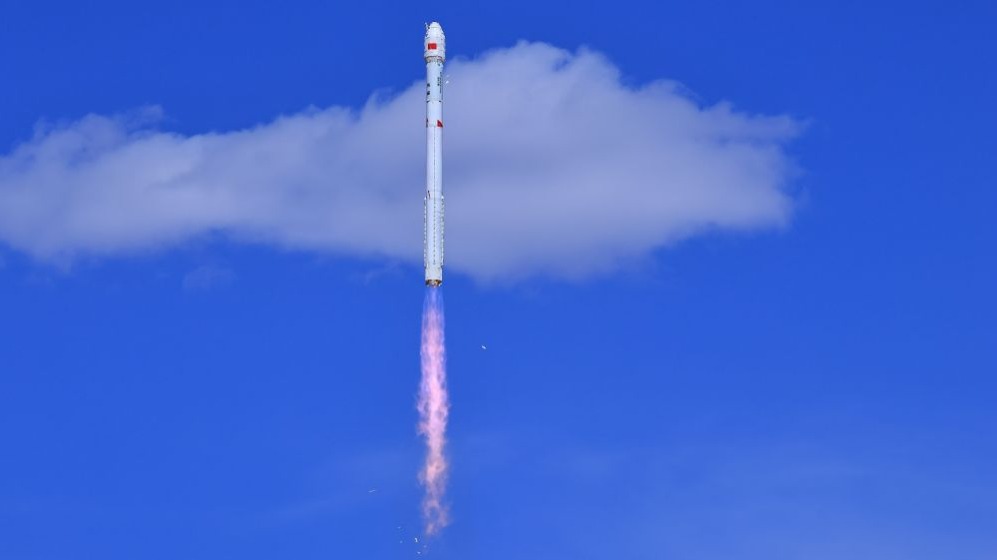
Space‑ground integration is also moving fast. A recent launch placed two satellites – Qianfan DTC01 and China Mobile 02 – into orbit to test direct mobile‑phone links from space. China Telecom demonstrated a new high‑orbit/medium‑orbit hand‑over that cuts latency from 300 ms to just 26 ms, making satellite‑to‑phone switches virtually invisible. The Beidou SMS service now lets users send text messages via the navigation satellite system without swapping SIM cards.
On the ground, the country is weaving dedicated 5G networks into factories, mines, pipelines and offshore cables, eliminating blind spots and powering the “5G + industrial internet” wave. Over 80,000 virtual industry‑specific 5G networks are live, supporting more than 26,000 projects and 1,260 classified “5G factories.”
Together, these advances turn China’s communication infrastructure from a simple connection pipe into a core engine for industrial upgrade, smart‑city innovation and a future where everything—from phones to factories to satellites—talks seamlessly.
Read more
China’s Tech Boom: Humanoid Robots Lead Global Market and New Breakthroughs in Rockets, Batteries, and 5G Factories
China’s Ministry of Industry and Information Technology says the country now makes more than half of the world’s humanoid robots, a sign that home‑grown tech is taking the lead. Officials highlighted how fast‑growing “emerging industries” are becoming the engine of the nation’s economy.
Key milestones this year include the Long March 10B rocket’s first‑stage recovery – the first time a Chinese carrier rocket has been safely brought back and the world’s first network‑guided recovery – marking a leap forward for reusable launchers. In electric cars, a new “blade” battery paired with a megawatt‑level flash‑charging system promises fast charging, long range, long life and low‑temperature performance all at once. A breakthrough in carbon‑fiber production now lets China mass‑produce ultra‑strong T1200 fibers at a hundred‑ton scale, a world‑first.
The rollout of 5G‑enabled factories is already boosting output by about 25 % in a sample of 100 sites, while remote‑controlled surgical robots have performed more than 3,000 minimally invasive procedures. Inspection robots are working in underground mines and high‑voltage tunnels, and AI‑driven visual inspection now spots micron‑level defects five times faster than humans. In drug research, large AI models have cut pre‑clinical development time for new anti‑cancer drugs by roughly 40 %.
Together, these advances show how China’s high‑tech push is reshaping manufacturing, healthcare, space travel and clean energy.
Read more

China’s Cutting‑Edge Science: From Stem Cells to Deep‑Space Telescopes
China is rapidly becoming a world leader in a wide range of high‑tech fields. In biotechnology, researchers at Peking University have made breakthroughs in guiding stem cells to become specific tissue types, while Nobel laureate Tu Youyou’s work on traditional Chinese medicine earned her the 2015 Nobel Prize in Physiology or Medicine. In laser science, China joined the United States and France as the only nations that can fire a single‑beam laser with more than ten thousand joules of energy.
The country’s nuclear research is also advancing: a superconducting tokamak device achieved a steady‑state, high‑confinement plasma run lasting over a hundred seconds, a world first for magnetic‑fusion experiments. China’s “Shenguang” inertial‑confinement machines and the ultra‑deep Jinping underground laboratory (2.4 km of rock overhead) are key assets for dark‑matter searches. In 2015 China launched a satellite dedicated to detecting dark‑matter particles, and a 2017 hard‑X‑ray telescope now scans the sky for black holes and other high‑energy phenomena.
On the engineering side, the 500‑meter aperture spherical radio telescope, completed in 2016, is the largest single‑dish dish on Earth and has already discovered more than 80 pulsars. Chemically, China was the first to synthesize crystalline bovine insulin in 1965 and, in 2021, created artificial starch directly from carbon dioxide. The nation dominates the global rare‑earth market, controlling the entire supply chain from mining to high‑tech applications, and leads in producing advanced materials such as photovoltaic cells, super‑hard alloys, and specialty steels. Together, these achievements showcase China’s growing influence across science, technology, and industry.
Read more
Breakthroughs in Green Energy: Guangzhou Institute’s Latest Innovations
The Guangzhou Institute of Energy Conversion is racing ahead with a suite of green‑tech breakthroughs that could reshape how we power our world. In May 2026, researchers unveiled a method to turn “emerging solid waste” into valuable metals such as lithium, silver, nickel and cobalt, offering a new source for battery materials while cleaning up waste streams. A few weeks earlier they launched a user‑friendly “Geothermal Calculator” software that simulates underground heat extraction, making geothermal projects faster and cheaper to design.
The institute also reported major strides in recycling retired power‑battery packs, optimizing the whole recovery system to boost efficiency and lower costs. A novel ultra‑long gravity heat‑pipe cooling system—designed to circulate heat without external power—was introduced, alongside an “electricity‑to‑ice” storage concept that could store surplus offshore wind energy as frozen water for later use.
Other highlights include a new offshore renewable‑energy assessment framework, innovative carriers for growing micro‑algae, and catalytic upgrades that turn high‑carbon phenols into useful chemicals. The institute’s water‑phase‑change latent‑heat technology is already being deployed in Xiong’an’s new district, while advanced processes recover precious metals from e‑waste and convert CO₂ into methanol. Recent collaborations at global science forums and up‑cycling strategies that blend retired lithium batteries with mining tailings further underline the institute’s commitment to a circular, low‑carbon future.
Read more