
AI Meets Quantum: New Peptide Designs Promise Faster Drug Discovery
A research team at Denmark’s Technical University (DTU) has shown that pairing generative AI with a quantum computer can create novel peptide molecules—tiny protein fragments that could become the next generation of medicines. By feeding the AI a library of known peptides and letting a small‑scale quantum processor explore countless variations, the scientists produced a more diverse set of candidates, especially for targets where data are scarce. The breakthrough is more than a scientific curiosity; the team’s founder, Patrick Jenkins, says it demonstrates a near‑term commercial use for quantum hardware. His startup is already testing the workflow with oil giant BP to speed up chemical synthesis and with Toyota to streamline vehicle‑design simulations.
Looking ahead, the group plans to scale the method to larger proteins and more sophisticated AI models. They see huge potential in neglected‑disease research, where funding is limited, and even envision quantum‑boosted AI designing synthetic antidotes for deadly snake‑bite venom. While today’s quantum machines are still too small to run the biggest AI models, the experiment proves the concept works and hints at a future where quantum‑enhanced AI could accelerate drug discovery, reduce costs, and open doors to treatments that were previously out of reach.
Read more

T‑Mobile Pulls the Plug on 2G: Time to Upgrade Your Phone
When 2G first hit the streets in the 1990s, it was a breakthrough – digital voice, encrypted calls and the birth of SMS. Back then, smartphones didn’t exist; the first iPhone in 2007 still relied on 2G, and early Android phones launched with 3G capability. Over the years, every major carrier has said goodbye to 2G: AT&T in 2017, Verizon in 2020, and even T‑Mobile’s own 3G network vanished in 2022. Now T‑Mobile is finally shutting down its 2G network and urging the few remaining users to move on.
For most customers, the change will be barely noticeable because modern phones run on 4G LTE or 5G, delivering lightning‑fast data, high‑definition video, cloud services and support for billions of connected devices. T‑Mobile says anyone still on a 2G handset will gain quicker speeds, access to the new T‑Satellite data service, and more accurate 911 location tracking after upgrading. In short, if your phone still shows a 2G icon, it’s time to trade it in for a newer model and enjoy a smoother, safer, and faster mobile experience.
Read more

Scientists Harness Black‑Hole‑Like Power in a Lab Experiment
Researchers at the Advanced Science Research Center have built a tabletop device that mimics the extreme spin of a black hole and demonstrated how to pull energy out of it. Using rapidly rotating electromagnetic fields, the team observed a phenomenon called "super‑radiance," where waves gain energy from the rotation—an effect first predicted for real black holes decades ago. The experiment confirms that the famous Penrose process, once thought to be purely theoretical, can be reproduced in the lab. While the setup is far from a practical power source, the findings could spark new ways to steer light, boost quantum‑computing operations, and create ultra‑fast communication links by exploiting the same physics. The work, funded by the U.S. Department of Defense, the National Science Foundation and the Simons Foundation, appears in Nature. By bringing one of the universe’s most extreme environments into a controlled setting, the researchers open a fresh avenue for studying exotic physics and exploring future technologies inspired by black‑hole dynamics.
Read more

Fusion Startup General Fusion Soars 40% on First Day of Trading
General Fusion, the veteran fusion‑energy startup, made a splash on Wall Street on Monday, jumping more than 40% from its opening price of $12.85 as the market opened. The surge follows the company’s completion of a reverse merger with Spring Valley Acquisition Corp. III, turning it into the first publicly traded fusion firm. While the deal could have brought as much as $230 million into the balance sheet, heavy redemptions typical of SPAC deals have trimmed that figure dramatically – analysts estimate the net cash infusion may be under $30 million after fees.
Founded in 2002, General Fusion has already raised over $600 million from private investors and now reports roughly $150 million in cash after a recent $108 million private raise. Its core technology, magnetized target fusion, uses powerful electromagnetic fields to create a hot plasma inside a lithium‑lined chamber, then compresses the lithium with synchronized pistons to trigger fusion.
The company had been cash‑strapped, missing a $125 million fundraising target and slashing about a quarter of its workforce in 2025. A modest $22 million “pay‑to‑play” round later gave it breathing room, but the SPAC merger was seen as the decisive step to secure the capital needed for its ambitious energy goals. Investors appear eager to back the promise of clean, limitless power, propelling General Fusion’s stock to its impressive debut.
Read more
China’s Reusable Rocket Milestone Sparks Race to Flood Space with 60,000 Satellites
In the summer of 2026 China’s commercial space sector celebrated a game‑changing achievement: the Long March 10B’s first stage returned safely to Earth, marking the nation’s first controlled recovery of a launch‑vehicle booster. The breakthrough promises to slash launch costs dramatically—similar to SpaceX’s Falcon 9, a reused rocket could bring the price down to about $2,000 per kilogram after ten flights. Yet the excitement comes with a daunting task. Industry leaders say China must launch roughly 60,000 low‑orbit satellites in the next decade, which translates to about 300 launches a year if each rocket carries 20 payloads. Current launch cadence can’t meet that demand, so reusable rockets are seen as the only realistic path forward.
Private firms are racing to catch up. Blue Arrow Aerospace completed a static‑fire test of its Zhuque‑3 reusable carrier, Galaxy Power’s Cangqiong‑50 engine has logged 57 hot‑fire tests, and companies such as Deep Blue Aerospace and Interstellar Glory are also advancing recovery technology. With rockets becoming cheaper, the industry’s focus is shifting to the satellites themselves. Engineers are developing modular, mass‑produced thermal‑control systems that can handle the 10‑100 kW power loads of next‑generation “computing” satellites, cutting weight by more than 60 %.
At the same time, managing thousands of satellites demands a new kind of autonomous control. Experts envision a closed‑loop “perception‑computation‑control‑execution” system that operates continuously in space, moving decision‑making from ground stations to intelligent agents in orbit. By combining reusable launchers, standardized satellite factories, and AI‑driven constellation management, China aims to turn the lofty goal of 60,000 satellites into a practical, cost‑effective reality.
Read more
Chinese Scientists Turn Ice‑Cold Trick Into a ‘Smart Switch’ for Ultra‑Thin Water Filters
A team of researchers from the Chinese Academy of Sciences, City University of Hong Kong and Beijing Normal University has turned a simple observation about freezing water into a high‑tech solution for clean‑water and mineral‑recovery challenges. By exploiting the fact that water freezes at a slightly lower temperature when trapped between ultra‑thin sheets of graphene oxide, the scientists discovered a “ice‑point difference” that lets them fine‑tune the gap between the sheets. They used this effect as a “smart switch” to lock the spacing in place with a polymer, creating a stable, two‑dimensional membrane that can separate ions with unprecedented precision. The new graphene‑oxide‑polymer composite membrane can distinguish rubidium and potassium ions whose hydrated sizes differ by less than 0.1 angstrom—about one‑ten‑millionth of a millimeter. Published in *Nature*, the work promises a breakthrough for tackling water scarcity and extracting valuable minerals from seawater or wastewater. The discovery marks a major step forward for 2D membrane technology and showcases China’s growing leadership in cutting‑edge material science.
Read more
Boosting China’s Science: Why Fresh Funding and New Labs Are Key to the Next Big Breakthroughs
China’s leaders say the country must step up its basic scientific research if it wants to stay ahead in the next wave of global technology competition. In a recent round‑table, top scholars explained that today’s economic shift—from rapid growth to high‑quality development—creates an urgent need for “source innovation,” the kind of deep, original discoveries that fuel new industries. They warned that without a solid grasp of fundamental principles, China will remain dependent on foreign materials, equipment and software. The panel stressed two complementary approaches: goal‑oriented projects that target national priorities such as AI, biosafety and advanced materials, and free‑exploration research that pursues curiosity‑driven questions without immediate commercial pressure. New research hubs like the Zhongguancun Artificial Intelligence Institute are praised for their flexible, industry‑linked structures, which help turn scientific ideas into marketable products. Experts called for a more balanced funding mix, stable long‑term support for exploratory work, and mechanisms that let industry pose real‑world problems while academia supplies the answers. By aligning investment, institutional design, and research strategy, China hopes to generate the “zero‑to‑one” breakthroughs needed for future economic strength.
Read more
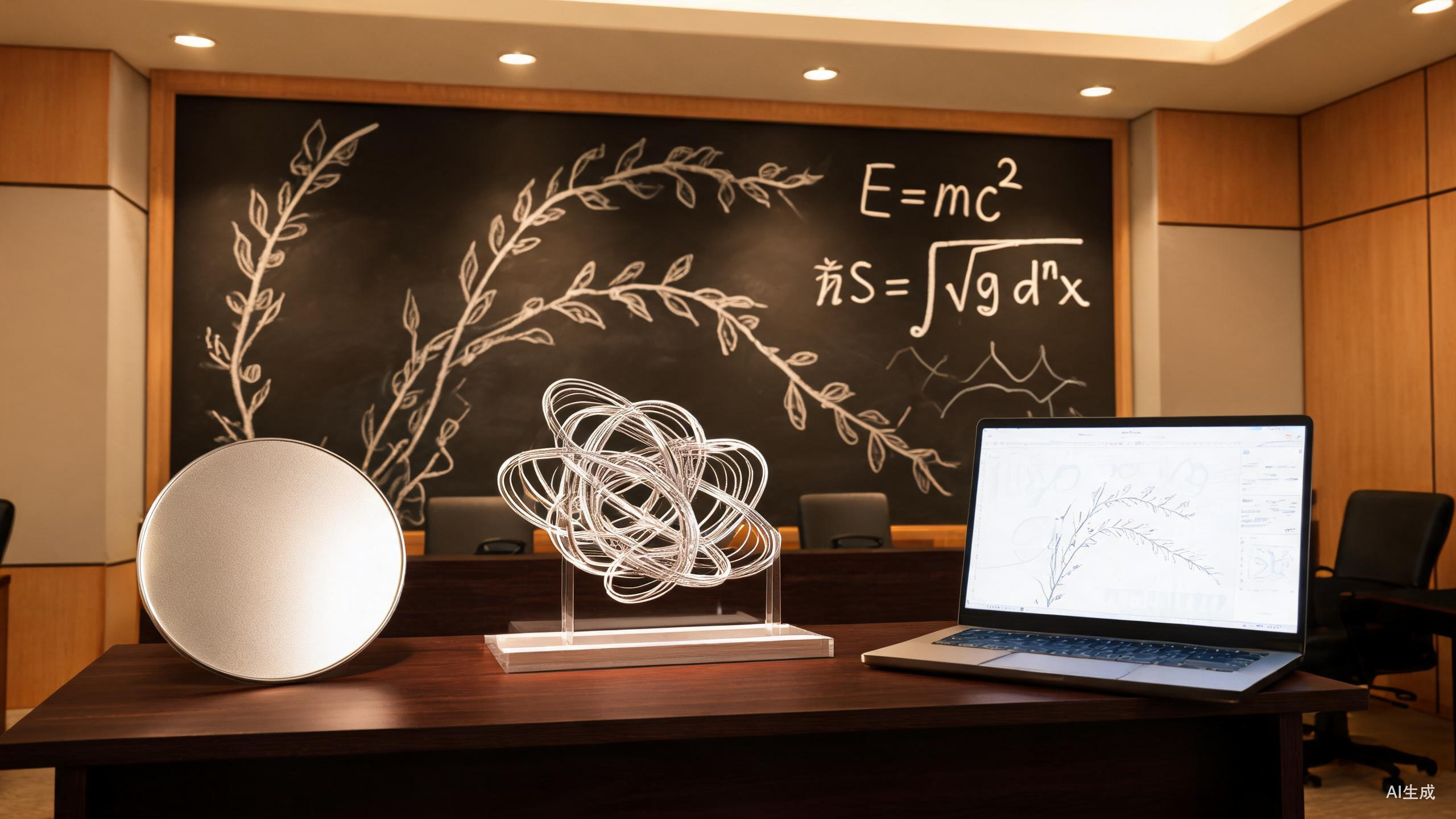
Fields Medal at 39: How Edward Witten’s Twisty Path Shows PhDs Can Thrive Beyond Academia
At the Strings 2026 conference in Shanghai, legendary theoretical physicist Edward Witten—often called the smartest living physicist—sat down for a candid chat. Witten’s journey is anything but linear. He began as an undergrad studying history and linguistics, flirted with politics and journalism, then switched to economics before finally discovering a love for mathematics and physics at Princeton. By 25 he earned his PhD, and at 39 he became the only physicist ever to win the prestigious Fields Medal.
Witten praised China’s rapid rise in theoretical physics, noting the surge of brilliant young Chinese researchers who constantly challenge him. He sees artificial intelligence as a helpful “colleague” that can crunch numbers and retrieve facts, but he doubts AI can yet generate original ideas or true physical intuition.
When asked about career options for math and physics PhDs, Witten stressed that research isn’t the sole route. Many of his own 1976‑class peers now work in tech, finance, biology, or other fields, and he believes it’s realistic for graduates to pursue diverse paths. While he admires China’s commitment to basic science, he admits he can’t offer specific policy advice. Ultimately, Witten’s story underscores that curiosity, flexibility, and a willingness to explore new disciplines can lead to groundbreaking achievements—whether inside or outside the ivory tower.
Read more
AI Powers the Future of Global Energy: China Showcases Smart‑Grid Breakthroughs
From July 9‑11, Chengdu hosted the 2026 China Smart Energy Conference, drawing government officials, international organisations and energy firms from across Asia. Speakers highlighted a shift from “AI helps energy” to a two‑way partnership where energy data fuels smarter AI, and AI, in turn, optimises power generation, transmission and consumption.
China’s smart‑energy sector is moving out of pilot projects into large‑scale, commercial roll‑outs. Smart grids are being upgraded, virtual power plants are aggregating resources, and AI models are now forecasting renewable output, balancing loads and spotting equipment faults. Huawei’s Gan Binbin explained how AI agents improve the accuracy of wind‑and‑solar forecasts, while Alibaba Cloud’s Huang Zhen outlined a four‑step plan to match energy and computing resources across borders.
International delegates were eager to learn. Indonesia’s Kevi Alivarga toured Chinese booths to explore adaptable smart‑energy platforms for his country’s growing digital economy. Bangladesh’s Muzaffar Ahmed discussed financing hurdles for renewable projects in remote areas, and mountain‑region experts stressed the need for grid intelligence and cross‑border links.
Overall, the conference underscored China’s ambition to export its end‑to‑end smart‑energy solutions—spanning AI‑driven forecasting, grid safety, and digital coordination—to help nations accelerate a low‑carbon, reliable power future.
Read more