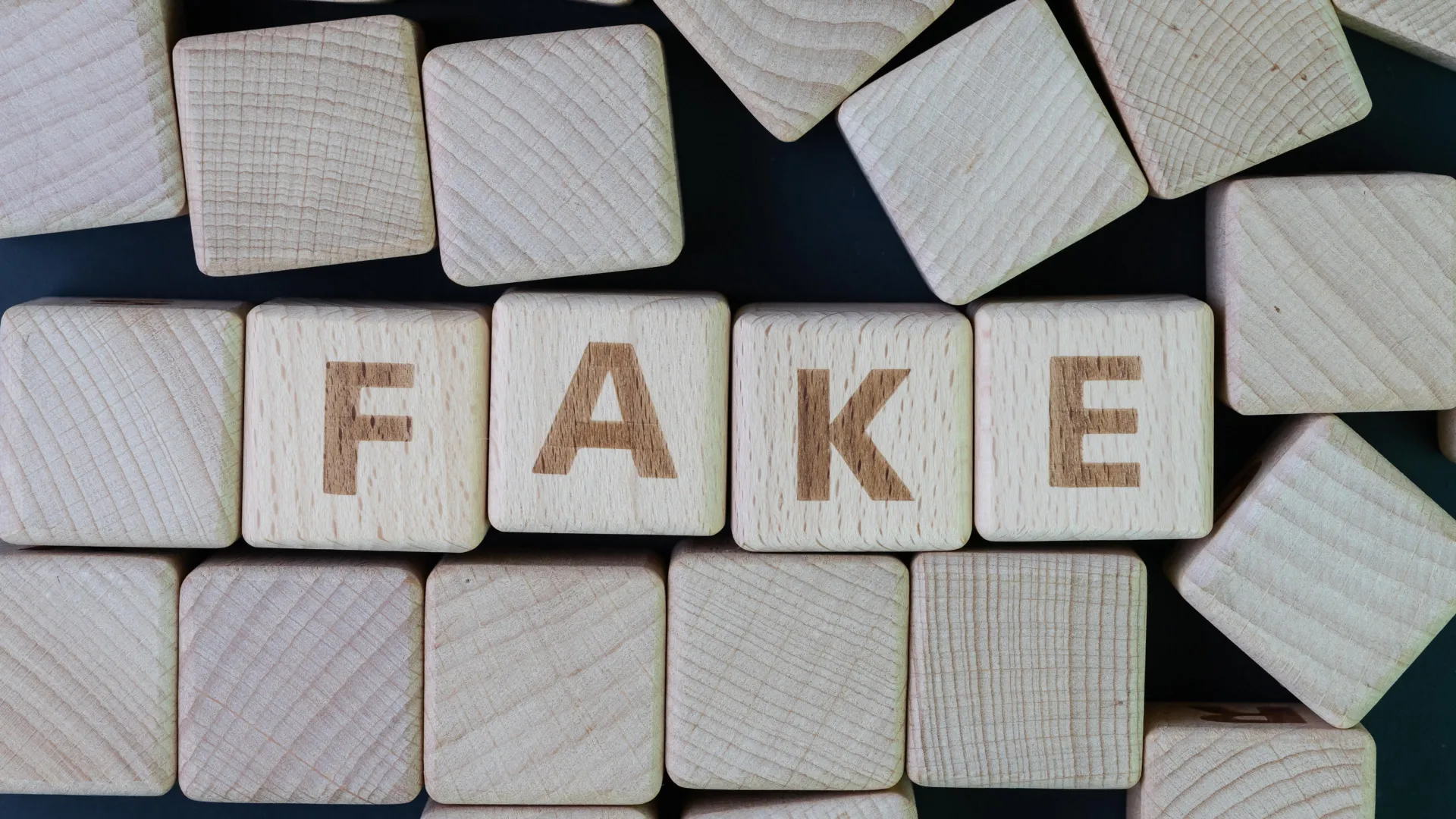
AI Detects Over 250,000 Potentially Fake Cancer Studies – A Wake‑Up Call for Science
A new artificial‑intelligence system has sounded an alarm on the reliability of cancer research. By scanning the text of 2.6 million papers published between 1999 and 2024, a team at Queensland University of Technology identified more than 250,000 studies whose writing style matches that of known “paper‑mill” frauds – operations that churn out fabricated articles for profit. The AI looks for subtle linguistic fingerprints, such as repetitive phrasing, odd citation patterns and unusually uniform sentence structures, that are hard for humans to spot at scale.
If these flagged papers have slipped into the scientific record, they could mislead researchers, skew meta‑analyses, and even influence clinical trial designs or drug approvals. “Cancer research drives treatment decisions for patients worldwide,” said Professor Barnett, a co‑author of the study. “When bogus data enter the evidence base, real progress stalls and patients may be harmed.”
The findings highlight a growing integrity crisis in modern science, where organized fraud can outpace traditional peer‑review safeguards. The researchers hope their tool will help journals, funding agencies and institutions weed out suspect work before it contaminates the literature, restoring confidence in the scientific process.
Read more

AI Startup Applied Computing Rolls Out Whole‑Plant Intelligence for Oil & Gas
Applied Computing, a fast‑growing AI startup, is aiming to give oil and gas operators a single, plant‑wide artificial‑intelligence model that can monitor, predict and optimise every piece of equipment. The company has already teamed up with Indian energy giant Wipro and engineering firm KBR, which has woven Applied Computing’s Orbital AI into its INSITE 3.0 digital platform for energy projects, including a new ammonia‑production line.
Founder and CEO Adamson says the firm is also in talks with a major U.S. upstream operator and expects to announce a partnership with a European oil major in the coming weeks.
The KBR deal opens the door to a wealth of operational data and industry know‑how, as well as introductions to other potential customers. With a fresh $20 million funding round, Applied Computing plans to expand globally, hire more researchers and engineers, and pilot its AI solutions with additional energy clients. The startup has just opened a Houston office to sit closer to its two North‑American customers, while keeping its headquarters in London and a development hub in Bengaluru.
Looking ahead, the company is eyeing the Middle East market as the next frontier for its plant‑wide AI technology.
Read more
AI Breakthroughs Boost Code Safety and Accuracy for Bash Scripts and Smart Contracts
A research team at the Chinese Academy of Sciences has unveiled three AI‑driven tools that dramatically improve the reliability of automatically generated code. The first, BashCoder‑R1, tackles the common problem of large language models (LLMs) producing buggy Bash scripts. By adding a “chain‑of‑thought” fine‑tuning step and turning syntax rules, static‑analysis checks, and formatting standards into reward signals, the model learns to reason before it writes code. In the BashBench test suite of 952 tasks, BashCoder‑R1 achieved a 73.2 % success rate on multi‑line scripts—far ahead of the previous best model, DeepSeek‑V3.2.
The second innovation, Bash‑Commenter, focuses on the quality of automatically generated comments. It creates tiny “grammar pairs” from a script’s abstract syntax tree and uses them as preference signals, teaching the model to grasp subtle command semantics. Across single‑line and multi‑line tasks, Bash‑Commenter outperformed all existing methods.
Finally, the team introduced SmartCoder‑R1 for high‑security smart‑contract generation. By encoding twelve critical security rules as hard constraints in a reinforcement‑learning framework, the system aligns logical intent with code output. Tested on 289 real contracts, SmartCoder‑R1 lifted the security‑metric FullRate to 50.5 %, a 45.8 % relative gain over DeepSeek‑R1.
These advances promise safer open‑source governance, smarter code‑review automation, and more trustworthy AI‑generated software in high‑risk domains. The findings have been accepted at major conferences ASE 2026, FSE 2026, and ISSTA 2026.
Read more
Unlock the AI Agent Boom of 2026: Free Course to Jump‑start Your Career
A brand‑new, completely free learning track on AI agents and large‑model development has just been released. Curated by Dr. Lu Weimin—a Tsinghua‑Caltech dual PhD, Forrester‑rated “Strong Performer” CEO of Shanghai Yimbow, author of 50+ IEEE papers and holder of 35 patents (including NASA‑JPL tech)—the material promises to take anyone from a curious beginner to a job‑ready AI specialist.
The program is split into four practical phases:
1️⃣ Foundations (30 days) – video lessons and hands‑on projects that teach you how to build a private knowledge base and create a conversational agent using Python or JavaScript.
2️⃣ Advanced Applications (30 days) – deeper dives into tool‑calling, Retrieval‑Augmented Generation, and the latest ReAct and Chain‑of‑Thought reasoning frameworks that dramatically cut hallucinations.
3️⃣ Model Training (30 days) – step‑by‑step fine‑tuning of your own vertical LLM and even training multimodal open‑source models.
4️⃣ Business Deployment (20 days) – guidance on cloud vs. local deployment, cost‑performance trade‑offs, and how to become an AI‑powered product manager or entrepreneur.
The course also tackles common pitfalls like hallucination and prompt‑engineering, offering proven mitigation techniques. All resources—including video tutorials, code samples, and a QR code for instant download—are hosted on CSDN and can be accessed for 100 % free. Whether you aim to boost your salary, switch careers, or launch an AI startup, this roadmap gives you the tools and credibility to succeed in the 2026 AI wave.
Read more
Jiangsu Becomes China’s Innovation Powerhouse: From Deep‑Sea Submersibles to Solar Satellites
Jiangsu province is fast turning into China’s go‑to hub for breakthrough science and technology. At a recent national awards ceremony, the province boasted 15 projects that earned top honors, including the celebrated “Fendouzhe” manned submersible, which has dived to the deepest point on Earth. Veteran engineer Academician Ben De, a National Highest Science and Technology Award winner, has spent more than six decades in Jiangsu, helping build the nation’s radar and defense capabilities. Meanwhile, 37‑year‑old Zhang Xiaoqin of State Grid Jiangsu solved a stubborn greenhouse‑gas leak problem by inventing a nitrogen‑cycle recovery system that cuts sulfur hexafluoride emissions to near zero – a first worldwide –
Jiangsu’s innovation engine is powered by a surge in patents (34.2 per 10,000 people, the highest in the country) and a growing roster of elite scientists (now 123 academicians). The province’s research institutions have launched solar‑exploration satellites “Xihe” and “Kuafu‑1,” mapped the Sun’s atmosphere in 3‑D, and built the world’s only full‑depth high‑speed underwater communication device. New basic‑science labs in physics, synthetic biology and 6G are attracting top talent and fostering collaborations that bridge discovery and commercial use. All of this positions Jiangsu as a global leader in industrial‑technology innovation, ready to shape the next wave of scientific breakthroughs.
Read more