
Nvidia’s Stock Slips as Big Tech Builds Its Own Chips – A Market Twist
Nvidia, long the poster child of the AI boom, has seen its shares tumble about 15% since their May high, even though the company still expects revenue to keep climbing. The dip has made Nvidia cheaper than the broader S&P 500 on a profit‑per‑dollar basis, meaning investors are paying less for each projected dollar of earnings than they do for a typical large U.S. firm. The root of the problem isn’t a slowdown in demand for AI compute, but a shift in who supplies that compute. Tech giants such as Google, Amazon, Microsoft and even OpenAI have started rolling out their own custom silicon to cut reliance on Nvidia’s GPUs. While many of these home‑grown chips don’t yet match Nvidia’s latest models, they’re “good enough” to create competition and push down the price of cloud compute. As Ornn co‑founder and CTO Wayne Nelms explains, the market is now a classic supply‑and‑demand story: more players are entering the accelerator space, but no one is building their own high‑bandwidth memory (HBM) or DRAM. Until a breakthrough in memory technology or a new memory‑focused competitor appears, Nvidia is likely to stay in this uneasy position, watching its own ecosystem turn into a rival marketplace.
Read more

Can Your Phone Keep Up with 69,000 Fans? Inside the World Cup’s Epic Network Stress Test
When the FIFA World Cup rolled into the United States, carriers faced a massive challenge: keeping millions of smartphones online while 69,000 fans packed into each stadium. Verizon, the event’s official sponsor, went all‑in. It hung thousands of tiny antennas under every seat, added extra 5G spectrum, and even installed giant ball‑shaped towers to blanket the upper decks with both 4G and 5G signals. The goal? Support more than 50 terabytes of data per game – roughly the equivalent of streaming every Netflix movie at once.
T‑Mobile and AT&T weren’t far behind. T‑Mobile upgraded venue wiring and expanded 5G coverage around the stadium and transit hubs, while AT&T deployed dozens of “small cells” and temporary towers to fill any dead zones. All three carriers staffed on‑site teams to monitor traffic in real time.
For fans, the takeaway is simple: bring a power bank, keep your apps updated, and favor 5G over the stadium Wi‑Fi. Using your phone’s digital wallet for tickets, rides and concessions can also speed things up. If you want the fastest possible connection, sign up for AT&T’s Turbo Live before the match. In short, the network upgrades turned stadiums into high‑speed data hubs, ensuring you can share that winning goal live, even in the nosebleed seats.
Read more

Heidelberg Breakthrough: Scientists Merge Rival Quantum Theories, Paving Way for New Tech
Physicists at Heidelberg University have announced a landmark discovery that finally brings together two long‑standing, conflicting ideas about how a single particle—known as an impurity—behaves inside a crowded quantum system. For decades, researchers have been split between two mathematical models that each explained part of the puzzle but could not coexist. By developing a new framework that unifies these rival approaches, the team has solved a problem that has stymied quantum theory for years.
The breakthrough emerged from collaborative work within the university’s STRUCTURES Cluster of Excellence and the ISOQUANT Collaborative Research Centre 1225, and the results have been published in Physical Review Letters. Beyond its theoretical elegance, the new model is directly relevant to cutting‑edge experiments with ultracold atomic gases, two‑dimensional materials such as graphene, and next‑generation semiconductors. Researchers say the unified theory will help design more precise quantum devices, improve control over exotic states of matter, and accelerate the development of quantum‑based technologies in communications and computing. In short, this unification not only settles a deep scientific debate but also opens fresh avenues for practical applications in the rapidly evolving world of quantum engineering.
Read more
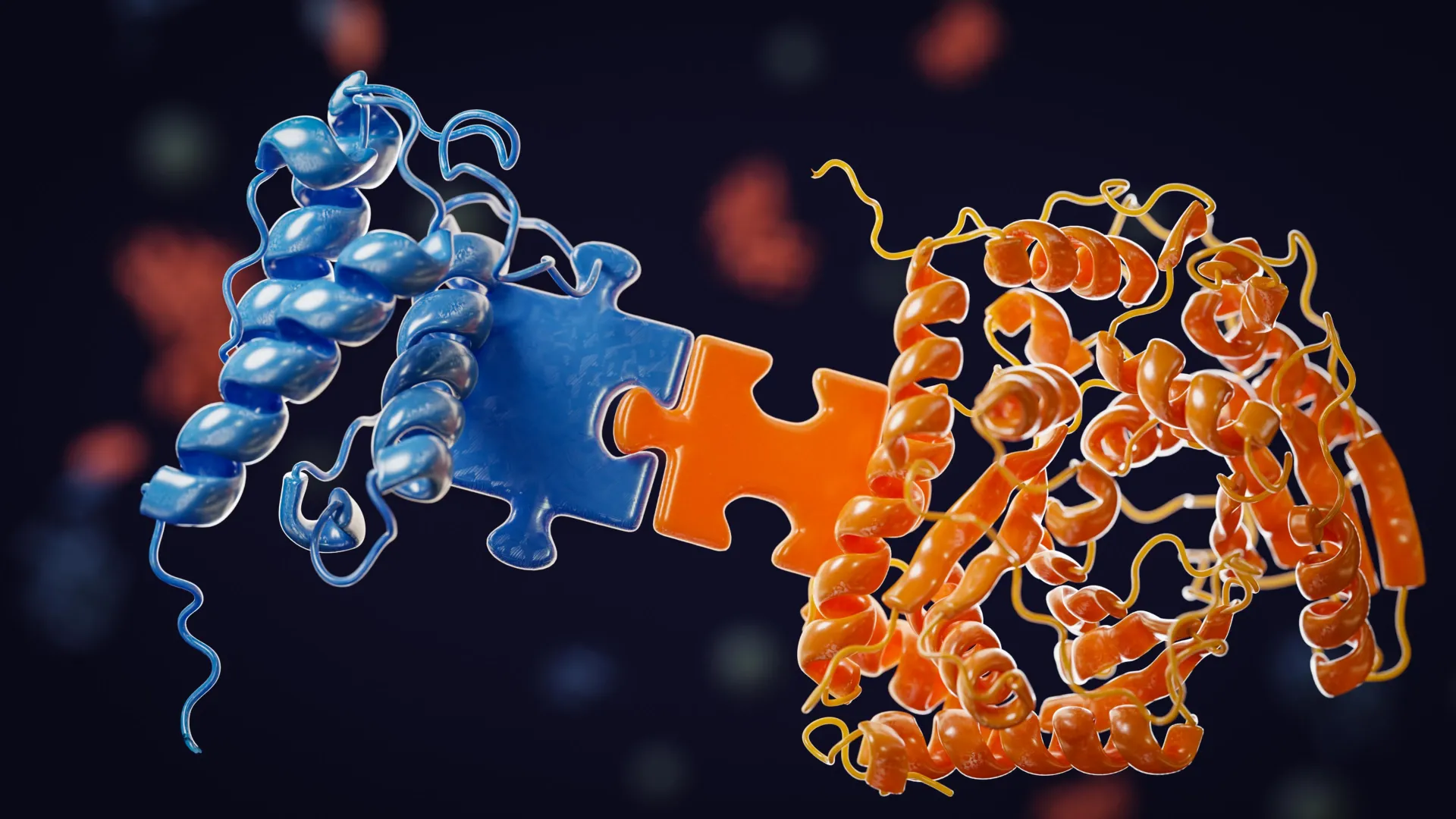
Breakthrough: Scientists Unlock Bacterial Blueprint for Smarter Cancer Drugs
Researchers at the University of Warwick have uncovered how bacteria assemble complex drug molecules, a discovery that could pave the way for a new generation of cancer medicines. Inside many bacteria, drug‑building factories are made up of massive protein machines called PKS‑NRPS hybrids. These hybrids stitch together chemical building blocks to create potent compounds, but the exact “hand‑off” mechanism between the different parts of the assembly line was a mystery—until now.
The team found that tiny protein segments known as “docking domains” act like molecular connectors, allowing one enzyme to recognize and pass its product to the next. These docking domains share a common contact point, enabling them to pair with multiple partners and generate a wide variety of drug variants while keeping each molecule precisely shaped for activity.
Using a blend of structural biology, biochemistry, genetics and computer modeling, the scientists mapped the docking domains in detail and showed how they drive combinatorial biosynthesis. Their work also suggests that these systems evolved through gene duplication and recombination, giving bacteria a flexible toolkit for drug creation.
Understanding this natural engineering trick gives drug developers a new template for designing synthetic pathways that can produce more effective, customizable cancer treatments with fewer side effects.
Read more
AI‑Powered Agent Team Uncovers New Quantum Materials Faster Than Ever
Topological materials—exotic substances that could power tomorrow’s quantum computers and ultra‑fast spintronic devices—have long been hard to find because traditional research steps are fragmented and slow. To speed things up, the Chinese Academy of Sciences’ Computer Network Information Center teamed up with physicists and other experts to build an AI‑driven multi‑agent platform called TopoMAS.
TopoMAS works like a smart research assistant. It reads scientific papers, pulls data from massive literature databases, builds a knowledge graph, and then uses a large language model to reason about which material structures might have the coveted topological properties. The system automatically generates candidate crystal structures, runs first‑principles simulations to test them, and loops back with human feedback to improve its guesses. In short, it creates a closed‑loop workflow that handles everything from information retrieval to computational verification.
The result? Using TopoMAS, researchers have already identified several previously unknown topological materials, demonstrating a powerful new paradigm for AI‑augmented discovery in materials science. The breakthrough was published in *Materials Genome Engineering Advances* and was supported by the National Natural Science Foundation of China.
Read more
China’s Academy Unveils ‘MMAT’ – AI Agent That Solves Math Puzzles and Proves Theorems
On July 6, the Academy of Mathematics and Systems Science of the Chinese Academy of Sciences announced a new AI tool called MMAT (Mathematical Mechanization Agent). Built on large‑language‑model technology, MMAT acts as a full‑process research assistant for mathematicians. The system breaks down a mathematician’s workflow into 20 specialized sub‑agents, each handling a specific step such as idea generation, proof planning, code writing, or verification. When a problem is submitted, MMAT automatically assembles the right mix of agents, creates a solution plan, works through the calculations, and even produces formal Lean code that can be checked for correctness.
In just two months of internal testing, MMAT tackled eight long‑standing open problems in algebraic computation theory, differential algebra and number theory. It solved two problems completely on its own, supplied the crucial lemmas for six others, and formally verified the proofs for two especially tough cases. The platform also builds knowledge‑graph visualizations of the mathematical objects involved, helping researchers see connections at a glance.
Compared with earlier AI math tools, MMAT avoids the pitfalls of single‑proof outputs, logical “hallucinations,” and limited planning ability. Its success marks a major breakthrough for AI‑driven theorem proving in China and points to a future where intelligent agents can partner with human mathematicians to accelerate discovery.
Read more
How Real‑World Scenarios Are Powering China’s Next‑Gen Smart Economy
Artificial intelligence is moving out of the lab and into everyday life, and China is turning that shift into a new kind of “intelligent economy.” The secret, experts say, is focusing on real‑world “scenarios” – concrete situations where AI can solve actual problems. By linking technology, demand and ecosystems, these scenarios act as the last mile that turns abstract algorithms into useful products and services.
In factories, the push is toward “lighthouse” plants that use AI, digital twins and robot clusters to manage everything from design to quality checks, breaking down data silos and creating a replicable “digital factory operating system.” At the cluster level, an “industrial brain” will gather data across supply chains, predict risks and coordinate production, opening the door to networked manufacturing and data‑driven finance.
Beyond industry, scenario‑driven innovation is reshaping homes with smart assistants, health‑monitoring wearables and service robots that anticipate family needs, spawning a booming market for intelligent‑native consumer goods. Retail spaces are being turned into immersive “future districts” where AR, VR and digital avatars blend online and offline shopping experiences. Public services such as education, healthcare and culture are also getting a boost, with 5G‑enabled remote surgery and AI‑assisted diagnostics bringing high‑quality care to more people.
Together, these scenario‑focused projects aim to create a closed loop of demand discovery, collaborative innovation and large‑scale rollout, turning China’s massive market and industrial base into a powerful engine for a smarter, more inclusive economy.
Read more
China’s Tech Surge: How Innovation Fuels a New Era of Growth
At a recent policy forum, China’s science minister Yin Hejun outlined how the country’s rapid tech push is powering its shift to high‑quality development. Since the 18th Party Congress, China has turned research into a national priority, lifting its Global Innovation Index ranking from 34th in 2012 to 10th in 2025. R&D spending jumped from 1.03 trillion yuan to nearly 4 trillion yuan, while the share of GDP devoted to research rose to 2.8 %. The nation now files the most international patents for seven straight years and leads the world in high‑impact scientific papers.
A youthful talent pool is at the heart of the boom: over 7.9 million full‑time R&D staff, with nearly half of key project leaders under 45. China’s scientists are collaborating with more than 160 countries and taking part in global projects such as ITER and the Square Kilometre Array.
Tech advances are reshaping industry. AI, IoT and big data are modernising steel, cement and other traditional sectors, while robot use now spans 71 economic categories. Exports of electric vehicles, batteries and solar panels hit 1.3 trillion yuan in 2025, and the country has led global EV production for 11 years running. Breakthroughs in quantum computing, large‑scale AI models and humanoid robotics are laying the groundwork for future “pillar” industries. In short, China’s science and technology drive both today’s industrial upgrades and tomorrow’s economic frontiers.
Read more
Hydrogen Medicine Takes Center Stage at Major Geriatric Health Conference in Harbin
From July 3‑4, 2026, Harbin hosted the 12th Hydrogen Biomedical Conference, bringing together doctors, scientists and policy makers to explore how hydrogen‑based therapies could help China’s aging population. Organized by the Chinese Geriatric Healthcare Research Association and Harbin Medical University’s Fourth Affiliated Hospital, the two‑day event featured nine keynote talks, 16 special‑topic presentations and dozens of posters.
Speakers stressed that hydrogen molecules show promise as safe, anti‑inflammatory and antioxidant agents that could aid recovery from chronic illnesses, heart disease, stroke and even severe COVID‑19 cases. Academics such as Liu Jianfeng and Ji Yong highlighted the need for solid clinical evidence to move hydrogen medicine from the lab to the bedside, while academicians Gu Ning and Ge Junbo called for tighter standards, better detection methods and collaborative research to overcome technical hurdles.
Chairman Qin Shucun framed the gathering around three goals: problem‑driven basic research, evidence‑based clinical trials, and cross‑disciplinary translation that serves elderly patients. The consensus was clear – hydrogen therapy could become a valuable adjunct in healthy‑aging strategies, but it must be backed by rigorous trials and coordinated innovation. The conference closed with a call for young scholars to join the effort and help turn hydrogen medicine into a mainstream tool for China’s “Healthy China” vision.
Read more