
Space, Trees, and Murder: Webb Telescope’s New Find, China’s Super‑Fast Green Wall, and the Medici Mystery Solved!
This week’s science roundup brings three wildly different stories together. First, NASA’s James Webb telescope has spotted a mysterious, never‑before‑seen material on a distant exoplanet. The substance glows in infrared light and doesn’t match any known minerals on Earth, hinting at exotic chemistry that could reshape our ideas about planetary formation.
Meanwhile, China’s ambitious “Great Green Wall” project is outpacing nature. Satellite data show the man‑planted forest belt is growing up to 30 % faster than nearby natural woodlands, thanks to carefully selected fast‑growing species and high‑tech irrigation. Scientists say the rapid greening could boost carbon capture, but they’re also watching for impacts on local ecosystems.
Back on Earth, a centuries‑old murder mystery involving the powerful Medici family has finally been cracked. Using DNA analysis of hair found in a 16th‑century lockbox and newly uncovered court records, researchers identified the victim as a rival banker and pinpointed the assassin’s motive—political intrigue rather than simple revenge.
Together, these discoveries remind us that the universe still holds surprises in the heavens, on the ground, and even in the dusty archives of history.
Read more
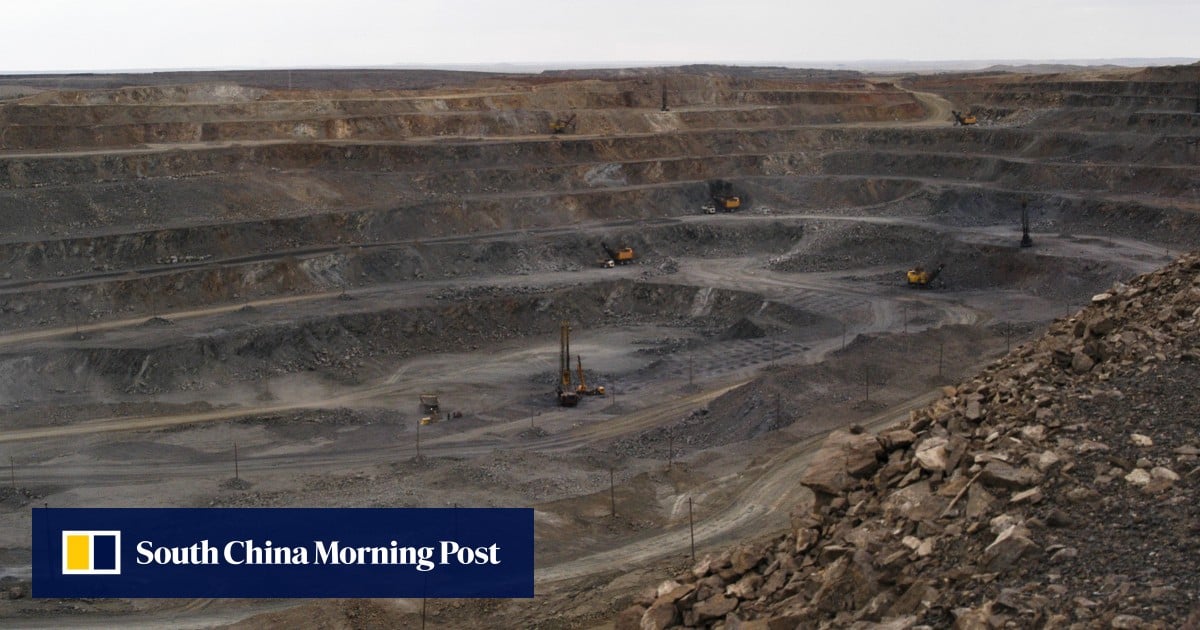
China’s Rare‑Earth Edge Cracks: Foreign Patents Hold the Power
A new study published in the Bulletin of the Chinese Academy of Sciences warns that China’s booming rare‑earth sector may be built on shaky ground. While the country dominates the mining and basic processing of rare‑earth minerals, the research shows that the most valuable downstream technologies – the high‑end components that turn raw material into everyday gadgets – are still largely owned by companies in Japan and the United States.
The team from the University of Science and Technology of China mapped the global patent landscape for advanced rare‑earth functional materials such as permanent magnets, catalytic converters, luminescent paints and polishing compounds. Their analysis revealed that more than 80 % of patents for these commercially critical products are held outside China. In other words, even though China supplies the bulk of the raw elements, it relies on foreign know‑how to make the high‑tech parts that power electric cars, wind turbines, smartphones and clean‑energy equipment.
The findings shift the conversation from sheer resource volume to technological control, highlighting a strategic vulnerability. If China cannot secure its own patents or negotiate better access, it could face bottlenecks in the very industries that depend on rare‑earths for future growth.
Read more
China Rolls Out ‘Dual 10G’ and 6G: Building a Space‑Air‑Ground Internet of the Future
At the opening of the 2026 Mobile World Congress in Shanghai, China announced a bold upgrade to its digital backbone. The plan moves beyond simply covering the country with fast internet and aims to create a “new‑generation communication network” that links land, sea, air and space. The centerpiece is “dual 10G” – ultra‑fast 10‑gigabit fiber for homes and offices, paired with a next‑generation mobile layer that pushes 5G‑A toward the upcoming 6G era. This upgrade will cut latency, make connections more reliable, and support not just phones but robots, factory equipment and AI assistants.
The strategy also adds low‑altitude networks for drones and urban air traffic, and expands satellite internet constellations to bring seamless coverage to remote regions and moving platforms. A recent test using high‑orbit and medium‑orbit satellites showed latency dropping from 363 ms to just 26 ms, proving that space‑based links can work hand‑in‑hand with ground networks.
Beyond speed, the new infrastructure will blend computing power with connectivity, allowing the network to sense and allocate AI‑heavy workloads in real time. Internationally, the first 6G standards have been finalized, positioning China to lead the next wave of AI‑driven services. In short, the country is shifting from “more towers” to a smarter, faster, and truly integrated digital ecosystem that reaches from the ground up to the stars.
Read more
Robots Get Real: China’s Embodied‑Intelligence Boom Aims for Everyday Use
China’s “embodied intelligence” sector – the blend of AI and physical robots – is moving from laboratory demos to products that ordinary people can rely on. At the 2026 World Intelligent Industry Expo, more than 80 firms showcased 150 new robot systems, from dog‑like machines that climb stairs to dual‑arm units that can thread needles with millimetre precision. Companies such as Galileo Technology are already selling robots for 24‑hour inspections in energy plants and disaster zones, while Tianjin‑based Tianxing Technology is exporting $4,000 dual‑arm robots for factory line checks and classroom demos.
The industry is growing fast: over 3,000 firms now operate in China, with revenue in Tianjin’s supply chain topping 27 billion yuan in 2025 and a 10 % year‑on‑year rise in early 2026. Yet large‑scale adoption still faces three big hurdles. First, clean, standardized data is scarce – firms spend about 70 % of project time just preparing data for AI training. Second, robots that work well in a lab often stumble in real factories because they lack the ability to generalise across changing environments. Third, the hardware itself is not yet fully standardised, making customisation costly and slowing mass production.
Industry leaders say breaking these bottlenecks will turn today’s “usable” machines into truly “user‑friendly” assistants that can operate safely across many settings, ushering in a new era of everyday robotics.
Read more
Smart Talk: How Conversational AI Is Becoming a Everyday Co‑Pilot
Imagine telling your car to set the temperature, asking a robot vacuum to clean a specific room, or speaking to a factory robot to schedule production – all without lifting a finger. That vision is turning into reality as conversational AI moves from labs into daily life. In August 2025, China’s State Council rolled out the “AI+” plan, urging the nation to weave intelligent connections into every device and create a seamless voice‑driven environment.
At a recent AI engineering summit, Yu Kai, co‑founder of Aiflyer and a professor at Shanghai Jiao‑Tong University, warned that simply making bigger language models isn’t enough. Real‑world settings are noisy, user requests can be vague, and multimodal data (voice, text, images) often clash. Instead of trying to eliminate uncertainty, Yu’s team is teaching AI to recognize its limits – to ask clarifying questions, refuse risky tasks, or hand them off to a human.
Their research focuses on “fault‑tolerant alignment” and semi‑formal communication rules that make AI‑to‑AI exchanges more reliable and easier to verify. The goal is a full‑stack system that blends large and small models, edge devices, and cloud services, delivering stable, trustworthy assistance in smart cars, home appliances, office gear, and industrial robots. In the coming years, the real AI race will be judged not by model size alone, but by how safely and smoothly these systems work together in everyday scenarios.
Read more
China Rolls Out Bold Plan to Supercharge the Industrial Internet
China’s Ministry of Industry and Information Technology, together with eight other agencies, has unveiled a sweeping set of guidelines called the “Implementation Opinions on Promoting High‑Quality Development of the Industrial Internet.” The document lays out a five‑by‑five framework that targets five core functions—network, identification, platform, data and security—and five strategic directions to push the nation’s industrial internet into a new era of quality and depth.
The policy builds on rapid progress made during the 14th Five‑Year Plan, where more than 25,000 dedicated 5G networks, 740 billion device identifiers, and over 340 industrial platforms were launched. Smart factories now account for hundreds of sites, delivering average gains of 20 % in product quality, 18 % in cost savings and 25 % in capacity. Yet gaps remain in core‑industry coverage and advanced technology integration.
A key thrust of the new plan is to turn artificial intelligence from a novelty into a productivity engine. By weaving AI into the industrial internet, China aims to boost manufacturing intelligence, cut waste, and secure a leading position in the next wave of global tech competition. The guidelines provide a roadmap for businesses, researchers and local governments to accelerate digital transformation, improve efficiency, and drive sustainable growth across the country’s manufacturing sector.
Read more