
Apple’s Next Wave: Faster iPad Pros, Touchscreen MacBooks, and a Flood of Foldable Phones
Apple is gearing up for a major product refresh that could reshape its entire lineup. According to industry insider Mark Gurman, the company will roll out a redesigned entry‑level 14‑inch MacBook Pro as early as the first half of 2027, and it may even sport a touchscreen—a feature long rumored for Apple laptops. Higher‑end MacBooks slated for later this year or early next year could follow suit.
At the same time, Apple is set to overhaul its iPad Pro line. The new models are expected to jump from the current M5 chip to a more powerful M7 processor, giving them the muscle to handle heavier AI workloads. Gurman also hints at a vapor‑chamber cooling system that would keep the tablets from overheating during intensive tasks.
Perhaps the biggest buzz surrounds Apple’s first foldable phone. While the company hasn’t officially confirmed it, Nikkei Asia reports that Apple has asked its suppliers to gear up for 10 million units this year—up from the 7‑8 million it initially projected. The demand forecast suggests the device could be a major revenue driver.
Tech reviewer Austin Evans praised the iPad’s sleek design and 5G capability but warned that iPadOS still feels locked down compared with macOS or Windows, especially for power‑users who rely on apps like Final Cut Pro. All eyes will be on Apple’s upcoming announcements to see how these upgrades play out in the real world.
Read more
China Leads the Race to 6G: Lessons Learned from 5G’s Hiccups
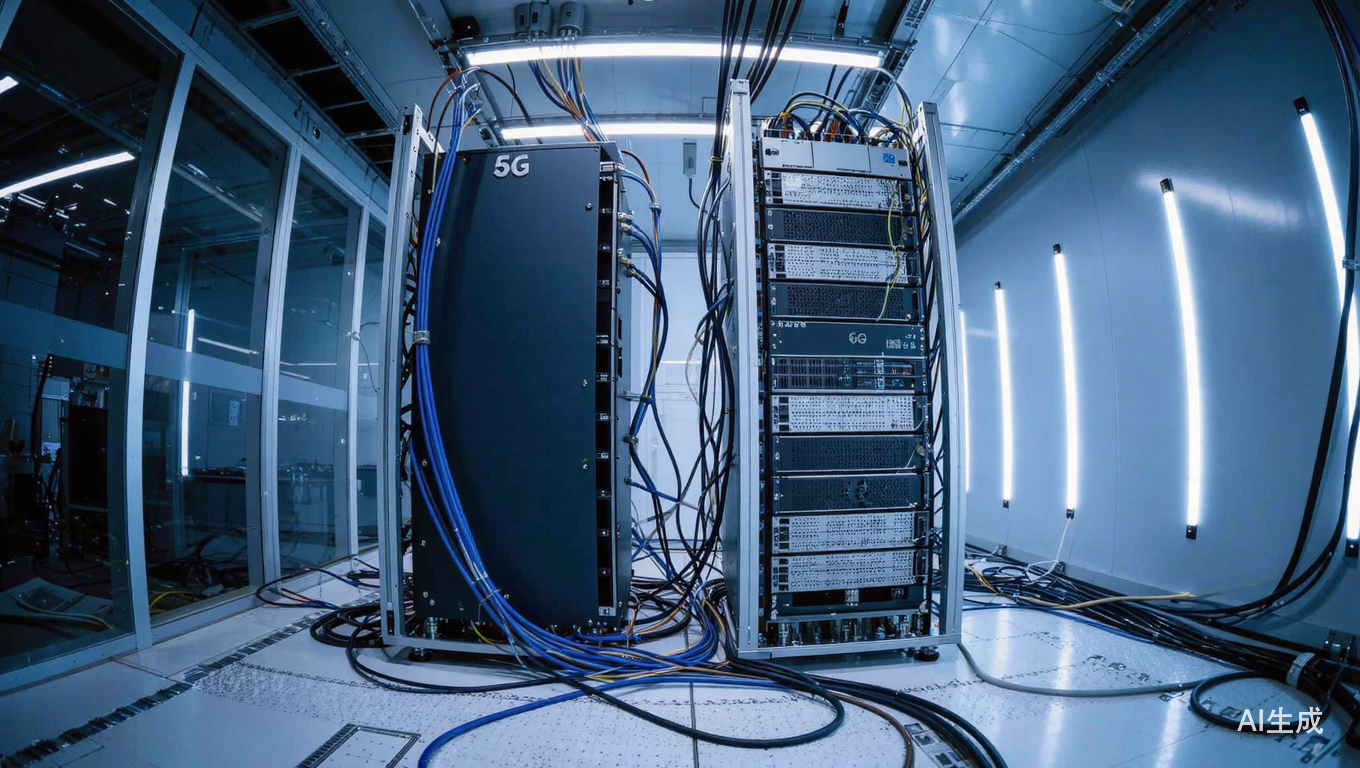
At this year’s Shanghai Mobile World Congress, China’s biggest telecoms rolled out a parade of 6G prototypes – from China Telecom’s “Ubiquitous Intelligent Network” to China Mobile’s cloud‑based 6G base stations and Beijing’s ultra‑large antenna arrays. The message was clear: the world’s first large‑scale 6G services could be on the market by 2030, with trials possibly arriving even sooner. But the excitement is tempered by caution. Industry leaders recall how 5G’s lofty promises fell short, leaving a “psychological shadow” that now drives a more pragmatic approach. The International Telecommunication Union’s new 6G framework caps peak speeds at just 1.8 times 5G’s best, and indoor positioning accuracy is set at 75 cm – far below the 10 cm needed for advanced robotics, but realistic for today’s market. A key lesson is the need to finish the 5G transition from the cheaper “non‑standalone” (NSA) setups to the fully fledged “standalone” (SA) architecture. Only about a quarter of the world’s 5G networks are SA, limiting features like network slicing. Experts say a solid 5G‑SA foundation is essential before 6G can roll out. Regional priorities also differ: North America stresses cost, Asia puts security first, and Europe focuses on enterprise and software upgrades. The consensus is that collaboration and realistic goals will shape the next generation of mobile connectivity.
Read more
China Telecom & Huawei Unveil AI‑Powered 5G Positioning that Pinpoints Users Within 10 Meters
At the World Mobile Communication Conference in Shanghai, China Telecom and Huawei announced a breakthrough that could change how mobile networks locate devices. Using an AI‑native wireless air‑interface, the two companies ran the first field test that relies on a single base‑station to deliver high‑precision positioning. Traditional cellular positioning, which depends on multiple towers and often struggles in non‑line‑of‑sight conditions, typically offers accuracy measured in hundreds of metres. By embedding AI models directly in the base‑station, the system learns the surrounding radio‑wave environment and predicts a user’s location from multi‑dimensional air‑interface data alone. The test, conducted at China Telecom’s Beijing research park and Huawei’s Shanghai lab, achieved an average error of less than ten metres – more than ten times better than conventional methods. The partners also showcased an “AI‑enabled Service Network” (ASN) that turns the network from a simple connection pipe into a platform that can deliver customized, intelligent services, boosting resource scheduling, mobility enhancement and multi‑task handling.
Read more
AI‑Powered System Uncovers New Quantum Materials Faster Than Ever
Topological materials—exotic substances that could power the next generation of quantum computers and ultra‑fast electronics—have long been hard to find. Traditional research methods involve a slow, step‑by‑step process that often loses information and can get stuck in dead ends. To speed things up, scientists at the Chinese Academy of Sciences teamed up with computing experts to build a new platform called TopoMAS. TopoMAS is an intelligent, multi‑agent system driven by a large language model. It can read scientific papers, pull relevant data, map relationships in a knowledge graph, suggest new material structures, and even run complex computer simulations—all while learning from each round of results. Human researchers stay in the loop, reviewing and guiding the AI’s suggestions. Using this closed‑loop workflow, the team has already identified several previously unknown topological materials, opening fresh avenues for quantum‑tech research.
Read more
Breakthrough ‘Research Engine’ Lets Scientists See Materials Without a Vacuum
The Chinese Academy of Sciences (CAS) has unveiled a world‑leading research platform that lets researchers observe the inner workings of materials without the need for a vacuum chamber. Dubbed a “research engine,” the system combines advanced imaging techniques, ultra‑fast lasers and AI‑driven data analysis to capture real‑time, high‑resolution snapshots of how atoms and molecules behave under normal atmospheric conditions. Traditionally, scientists have had to place samples in a vacuum to eliminate interference from air molecules, a step that can alter the very properties they aim to study. By removing this barrier, the new engine opens the door to exploring a wide range of phenomena—from how batteries charge and discharge, to the way catalysts speed up chemical reactions, and even the dynamics of biological tissues. CAS officials say the breakthrough will accelerate the development of next‑generation energy storage, greener manufacturing processes, and advanced medical diagnostics.
Read more