
Giant Space ‘Airbag’ Could Shield Earth from Devastating Solar Storms, Scientists Say
A team of researchers has unveiled a bold plan to protect our planet from the worst solar storms ever recorded. Their concept, dubbed “StormWall,” envisions launching a massive inflatable shield—essentially a giant airbag—into a high Earth orbit where it would act like a magnetic umbrella, deflecting the charged particles that accompany solar superstorms. The idea builds on proven inflatable‑structure technology used in satellite deployment and space‑habitat prototypes, making the engineering side “quite feasible,” according to several space‑weather experts.
Why the urgency? The May 2024 solar storm already cost U.S. farmers roughly $500 million by scrambling GPS‑based equipment, and a Carrington‑level event could wreak up to $3.4 trillion in damage, crippling power grids, communications, and navigation systems.
StormWall would sit in a strategic orbit, creating a protective bubble that absorbs or redirects solar particles before they reach Earth’s magnetosphere. Proponents argue that the upfront investment would pay for itself many times over by averting catastrophic economic loss. While still in the proposal stage, the concept is gaining traction as policymakers and industry leaders grapple with the growing threat of space weather in an increasingly technology‑dependent world.
Read more
Micron’s Meteoric Rise: Why Wall Street Is Calling It the Next Nvidia
Micron’s market value surged to almost $1.27 trillion, putting it shoulder‑to‑shoulder with tech giants like Meta and Tesla. The stock jumped more than 236 % in the past month, climbing from under $100 a share in early 2025 to $1,132 today. The once‑humble memory‑chip maker, best known for tiny RAM cards, is now at the center of a global “RAMageddon” – a severe shortage of computer memory that’s driving up prices for everything from smartphones to Xbox consoles.
Analysts say the shortage is only getting worse because new clean‑room capacity can’t keep up with exploding demand, especially from AI‑heavy data centers. Micron’s latest earnings report backs that optimism: third‑quarter revenue exploded to $41.45 billion, a four‑fold year‑over‑year increase, while net profit surged from $1.88 billion to $28.2 billion. The company also forecast a fourth‑quarter revenue range of $49‑$51 billion. Wall Street, eager for the next public AI‑related champion after Nvidia, is now eyeing Micron as a potential long‑term winner.
Read more

Google’s Gemini Lets You Create Custom AI Images for Free – No Prompt Needed!
Google has just opened the doors to its Gemini AI image generator for anyone in the United States, and it’s completely free. What makes Gemini different is its “Personal Intelligence” feature, which learns what you love from the Google services you already use—Gmail, Photos, YouTube, Search, and more. Instead of typing a long, detailed prompt, you can simply say, “Show me an illustration of me and my favorite things,” and Gemini will pull together a picture that reflects your coffee habit, love of baking, favorite travel spots, or any other interest it has spotted in your data.
Even better, Gemini can automatically fetch real photos of you from Google Photos, so you don’t have to upload anything manually. The AI blends those personal snapshots with its own creative flair, delivering a unique, personalized artwork in seconds. This move signals Google’s push to make AI tools feel more like a natural extension of everyday life, rather than a technical novelty. The service is now live for U.S. users, with no hidden fees or subscription required.
Read more
Why AI Is Turning Databases Into the New Backbone of Business
Artificial intelligence is reshaping the very foundations of today’s digital world, and data infrastructure is emerging as the most valuable piece of that puzzle. As large‑language models become more alike in raw capability, the real competition is moving from “who has the biggest model” to “who can make AI understand a specific business and deliver real results.” That shift is creating a demand for a brand‑new kind of “AI database.”
Historically, every major computing leap—personal computers, the internet, mobile and cloud—has forced a rewrite of the underlying data layer. Relational databases powered the PC era, distributed and open‑source systems grew with the web, and cloud‑native storage took over with mobile. In the AI era, the database must do more than store rows; it must organize, contextualize and retrieve data in ways that let AI models apply the right knowledge to the right problem.
For Chinese software makers, this is a rare chance to stand shoulder‑to‑shoulder with global rivals and define the next generation of AI‑ready databases on their own terms. The challenge isn’t a simple plug‑in for vectors; it’s a fundamental redesign that answers how data should be structured, understood and invoked when AI drives every decision. The “last mile” of AI success will be won or lost on the quality of that data infrastructure.
Read more
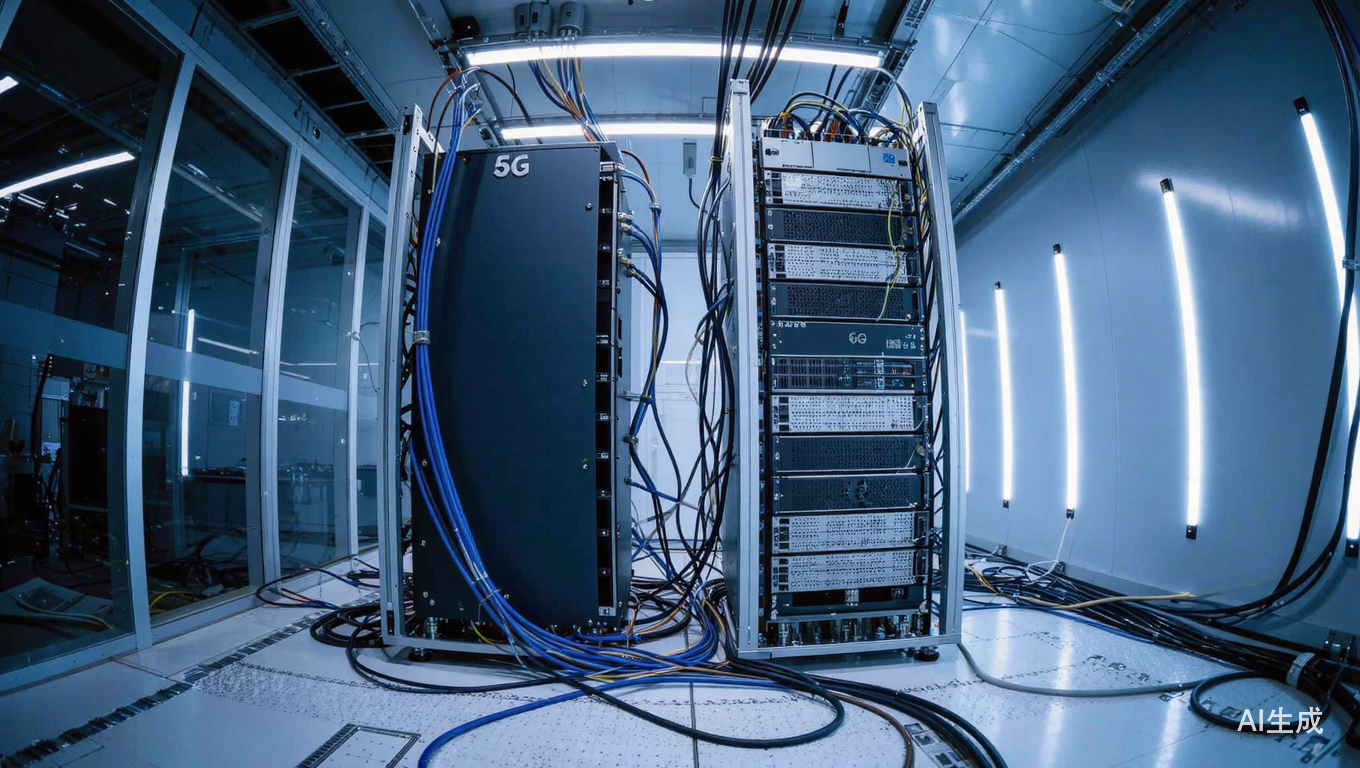
Why 6G Is Being Built Differently After 5G’s Missteps
The race to launch 6G is already under way, but industry leaders say the new network will be designed with far more caution than its predecessor. After 5G fell short of the sky‑high promises that fueled hype, operators and vendors are now focusing on realistic performance goals. The draft 6G specifications call for a peak data rate only about 1.8 times faster than 5G and an indoor‑positioning accuracy of roughly 75 cm—figures chosen to match real‑world needs rather than chase record‑breaking numbers.
A key lesson from 5G is the split between standalone (SA) and non‑standalone (NSA) architectures. While NSA helped roll out 5G quickly, it limited the technology’s full capabilities, leaving most networks stuck in a lower‑performance mode. For 6G, the consensus is clear: the core network will support only SA, and a fully migrated 5G SA will be a prerequisite for any 6G rollout.
Regional demands also differ—North America wants low‑cost solutions, Asia prioritises security and user experience, and Europe focuses on new applications. Spectrum allocations reflect these variations, with China earmarking 6 GHz of continuous bandwidth and the U.S. eyeing a higher‑frequency band.
Technically, 6G will build on the proven OFDM waveform and aim for software‑driven upgrades that work with existing hardware, keeping deployment costs down. Industry groups are already testing prototypes, exploring use‑cases, and shaping standards to ensure that 6G balances speed, cost, and commercial viability, avoiding the over‑hype that hampered 5G.
Read more
China’s ‘Light Boat’ Satellite Yields Breakthroughs in Space Health, Navigation and Low‑Cost Life‑Support
The Chinese Academy of Sciences’ Light Boat Test Spacecraft (also known as White Elephant No. 29) has just released its second batch of in‑orbit test results. The data showcase four key advances that could reshape how humans work and live in space.
First, a micro‑level deformation laser sensor from Harbin Institute of Technology can now monitor a spacecraft’s structural changes in real time without any added markers, turning noisy signals into precise deformation maps. This paves the way for true “real‑time health monitoring” of orbiting vehicles.
Second, a rice‑grain‑sized chip‑gyroscope created by Shanghai Jiao‑Tong University delivers navigation‑grade accuracy without active temperature control, successfully measuring the Light Boat’s angular velocity and promising sharper guidance for deep‑space probes and bio‑inspired aircraft.
Third, a suite of medical tools developed with Shenzhen University of Science and Technology proves that astronauts can continuously record weak muscle signals and run handheld blood‑cell tests in orbit, eliminating the need for bulky ground‑based equipment and opening the door to future space‑hospitals.
Finally, a low‑cost, industrial‑grade life‑support module using passive gas‑liquid mixing was validated on‑orbit, dramatically cutting the price of life‑science experiments. Together, these results provide essential technology for China’s next generation of space habitats, health services, and affordable aerospace missions.
Read more
Shenzhen’s Bold Blueprint: Building China’s Next Chip Powerhouse
Shenzhen, often called China’s Silicon Valley, is rolling out an ambitious plan to become the nation’s third semiconductor hub. On May 25, 2026, Huawei’s semiconductor chief He Tingbo unveiled a new “Tao Law” that swaps traditional size‑scaling for time‑scaling, promising transistor densities comparable to a 1.4 nm process by 2031 – a direct challenge to Moore’s Law. The very next day, Shenzhen released its 14th Five‑Year Plan, pledging to “strengthen manufacturing of all categories of semiconductors and integrated circuits” and to fast‑track a world‑class semiconductor technology center in Longhua District.
The blueprint covers roughly 200 sq km across Longhua (115 sq km) and Longgang (85 sq km), carving out a dedicated zone where design, equipment, materials and fabrication can coexist under one coordinated plan. Officials stress that the goal is a full‑chain ecosystem that rivals the global division of labor – the U.S. leads design, Europe supplies tools, Japan provides materials, while South Korea and Taiwan focus on manufacturing.
Local firms are already buzzing. JPT, a 20‑year‑old optics company based in Longhua, sees the project as a chance to supply key equipment and help set industry standards. The timing is strategic: as artificial intelligence drives a surge in demand for high‑performance chips, Shenzhen aims to turn its existing electronics strength into upstream chip production, positioning the city at the heart of the next computing revolution.
Read more
Quantum Tech Gets a Boost: New Rules, Big Funding, and a Long Road Ahead
The Shanghai Stock Exchange has just added "quantum" to its list of strategic emerging industries, giving quantum‑tech firms a clear classification for IPOs and cutting down on hype‑driven “quantum concept” stocks. This regulatory tweak means sponsors and regulators now have concrete guidelines, making it easier for genuine quantum companies to tap capital markets.
Funding is already flowing. In early June, Origin Quantum raised nearly 3 billion yuan in a pre‑IPO round, valuing it at 21 billion yuan – the highest for a Chinese quantum‑computing firm. Bose Quantum and SpinQ Technology have each secured around 1 billion yuan in recent rounds, while local governments and hard‑tech venture funds are adding further support.
The industry is split into three tracks: quantum communication, measurement and computing. Communication firms have reached a commercial scale, measurement companies are gaining traction case by case, and computing remains the most experimental but shows promise – SpinQ has exported superconducting chips overseas and delivered complete quantum computers to over 200 institutions worldwide.
Three positive shifts are emerging: faster industrialisation, a move from chasing qubit counts to building error‑corrected systems, and investors focusing on real engineering capabilities. Yet challenges linger – multiple competing technology routes, expensive and bulky hardware, a shortage of talent, and a still‑nascent ecosystem. Experts say the sector will need patience and a decade‑long commitment before quantum breakthroughs become everyday business tools.
Read more