AI‑Powered Satellite Can Spot Oil Spills, Border Construction and More – All From Orbit
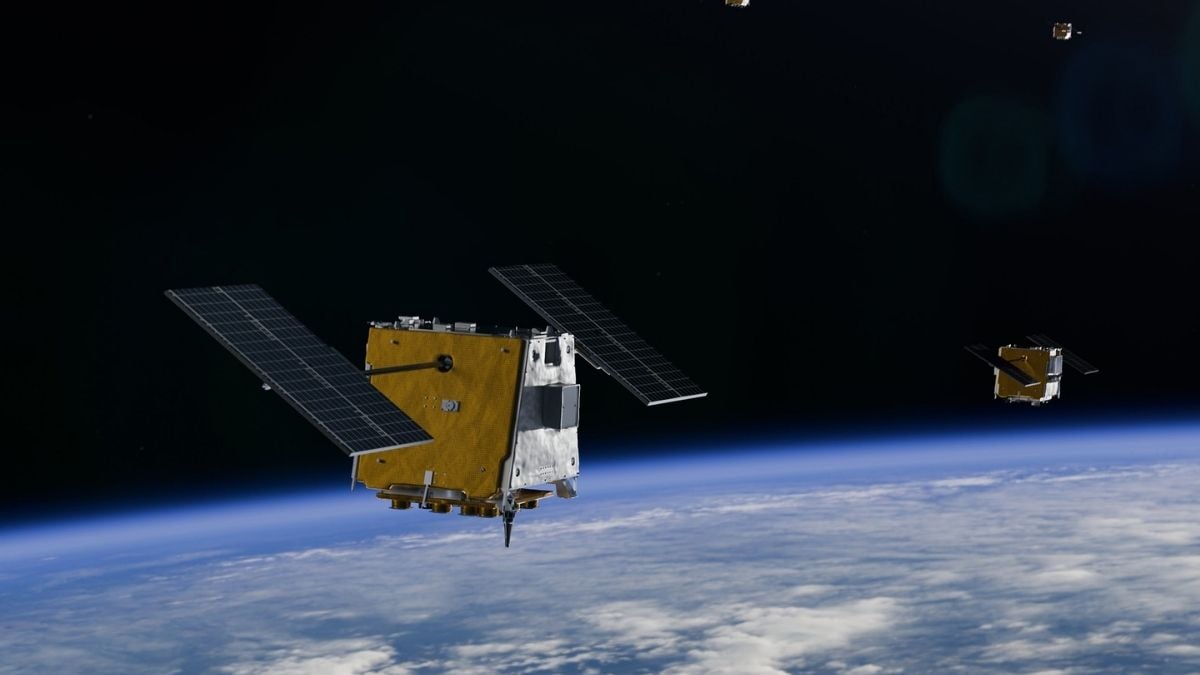
A new generation of satellite is learning to think for itself. Researchers have equipped a low‑Earth‑orbit satellite with artificial‑intelligence that can instantly recognize what it sees in its images—whether it’s an oil slick on a coastline, a new building near a border, or other events that matter to governments and businesses. The idea is to turn the satellite into a constant watchdog: you set the criteria, the AI scans the planet in real time, and only sends a report when something matches your trigger.
The technology promises faster decision‑making for civil, commercial, and defense missions, but it also raises privacy and ethical questions. Critics warn that handing high‑stakes image interpretation over to algorithms could lead to surveillance overreach or mistakes if the AI misidentifies a target. The research team admits the system still needs work on accuracy, reliability, and resistance to “adversarial prompts” that could fool it.
Despite these hurdles, the developers are confident the breakthrough will soon become standard. "It opens the door to always‑on patrol layers in space," said Paul Lasserre, head of AI at Loft Orbital. The full study is posted on the arXiv preprint server, and the scientific community is watching closely to see how this AI‑driven eye in the sky will reshape global monitoring.
Read more

Ex‑Databricks AI Leader Says New Chip Could Slash AI Power Use by 1,000‑Fold
Former Databricks AI head Naveen Rao is betting that a brand‑new kind of computer chip could dramatically lower the electricity needed to run artificial‑intelligence models. On Thursday his startup, Unconventional AI, unveiled its first product – an image‑generation system dubbed “Un0.” Unlike typical AI tools that rely on massive data‑center farms, Un0 was built using a software simulation of a novel oscillator‑based chip architecture. Rao says the prototype performs on par with today’s best diffusion models, but the real breakthrough comes from the hardware design.
The company’s research paper explains how the simulated chips mimic the way electrons oscillate, allowing calculations to happen with far less energy. While the current version runs in a virtual environment, Rao promises to publish the actual chip schematics soon, paving the way for a full‑scale hardware rollout. The long‑term vision is an end‑to‑end inference stack—hardware, software and network—where prompts are sent in and AI answers come out while using just one‑thousandth of the power traditional systems consume.
If Rao’s claims hold up, the move could dramatically cut AI’s growing electricity bill, making the technology cheaper, greener and more accessible for businesses and developers alike.
Read more

Cloudflare Forces AI Firms to Pay for Using Publisher Content
Starting September 15, 2026, Cloudflare will change the default settings on its network to block “mixed‑use” web crawlers—those that combine traditional search, AI agents, and training—from any page that carries advertisements. The move is aimed at giving publishers a way to charge AI companies for the value their content creates, not just for the act of fetching it.
The new rule applies to all new Cloudflare customers, any new sites set up by existing users, and even the free‑tier accounts that already rely on Cloudflare’s services. Site owners can still override the setting, but the default will now keep ad‑supported pages out of the reach of AI crawlers unless a publisher explicitly allows it.
Alongside the block, Cloudflare is expanding its “Pay Per Crawl” marketplace into a “Pay Per Use” model, letting publishers set fees that kick in when an AI system actually benefits from their material. The company says this could cut bandwidth waste—over half of AI‑related crawl traffic today simply re‑downloads unchanged pages.
For publishers, the change promises more control over their intellectual property and a new revenue stream, while AI developers may need to renegotiate how they access web content for training and agent services. Cloudflare notes that even the biggest search engine—widely understood to be Google—already enjoys a data advantage, making the new policy a potential level‑playing field for smaller AI players.
Read more

Amazon’s New ‘Proteus 2’ Robots Promise Safer, Smarter Warehouses
During two recent tours of Amazon’s fulfillment centers, the company made it clear that its next wave of robots is meant to work *with* people, not replace them. Amazon’s robotics chief, Brady, argued that a "people versus machines" mindset is wrong, insisting that technology should be a tool that expands human capability. So far, the retailer has up‑skilled roughly 700,000 employees and expects even more jobs to emerge as its robot fleet grows.
The original Proteus robot has been in service for several years, with more than 4,000 units operating across 25 sites. This month Amazon unveiled Proteus 2, a next‑generation version that understands spoken commands thanks to built‑in natural‑language processing. The robot also features an “invisible force‑field” safety system: sensors detect a person stepping into its path and automatically slow or stop the vehicle, creating a protective bubble around moving equipment.
Amazon plans to pour over $10 billion into modernizing its European fulfillment network, adding new robotic systems that many were inspired by frontline workers themselves. The goal is simple—faster deliveries achieved through safer, smarter collaboration between humans and machines.
Read more
China’s Top Science Hub Completes Supercomputing Milestone, Boosting National Innovation
The Chinese Academy of Sciences (CAS), the nation’s premier research institution and strategic think‑tank, has announced the completion of a critical link in its domestic supercomputing ecosystem. This breakthrough ties together high‑performance computing resources across the academy’s dozens of research institutes, universities, and regional branches, creating a unified platform for scientists to run massive simulations, analyze big data, and accelerate breakthrough discoveries.
Founded in 1949, CAS now operates a sprawling network that includes the University of Science and Technology of China, the University of Chinese Academy of Sciences, and ShanghaiTech University, each tightly integrated with the academy’s research labs. Its organizational structure spans bureaus for basic research, strategic high‑tech, sustainable development, talent, and international cooperation, as well as a nationwide system of branches from Shanghai to Xinjiang.
The new supercomputing link supports mission‑oriented research in fields such as quantum materials, climate science, and advanced manufacturing, aligning with the Party’s policy of “original innovation” and national security priorities. By consolidating computing power, CAS aims to speed up the translation of scientific breakthroughs into real‑world technologies, reinforce China’s position in global high‑tech competition, and nurture the next generation of scientific talent. The achievement underscores CAS’s role as the backbone of China’s scientific and technological progress over the past seven decades.
Read more
Shenzhen Unveils Massive ‘Chip City’ Plan to Turn China into a Semiconductor Powerhouse
Shenzhen, often called China’s Silicon Valley, has just announced an ambitious blueprint to build a world‑class semiconductor hub covering about 200 square kilometres across Longhua and Longgang districts. The plan, part of the city’s 15th Five‑Year Outline, calls for a full‑chain chip ecosystem – from design and equipment to materials and manufacturing – all within a single, tightly coordinated zone.
The move follows a high‑profile speech by Huawei’s semiconductor chief, who introduced a new “Tau Law” that could push transistor density beyond the limits of Moore’s Law by 2031. Shenzhen officials say the new chip city will let China shift from copying foreign roadmaps to setting its own.
The area will be divided into four specialised sub‑zones in Longhua and a complementary zone in Longgang, each focused on different stages of chip production. Local firms such as JPT Optoelectronics, which has grown from a small connector maker to a listed laser‑technology company, see the plan as a chance to supply critical equipment and help shape industry standards.
Timing is key: the rise of artificial intelligence is driving an unprecedented demand for powerful processors, and Shenzhen wants to secure the manufacturing base that will feed the next wave of AI‑driven computing. The city’s leaders view the project as a once‑in‑a‑generation opportunity to place China among the top global semiconductor players.
Read more
Shanghai Unveils 5G‑A Super‑Uplink Network: AI‑Powered Live Streams and Robot Readers Now a Reality
At the 2026 Mobile World Congress in Shanghai, China Mobile demonstrated a groundbreaking 5G‑A network that finally gives the internet a powerful “upload” artery. The new system links more than a thousand base stations and uses 4.9 GHz spectrum, three‑carrier aggregation and distributed MIMO to boost uplink speeds from megabits to gigabits. In the bustling East Hall of Shanghai Library, visitors who once suffered blurry, lag‑filled live streams now enjoy crystal‑clear, real‑time video thanks to portable Wi‑Fi X terminals that tap the super‑uplink.
A live demo showed a smartphone calling the “Doubao” AI model to read ancient oracle‑bone inscriptions. On the ordinary network the AI stuttered and gave nonsense answers; on the 5G‑A link it responded instantly and accurately. On the 7th floor, cloud‑connected robots in a “Robot Reading Club” chatted fluently with children, while attendees wearing AI glasses received instant translations of Egyptian hieroglyphs.
Industry insiders say the shift from download‑centric to balanced upload/download traffic is reshaping urban digital life, enabling drones, smart factories, and digital twins. Analysts predict the rollout of 500,000 5G‑A stations and a future 6G rollout by 2030 could generate a trillion‑yuan market and add 1.5 percentage points to China’s GDP. The launch marks the first large‑scale commercial deployment of a network built for the AI era, unlocking new possibilities for entertainment, education, and industry alike.
Read more
China Unveils Its First Home‑Made Dilution Refrigerator – A Leap for Quantum Research
The Chinese Academy of Sciences (CAS) has announced the successful launch of the nation’s first domestically produced dilution refrigerator, a sophisticated cryogenic device that can cool materials to just a few millikelvins above absolute zero. Such ultra‑low temperatures are essential for cutting‑edge experiments in quantum computing, superconductivity, and fundamental physics, where even the tiniest thermal vibrations can disrupt delicate quantum states.
Developed entirely within China, the new refrigerator marks a major step toward self‑reliance in high‑tech scientific infrastructure, reducing dependence on imported equipment that has traditionally dominated the market. CAS scientists say the system not only matches the performance of leading foreign models but also offers greater flexibility for custom research setups, potentially accelerating the development of quantum processors, ultra‑sensitive detectors, and next‑generation materials.
The breakthrough reflects more than 70 years of CAS’s commitment to basic research and technological innovation. By integrating advanced cryogenic engineering with home‑grown expertise, the academy aims to boost the country’s strategic capabilities in emerging fields and support national goals of scientific excellence and economic growth. Researchers across universities and institutes are already planning to use the refrigerator for experiments that could reshape computing, communications, and our understanding of the quantum world.
Read more
Breakthrough Brain Cancer Drug Shows Promise: How Capital Medical University Merged Education, Research, and Talent
A young art teacher in Beijing’s Tiantan Hospital once feared he would never pick up a paintbrush again after a glioma left his right hand paralyzed. In 2024, that fear turned into hope when China launched Burmonertinib, the nation’s first home‑grown small‑molecule drug that targets brain glioma. The medicine is the culmination of a 20‑year quest led by Academician Jiang Tao and his team, who traced a key fusion gene, designed the drug, and guided it through clinical trials.
The patient’s tumor shrank to a faint trace, allowing him to marry, have children, and return to the classroom—proof that scientific breakthroughs can rewrite personal stories. Behind the drug’s success is Capital Medical University’s “education‑technology‑talent” model. The university has built a full‑chain innovation ecosystem: national key labs for digestive health and infectious disease, dozens of municipal labs, and interdisciplinary centers that link basic research with hospital practice. Joint laboratories let clinicians walk into labs and scientists into wards, accelerating idea exchange.
To fuel this loop, the school created a global talent‑recruitment cloud, attracted senior scientists from abroad, and launched new majors such as Intelligent Medical Engineering. By weaving teaching, research, and talent development together, Capital Medical University not only delivered a life‑saving drug but also set a template for a healthier China.
Read more