AI Breakthroughs: Lightning‑Fast Heart Scans, Smart Warehouse Agents, and Multilingual Models Unveiled
At a recent BAAI showcase, chief scientist Zhang Henggui unveiled the new BAAI Cardiac Agent – a dual‑mode AI that blends a physics‑based digital twin of the heart with data‑driven multimodal analysis. In just 30 seconds, the system can segment multiple MRI sequences, run quantitative measurements, and generate a structured report. In a multi‑center trial of 2,413 patients, it achieved an AUC above 0.93 and a correlation over 0.90 with clinical cardiac‑function indicators, earning validation at Beijing Anzhen Hospital. Zhang highlighted its debut in the operating room, where it provided real‑time decision support during valve‑repair surgery, calling the moment “the jewel of surgery.”
Meanwhile, Shao Ling of Beijing Xinyuanshi Technology demonstrated a visual‑intelligence platform for warehousing, customs and transport. The three‑tier architecture combines tiny models for real‑time filtering, large models for semantic analysis, and an agent layer for workflow orchestration. Overcoming multi‑chip deployment hurdles, the team leveraged FlagOS to cut costs via operator‑library acceleration and memory optimisation.
Additional highlights included Professor Xiong Deyi’s low‑resource multilingual large‑model research, Associate Professor Wang Xiaofei’s edge‑computing network design for large‑model services, Tencent Education’s AI‑driven programming tools, and Zhongjiao Kaiyuan’s insights into coding agents powered by context engines and code graphs.
Read more
Scientists Unveil a Gold Mine of Black Hole Collisions, Sharpening the Hunt for the Universe’s Expansion Rate
Astronomers have just added a spectacular new find to their growing catalog of gravitational‑wave events: a pair of black holes, each about 26 and 30 times the mass of our Sun, slammed together more than 3 billion light‑years away. The collision produced a ripple in space‑time that was pinpointed with unprecedented accuracy, giving researchers a clearer picture of where the event happened.
This discovery is part of the latest GWTC‑5.0 catalog, which now holds dozens of such cosmic crashes. With each new detection, scientists gain a fresh way to measure how fast the universe is expanding—a question that has puzzled cosmologists for decades. By comparing the distance inferred from the gravitational wave signal with the redshift of the host galaxy, they can calculate the Hubble constant without relying on traditional methods like supernovae or the cosmic microwave background.
"The updated catalog gives us a much larger collection of gravitational‑wave signals to help answer one of the biggest questions in cosmology: how fast is the universe expanding?" said Alex Papadopoulos, a postgraduate researcher at the Institute for Gravitational Research. As the treasure trove of black‑hole mergers grows, so does our ability to weigh the cosmos with ever‑greater precision.
Read more
China’s AI Boom: How Open‑Source Models Are Accelerating the Global Tech Race
China is turning its AI research into a worldwide public good by releasing open‑source models that anyone can download and run on their own servers. This approach is breaking down the cost and expertise barriers that have kept many countries on the sidelines of the AI revolution. For example, Uganda’s new large‑language model, nicknamed “Sunflower,” was built on China’s Qwen framework. The model now helps local farmers get real‑time advice on crops and lets students translate textbooks into regional dialects, boosting education and agriculture across the nation. The ripple effect is global: a university in Brazil and a financial firm in South Africa are both tapping into the same freely available model weights to power their own AI projects. The People’s Daily argues that China’s rapid AI progress isn’t just a national triumph—it’s a catalyst for worldwide innovation. By sharing efficient, high‑performing tools, China is giving the rest of the world a shortcut into the AI era, fostering collaboration, competition, and faster technological advancement for everyone.
Read more
Huawei Unveils ‘Tao Law’ – A Game‑Changer Set to Redefine China’s Chip Future
China’s chip industry is at a turning point. At the 2025 World AI Conference in Shanghai, Huawei showcased its new Ascend 384 super‑node, a massive processor that links 384 AI engines with ultra‑fast, low‑latency buses. The design lets the chips share data without the bottlenecks that slow most systems, giving Huawei a performance edge over comparable NVIDIA products without needing new hardware.
The breakthrough is built around what Huawei calls the “Tao (τ) Law.” Over the past six years the company has used this principle to design and mass‑produce 381 different chips for a wide range of industries. The upcoming Kirin chip, slated for autumn 2026, will employ “logic folding” – a technique that packs more functionality into each transistor – and promises a leap in speed and efficiency. By 2031, chips guided by the Tao Law are expected to reach transistor densities comparable to a 1.4 nm process, even though they will be manufactured with older, more affordable technology.
Analysts see the Tao Law as China’s answer to the post‑Moore era, shifting focus from shrinking physical dimensions to cutting signal‑delay time (τ). If successful, it could reduce reliance on costly EUV lithography, boost domestic supply chains, and move Chinese firms from followers to innovators in the global semiconductor race.
Read more

Inside ITER: The Reactor That Burns 10 Times Hotter Than the Sun
Step inside ITER, the world’s biggest fusion experiment, where scientists from dozens of countries are trying to copy the Sun’s power plant on Earth. Inside the massive doughnut‑shaped chamber, hydrogen atoms are heated to temperatures that dwarf even the Sun’s core—about ten times hotter—creating a plasma that can fuse together and release huge amounts of clean energy. Unlike traditional nuclear power, fusion produces no long‑lived radioactive waste and uses fuel that’s abundant in seawater. The video walks viewers through the towering superconducting magnets that squeeze the plasma, the ultra‑precise laser systems that monitor every reaction, and the international teamwork that keeps the project moving forward. It also explains why achieving and sustaining those extreme temperatures is such a scientific milestone and how, if successful, ITER could pave the way for a new era of carbon‑free electricity. With climate change accelerating, the promise of limitless, safe power is more exciting than ever. The footage captures the awe‑inspiring scale of the reactor, the dedication of the engineers, and the hopeful vision of a future where the Sun’s energy is harnessed right here on our planet.
Read more
China’s Chip Boom Defies Global Blockades, Yet Critical Gaps Remain, Top Scientist Warns
At the 2026 Jiwei Conference, Chinese Academy of Sciences academician Xu Hongxing highlighted the remarkable rebound of China’s semiconductor sector. After years of setbacks, the industry is now posting strong growth – exports hit 1.44 trillion yuan in 2025, a 26.8 % rise, and early‑2026 figures show an 83.7 % jump in just the first four months. Xu credited this surge to coordinated national policies, industry unity, and a renewed confidence among engineers.
However, he cautioned that China still trails world leaders in several crucial areas. The country lacks home‑grown core equipment, precision manufacturing processes, and key raw materials. One promising frontier is diamond‑based semiconductors, which could solve the overheating problem that plagues today’s high‑power AI chips. Xu also urged attention to emerging materials like carbon nanotubes and two‑dimensional sheets.
To turn breakthroughs into market products, Xu called for tighter links between research labs and factories, more funding for basic science, and a balanced talent pipeline that nurtures both theorists and practical engineers. He warned against over‑reliance on AI, which could erode human creativity and reasoning. In short, China’s chip industry is on an upward trajectory, but sustained success will require decisive advances in technology, talent, and collaboration.
Read more
Asthma Medicine Shows Promise Against Tough Breast Cancers, Early Study Finds
A routine asthma pill may soon become a surprise weapon against some of the hardest‑to‑treat cancers, according to a new early‑stage study. Researchers discovered that the drug blocks a protein called CysLTR1, which many tumors hijack to turn a type of white blood cell—neutrophils—into “sleepers” that stop attacking the cancer. Normally, neutrophils help destroy tumor cells, call in other immune fighters, and boost the impact of certain cancer therapies. By stopping the tumor from pulling the plug on these cells, the asthma medication re‑awakens the immune system’s natural defenses. The findings, published in the journal *Nature Cancer*, focused on aggressive triple‑negative breast cancer, a form that lacks the usual hormone targets and often resists standard treatments. The study also offers a possible clue why some patients don’t respond to immunotherapy, which relies on the immune system to seek out and kill cancer cells. While the results are still early and based on laboratory work, they suggest that repurposing an already‑approved, inexpensive drug could speed up new treatment options for patients facing stubborn cancers.
Read more
Breakthrough Quantum Sensor Detects Tiny Energy Bursts—Paving Way for Photon Counting and Dark Matter Hunt
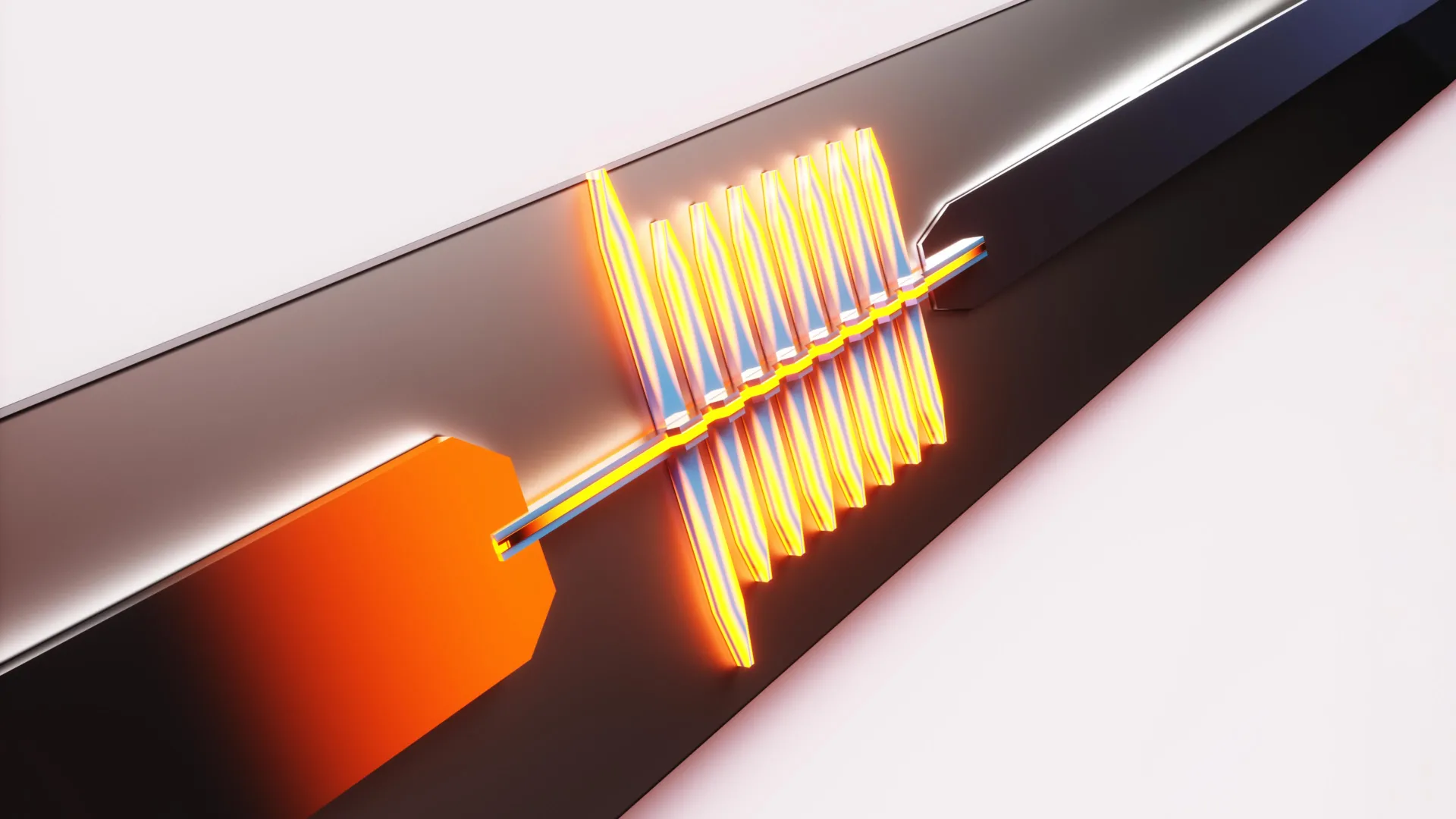
Finnish researchers have unveiled a new quantum sensor that can spot energy changes so small they’re measured in zeptojoules – a unit that’s less than a trillionth of a billionth of a joule. In plain terms, the device can feel the tiniest flicker of heat, allowing it to register the arrival of single photons, the fundamental particles of light. This level of sensitivity is a game‑changer for several cutting‑edge fields. For quantum computers, which rely on precise control of quantum bits, the sensor could help keep operations stable and error‑free, bringing practical quantum machines closer to reality. In the realm of astrophysics, the same technology offers a new way to hunt for dark matter, the invisible substance that makes up most of the universe’s mass. By detecting the minuscule energy deposits that dark‑matter particles might leave behind, scientists gain a powerful new tool in their quest to uncover this cosmic mystery. The breakthrough hinges on ultra‑pure superconducting materials that react instantly to the slightest temperature shift. While still in the laboratory stage, the sensor’s ability to count individual photons and sense ultra‑low energy events promises to open doors to more powerful quantum devices and fresh insights into the universe’s biggest unanswered questions.
Read more