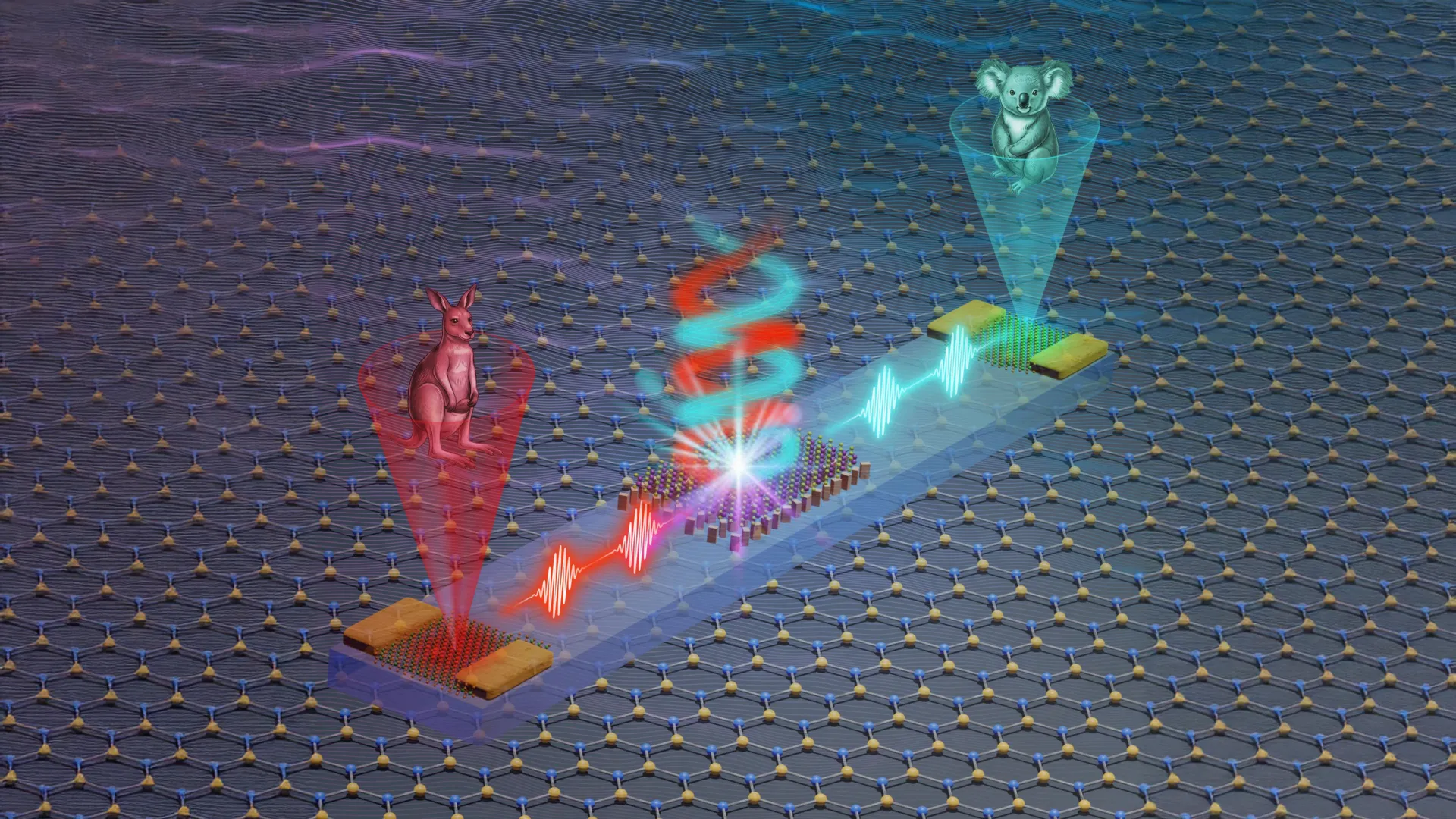
Breakthrough Light‑Powered Chip Promises Faster AI and Quantum Computers
A research team led by Monash University has unveiled a microscopic chip that can generate, steer, and read information carried by light—all on a single piece of silicon. The device taps into a cutting‑edge field called “valleytronics,” which exploits a quantum property of electrons that behaves like tiny valleys in an energy landscape. By using atom‑thin materials and nanoscale structures, the chip can encode data in these valleys, allowing information to travel at the speed of light while using far less power than traditional electronic circuits.
The breakthrough could reshape the future of computing. Because the chip processes data with light, it promises dramatically faster speeds for artificial‑intelligence tasks and could serve as a building block for quantum computers that need ultra‑low‑energy, high‑precision components. The project brought together experts from Monash, Singapore University of Technology and Design, LMU Munich, and the University of Technology Sydney, highlighting the global push toward more sustainable, high‑performance technology. While still in the laboratory stage, the new valleytronic chip marks a major step toward computers that are not only quicker but also greener, opening doors to innovations we’ve only imagined until now.
Read more
Scientists Teleport Microwave Signals at Near‑Freezing Temperatures, Paving Way for 5G‑Ready Quantum Networks
A research team has shown that quantum information can be sent through microwave signals even when the wires are chilled to just 4 kelvin (about –269 °C). Using special niobium‑titanium superconducting cables, they were able to preserve the delicate quantum state despite the presence of thermal noise that normally scrambles such data. The breakthrough demonstrates that quantum microwave links don’t have to stay at the ultra‑cold millikelvin levels previously thought necessary, opening the door to more practical, real‑world applications.
The scientists say the next step is to replace rigid, ultra‑cold connections with flexible lines cooled by liquid helium, making it easier to integrate quantum communication into existing cryogenic equipment. Their long‑term vision is even bolder: to develop quantum microwave networks that operate at room temperature and through open‑air channels, enabling ultra‑secure key distribution over frequencies that match upcoming 5G and 6G wireless standards. While challenges remain—especially in building cryogenic hardware that meets the high‑fidelity demands of quantum computers—the results suggest that quantum‑grade microwave communication could soon move from the lab into everyday technology.
Read more

Inside Disney’s Next‑Gen Ride: How Imagineers Are Redefining Theme‑Park Magic
Disney’s creative engineers, known as Imagineers, have pulled back the curtain on the cutting‑edge technology powering their newest attractions. In a recent CNET interview, they explained how a blend of trackless ride systems, high‑resolution projection mapping, and synchronized motion platforms creates an immersive experience that feels like stepping into a movie. The team highlighted the use of real‑time data and AI to adjust ride elements on the fly, ensuring each guest gets a slightly different adventure. Advanced haptic‑feedback seats and scent dispensers add physical sensations that match the on‑screen action, while hidden LED lighting and laser‑etched set pieces make the environments feel alive. Safety remains a top priority, with redundant sensor networks and automated emergency protocols. By marrying storytelling with robotics, virtual reality, and sophisticated control software, Disney aims to set a new standard for theme‑park rides that blur the line between reality and imagination. The interview also hinted at future projects that could incorporate guest‑generated content, making every visit uniquely personal.
Read more