Young Chinese Scientists Break Quantum Record with Jiuzhang‑4 Light‑Based Computer
A team of researchers in their 20s from the University of Science and Technology of China and other Chinese Academy of Sciences institutes has built "Jiuzhang‑4," an optical quantum computer that manipulates a staggering 3,050 photons. Published in *Nature* on May 13, the breakthrough shows the machine solving a Gaussian boson‑sampling problem about 10^54 times faster than the world’s fastest supercomputer – a task that would take classical computers more than 10^42 years. The secret? A novel "space‑time mixed encoding" architecture that adds a time dimension to the traditional spatial layout, dramatically reducing photon loss. The prototype integrates 1,024 squeezed‑state light sources into an 8,176‑mode circuit with 51 % overall efficiency. Young scientists like Liu Hualiang, Gong Siqiu and Su Hao spent months fine‑tuning lenses, beam splitters and detectors, often working through holidays and Chinese New Year. Their dedication turned a flash of insight on a campus walk into a functional quantum device, proving that China’s new generation can lead the "second quantum revolution." While Jiuzhang‑4 is currently specialized for certain mathematical tasks, its scale and low loss lay the groundwork for future fault‑tolerant, general‑purpose quantum computers.
Read more

Breakthrough Gene Hunt Uncovers 48 New Alzheimer’s Targets
A massive international research effort has mapped the genetic landscape of Alzheimer’s disease like never before, flagging 127 DNA regions linked to the condition – 48 of them completely new to science. By scanning the genomes of tens of thousands of people, scientists discovered not only fresh genetic clues but also identified specific brain cells whose activity wanes as dementia advances. These insights point to several promising drug targets that could slow or halt the disease’s progression.
The study, the largest of its kind to date, highlights how certain gene variants raise the risk of Alzheimer’s and pinpoints the cell types most vulnerable to these genetic hits. "It’s an exciting time for Alzheimer’s genetics," says veteran researcher Rudolph Tanzi, who first identified the APP gene’s role in the disease back in 1987.
While the findings won’t instantly change an individual’s risk profile, they lay the groundwork for new therapies that could one day protect the brain’s critical cells. For anyone following the fight against dementia, this research marks a hopeful step toward turning genetic knowledge into real‑world treatments.
Read more
China Opens “Gold Spectrum” for 6G – Commercial Rollout Expected by 2030
China has become the first nation to grant official permission to use a prized 6‑gigahertz frequency band—dubbed the “Gold Spectrum”—for testing the next‑generation mobile network, 6G. The move clears a major hurdle, allowing researchers to shift from lab experiments to real‑world trials in cities and factories. Officials say the band offers wide coverage, huge capacity and reliable connections, and it fits neatly with the existing 5G infrastructure, keeping costs down as the technology evolves.
The government’s second‑phase 6G trials are now under way, focusing on building prototype systems and proving that the technology works outside the lab. Experts predict that commercial services could start appearing around 2030, with broader rollout by 2035. What will 6G mean for everyday life? Imagine holographic video calls that feel like you’re in the same room, smart robots and “digital twins” of entire cities that manage traffic and energy in real time, and factories where machines coordinate instantly with zero lag. Even emergency responders and drones could rely on ultra‑precise, low‑latency links. In short, the approved Gold Spectrum is set to accelerate a future where everything—from phones to factories to whole cities—talks to each other instantly and intelligently.
Read more
Tiny Fiber Patch Boosts Brain Cancer Survival in Mice, Doubling Lifespan
A team of scientists from the University of Cincinnati and Johns Hopkins Medicine has unveiled a new way to fight glioblastoma, the most aggressive brain tumor in adults. They created a thin, mesh‑like patch made of ultra‑small fibers that can be implanted directly into the brain. The patch is loaded with three different cancer‑fighting drugs that work together to attack the tumor from multiple angles. In mouse experiments, the three‑drug combination showed a powerful “team‑up” effect, dramatically slowing tumor growth and more than doubling the animals’ survival time compared with standard treatment. The researchers say the fiber mesh releases the medicines right where they’re needed, avoiding the side effects of high‑dose chemotherapy that circulates throughout the body. Lead author Daewoo Han, an assistant professor of engineering, highlighted that this approach could pave the way for personalized, localized therapy for patients with glioblastoma, a disease that currently has very limited options.
Read more
China’s Space Station Brings Back 41 kg of Lab Samples – From Mini‑Brains to Super‑Alloys
China’s Shenzhou‑22 spacecraft has safely delivered the 10th batch of scientific samples from its space station, returning about 41 kg of material collected from 23 experiments. The haul includes nine life‑science specimens—such as artificial embryos and tiny brain organoids—twelve material‑science samples like new titanium alloys, high‑strength steels and ferroelectric crystals, and two combustion‑science items featuring flame‑synthesized nanomaterials and soot collectors. After landing, the samples were inspected at the Chinese Academy of Sciences’ Space Application Engineering and Technology Center before being passed on to researchers.
In the life‑science arena, scientists will study how embryos and brain‑like structures develop in microgravity, seeking clues that could help humans live and work in space for extended periods. Material scientists will examine how weightlessness alters alloy formation, crystal growth, and defect patterns, aiming to design stronger, lighter components for aerospace, medical imaging and precision sensors. Meanwhile, combustion experts will analyze soot and nano‑carbon particles to improve fire‑safety measures and develop new energy‑efficient nanomaterials for use on Earth and beyond. This multidisciplinary payload marks a major step toward turning space‑based research into practical technologies that benefit everyday life.
Read more
When Quantum Computers Threaten Your Online Privacy – Is Q‑Day Coming?
Imagine a day when the secret codes that protect your bank account, private chats, and even government secrets suddenly become readable. Scientists call that moment “Q‑Day,” and it could arrive sooner than many thought. In a new New Scientist video, experts explain how quantum computers—machines that use the strange rules of quantum physics—are poised to crack the encryption that underpins the modern internet. While the idea once sounded like science‑fiction, recent breakthroughs suggest the technology is advancing at breakneck speed. If a sufficiently powerful quantum computer is built, it could solve the complex math problems that keep today’s data safe in a matter of seconds, exposing everything from credit‑card details to diplomatic cables. The video also balances the threat with the promise: the same quantum power could unlock breakthroughs in drug discovery, climate modeling, and materials science. Filmed at Quantum Motion’s labs, the report walks viewers through how quantum bits (qubits) work, why they’re so powerful, and what steps researchers and policymakers are taking to develop “quantum‑resistant” encryption before the countdown reaches zero. Stay informed, because the future of online security may depend on it.
Read more
How Shulan Medical Is Turning AI Into a Personal Health Twin
China’s health sector is moving from simply treating illness to managing overall wellness, and Shulan Medical is leading the charge with a blend of AI, big data and what experts call “computational medicine.” Starting in 2015 with an “Internet + Healthcare” model, the company stepped up in 2025 to an “All‑in‑Technology” strategy that lets doctors simulate surgeries, predict outcomes and build a digital replica—or “twin”—of each patient’s health.
Founder Zheng Jie created the Open Medical and Health Alliance (OMAHA) to share standardized medical terminology and make health data interoperable. Shulan’s own Hospital Information System gives it full control over electronic records, while the iMDT platform lets doctors across hospitals consult remotely via video and shared data.
In 2024 the group helped launch the Zhejiang Key Laboratory of Artificial Organs and Computational Medicine, which now supports more than 170 institutions and has authored dozens of national standards. Early 2025 saw the debut of Dr.Shu, an AI health assistant that guides patients from symptom check‑in to appointment booking and helps clinicians draft medical notes.
All these pieces feed a lifelong health database that turns static records into dynamic, predictive models. With new “AI Future Hospital” projects that combine cloud computing, 6G and wearable tech, Shulan is building a closed‑loop ecosystem—clinical care, research, talent training and industry innovation—aimed at making personalized, predictive medicine a reality for everyone.
Read more
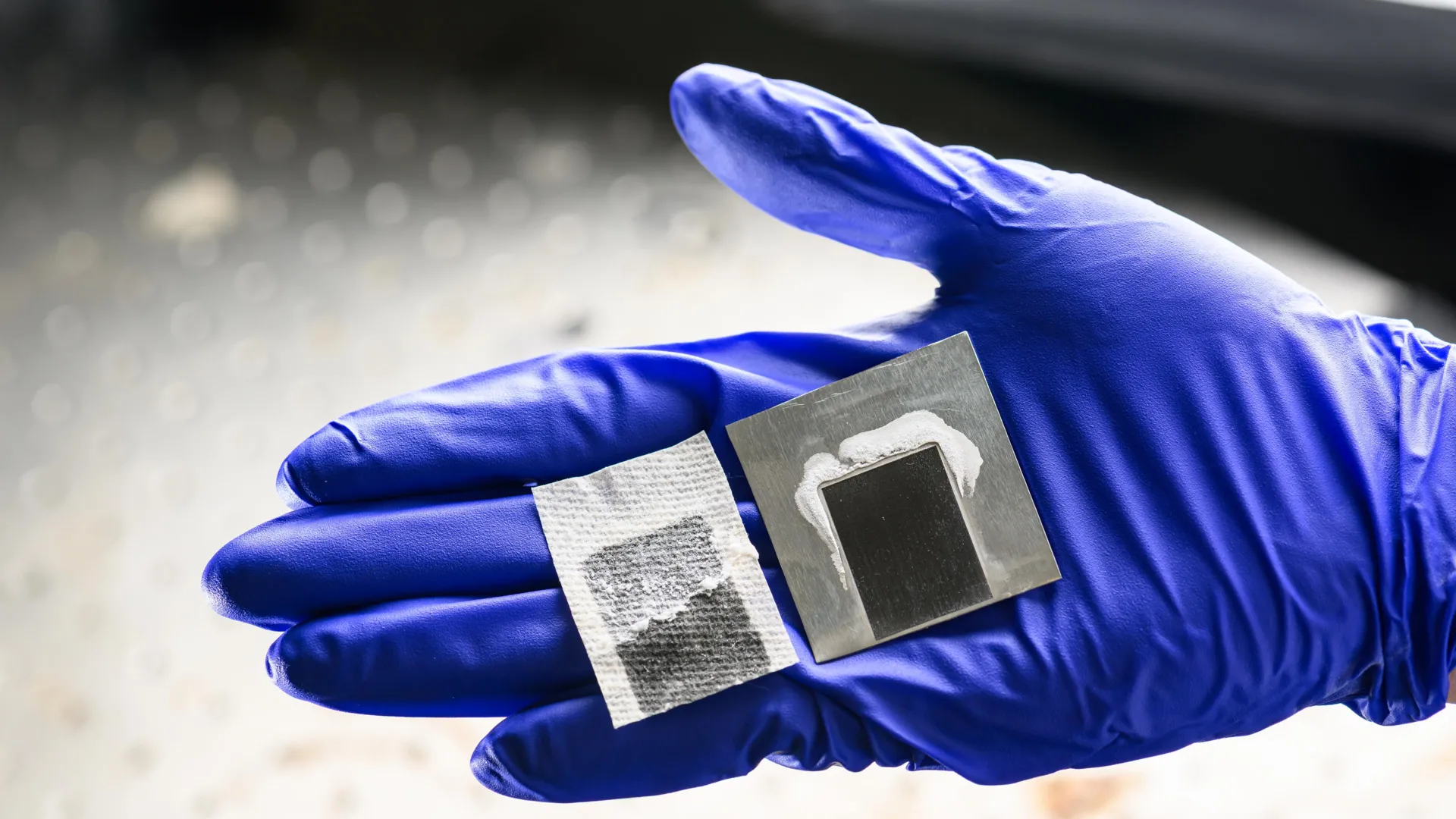
Sun-Powered Desalination Turns Sea Water into Drinkable Water—No Toxic Brine, Plus Valuable Minerals!
Scientists have unveiled a new solar‑driven system that can turn seawater into clean drinking water without producing the salty, toxic waste—known as brine—that plagues today’s desalination plants. The key is a set of metal panels whose surfaces are etched with tiny laser‑made patterns. When sunlight hits the panels, water evaporates instantly, leaving the salt behind. A built‑in “self‑cleaning” mechanism gently shakes the salt crystals off the surface, so the panels never clog and can keep working continuously.
The team tested the prototype with water from the Atlantic, Pacific and Indian Oceans and recovered almost every gram of dissolved salt as solid particles. Those solids aren’t just waste; they contain valuable minerals such as lithium, a metal in high demand for electric‑vehicle batteries. By collecting and processing the salts, the technology could turn a disposal problem into a revenue stream.
If scaled up, this approach could help water‑short regions—from California’s drought‑hit valleys to arid parts of the Middle East—produce fresh water using only sunlight, dramatically cutting energy costs and environmental impact. The research was led by Professor Chunlei Guo at the University of Rochester’s Laboratory for Laser Energetics.
Read more
China Launches Groundbreaking Project to Turn CO₂ into Green Jet Fuel
On May 22, scientists and officials gathered at the Guangzhou Institute of Energy Conversion to kick off a national research program aimed at producing bio‑aviation fuel from carbon dioxide using renewable energy. The initiative, part of China’s “Double‑Carbon” strategy, brings together experts from the Chinese Academy of Sciences, top universities and industry partners to create a closed‑loop process that captures cheap CO₂, powers a biological reduction with green electricity, and converts the result into low‑carbon jet fuel. Leaders such as Che Zifan of the National Natural Science Foundation, academicians Chen Yong and Li Yanpeng, and director Lv Jiancheng highlighted the project’s ambition to solve the aviation sector’s decarbonisation challenge while bypassing traditional feedstocks like waste oils or agricultural residues. The team will develop a novel chain of technologies that couples solar‑driven hydrogen production with microbial synthesis of farnesene, followed by targeted hydrogenation to yield sustainable fuel. With multi‑institution collaboration and a clear roadmap, the project aims to deliver scalable, negative‑emission jet fuel that could reshape the future of green aviation.
Read more