AI Boom 2026: $7 Billion Funding, New Agent Assistants, and Record‑Fast Model Updates
May 2026 marked a turning point for China’s AI scene. Investors poured roughly $7 billion into the last‑stage startups, with DeepSeek snagging a 50‑billion‑RMB round that set a national record, Moonshot AI raising about $20 billion, and StepFun gearing up for a Hong Kong IPO. At the same time, the industry’s deal flow collapsed—over 90% of 2024‑era financing vanished—signaling a rapid consolidation.
2026 is also being hailed as the first year of practical AI agents. Tools like Anthropic’s Claude can now run a computer and finish complex tasks, Tencent’s WorkRally produces comic scripts autonomously, and Baidu’s new Agent Platform rewrites the underlying “chip‑cloud‑model” stack. Standard communication protocols (MCP, A2A) are emerging as the "TCP/IP" of this agent era, enabling multi‑agent systems to handle sophisticated workflows.
Model releases are arriving faster than ever. OpenAI’s GPT‑5.5 Instant debuted in early May, cutting hallucinations by half and delivering sharper answers. Competitors followed suit: Anthropic’s Claude Opus 4.6, Google’s Gemini 3.1 Pro, and Meta’s LLaMA 3.5 Agent, all pushing accuracy past the 50% “human‑test” benchmark. Chinese firms answered with DeepSeek R2 (1.2 trillion parameters, 91% SWE‑bench score) and Baidu’s Wenxin 5.1, which slashes training costs to a fraction of Western rivals.
Policy makers are catching up. China released a national strategy for AI agents, outlining 19 key use‑cases, while new standards aim to streamline AI terminal grading and boost AI‑manufacturing synergy. Environmental concerns linger—training Grok 4 may emit up to 140,000 tons of CO₂—yet the sector’s momentum is undeniable, with global AI investment projected to hit $581 billion in 2025 and IT spending soaring to $6.31 trillion in 2026.
Read more

SpaceX Rockets 29 New Starlink Satellites Into Sky From Florida
On the morning of May 29, 2026, SpaceX lifted off from Cape Canaveral’s Launch Complex 40 at 8:57 a.m. EDT, sending a Falcon 9 rocket soaring into the Atlantic. The mission, dubbed Starlink‑29, carried 29 brand‑new broadband‑service satellites destined for low‑Earth orbit. Once deployed, the satellites will join an ever‑growing constellation that aims to deliver high‑speed internet to remote and underserved regions around the globe.
The Falcon 9’s first stage performed a controlled landing back at the nearby drone ship, marking another successful reuse of the rocket’s hardware. Inside the payload fairing, each Starlink satellite is equipped with advanced phased‑array antennas and high‑throughput transponders, allowing the network to handle more users and provide faster data rates than earlier batches.
SpaceX’s rapid launch cadence reflects its ambition to reach a target of several thousand operational satellites within the next few years, a goal that could reshape global connectivity and support emerging technologies such as autonomous vehicles and remote‑sensing applications. The Florida launch underscores the state’s continuing role as a hub for commercial space activity, and it adds another milestone to SpaceX’s record of reliable, high‑frequency missions.
Fans and industry watchers celebrated the successful liftoff on social media, noting the smooth ascent, the precise deployment of the payload, and the continued progress toward a truly global internet service.
Read more
China’s Shenzhou‑23 Rockets Into Space with Major Upgrades and New Science Experiments
On May 24, a Long March 2F rocket lifted off from Jiuquan, carrying the Shenzhou‑23 crewed spacecraft. Ten minutes later the capsule separated and settled into its planned orbit, where a three‑astronaut crew began a series of experiments and maintenance tasks aboard China’s space station.
What makes this flight stand out are several safety and capability upgrades. The crew‑window now has three layers of ablative glass plus an extra protective shield, dramatically improving resistance to debris impacts after cracks were found on earlier missions. The return capsule’s cargo capacity has more than tripled – from about 50 kg to over 100 kg – allowing scientists to bring back a larger haul of research results, equipment, and personal items.
The mission also carries nine scientific payloads (about 54 kg) that explore everything from growing rice seeds in micro‑gravity to testing new perovskite solar cells, nano‑enzymes, liver‑cell cultures and antibiotic‑producing microbes. Astronauts will perform several spacewalks to install, debug and repair hardware, and the spacecraft includes special accommodations for female crew members. Developed in just five months to meet emergency‑rescue requirements, Shenzhou‑23 marks China’s seventh crewed flight in the space‑station era and the 40th launch of its manned program.
Read more
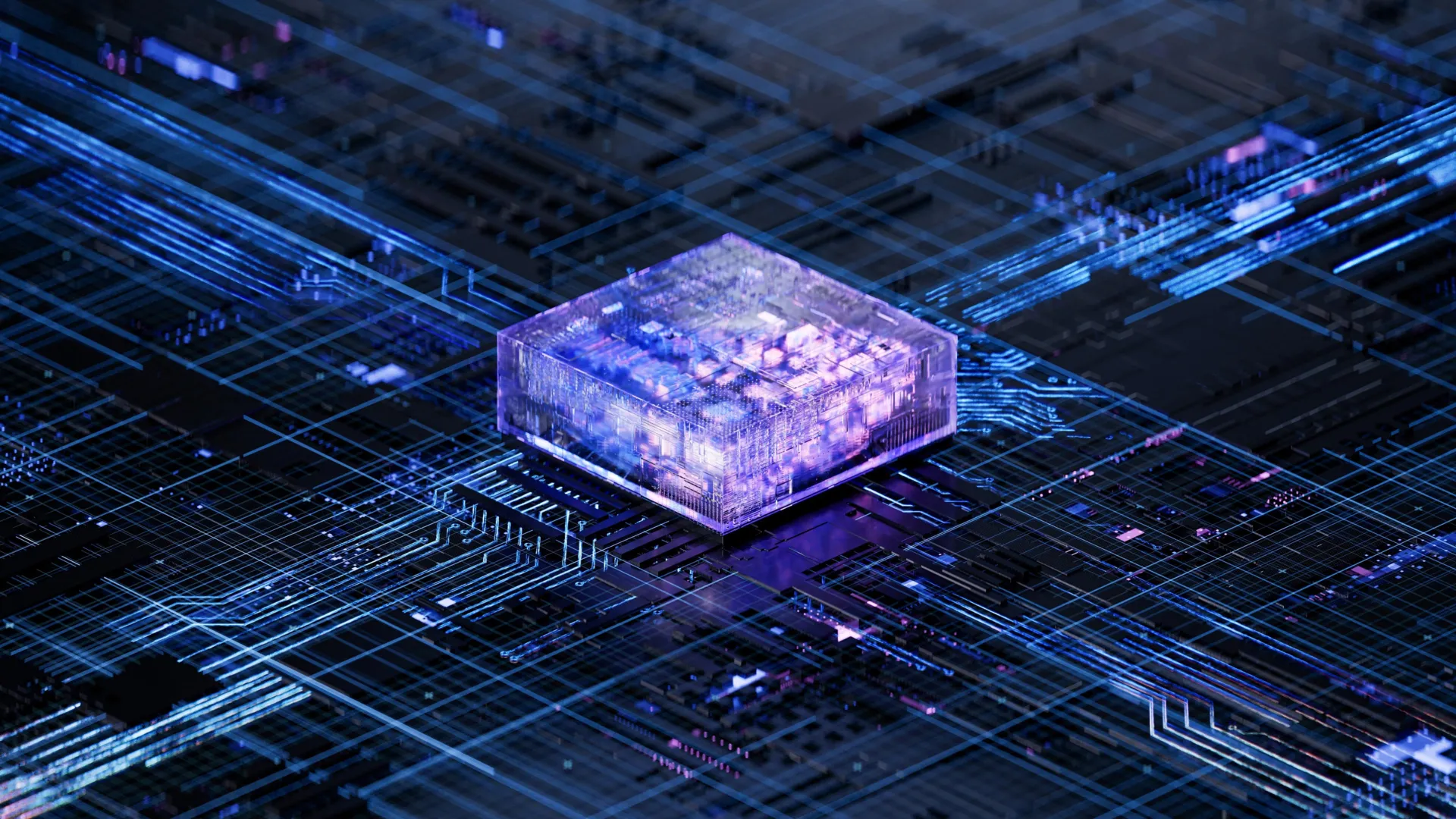
Stacked‑Silicon Chip Could Keep Computers Getting Faster for Years
Researchers at the University of Illinois have found a way to keep the pace of faster, smaller computers moving forward, even as traditional chip‑shrinking methods start to stall. Their new technique stacks ultra‑thin layers of silicon circuits on top of each other, creating a true three‑dimensional chip. By using a low‑temperature manufacturing process, the team overcame a long‑standing hurdle that made building multi‑layer chips difficult and costly. The result is a chip that packs far more computing power into the same footprint, runs cooler, and uses less electricity. This breakthrough could extend the trend famously known as Moore’s Law— the observation that the number of transistors on a chip doubles roughly every two years— for many more years. In practical terms, the technology promises faster smartphones, more responsive laptops, and smarter devices without the need for larger batteries or bigger hardware. While still in the research stage, the approach shows promise for commercial production, potentially reshaping the semiconductor industry and keeping the rapid pace of digital innovation alive.
Read more
China Supercharges Its Robot Revolution: Embodied AI Takes Off at World Expo
At the World Intelligent Industry Expo in Tianjin, visitors watched a robot dog sprint up stairs, crawl under obstacles and choose the safest path up a steep slope—all without human help. The trick? Galileo (Tianjin) Technology’s home‑grown joint modules that combine motors, reducers and sensors, paired with real‑time gait‑control algorithms that let the dog “feel” the ground and adjust its balance on the fly. The company boasts full control over every hardware and software layer and has filed more than 300 patents.
Beyond the dog, Paixini Perception Technology is turning everyday robot work into data. Its staff wear five‑finger tactile gloves in five dedicated factories, recording the force, angle and visual scene of each grab, sort or assembly task across 15 industries. That rich, multi‑modal data is now sold through a cloud marketplace, letting other firms skip costly data‑collection rigs.
China’s government is backing the whole ecosystem—open‑source robot brains from Gaode, a national AI pilot base in Hangzhou, and a push for shared sensors, models and training data. Experts say this openness slashes R&D costs and fuels rapid innovation. Nobel laureate Michael Spence notes China’s unique focus on turning AI into real‑world economic power. Forecasts predict the embodied‑AI market will hit 400 billion yuan by 2030 and top 1 trillion yuan by 2035, positioning China as a global leader in the robot age.
Read more
From 5G‑A to 6G: Tackling the Biggest Hurdles in Tomorrow’s Mobile Networks
The next generation of mobile networks, dubbed 6G, promises mind‑blowing experiences such as holographic calls, digital twins of real‑world objects, and ultra‑fast, ultra‑reliable connections for everything from factory robots to remote surgery. To get there, researchers are exploring a handful of breakthrough ideas.
First, the terahertz band (0.1‑10 THz) could deliver massive bandwidth, but its signals fade quickly, demanding new high‑frequency chips and smart beam‑steering antennas. Reconfigurable Intelligent Surfaces (RIS) act like programmable mirrors that reshape radio waves, helping to cover dead zones at these high frequencies.
Second, 6G will blend communication with sensing, turning base stations into radar‑like eyes that can detect gestures or map environments in real time. Semantic communication aims to send only the meaning of data, cutting down traffic and latency.
Security also steps up: with AI‑driven attacks and the looming threat of quantum computers, dynamic encryption and blockchain‑based identity checks are being prototyped.
Meanwhile, the interim step—5G‑A—already pushes mobile broadband higher with enhanced Massive MIMO, tighter time sync for sub‑millisecond latency, and support for millions of IoT devices per square kilometre.
Coordinated efforts among industry, academia, and standards bodies worldwide are racing to test these technologies, file patents, and shape the global 6G roadmap. The journey from 5G‑A to 6G is a complex puzzle, but each piece brings us closer to a truly immersive, intelligent wireless future.
Read more

Boosted ‘Killer’ Immune Cells Show New Power Against Deadly Cancers
Researchers at McGill University have discovered a way to turbo‑charge the body’s natural killer (NK) cells, the immune system’s frontline “hit‑and‑run” fighters. By briefly blocking two proteins that normally keep NK cells in check, the scientists turned these cells into far more aggressive cancer hunters. In laboratory tests, the enhanced NK cells broke through the protective shields of several hard‑to‑treat tumors, including aggressive forms of leukemia, glioblastoma (a brain cancer), kidney cancer and triple‑negative breast cancer. The technique works by releasing the NK cells’ built‑in ability to spot and destroy abnormal cells, while also preventing tumors from sending “do‑not‑attack” signals. The team reports that the supercharged NK cells killed cancer cells at rates far higher than untreated NK cells, suggesting a promising new avenue for immunotherapy. While the work is still in early stages, the findings could lead to personalized treatments that harness a patient’s own immune system to combat cancers that have resisted conventional therapies. The researchers stress that further animal studies and clinical trials will be needed before the approach can be tested in patients.
Read more
Huawei’s ‘Tao’s Law’ Could Redefine Chip Making Without Expensive EUV Machines
Bloomberg says Huawei may soon mass‑produce chips that perform like a 1.4 nm process, even though the company doesn’t use the ultra‑expensive Extreme Ultraviolet (EUV) lithography machines that most experts think are essential for such advanced nodes. IDC China’s Huo Jinjie calls the breakthrough “Tao’s Law,” a new framework that shifts the focus from shrinking transistors to cutting communication latency inside chips.
By shortening internal pathways, stacking chiplets, and co‑designing architecture, software, and packaging, Huawei aims to boost overall system efficiency rather than just raw transistor count.
Industry insiders say this could change the game for China’s semiconductor sector, giving it a way around current equipment bottlenecks. The approach has already yielded 381 different chips for digital‑transformation projects, and a new Kirin processor slated for late‑2026 will be the first to use “logic folding” technology, promising a performance jump comparable to a 1.4 nm process. Analysts compare the move to the disruptive impact of DeepSeek, suggesting it could spark a wave of local innovation and investment. Huawei stresses that open collaboration with global scientists and partners will be key, positioning “Tao’s Law” as a catalyst for a more sustainable, architecture‑driven chip ecosystem.
Read more
Ancient Protein Map Uncovers Hundreds of Mystery Genes Behind Rare Diseases
A team of scientists has pieced together a 1.5‑billion‑year‑old protein interaction network—essentially a molecular map from the dawn of complex life—to hunt for hidden genes that may cause human disease. By comparing this ancient blueprint with modern genomes, they identified hundreds of previously unknown genes that appear linked to a variety of health conditions. To test their findings, the researchers turned to frog and mouse models, where they confirmed that three of the newly flagged genes are indeed tied to rare disorders: osteopetrosis (a bone‑hardening disease), end‑stage kidney disease, and short‑rib thoracic dysplasia, a severe skeletal malformation. These early successes suggest the ancient network can spotlight disease‑relevant genes that modern studies have missed. The team plans to expand their work, using additional animal experiments to verify more candidate genes and explore how these ancient connections influence today’s biology. If successful, this approach could open a new frontier in genetics, offering fresh targets for diagnostics and therapies and shedding light on the deep evolutionary roots of human disease.
Read more