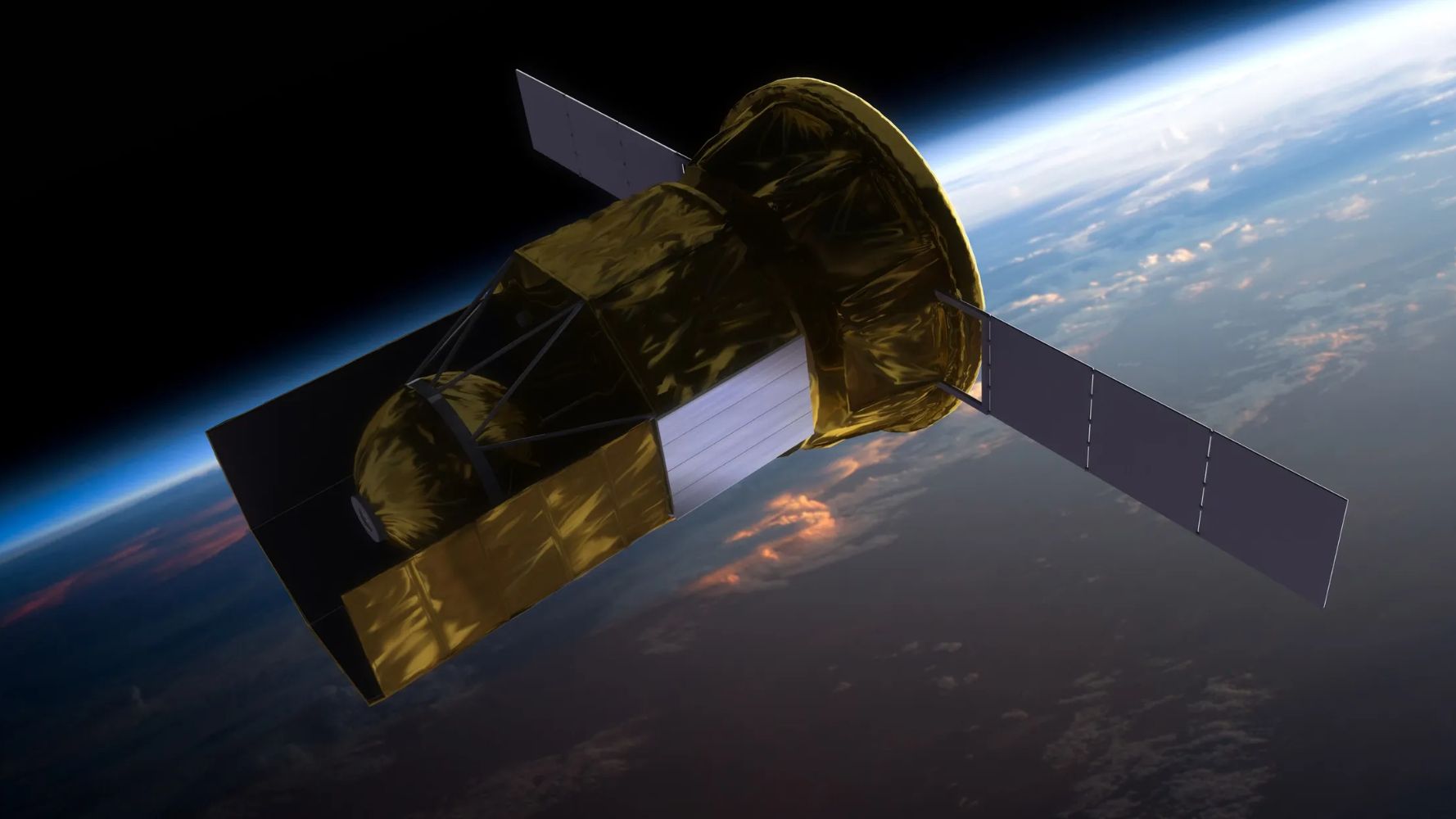
NASA’s New ‘Space Gas Station’ Satellite Takes Flight to Power Moon and Mars Missions
While SpaceX readies its Starship for a twelfth test flight and Blue Origin fine‑tunes its Blue Moon lander, NASA is quietly building the infrastructure that will let those rockets go farther. The agency’s LOXSAT (Low‑Earth Orbit eXperiment Satellite) is set to launch this summer aboard Rocket Lab’s Photon bus, hitching a ride on an Electron rocket from New Zealand no earlier than July 17. Once in low‑Earth orbit, LOXSAT will spend nine months running a suite of eleven experiments that probe how to store, transfer, and manage super‑cold (cryogenic) propellants in space. Those fluids—liquid hydrogen and oxygen—are the lifeblood of the Artemis lunar landers, which rely on on‑orbit refueling to carry astronauts from Earth to the Moon’s surface and back. By proving that a “space gas station” can safely handle cryogenic fuels, NASA hopes to unlock a new era of deep‑space travel, making missions to the Moon, Mars, and beyond more flexible and cost‑effective. The data gathered will help engineers scale the technology for larger stations, turning the vision of a refuel‑on‑the‑go spacecraft fleet into reality.
Read more
Vast Unveils Powerful New Satellite Fleet to Boost Private Space‑Station Ambitions
Vast, the company best known for designing and building private space stations, has announced the launch of its first line of high‑power satellites. The new fleet is intended to provide robust communications and data‑transfer capabilities for future orbital habitats, research labs, and commercial ventures. Vast says its world‑class engineering team and large‑scale manufacturing facilities give it a unique edge in the competitive high‑power satellite market, building on the success of its recent Haven Demo mission, which proved the company’s on‑orbit technology.
The satellites, each equipped with advanced power‑generation arrays and high‑throughput transponders, will support everything from real‑time video streaming from space stations to secure broadband links for scientific experiments. By integrating satellite services directly with its private stations, Vast aims to create a seamless end‑to‑end space infrastructure that can attract commercial partners, governments, and research institutions.
Industry analysts see this move as a strategic step toward a more self‑sufficient low‑Earth‑orbit economy, reducing reliance on third‑party providers. Vast plans to begin deploying the satellites later this year, with full operational capability expected by early 2027. The rollout could accelerate the commercialization of space habitats and open new opportunities for businesses and scientists operating beyond Earth’s atmosphere.
Read more

Old‑World Glassmaking Inspires a New Material That Sucks Up CO₂ and Hydrogen
Scientists have taken a page from centuries‑old glassmakers to create a futuristic, sponge‑like glass that can capture greenhouse gases and clean‑fuel hydrogen. By adding simple salts of sodium and lithium during production, the researchers made the porous glass easier to melt, shape, and scale up. The resulting material is riddled with tiny, interconnected pores that act like microscopic nets, trapping carbon dioxide and hydrogen molecules inside. This breakthrough could speed up the development of better storage solutions for renewable energy, help clean up industrial emissions, and open new possibilities in high‑performance manufacturing. While the lab results are promising, the team says the glass still needs to prove its durability over long periods and under real‑world conditions. Future work will focus on fine‑tuning its stability, predicting how it behaves in different environments, and testing it in actual carbon‑capture and hydrogen‑storage systems. The study was a collaborative effort involving researchers from the University of Birmingham, Technische Universität Dortmund, Ruhr‑University Bochum, SRM University‑AP, the Technical University of Munich, and the University of Cambridge.
Read more
Laptop Beats Quantum Computer in Complex Simulation—New Math Turns the Tables
In a high‑profile 2025 study, a team of quantum researchers announced that they had used a quantum processor to simulate the dynamics of a tangled web of qubits, claiming the task was beyond the reach of any classical computer. The headline sparked excitement about a new milestone in "quantum supremacy."
But a fresh paper published this spring shows that the claim may have been premature. By dusting off a 1980s algorithm called belief propagation and marrying it with modern tensor‑network tricks, a team of physicists demonstrated that an ordinary laptop can reproduce the same results – and even push the simulation a bit farther. The work proves that clever software can sometimes close the gap that hardware alone leaves open.
The findings remind us that quantum advantage isn’t just about raw qubit counts; it also hinges on the algorithms we run. As researchers revive and reinvent older methods, the race between quantum and classical machines becomes less about who’s faster and more about who can think smarter. The study, featured in *Science*, has reignited debate over how and when true quantum supremacy will be achieved.
Read more