China’s Science Powerhouse: How the Academy Drives Innovation and Shapes the Future
Founded in 1949, the Chinese Academy of Sciences (CAS) has become the nation’s premier hub for cutting‑edge research and talent development. Its core mission is to conduct mission‑oriented basic science, tackle major national projects, and pioneer disruptive technologies that fuel China’s economic growth, security, and global standing. Over seven decades, CAS has nurtured world‑class scientists, launched breakthrough discoveries, and built a network of research institutes that span everything from quantum physics to biotechnology.
CAS also runs three flagship universities. The University of Science and Technology of China (USTC), originally set up in Beijing in 1958 and now thriving in Hefei, blends rigorous research with innovative teaching. The University of Chinese Academy of Sciences (UCAS) focuses on graduate education, tightly integrating students with CAS’s research labs. ShanghaiTech University, a joint venture with the Shanghai municipal government, emphasizes entrepreneurship and international collaboration.
Recent leadership speeches, including President Xi Jinping’s call to strengthen basic research, underscore the Academy’s role in cementing China’s status as a technology superpower. Highlights such as the “Wukong” project’s insights into cosmic‑ray acceleration and AI‑driven waste‑to‑resource technologies illustrate CAS’s commitment to turning fundamental science into real‑world solutions.
Read more

arXiv Threatens One‑Year Ban on Papers Written by AI
The popular pre‑print server arXiv is tightening its rules on the use of artificial‑intelligence tools in scientific papers. After a recent study showed a sharp rise in fabricated citations—many traced back to large language models (LLMs) that can generate references on the fly—arXiv announced it will suspend any author who submits a manuscript that appears to be written entirely by AI for a full year. The move aims to protect the integrity of research and curb the spread of misinformation that can arise when AI‑generated content goes unchecked. Authors will still be allowed to use AI for assistance, such as language polishing or data analysis, but they must disclose any AI involvement and ensure that all citations are real and verifiable. The policy will be enforced through a combination of automated checks and human review, with violators receiving a public notice and a ban on new submissions for twelve months. Researchers, institutions, and publishers are watching closely, as the decision could set a precedent for how the academic community balances innovation with responsibility in the age of generative AI.
Read more
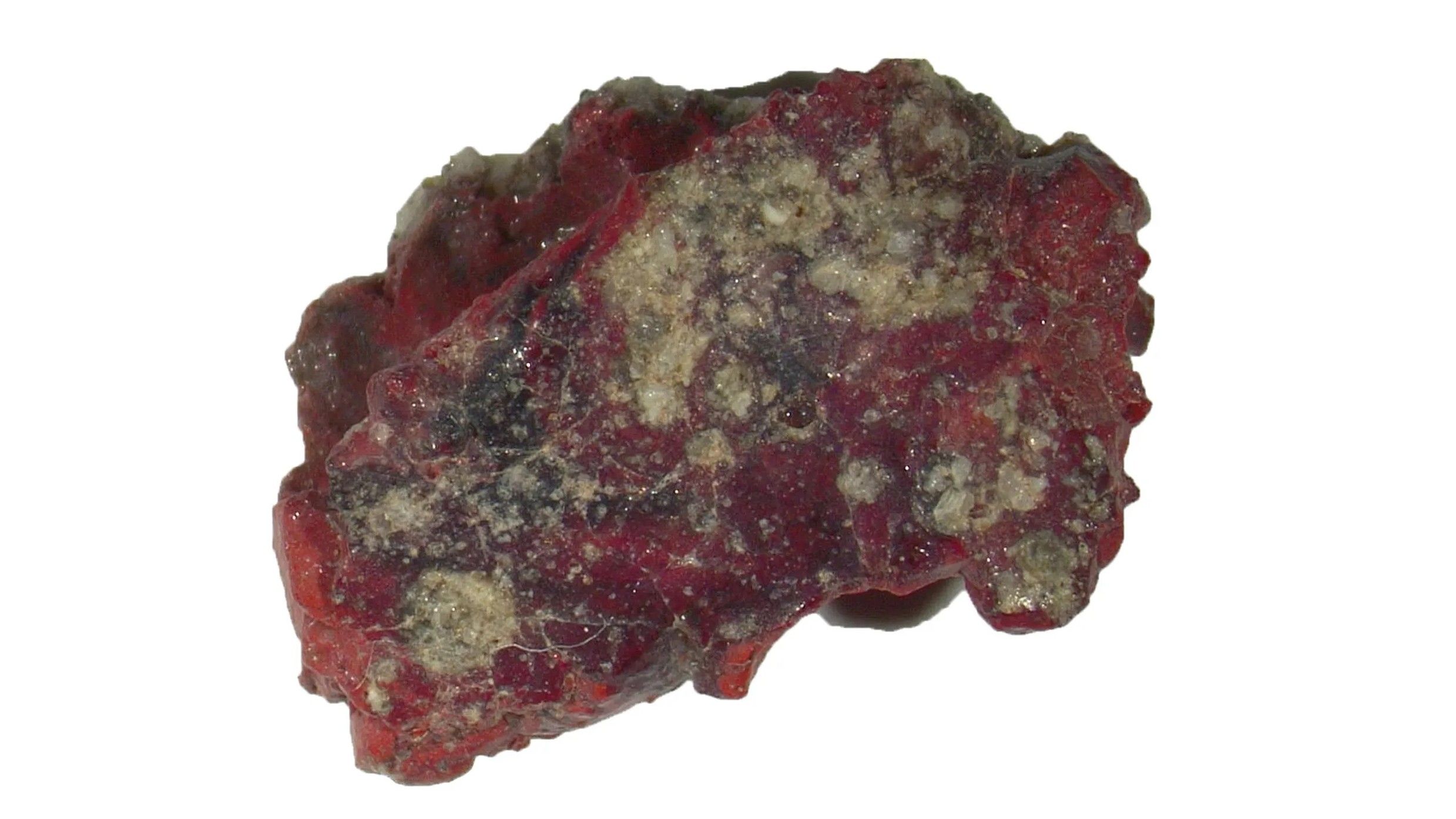
Mystery Crystal Born from the First Atomic Blast Stuns Scientists
In the early hours of July 16, 1945, the United States detonated the world’s first nuclear bomb at the Trinity test site in New Mexico. Decades later, researchers have uncovered a surprising by‑product of that historic explosion: a rare type of crystal that has never been seen before. The material, commonly called “trinitite,” is the glassy residue that formed when the desert sand melted under the bomb’s intense heat. While studying samples of trinitite, a team led by mineralogist Luca Bindi of the University of Florence discovered tiny clathrate crystals embedded within the glass. Clathrates are cage‑like structures that can trap other molecules, and they are usually created only under very specific laboratory conditions. Finding them in a nuclear blast product is unprecedented. The discovery suggests that the extreme temperatures and pressures of the explosion forced atoms into an exotic arrangement, offering a new window into the chemistry of nuclear detonations. Bindi and his colleagues hope that further analysis of these crystals will improve our understanding of how matter behaves under extreme conditions, with potential implications for both nuclear forensics and materials science.
Read more
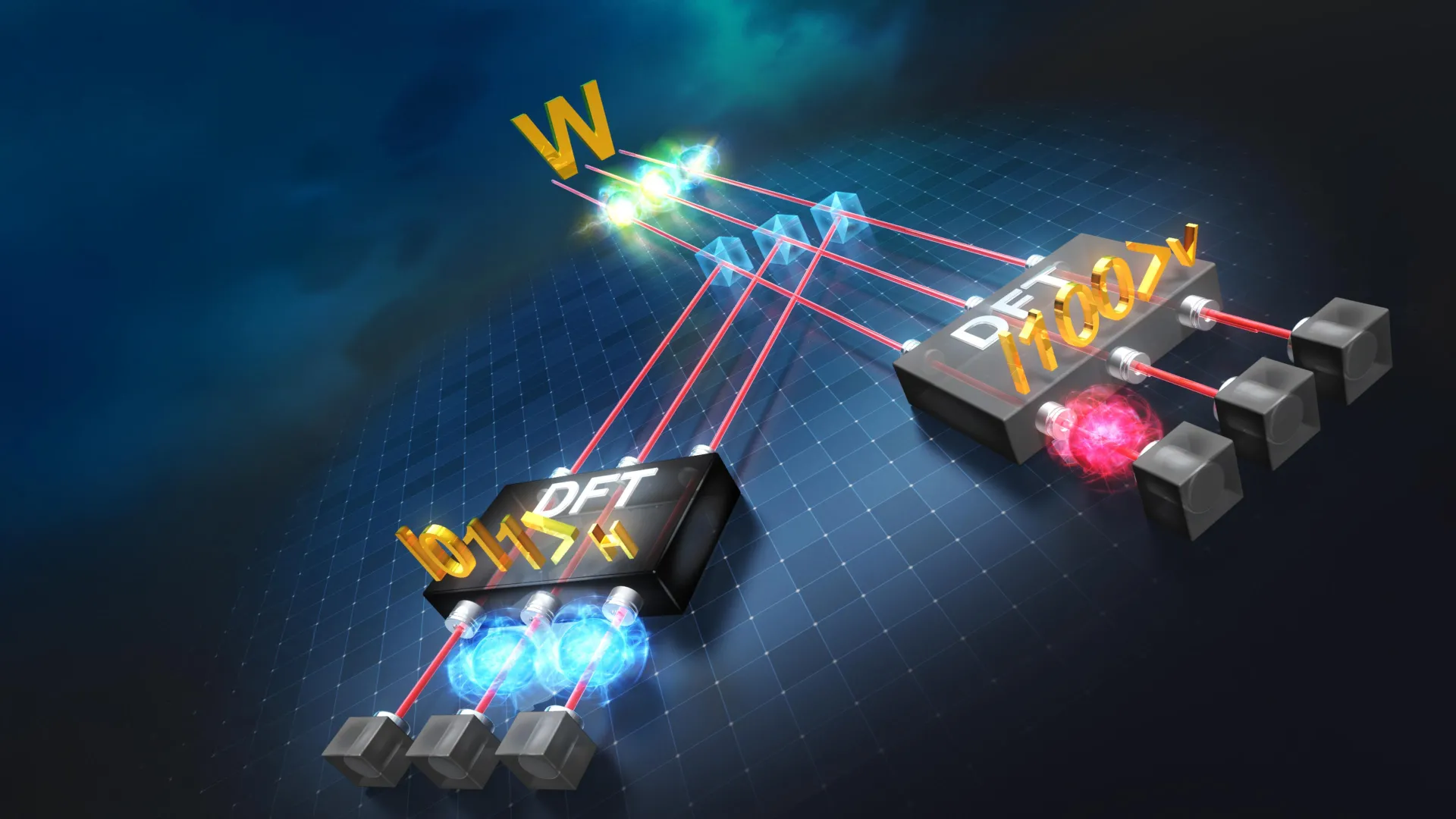
Japanese Scientists Crack Quantum Puzzle, Paving Way for Real‑World Teleportation and Super‑Fast Computing
Researchers at Kyoto and Hiroshima Universities have announced a major breakthrough in quantum physics that could change the way we think about communication and computing. For years, scientists have struggled to reliably detect a special kind of entangled particle arrangement known as a “W state.” The new technique lets them spot these elusive states instantly, a feat that opens the door to faster, more secure quantum networks and even teleportation‑like data transfer.
The discovery arrives just as the world’s first small‑scale quantum network is being tested on ordinary fiber‑optic cables in New York. That experiment linked three nodes using a process called entanglement swapping, showing that quantum links can be stitched together into a functional network. The Japanese team’s method promises to make such measurements far more precise, which is essential for scaling up these networks.
Looking ahead, the scientists plan to expand the technique to larger groups of photons and to integrate it onto chip‑based photonic circuits, bringing us closer to practical quantum computers that can solve problems far beyond the reach of today’s machines. In short, solving the W‑state puzzle could usher in a new era of ultra‑secure communication, real‑time quantum data teleportation, and the next generation of supercomputers.
Read more