Chinese AI Models Surge Abroad: Low Costs, Speed, and Growing Global Trust
Chinese large‑language models are rapidly winning over users worldwide. Data from the AI‑model hub OpenRouter shows that between May 4 and May 10 Chinese models processed a staggering 7.94 trillion tokens, keeping them at the top of global usage charts. On the open‑source platform Hugging Face, China now leads in monthly model downloads, signalling deep integration into the worldwide developer community.
Why are overseas developers choosing Chinese AI? The answer lies in price and performance. Chinese APIs cost far less than comparable services, and their response times are praised for business‑critical speed. Airbnb’s CEO Brian Chesky even credits the Qwen model for helping the company run smoother.
On the technical front, Chinese models are closing the gap with the likes of OpenAI and Google. Alibaba’s Qwen 3.6‑Plus recently placed second on the Code Arena benchmark, a respected test of AI programming skill. Academician Wang Huaimin of the Chinese Academy of Sciences says the nation is moving from merely participating in open‑source projects to leading them.
Most of this activity happens on overseas cloud platforms, meaning data stays abroad while the technology originates in China—a true "model going global" scenario. Experts now urge Chinese firms to shift from simple API calls to building full‑featured developer ecosystems overseas, offering localized support and tools that match real‑world AI needs.
Read more
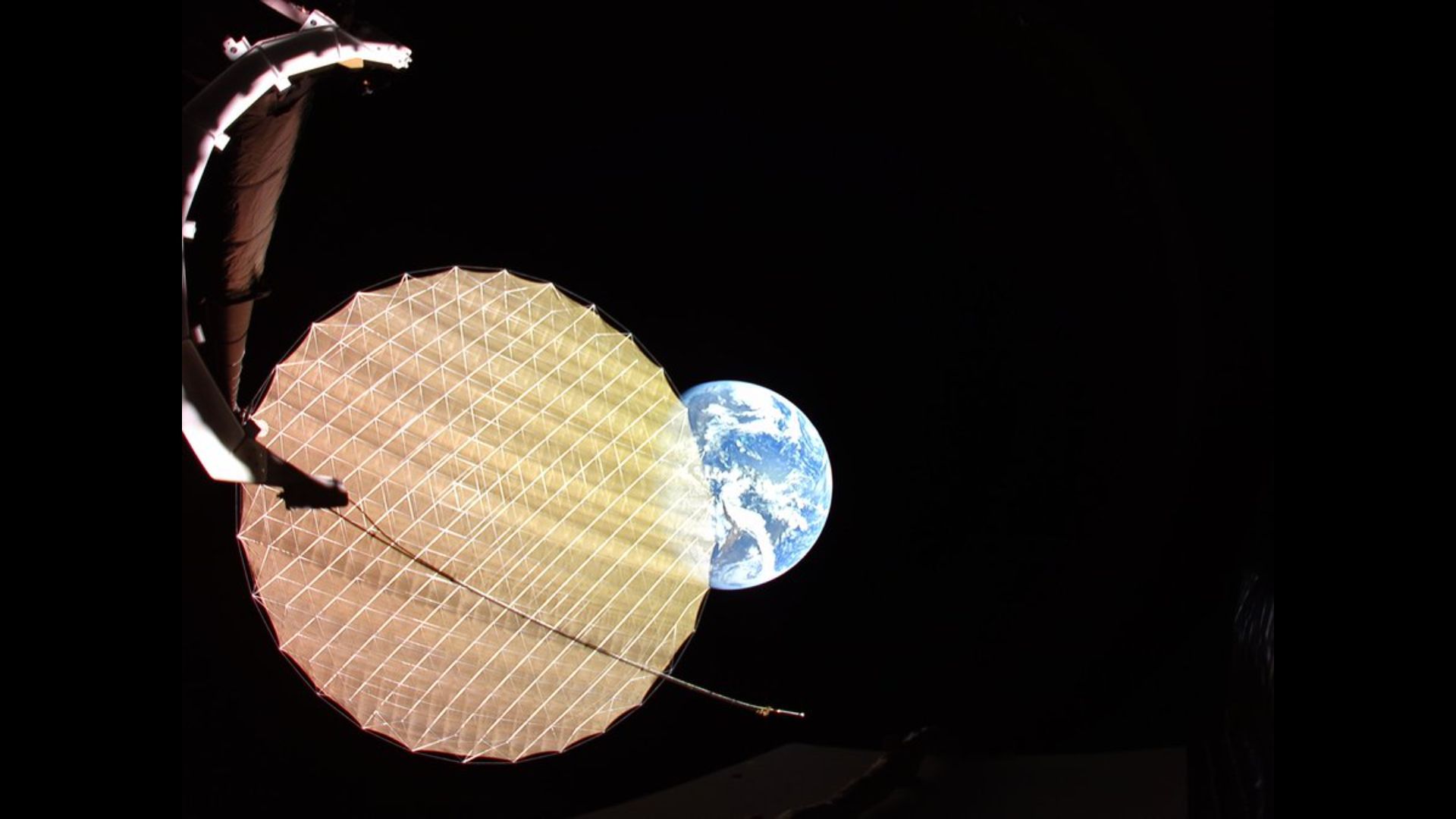
Giant Space Mirror Unfolds: Satellite Sends Stunning Selfie from 22,000 Miles Away
A spectacular image released by ViaSat shows its massive ViaSat‑3 F2 communications satellite unfurling a huge reflector while orbiting more than 22,000 miles above Earth. The satellite, which lifted off on Nov. 13, 2025 aboard a United Launch Alliance Atlas V, spent the first few months cruising to its final geostationary slot – a fixed point 35,786 km (about 22,236 mi) from the planet’s surface. Once there, the 13,000‑pound (5,900 kg) spacecraft deployed a giant, dish‑like reflector designed to boost its broadband capacity across the Americas. In the photo, Earth appears as a tiny blue marble in the background, effectively “photobombing” the satellite’s own selfie. ViaSat hailed the milestone as a key step in the ViaSat‑3 program, emphasizing that the reflector will enable ultra‑high‑speed internet for millions of users. The successful deployment marks the transition from launch to full operational capability, bringing the promise of faster, more reliable satellite internet to remote and underserved regions. The striking visual has captured the imagination of space enthusiasts worldwide, highlighting both the engineering feat and the awe‑inspiring perspective of working at the edge of Earth’s gravity.
Read more
China’s AI and Service Boom Goes Global: From Top‑Ranked Language Models to Hainan’s One‑Stop Aircraft Repairs
Chinese artificial‑intelligence firms are now punching above their weight on the world stage. Alibaba’s Qwen 3.6‑Plus language model recently placed second in the Code Arena benchmark, edging out rivals from OpenAI and Google. Experts say China’s home‑grown models are closing the gap with the world’s best, thanks to strong engineering, lower API prices and lightning‑fast response times. Overseas developers are already tapping these models through foreign cloud platforms, generating almost 8 trillion tokens in a single week – the highest global figure – and downloading more models each month than any other country on Hugging Face. Real‑world stories illustrate the impact: a Singapore engineer built a popular Southeast‑Asian language model on Qwen’s open‑source code, while an American director used ByteDance’s Seedance 2.0 to craft a movie‑quality trailer in just over a minute.
At the same time, China’s service sector is expanding beyond tech. Hainan’s Free‑Trade Port now runs a one‑stop aircraft‑maintenance hub that stocks over 2,200 parts, cutting part‑lead times from months to under a week and saving airlines 10‑15 percent on costs. Favorable customs and tax policies have turned the port into an “overseas aviation supermarket.”
The Chinese government is backing this push with new policies to promote “China Services” abroad. In 2025, China’s service trade topped 8 trillion yuan, up 7.4 percent year‑on‑year, with exports growing 14.2 percent. Together, AI breakthroughs and service‑industry incentives are turning China into a fast‑growing global brand.
Read more

Scientists Capture Sunlight in a Liquid ‘Solar Battery’ that Can Boil Water on Demand
A team of researchers at the University of California, Santa Barbara has unveiled a groundbreaking “solar battery” that stores sunlight inside a liquid mixture of tiny molecules. Unlike conventional solar panels that convert light directly into electricity, this new material traps the sun’s energy chemically, allowing it to be saved for days, months—or even years after the sun has set. When the stored energy is needed, the molecules release it as heat, enough to bring a cup of water to a boil. The concept draws inspiration from natural systems such as DNA, which can switch between different forms, and from photo‑chromic lenses that darken in bright light. In laboratory tests, the liquid battery held more energy per kilogram than today’s lithium‑ion batteries, and it can be recharged simply by exposing it to sunlight again. Because it works without heavy‑metal components or a wired grid, the technology could one day power remote villages, off‑grid homes, or even be integrated into portable devices and electric vehicles. The researchers say the material remains stable over many charging cycles, opening the door to a new generation of clean, long‑term energy storage.
Read more
China Launches ‘Space Cloud’ – A Satellite Network That Thinks Like the Internet
China is building a revolutionary “Space Cloud,” a network that links dozens of satellites—remote‑sensing, communications, and even computing platforms—into a single, intelligent service system. Think of it as the internet, but in orbit. Instead of each satellite working alone and sending data back to a single ground station, the new system lets satellites share tasks and data in real time, dramatically speeding up how quickly information reaches users and improving reliability.
Academician Wu Yirong of the Chinese Academy of Sciences explains that this shift moves us from “single‑function satellites” to a collaborative “satellite cloud.” China already leads the world in high‑resolution imaging satellites and is rapidly expanding its high‑throughput communication fleet. Now, space‑based computing is entering a fast‑track development phase, adding another layer of capability.
The Space Cloud will boost the efficiency of everything from disaster monitoring and weather forecasting to global internet coverage and scientific research. By turning space into a coordinated, cloud‑like platform, China aims to make its orbital assets work together smarter, faster, and more flexibly than ever before.
Read more

Student’s Off‑The‑Cuff Idea Leads to New Way to Hunt Down “Zombie” Cells Behind Aging
A chance chat between two graduate students at the Mayo Clinic sparked a discovery that could change how we fight aging and age‑related diseases. The duo suggested using tiny, lab‑made DNA fragments—called aptamers—to lock onto senescent cells, the so‑called “zombie” cells that stop dividing but refuse to die. These rogue cells build up over time, fueling wrinkles, joint pain, cancer, Alzheimer’s and other neurodegenerative conditions.
The research team took the idea to the lab, designing aptamers that act like molecular Velcro, snapping only onto the surface markers of senescent cells while ignoring healthy ones. In early experiments, the aptamers successfully highlighted and isolated these stubborn cells from mouse tissue, offering a clear visual cue and a potential delivery route for future therapies.
If the approach works in humans, doctors could one day pinpoint and eliminate senescent cells with far greater precision, slowing or even reversing aspects of aging and disease. The breakthrough shows how a simple, creative spark from a student can open doors to big scientific advances, turning a casual conversation into a promising new tool in the fight against age‑related decline.
Read more
China Unveils Record‑Breaking Photonic Quantum Computer ‘Jiuzhang 4’
Chinese scientists have announced a new quantum‑computing prototype called Jiuzhang 4 that shatters previous performance records. Using light particles (photons) to carry information, the machine can manipulate more than 3,000 photons at once—over ten times the number handled by its predecessor, Jiuzhang 3. In practical terms, the device solved a test problem in just 25 microseconds, a speed that is roughly 10^30 times faster than the world’s fastest traditional supercomputer.
The breakthrough comes from a novel “space‑time hybrid encoding” design that lets photons interfere in both spatial and temporal dimensions, dramatically cutting the loss of photons that has limited larger photonic systems. This architecture lets the computer operate across 8,176 distinct pathways (called modes) and use 1,024 specially prepared quantum states as a powerful “fuel” for calculations.
While Jiuzhang 4 is still a specialized simulator—best suited for tasks like Gaussian Boson Sampling—it points the way toward universal quantum computers that could tackle complex problems in image recognition, network analysis, and error‑correction for future quantum hardware. The achievement, published in *Nature*, underscores China’s rapid progress in photonic quantum technology and sets a solid foundation for the next generation of fault‑tolerant quantum machines.
Read more