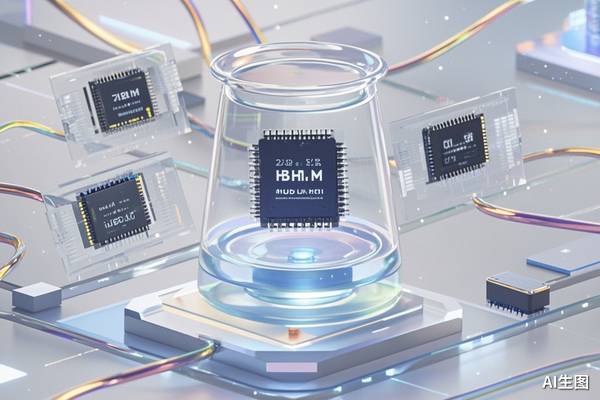
Intel’s New ‘HB3DM’ Memory Promises Lightning‑Fast Speed – Can It Outrun HBM4?
A fresh wave of memory technology is aiming to give computers the best of both worlds – the blistering speed of high‑bandwidth memory (HBM) and the versatility of traditional DRAM. Intel’s upcoming HB3DM chip stacks nine layers of memory cells on a single package, using a hybrid‑bonding process that links a logic layer with eight DRAM layers. Each layer holds about 1.1 GB, so a full module delivers roughly 10 GB of storage, but its real star is speed: the design can push around 5.3 TB per second of bandwidth, more than double what today’s HBM4 offers. The trade‑off is capacity – HBM4 can reach 48 GB per stack – but Intel hopes future generations will add more layers to close that gap.
At the same time, NEO Semiconductor has proved a new 3D X‑DRAM that fits into existing 3D NAND factories, promising higher density and lower power for AI workloads. SanDisk’s HBF (high‑bandwidth flash) takes the HBM stacking idea and applies it to NAND flash, creating a non‑volatile memory that can store massive data sets while still moving data quickly. HBF is meant to complement, not replace, HBM, handling the bulk of AI model data at lower cost.
Together, these advances suggest that from 2026 to 2038 memory bandwidth could jump from 2 TB/s to 64 TB/s, reshaping everything from data‑center AI training to edge devices.
Read more
AI Boom Triggers Global Memory Chip Shortage, Chinese Companies Ride the Wave
A fresh wave of AI computing power is straining the world’s supply of memory chips, creating the sharpest shortage in 15 years. Leading makers SK Hynix and Samsung saw their shares hit record highs on May 11 as demand for DRAM, NAND flash and high‑bandwidth memory (HBM) surged. Goldman Sachs warns that gaps in supply could reach 5 % across the three main chip types, pushing contract prices up 60‑70 % quarter‑on‑quarter.
The scramble for chips is feeding a massive spending spree by cloud giants—Google, Amazon, Microsoft, Alibaba and others—who plan to pour roughly $830 billion into AI infrastructure this year, a 79 % jump from last year. That spending, combined with a seasonal rebound in consumer electronics, is driving a clear upward cycle for memory.
Chinese memory‑related firms are reaping the benefits. More than a dozen A‑share companies, including Huate Gas, Puyao, Biwin Storage, Desay and Longsys, have seen their stock prices double or more this year. Revenue rose year‑on‑year for 35 of the 39 listed firms, with several posting over 200 % growth. Companies such as Unimicron, DeMingli and Jiangbolong are expanding into AI‑focused storage solutions and new technologies like CXL.
In short, the AI‑driven chip crunch is inflating prices worldwide while giving China’s memory‑chip supply chain a rare boost, turning a global shortage into a domestic growth story.
Read more
Breakthrough Photonics Tech Promises Tiny, Super‑Fast Lidar Sensors
Scientists have unveiled a new photonics design that could shrink lidar sensors—those laser‑based rangefinders used in self‑driving cars, drones, and robotics—while boosting their performance. The key lies in a clever arrangement of tiny light‑emitting antennas that work together like a perfectly synchronized orchestra. Even though each antenna naturally prefers a different way of sending light, the researchers fine‑tuned three critical factors: every antenna must release the same amount of light, aim its beam at the same angle for any given color, and shift that angle uniformly across the whole array when the system steers. By meeting these conditions, the array produces a clean, controllable laser sweep without the bulky optics traditionally required. The result is a compact, chip‑scale lidar that can deliver high‑resolution, long‑range detection in a package small enough for integration into consumer devices. This advance could accelerate the rollout of autonomous vehicles, improve obstacle‑avoidance for delivery robots, and enable new applications like precise mapping from handheld tools. The research builds on earlier work in optical phased arrays and 3‑D printed antenna structures, marking a significant step toward affordable, high‑performance lidar for everyday use.
Read more
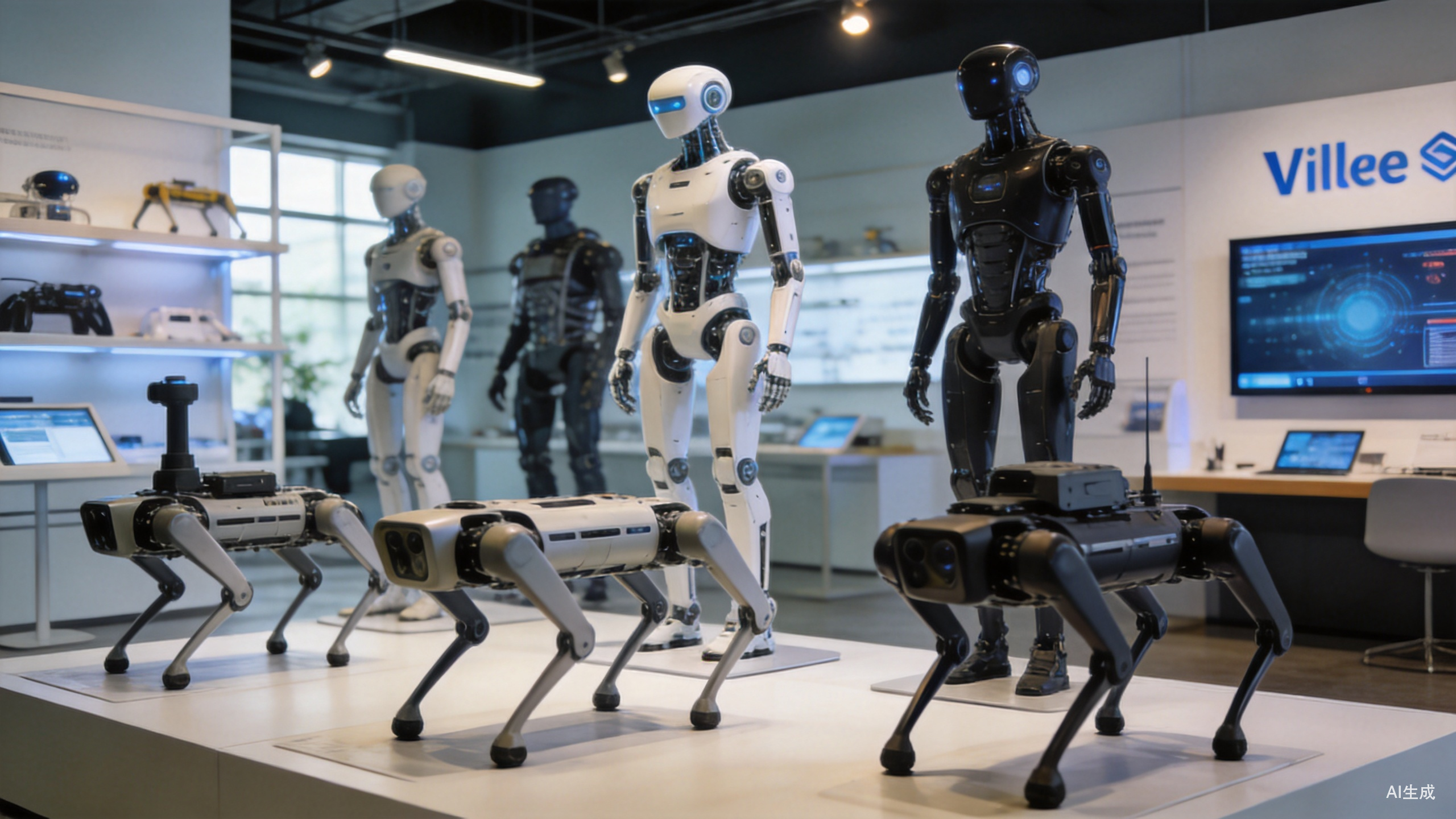
China’s Robot Revolution: How Magic Atom Is Challenging Silicon Valley
Magic Atom, a fast‑growing Chinese robotics firm, is using a mix of cheap data, strong manufacturing and ambitious product design to take on Silicon Valley’s AI leaders. At a recent conference in Santa Clara, the company’s president explained that China’s advantage lies in building the “body” of robots – the hardware, supply‑chain depth and low‑cost data collection – while the U.S. focuses on the “brain.”
Magic Atom’s lineup includes a full‑size humanoid (GEN1) for research, a smaller, high‑energy Z1 for education and entertainment, and a family of quadruped robot dogs (from consumer‑grade MagicDog to heavy‑duty Y1 that can lift 200 kg). The firm tailors each model to regional needs: Asian markets want interactive demos, Europe seeks factory‑grade precision, and the U.S. mainly funds research labs.
A recent 150 million RMB order shows early commercial traction in guided‑tour and data‑collection roles. Looking ahead, Magic Atom plans to cement its brand, expand an ecosystem of developers, and build local teams abroad, aiming for an IPO around 2027. The company believes the next three‑four years are critical – the market could explode by 2029‑2030, and the first movers will lock in the biggest share of the emerging global robotics industry.
Read more

Inside the Battle of the Bots: Figure 03 Takes on 1X Neo in Their Factories
This week CNET got an exclusive look inside the production lines of two of the hottest humanoid‑robot makers: Figure and 1X. Both companies unveiled fresh footage that shows how they turn sleek, human‑like machines from raw parts into walking, talking assistants. Figure’s factory feels like a high‑tech car plant, with robotic arms assembling the Figure 03’s lightweight frame on a moving conveyor belt, then moving the half‑built bots into a clean‑room for delicate sensor placement. The company emphasizes modular design, allowing owners to swap out arms, heads or battery packs in minutes.
Across the street, 1X’s Neo line follows a more hands‑on approach. Their workshop mixes automation with skilled technicians who manually wire each joint, arguing that this gives the robot a more “organic” feel. 1X also showcases a unique “rocket‑boosted” prototype that can sprint short distances, hinting at future sports‑oriented models.
Both teams stress safety, running endless calibration tests and using AI to predict wear and tear before it happens. The video wraps up with a side‑by‑side comparison: Figure’s sleek, plug‑and‑play aesthetic versus 1X’s rugged, custom‑craft vibe. Whether you’re a tech enthusiast or just curious about the next generation of home helpers, the tour makes it clear that the race to perfect humanoid robots is heating up, and each company is carving its own path toward a future where robots share our living spaces.
Read more
China’s Digital Revolution: Inside the Massive 9th Digital China Summit
The 9th Digital China Construction Summit opened in Fuzhou this spring, turning the city into a showcase of more than 6,000 new technologies, products and projects. Visitors wandered through robot guides, AI‑powered perfume‑mixing stations, and 3‑D printers that churned out custom key‑chains on the spot. The event highlighted how digital tools are reshaping everyday life – from smart farms that boost harvests, to livestream‑driven e‑commerce that helps rural sellers reach city shoppers, and mobile‑payment kiosks that speed up street‑side transactions.
A striking statistic emerged: China’s daily use of AI “tokens” – the tiny data units that power large language models – topped 140 trillion in March, a thousand‑fold jump from early 2024. The country now holds about 60 % of the world’s AI patents and its AI‑related industries are worth over 1.2 trillion yuan. At the summit, heavyweight firms such as Huawei, ZTE, China Mobile and iFlytek displayed breakthroughs like a super‑cooling server that cuts electricity use by up to 40 %, AI glasses that translate speech in real time, and flexible‑manufacturing stations that can build most car‑body parts.
The digital push isn’t limited to factories. Citizens watched a taxi‑driver’s licence printed in under five minutes at a government service window, while VR tours let them “ride” ancient mountain paths. Robot baristas, AI‑driven city services and seamless mobile‑government apps illustrate a new reality where technology makes life faster, cheaper and more convenient for everyone.
Read more

AutoScientist: The AI That Teaches Itself to Learn Faster
Adaption, a fast‑growing AI research lab, has unveiled AutoScientist, a new tool that lets artificial‑intelligence models improve their own training. Instead of humans having to hand‑pick data or tweak model settings, AutoScientist automatically figures out the best combination of data and model architecture to teach a system a new skill.
Co‑founder and CEO Sara Hooker—formerly the VP of AI research at Cohere—explains that the breakthrough lies in “co‑optimizing both the data and the model,” meaning the system learns how to learn.
The timing is ripe: investors are pouring billions into next‑generation AI labs, giving startups like Adaption the resources to push the boundaries of what AI can do.
If AutoScientist lives up to its promise, it could dramatically cut the time and cost required to fine‑tune cutting‑edge models, opening the door for rapid innovation across fields such as drug discovery, climate modeling, and creative design.
Hooker likens the impact to the way code‑generation tools unlocked new productivity for developers—AutoScientist could unlock a wave of breakthroughs at the frontier of AI research.
Read more
China’s 20‑Year Cell Therapy Saga: From Nobel Hype to Tightening Rules and a New Golden Era
Over the past two decades China’s cell‑therapy market has swung between wild speculation and rigorous regulation. In the early 2000s, the excitement sparked by Nobel‑winning breakthroughs—especially Shinya Yamanaka’s stem‑cell reprogramming—fed a frenzy of clinics offering pricey, unproven treatments. Doctors with little immunology background marketed “miracle” infusions, while regulators struggled to fit these personalized products into existing drug frameworks. By 2010, more than 200 hospitals claimed to provide stem‑cell therapy, treating tens of thousands of patients, but efficacy and safety data were virtually nonexistent.
Repeated regulatory attempts in 2009 and 2011 failed to curb the profit‑driven chaos, and the industry continued to grow, attracting “stem‑cell tourism” from abroad. The turning point arrived in 2014 with the tragic Wei Zexi case, prompting the health ministry and the drug regulator to split oversight: drug authorities would handle products seeking market approval, while health authorities would manage early‑stage technologies. This dual‑track system forced many rogue operators out and spurred legitimate companies to pursue CAR‑T and other cell drugs.
In 2025 the State Council’s Order 818 formalised the new regime, pushing small workshops to consolidate and encouraging hospitals to build certified therapy centers. Today China boasts nine approved cell drugs, dozens of listed CGT firms, and over 500 registered trials, marking the start of a “golden decade” where scientific rigor and patient access finally align.
Read more

Breakthrough ‘Geometry Trick’ Tames Laser Noise in Quantum Computers
Scientists have unveiled a clever new method that could solve one of the biggest headaches in building quantum computers that use neutral atoms. These machines store information in atoms that float in place thanks to laser beams. The problem? Even the tiniest wobble in a laser’s timing or strength can scramble the data, making the computer’s basic operations—called swap gates—unreliable.
The research team introduced a “geometry‑based” swap gate that reshapes how the lasers interact with the atoms. By arranging the laser fields in a special geometric pattern, the gate becomes far less sensitive to those pesky fluctuations. In plain language, it’s like redesigning a bridge so that a slight gust of wind no longer threatens to shake it apart.
This innovation dramatically boosts the fidelity, or accuracy, of the quantum operations, bringing us a step closer to scaling up neutral‑atom processors that can run stable, large‑scale calculations. While still early days, the trick could pave the way for quantum computers that are not only powerful but also robust enough for real‑world applications, from drug discovery to climate modeling.
Read more