China’s Chip Materials Race: ESG Wins, New Factories, and 2‑D Semiconductor Breakthroughs
China’s semiconductor material sector is picking up speed on three fronts. First, Xi’an Yicai (688783), the country’s top 12‑inch silicon wafer maker, released its inaugural 2025 ESG report, pledging “green and innovation” as a core competitive edge and signaling a long‑term commitment to sustainable, high‑quality production.
Second, Nantong‑based Zhan Ding Materials, a pioneer in fluorine‑based electronic chemicals, signed a deal with the Tianjin Port Free‑Trade Zone to set up its headquarters and a new manufacturing hub, bolstering the city’s push to become a semiconductor‑materials hotspot. Its self‑developed hydrofluoric acid now meets the standards of leading global fabs.
Third, a joint research team from the National Defense University of Technology and the Chinese Academy of Sciences announced a major advance in wafer‑level growth and controllable doping of high‑performance two‑dimensional semiconductors—materials that could power post‑Moore‑era chips.
Meanwhile, Qingyi Optics is scaling mask‑plate production down to the 150 nm node, while JiuRi New Materials and Anji Technology report rapid roll‑outs of new photoresists and wet‑chemical solutions, respectively. At a recent STAR Market conference, executives from seven leading firms underscored that faster localization of equipment and relentless technology iteration are the twin engines driving China’s semiconductor‑materials renaissance.
Read more
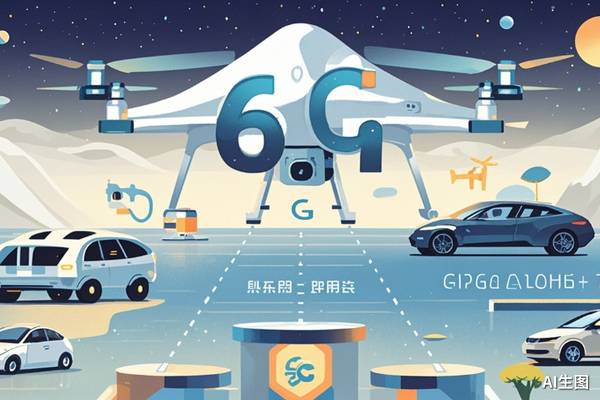
China’s 6G Race: Chip Breakthroughs, Patent Power, and a Trillion‑Yuan Market by 2035
China is fast‑tracking the next generation of mobile networks, 6G, with a full‑stack push that spans chips, standards, and industry partnerships. Recent breakthroughs in terahertz, phased‑array, baseband, RF, and AI‑computing chips have lifted domestic component coverage above 85%, and some designs now match or exceed the world’s best. Home‑grown testing equipment is also scaling, giving Chinese firms a reliable “ruler” for independent R&D.
On the intellectual‑property front, China leads globally with a 35% share of core 6G patents as of 2026. Giants such as Huawei, ZTE and Datang have built dense patent portfolios covering everything from integrated communication‑sensing‑computing to space‑air‑ground networking and built‑in security, positioning the country to shape future standards.
The government’s 15th Five‑Year Plan earmarks 6G standardisation and joint industry‑research projects, aiming for commercial roll‑outs by 2030 and full deployment by 2035—a market that could be worth a trillion yuan. Success will hinge on coordinated effort among regulators, research institutes, equipment makers, operators and global partners. Operators themselves are expected to evolve into platform providers, offering computing, sensing and intelligent orchestration services across vertical industries. In short, China’s early chip advances, patent dominance, and collaborative ecosystem are setting the stage for a new era of intelligent connectivity.
Read more
China’s Smart Manufacturing Boom Slashes Exoskeleton Robot Prices and Powers Global Collaboration
China’s high‑tech factories are turning a new corner, making cutting‑edge gear like exoskeleton robots affordable for everyday users. The secret? A tightly knit supply chain that bundles sensors, servos and other components within a few hours’ drive, especially in hubs such as Zhejiang, Shenzhen and Anhui. By clustering more than 74,000 robot‑related firms in the Guangdong region, manufacturers have cut production costs dramatically, allowing prices that once seemed out of reach to tumble.
These industrial clusters act like accelerators, letting ideas move from lab benches to assembly lines at lightning speed. The ripple effect reaches beyond China’s borders: Taixi Intelligence, a local AI and robotics firm, recently helped a patient in Argentina by delivering a customized exoskeleton, sparking gratitude and a promise to bring more technology back home.
China’s strategy also embraces open‑source AI, sharing breakthroughs worldwide instead of hoarding them. From powering grids in Brazil to contributing to global telescope projects, Chinese innovators are building bridges rather than walls. The result is a win‑win ecosystem where rapid domestic growth fuels international cooperation, promising a future where advanced tech benefits everyone, not just a few.
Read more
China Launches Dual‑Core Quantum Supercomputer and Rolls Out Nationwide Quantum Ambitions
China has taken a giant leap in quantum technology with two landmark announcements. First, the Chinese Academy of Sciences, together with Wuhan University, Huazhong University of Science and Technology and the Wuhan Quantum Technology Research Institute, unveiled "Han Yuan 2," the nation’s first dual‑core atomic quantum computer. Instead of silicon chips, the machine manipulates 200 individual atoms—essentially 200 tiny “super‑brains”—split into two cores: one for calculations and the other for real‑time error correction, dramatically boosting efficiency and paving the way for independent high‑end computing.
At the same time, the Anhui Provincial Key Laboratory reported that the home‑grown superconducting quantum computer "Origin Wukong‑180" is now online and ready to take global quantum‑computing jobs. Its single‑core chip packs 180 qubits with record‑high gate fidelities (99.9% for single‑qubit operations, 99% for two‑qubit), plus 251 auxiliary qubits, marking the first hundred‑qubit‑level processor built entirely in China.
Provincial governments are backing the surge: Guangdong’s new action plan targets quantum‑enhanced algorithms for logistics, biology and energy, while Shanghai’s digital‑economy pilot zone will fast‑track brain‑computer interfaces, 6G and quantum services. Analysts predict China could claim over 30% of the global quantum‑computing market by 2035, turning these breakthroughs into a trillion‑yuan industry.
Read more
China’s Bold Plan to Double Clean‑Energy Output in Ten Years
China has set an audacious goal: to double its non‑fossil energy supply within a decade. Officials say achieving this will require a complete overhaul of the country’s energy security model, linking clean‑energy expansion with smarter consumption.
The nation already generates about 4 trillion kilowatt‑hours of renewable power each year—enough to power the 27 EU member states combined. China also boasts the world’s largest, most integrated new‑energy industry chain, backed by rapid advances in wind, solar, and storage technologies.
During the 15th Five‑Year Plan, the government will push a wave of innovation: next‑generation coal‑plus‑renewable hybrids, flexible DC transmission, long‑duration batteries, and green pathways that turn electricity into hydrogen, ammonia, and methanol. It will also deepen ties with global climate initiatives, harmonise green‑certificate standards, and diversify energy imports.
Domestically, the plan calls for expanding traditional oil and gas reserves while accelerating the switch to electricity in transport, industry and construction, and rolling out heavy‑duty electric trucks. Policy reforms will make it easier for private firms to join large‑scale projects, and new market mechanisms will promote green‑electricity use.
By turning abundant, widely‑distributed renewables into a reliable backbone, China aims to boost energy self‑sufficiency, lower carbon emissions, and safeguard its power supply against geopolitical turbulence.
Read more