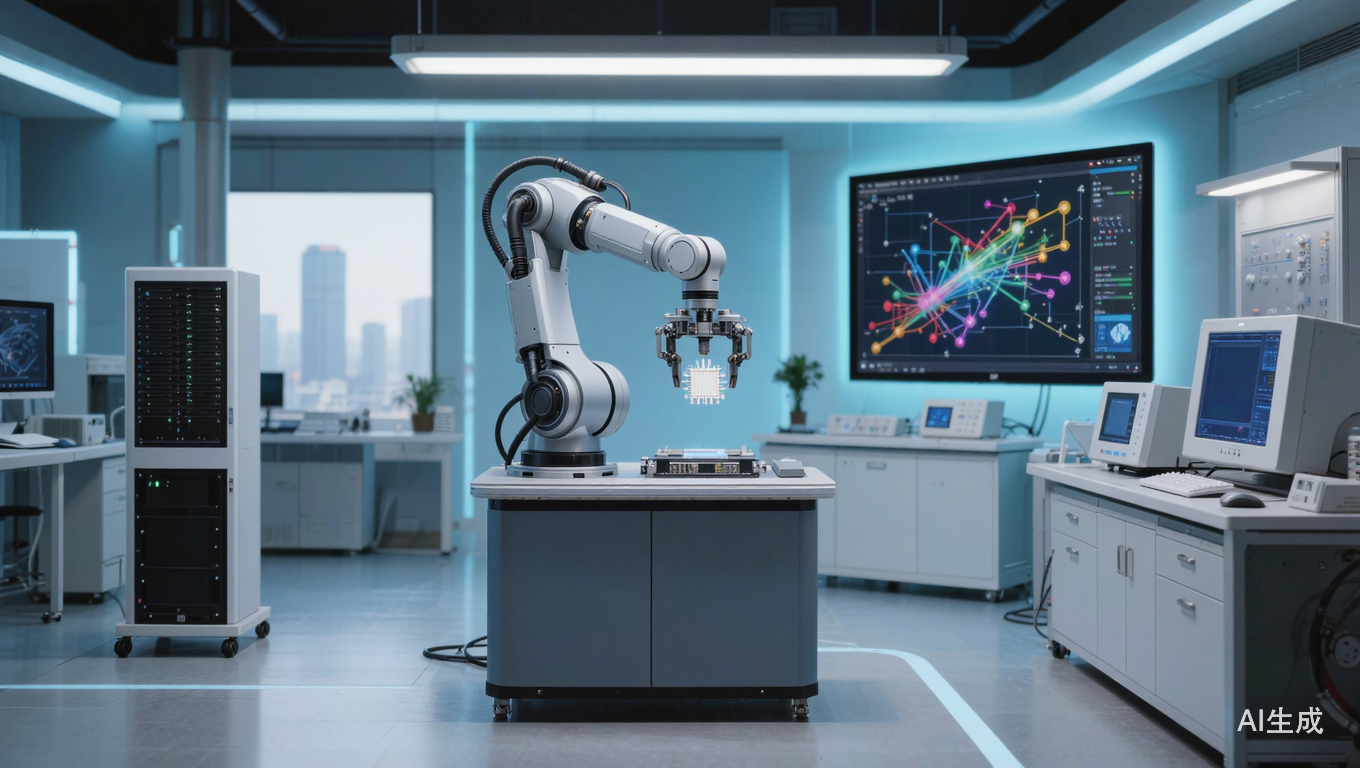
Why Yann LeCun Says Large Language Models Won’t Reach AGI – The Rise of JEPA World Models
Yann LeCun, one of AI’s founding fathers, argues that today’s giant language models (LLMs) are stuck in a cycle of imitation rather than true reasoning. Because they predict the next word one token at a time, they can’t grasp the underlying cause‑and‑effect rules that govern the real world, and errors pile up as the text grows longer.
LeCun proposes a different path: building “world models” with a framework called Joint Embedding Predictive Architecture (JEPA). Instead of trying to recreate every pixel of a video or every word of a sentence, JEPA compresses observations into compact mathematical embeddings, then learns to predict how those embeddings will change after an action.
The breakthrough came from solving the “representation collapse” problem that plagued earlier joint‑embedding methods. Techniques like Barlow Twins force different parts of the network to carry unique information, producing rich, non‑trivial embeddings.
Early experiments show robots using JEPA can anticipate the outcome of their moves with far higher accuracy than traditional vision models, and self‑supervised vision systems such as DINOv3 now rival fully supervised classifiers.
LeCun’s message is clear: to achieve Artificial General Intelligence we need AI that can forecast the physical consequences of its actions, not just spout plausible text. JEPA‑based world models, he believes, are the missing piece for safe, planning‑capable AGI.
Read more
AI Cracks One of Math’s Toughest Challenges: Solving Inverse PDEs
Engineers at the University of Pennsylvania have unveiled a fresh AI approach that can untangle a notoriously hard class of math puzzles known as inverse partial differential equations (PDEs). These equations are the hidden engines behind everything from weather forecasts to medical imaging, but solving them backward—figuring out the causes from observed effects—has long stumped scientists. Traditional AI methods relied on a labor‑intensive technique called recursive automatic differentiation, which repeatedly tracks how tiny changes ripple through a neural network. The new method sidesteps that bottleneck, letting the AI learn the underlying physics directly and much faster. By training on simulated data, the system can now infer the hidden parameters that generate real‑world patterns, opening doors to more accurate climate models, better drug discovery, and sharper imaging technologies. The breakthrough shows that AI isn’t just good at pattern recognition; it can also become a powerful tool for probing the fundamental laws that shape our universe. As researchers refine the technique, we may soon see AI‑driven insights accelerating breakthroughs across physics, engineering, and biology.
Read more
China’s AI‑Powered ‘Intelligent Economy’ Takes Off: Robots, Tokens, and Green Computing Lead the Surge
Artificial intelligence is reshaping China’s economy, turning it into what officials call an “intelligent economy.” From humanoid robots that now navigate obstacle‑filled tracks without human help, to AI agents like OpenClaw’s “Lobster” that spark a wave of one‑person startups, AI is fueling rapid growth across sectors. A new “token economy” has emerged, with daily AI token calls soaring past 140 trillion – a thousand‑fold jump from early 2024 – prompting tech giants to redesign services around token‑based pricing and accounting. The government’s latest work report backs this shift, pledging ultra‑large AI computing clusters, greener power supplies, and coordinated computing‑power scheduling. In Gansu’s desert data‑center park, wind‑solar farms now power more than 80 % of the servers, turning “watts into bits” and slashing electricity costs for massive compute farms. Nationwide, intelligent‑computing capacity has topped 1,882 EFLOPS, with over 70 dedicated “computing corridors” easing data flow. Early‑year figures show AI‑linked industries – special materials, chips, smart equipment – posting double‑digit value‑added growth, while policy makers promise further investment in AI‑plus infrastructure, data sets, and space‑based computing. Together, these moves aim to turn AI’s technical edge into real‑world industrial advantage, positioning the intelligent economy as a core driver of China’s high‑quality development.
Read more
Fusion Power: How the ‘Artificial Sun’ Could Light Up Our Homes
Scientists call nuclear‑fusion reactors “artificial suns” because they try to copy the Sun’s way of turning hydrogen into helium and releasing huge amounts of clean energy. The fuel – deuterium – can be taken from seawater, and the process emits no CO₂ and only short‑lived waste, making it a dream clean‑energy source. Achieving fusion on Earth is extremely hard: the fuel must be heated to over 100 million °C, turning it into plasma that no solid material can touch. Researchers therefore use magnetic “cages” (tokamaks) or twisted‑shaped devices (stellarators) to levitate the plasma, or they compress it in a flash with powerful lasers (inertial confinement) or giant electric currents (Z‑pinch). Recent milestones include China’s EAST tokamak holding 100 million °C plasma for 1,066 seconds, Europe’s ITER project aiming for first plasma in 2034, the U.S. National Ignition Facility producing more energy than its lasers in 2025, and private firms like Helion Energy and TAE Technologies demonstrating measurable fusion reactions. Despite these breakthroughs, turning laboratory sparks into a steady grid supply will take decades, requiring advances in materials, tritium handling, safety and economics. International cooperation, growing commercial investment and AI‑driven design are accelerating progress, and intermediate technologies such as high‑energy neutron sources are already finding industrial uses. The road to a working artificial sun is long, but each step brings us closer to a future where millions of homes could be powered by star‑like energy.
Read more
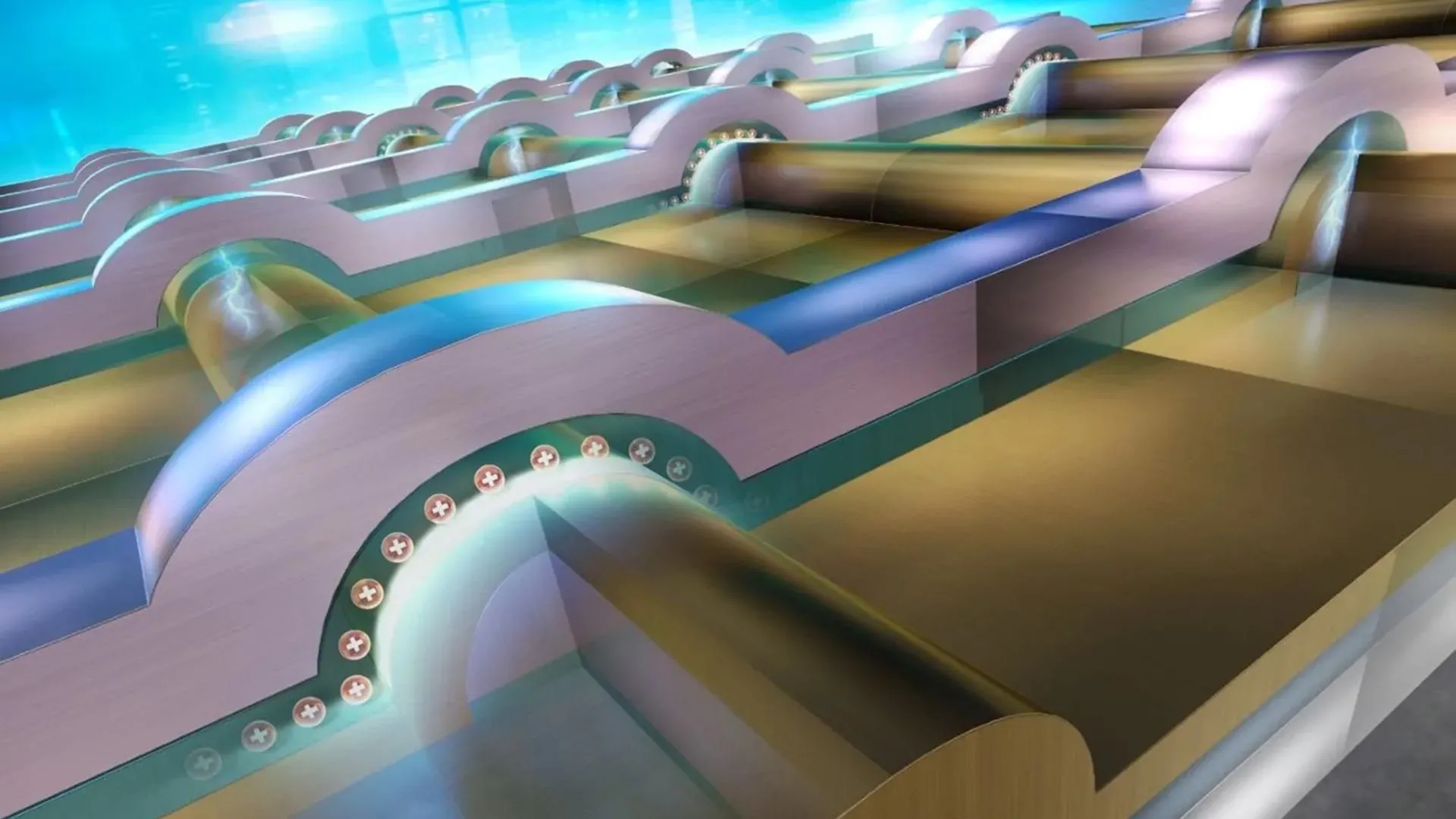
Tiny Memory Chip Could End Overheating in Your Gadgets
A team of researchers in Tokyo has created a brand‑new type of memory chip that could dramatically cut the heat and power drain that plague smartphones, laptops and other electronics. The breakthrough comes from Professor Yutaka Majima and his group at the Institute of Science Tokyo, who engineered a memory cell just 25 nanometers wide – roughly one‑three‑thousandth the thickness of a human hair. Unlike conventional memory, which requires a relatively large electric current and therefore generates waste heat, this nano‑device operates on a fraction of the energy, promising far‑lower battery consumption and cooler operation. The scientists demonstrated that the chip can handle basic machine‑learning classification tasks while using record‑low power, suggesting it could be integrated into future AI‑enabled devices without the usual thermal penalties. If the technology scales up, everyday gadgets could run longer between charges, stay cooler to the touch, and reduce the overall energy footprint of the electronics industry. The discovery challenges long‑standing limits on how small and efficient memory can become, opening the door to a new generation of ultra‑compact, energy‑smart hardware.
Read more
China’s Space 3‑D Printing Breakthrough: Building Metal Parts in Orbit
China’s top scientists have proved that metal 3‑D printing can work in space, marking a major step toward on‑orbit manufacturing and repair. The experiment, carried out by a research team from the Chinese Academy of Sciences, launched a compact metal additive‑manufacturing payload into a 600 km low‑Earth orbit. While floating in micro‑gravity, the device was remotely activated from the ground and successfully built a small metal test piece, meeting all pre‑set objectives.
Space‑based 3‑D printing faces a host of hurdles that don’t exist on Earth: the lack of gravity changes how molten metal behaves, launch vibrations demand ultra‑light yet sturdy hardware, and the whole system must operate safely without human hands. Over months of testing, the team tackled these issues by redesigning the printer’s feed mechanism, fine‑tuning the laser‑based melting process, and hardening the equipment against launch stresses.
The successful flight shows China now has a verified platform for space metal additive manufacturing. In the future, the technology could produce spare parts for satellites, fabricate tools for deep‑space missions, and even enable autonomous construction of habitats on the Moon or Mars. This breakthrough underscores China’s growing capabilities in high‑tech space research and its ambition to turn space from a destination into a manufacturing frontier.
Read more
Shaping Light in Empty Space: A New Leap for Sensors and Faster Data Links
Scientists have demonstrated for the first time that laser beams can be deliberately sculpted while traveling through a vacuum, without any physical medium to guide them. By using specially designed optical elements, the team can imprint complex patterns—such as twists, spirals, and intensity gradients—directly onto light as it propagates through empty space. This breakthrough simplifies the hardware needed for high‑precision sensing, because the shaped beams can interact with distant objects in ways that ordinary light cannot, revealing subtle changes in temperature, pressure, or chemical composition with far greater sensitivity. The same technology also promises to supercharge optical communication links. By encoding information onto the beam’s spatial structure, data can be transmitted at dramatically higher rates without requiring additional bandwidth or more powerful lasers. The approach is compatible with existing fiber‑optic and free‑space networks, making it a practical upgrade rather than a complete overhaul. Researchers envision applications ranging from next‑generation LIDAR systems for autonomous vehicles to ultra‑secure quantum‑key distribution and deep‑space telemetry, where every photon counts. In short, shaping light in a vacuum opens a versatile toolbox that could transform both how we measure the world and how we stay connected.
Read more
Revolutionizing Healthcare: The 2026 AI Diagnosis Blueprint
The new 2026 AI Medical Diagnosis Project sets out a bold roadmap to transform how doctors detect and treat disease. By zeroing in on the most critical diagnostic scenarios, the plan calls for intensive research and development across five core AI modules, each built on the cutting‑edge algorithms and hardware breakthroughs expected this year. The centerpiece is a deep‑learning‑driven medical imaging analysis engine that can automatically spot abnormalities in X‑rays, MRIs and CT scans with unprecedented speed and accuracy. Complementary modules will tackle lab‑test interpretation, electronic health‑record mining, predictive risk modeling, and real‑time decision support for clinicians. Together, these tools aim to smash long‑standing technical bottlenecks—such as data privacy, model interpretability, and integration with legacy hospital systems—while keeping the entire technology stack under independent, domestic control. The ultimate goal is a seamless, AI‑augmented diagnostic workflow that reduces misdiagnoses, shortens patient wait times, and lowers healthcare costs. By the end of 2026, the initiative hopes to deliver a fully operational suite that clinicians can trust, regulators can certify, and patients can benefit from, ushering in a new era of precision medicine.
Read more
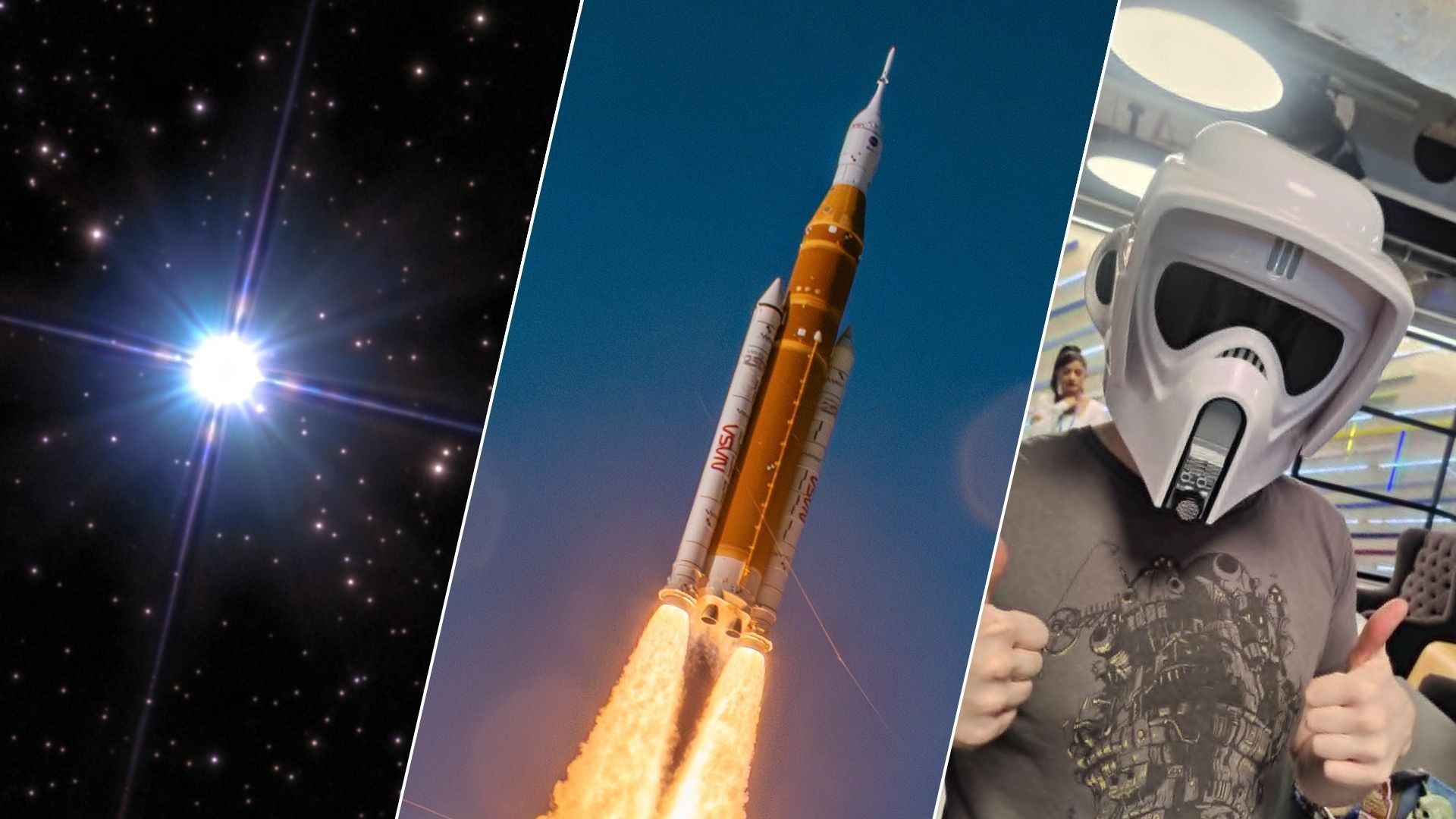
Stunning Space Shots: Galaxies, Artemis 2 Launch, New Telescope & a Star‑Wars Surprise
Space.com’s team loves everything that sparkles in the night sky—whether it’s a distant galaxy, a roaring rocket, or a nod to a beloved sci‑fi saga. In this roundup they’ve gathered the most eye‑catching images from the past month. First up, a real‑time view from a smart telescope that captured a swirling galaxy in vivid detail, proving that deep‑space wonders are now just a click away. Next, editor‑in‑chief Ian Stokes slipped into Amazon’s London office for a cheeky peek at the company’s May 4th Star Wars promotion, complete with a stormtrooper cameo that will make any fan smile. The highlight, however, is the Artemis 2 mission: the crew’s historic launch was photographed from a dinner venue in Florida, then followed to Houston as they set a new record for the farthest crewed flight ever attempted. Adding to the excitement, astronomy editor Monisha Ravisetti spent a day with NASA’s upcoming Nancy Grace Roman Space Telescope at Goddard, getting an exclusive look at the instrument that will soon scan the cosmos for dark energy, exoplanets and more. All together, these photos showcase the wonder of space exploration and the fun side of the people who bring it to us.
Read more