AI’s Wildest Week Yet: 8 Breakthroughs, Billion‑Dollar Bets, and the Race to Multimodal Mastery
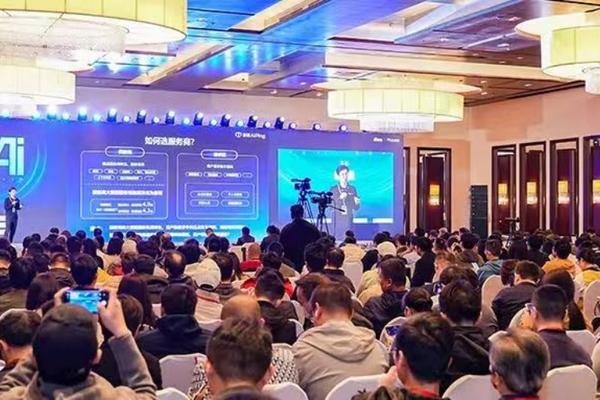
From April 16‑24, the AI world exploded with news that feels like a sprint of breakthroughs. Nine cutting‑edge models hit the stage—Anthropic’s Claude Opus, Alibaba’s Qwen 3.6‑Max, Moonshot’s Kimi K2, OpenAI’s ChatGPT Images 2.0, Ant Group’s Ling‑2.6‑flash, Xiaomi’s MiMo‑V2.5‑Pro, Tencent’s Hy3, the rumored GPT 5.5, and DeepSeek‑V4—each pushing the limits of language, vision, and video generation. At the same time, the cash flow turned into a tidal wave: Amazon pledged $25 billion, Google $40 billion to back Anthropic, and Elon Musk’s SpaceX announced a $60 billion bid for AI‑coding unicorn Cursor. Chinese AI giants gathered in Beijing for the Generative AI Conference, where 73 experts dissected everything from large‑language models and 3D world‑model creation to token economies and AI‑glass wearables. A clear consensus emerged—China’s AI battle is moving from pure model performance to whole‑ecosystem dominance. Key takeaways include: 1) Large models will soon reach domain‑expert levels via reinforcement‑learning‑from‑verified‑results and tool use; 2) Multimodal agents are converging on a “native full‑modality” transformer that unifies text, image, video, and 3D data without loss; 3) The next competitive edge will be scenario‑specific data, user taste, and seamless integration of AI into everyday tools. In short, the week proved that AI is no longer a niche research field—it’s a high‑stakes, multi‑trillion‑dollar race reshaping how we create and interact with digital content.
Read more

AI Beats ER Docs in Early Diagnosis – Study Shows Promise for Team‑Up Care
A new study published in *Science* shows that OpenAI’s latest large‑language model, the o1 series released in 2024, can out‑perform human emergency‑room doctors on several key tasks. Researchers at a Massachusetts medical center fed the AI a mix of textbook clinical scenarios and real‑world data from randomly selected ER patients. The model shone brightest during the first moments of triage, when doctors have only fragmentary information. While both doctors and the AI improved as more test results arrived, the AI handled uncertainty and messy, unstructured notes far better than its human counterparts.
The AI matched or exceeded physicians in choosing diagnoses, ranking urgency, and recommending next steps. However, the authors stress that these findings don’t mean machines will replace doctors anytime soon. Instead, they argue for faster, stricter evaluation standards and clear guidelines on how AI can safely augment medical decision‑making. The takeaway is that AI could become a powerful ally in busy emergency departments, helping clinicians cut through ambiguity and focus on patient care, but it still needs human oversight and robust regulatory frameworks.
Read more
AI Takes the Wheel: How the Latest Auto Show Shows Cars Learning to Think
At this year’s auto show, Chinese car makers unveiled a new wave of artificial‑intelligence technology that goes far beyond simple driver assistance. CEOs from Mercedes‑Benz, Momenta, Horizon Robotics and Huawei all stressed that AI is now the "brain" of the vehicle, while chips and operating systems act as its nervous system. Momenta demonstrated a "physical AI" model that can predict how objects will move in real time. In a test, the system saw a box of apples tumble from a car ahead, calculated their trajectory, and gently slowed the vehicle before the apples hit the road. Horizon Robotics introduced its first all‑in‑one intelligent chip, called "Star Sky," and a new operating system designed to keep the AI responsive in everyday traffic. Huawei unveiled an upgraded autonomous‑driving suite that uses cloud‑based world models and a safety‑risk field theory to cut collision chances by half and improve control precision by 30%. Inside the cabins, AI is learning to read occupants’ moods, hold natural conversations, and even adjust seats and suspension automatically. Brands such as Great Wall, Volkswagen, Audi, BMW and BAIC showcased large‑language‑model assistants that can answer questions, set routes and control vehicle functions with simple chat, all while keeping data private. Together, these breakthroughs signal a shift from cars that merely mimic good drivers to vehicles that truly understand and anticipate the world around them.
Read more
A Frozen Quantum Leap: The Neon‑Based Qubit That Could Power Tomorrow’s Computers
A team of researchers from Argonne National Laboratory, the University of Notre Dame and several leading universities has unveiled a surprising new contender in the race for practical quantum computers. By trapping a single electron on a sheet of solid neon—a material that stays frozen at ultra‑low temperatures—they created a qubit that behaves far more quietly than most existing designs. In a series of carefully timed microwave pulses, the scientists probed the qubit’s environment and mapped out the tiny sources of noise that normally scramble quantum information. Their systematic study, published in *Nature Electronics*, shows that the electron‑on‑neon qubit enjoys exceptionally low noise and a coherence time that rivals the best superconducting qubits, while also being easier to scale up. Lead author Xu Han highlighted that this “quiet” performance makes the technology a strong candidate for building larger, more reliable quantum processors. If the approach can be mass‑produced, it could help overcome one of quantum computing’s biggest hurdles—maintaining fragile quantum states long enough to perform useful calculations—bringing us a step closer to the transformative applications promised by quantum technology.
Read more
China’s Robots Sprint Past Humans in Marathon Test – A New Era of Humanoid Speed
Chinese humanoid robots have just crossed the finish line of a half‑marathon, showing they can run faster and farther than their human counterparts. The winning robot, nicknamed “Lightning,” delivered a record‑breaking 600 Nm of motor torque and covered more than 10 km on a single battery – a huge jump from last year’s 4‑5 km limit. What made this possible? China has finally mastered the core parts that once held the industry back – precision gearboxes, high‑performance servos, smart controllers and integrated joints – all now produced domestically. By July 2024 the country held over 190,000 robot‑related patents, roughly two‑thirds of the world total, and the supply chain for these components is now fully home‑grown. The race also highlighted a shift toward autonomy: nearly 40 % of the robots navigated the course without remote control, a leap from last year’s fully operator‑driven machines. This rapid progress is driven by a feedback loop where real‑world scenarios push technology forward, mass production drives costs down, and cheaper robots get placed in more jobs. International teams from Germany, France, Brazil and others joined the competition, exchanging data and ideas on the sidelines. Their praise underscores China’s open‑innovation model, which is reshaping the global robot market and setting the stage for a future where humanoid robots become everyday workers.
Read more
China’s Robot Revolution Steals the Show at Hannover 2026
China has built a complete, home‑grown robot supply chain that lets manufacturers source chips, sensors and whole modules within days instead of months. This speed, combined with two‑thirds of the world’s robot patents, has turned Chinese firms from followers into global competitors. At the 2026 Hannover Industrial Fair, Chinese robots dominated the exhibition floor – from graceful Tai Chi performances to ultra‑precise dexterous hands that mirror a visitor’s finger movements. Companies such as Paxini Sense, Luofei Robotics and Zoomlion showcased breakthrough technologies: a bionic hand that syncs with human gestures, a force‑controlled joint system that reproduces arm motions 1:1 for delicate assembly, and an AI‑driven operating system that links robots directly to industrial software. The fair’s organizers highlighted how these innovations are driving the “intelligent robots + industrial scenarios” trend. Meanwhile, China’s robot market, with roughly two million units in operation, now accounts for over 80 % of global humanoid shipments, making the country the world’s biggest demand engine. Export data showed a 48.7 % year‑on‑year rise in 2025, turning China into a net exporter of industrial robots for the first time. The message is clear: Chinese robots are not just a niche marvel – they are reshaping factories, logistics and everyday life worldwide.
Read more

Zap Energy Shifts Gears: Adding Nuclear Fission to Its Fusion Quest
Zap Energy, the California‑based fusion startup, has announced a strategic pivot: it will now develop a small nuclear‑fission unit alongside its core fusion reactor. The move isn’t about abandoning fusion, but about speeding up the whole program. By building a fission “side‑car,” Zap can test critical components—like high‑heat‑flux materials and power‑conversion systems—much faster than waiting for a full‑scale fusion plant to come online. The company also sees a regulatory upside. Working with the Nuclear Regulatory Commission on a fission project will let Zap forge relationships with regulators, giving it a head‑start when fusion‑specific rules finally solidify.
Financially, the shift opens new revenue streams. Zap hopes to sell early‑stage fission hardware and services to utilities and large energy users, generating cash that can fund the far more expensive fusion development. The cost of designing a second reactor isn’t negligible, but any additional funding eases the "eye‑watering" price tag of a single fusion concept. Zap isn’t alone; peers like Commonwealth Fusion Systems and Tokamak Energy are already monetizing high‑temperature superconducting magnets, while firms such as TAE and Shine Technologies have branched into nuclear‑medicine. By diversifying its portfolio, Zap aims to stay afloat, accelerate learning, and keep the dream of clean, limitless power within reach.
Read more
China Emerges as Global Innovation Powerhouse: Breakthroughs in Superconductors, Quantum Computing, and Moon Exploration
China is fast becoming a cornerstone of worldwide scientific progress. In 2023, researchers at Sun Yat‑sen University discovered a new high‑temperature superconducting system in nickel oxides, a "zero‑to‑one" breakthrough that could reshape how we design ultra‑efficient materials. Two years later, an academy team led by Xue Qikun achieved superconductivity in the same nickel‑based material at normal pressure, adding a third family to the elite club of ambient‑pressure superconductors. Quantum technology is also soaring. Teams at the University of Science and Technology of China built the 76‑photon optical computer "Jiuzhang" and the 66‑qubit superconducting machine "Zuchongzhi 2.0," making China the only nation to claim quantum advantage on both optical and superconducting platforms. In early 2026, a photonic‑chip‑based quantum‑key‑distribution network—dubbed the "Weiming Quantum Core Network"—was published in *Nature*, marking the first large‑scale, chip‑based quantum security system worldwide. Space achievements are equally striking. The Chang'e‑6 mission returned the first samples from the Moon’s far side, revealing ancient volcanic activity, hidden magnetic fields, and water in the lunar mantle. Officials credit steady, long‑term funding, world‑class research facilities, and a national focus on "hard technology" for these successes. With record‑high citation rates across nine scientific fields, China is now a key pillar on the global innovation map.
Read more