China vs. Silicon Valley: Who’s Leading the Next AI Wave?
This year’s global AI showdown shows China closing the gap with the U.S. powerhouse Silicon Valley. Home‑grown models such as DeepSeek‑R2 and the Qwen‑3 series are no longer just copying Western playbooks; they’re striking a balance between size, speed and cost, giving Chinese firms a clear edge in efficiency and real‑world deployment. While the West still holds a slight lead in breakthrough algorithms and long‑term research, the advantage now measures in months rather than years, according to DeepMind co‑founder Demis Hassabis.
Chinese AI is moving out of the lab and into production. Insurance giant Ping An has rolled out AI assistants that handle calls, claims and policy upgrades at scale, while medical startup Transon launched a Traditional Chinese Medicine model that already serves over ten million users and has earned a top‑tier evaluation from the national AI authority. These examples illustrate a broader shift: the industry is abandoning the “bigger‑is‑better” race for a focus on usability, low‑cost deployment, and task‑specific intelligence.
Large‑model developers are now adding reinforcement learning, tool‑calling and memory modules to make systems that can evolve after launch, rather than relying solely on raw parameter counts. The result? A ten‑fold boost in cost‑performance—10‑billion‑parameter models now outperform 100‑billion‑parameter rivals from just a year ago. The future of AI will be judged not by how massive a model is, but by how sustainably it can be integrated into everyday applications.
Read more
Plasma Mirror Could Supercharge Laser Power to Unthinkable Levels
A multinational team of physicists has unveiled a breakthrough method for cranking laser light up to extreme intensities using a fleeting “mirror” made of plasma. The concept, tested in experiments during 2024‑2025, replaces ordinary solid mirrors with an ultra‑thin sheet of ionized gas that forms when a powerful laser pulse hits a target. This plasma sheet reflects the incoming beam while simultaneously compressing it, allowing the light to bounce back with far greater brightness than before. Researchers from the United Kingdom’s AWE plc, the University of Michigan’s Center for Ultrafast Optics, and the University of Jena’s High‑Field Physics group collaborated on the project, combining expertise in laser engineering, plasma physics, and high‑energy acceleration. Their results show that plasma mirrors can safely handle laser powers that would shatter conventional optics, opening doors to new experiments in particle acceleration, nuclear fusion research, and even medical imaging. By sidestepping the damage limits of solid mirrors, this technique could pave the way for next‑generation laser facilities that explore the fundamental behavior of matter under extreme conditions. The discovery marks a significant step toward harnessing light’s full potential for science and technology.
Read more
How AI Is Redefining Programming: From ‘Vibe Coding’ to Agent‑Driven Engineering
When developers stop typing line‑by‑line code and start supervising smart agents, a whole new engineering discipline emerges. Researchers at the Chinese Academy of Sciences have mapped this shift into five “vibe‑coding” models, ranging from simple, fully automated code generation to sophisticated, context‑augmented collaboration where humans and AI constantly iterate, plan, test, and refine together.
The trend isn’t just academic. a16z’s latest AI‑applications report shows that tools built around vibe coding are now one of the fastest‑growing segments in consumer AI, moving from a niche “destination” product to a core functional layer embedded in everyday workflows. Revenue curves for platforms like Cursor, Claude Code, and Bolt.new are soaring, with valuations in the billions and annual recurring revenues topping half a billion dollars.
Even the pioneers feel the pressure. In December 2025, Andrej Karpathy tweeted that he’d never felt more behind as a programmer, noting that coding is being “re‑parameterized” from syntax mastery to intent expression, system design, and quality judgment. The real challenge, he argues, is not getting AI to write code but keeping humans in control of the resulting systems.
The market is fragmenting into specialized tools—some targeting seasoned developers who need deep model integration and precise refactoring, others aiming at non‑technical creators who want to build without ever touching a terminal. Recent upgrades, such as OpenAI’s GPT‑5‑Codex, add longer context windows and stronger reasoning, accelerating the chain reaction across the entire AI‑programming ecosystem.
Read more
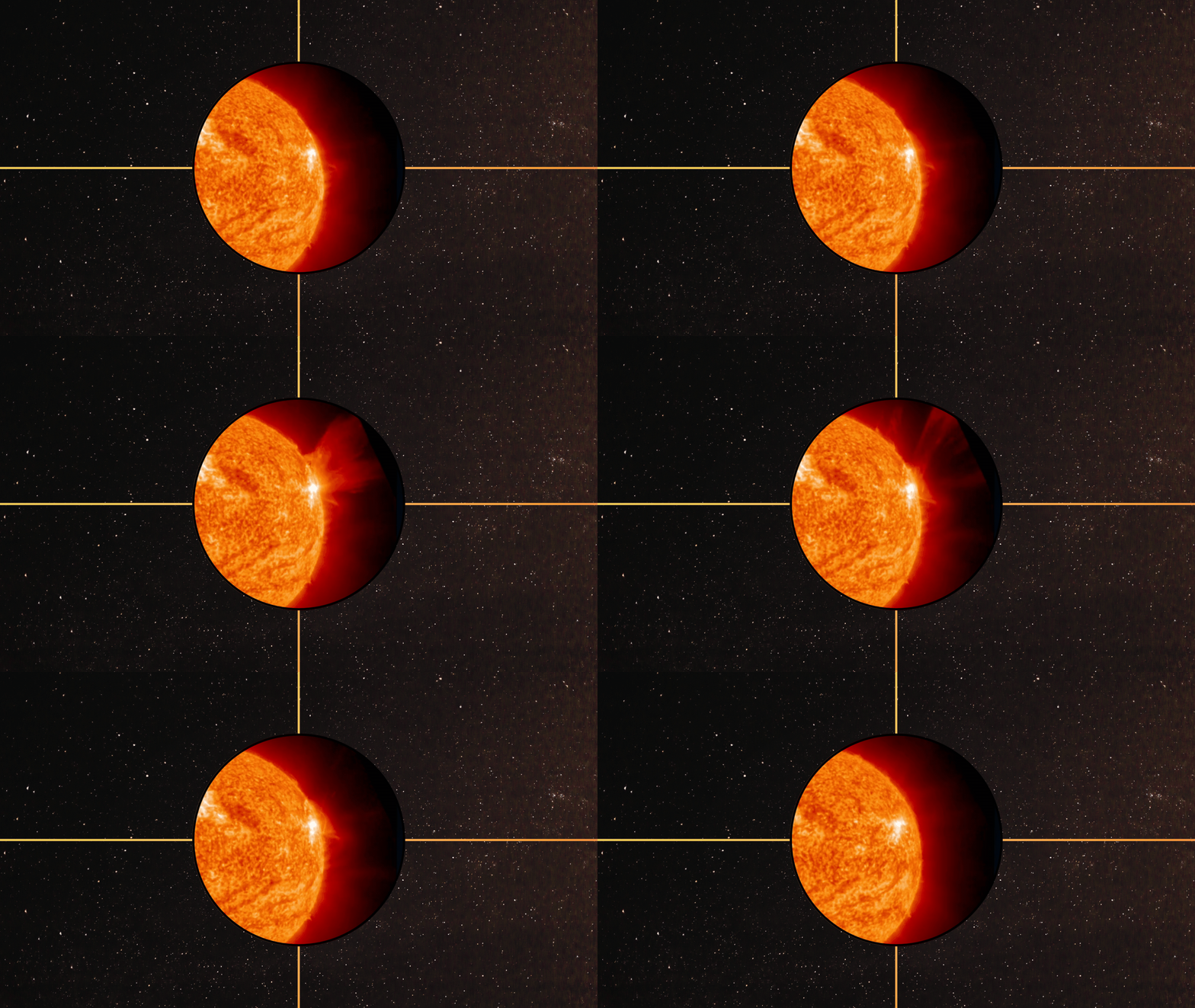
Double Solar Blast Sends Radio Blackouts Across the Globe
The Sun went on a fireworks display this week, firing off two massive X‑class solar flares just seven hours apart. Both eruptions were powerful enough to knock out short‑wave radio signals on the side of Earth facing the Sun. The first flare hit the Pacific region and parts of Australia, while the second disrupted communications across East Asia.
These flares weren’t isolated events. A day earlier, the Sun had already released a series of smaller M‑class flares, and scientists even spotted a rare “sympathetic flare” – two eruptions happening at once in sunspot groups on opposite sides of the solar disk.
So what exactly is a solar flare? Think of it as a sudden, gigantic burst of energy from the Sun’s surface, blasting out X‑rays and ultraviolet light at light‑speed. When that radiation reaches Earth, it zaps the thin layer of atmosphere called the ionosphere, which is crucial for bouncing radio waves around the globe. If the ionosphere gets too ionized, radio signals can fade or disappear entirely, leading to the blackouts experienced by pilots, mariners, and amateur radio enthusiasts.
While these flares didn’t pose a direct threat to satellites or power grids, they serve as a reminder of how our star’s mood swings can ripple through everyday technology on Earth.
Read more
China’s Moon Mission Unveils Hidden Secrets and Paves Way for Lunar Construction
At the 15th China International Aviation and Aerospace Expo, visitors saw real lunar soil from the far side of the Moon, brought back by the Chang’e‑6 mission. Scientists from Jilin University announced a world‑first find: natural single‑walled carbon nanotubes and graphite embedded in the moon dust, hinting at exotic chemistry that never formed on Earth. Building on that treasure, a team at the Deep Space Exploration Laboratory in Hefei has demonstrated a "lunar‑soil‑in‑situ 3D‑printing" system. By focusing solar energy to melt the regolith, they can print sturdy bricks using only moon material—no Earth‑supplied supplies needed. The breakthrough moves China from merely collecting samples to actually using them, a crucial step toward a permanent lunar outpost. Meanwhile, the upcoming Chang’e‑7 probe, slated for launch later this year, will test new landing and exploration technologies, while the Tianwen‑3 Mars‑sample‑return mission enters development. In asteroid hunting, Tianwen‑2, launched in May 2025, is on a decade‑long quest to retrieve material from Earth’s quasi‑satellite 2016 HO3, a “living fossil” of the early Solar System. On the commercial front, the domestically built Li Jian II Yao‑1 rocket lifted three satellites into orbit in March 2026, underscoring China’s growing private‑space capabilities. Together, these milestones signal a rapid shift from scientific discovery to real‑world space industry, bringing humanity one step closer to living and working on the Moon.
Read more
China’s Commercial Space Boom: From Refueling Satellites to Everyday Internet
April 24 marked the 11th China Space Day, celebrating seven decades of sky‑watching and a new era of commercial space. The government’s 2015 plan opened the door for private money, and by 2025 half of all Chinese launches were commercial. This year the China National Space Administration announced flight tests of reusable rockets and a push for high‑quality, secure growth.
One headline‑grabbing project is an on‑orbit “space gas station.” A robotic arm on a service vehicle can dock with a fuel‑starved satellite, refuel it, and move on—extending satellite lifespans and keeping them from becoming space debris.
China is also building a low‑orbit internet “highway.” A 21‑satellite constellation, nicknamed “Little Spider Web,” already provides fast, low‑cost links for drones, remote‑controlled firefighting, and even humanoid robots that can see and act from space. These satellites are moving the internet from ground towers to the sky, promising direct satellite connections for phones, cars and consumer devices.
Together, reusable launchers, satellite refueling, and massive low‑orbit networks are turning once‑far‑off space fantasies into everyday tools, bringing space technology into thousands of households across China.
Read more
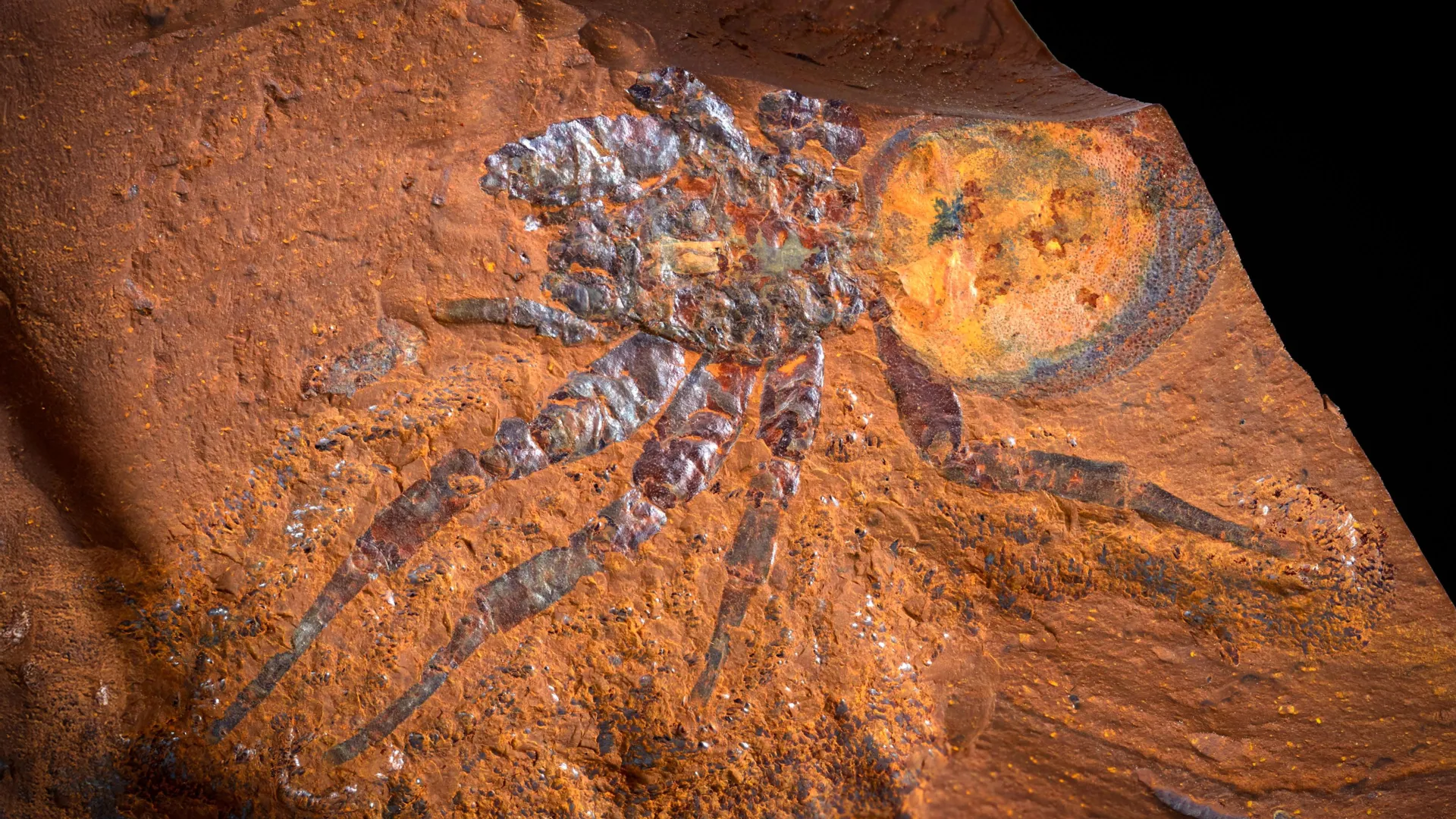
Ancient Creatures Frozen in Rust: Aussie Farmers Uncover Perfect Fossils
Deep beneath the red‑soil fields of McGraths Flat in New South Wales, a team of scientists has stumbled on a treasure trove of fossils unlike any seen before. Instead of being locked in ordinary shale or sandstone, the remains are encased in iron‑rich sediment—essentially rust that has acted like a natural freezer for ancient life. The fossils, dating back roughly 47 million years, retain astonishing details: delicate feathers, soft fur, and even the texture of skin are visible to the naked eye.
Such preservation is rare because iron‑laden rocks were long thought too harsh to keep delicate terrestrial organisms intact. By decoding how this rusty matrix formed, researchers now have a roadmap for hunting similar iron‑rich sites worldwide. The discovery suggests that future breakthroughs in understanding ancient land‑based ecosystems may come not from classic rock layers but from hidden, rust‑filled deposits beneath the surface.
The find builds on earlier work showing volcanic rocks can capture microscopic feather structures, expanding the list of unexpected geological settings that can safeguard the fine details of long‑lost creatures. In short, the rust beneath an Australian farm is rewriting the rules of fossil hunting and opening a new window onto life on Earth millions of years ago.
Read more
China’s 6G Race: Early Wins, New Apps, and Phones Arriving by 2030
Academician You Xiaohu says China’s 6G effort has moved from paper ideas to real‑world trials. From the start, the program has been open to global partners, inviting top experts in standards, research and industry to shape a worldwide 6G roadmap. You sums it up simply: 6G will once again overhaul how we work and live.
The latest "Pre‑6G" test network demonstrates the concept of "6G technology inside 5G" – it runs on existing 5G hardware while boosting capacity, cutting latency, and adding new features like AI‑driven signal processing, sensing fusion and space‑earth links. This hybrid platform gives developers a sandbox for fresh applications, from ultra‑reliable industrial control to immersive AR experiences.
China’s government is backing the push. The State Council’s 5G‑A plan calls for massive 5G rollout, early‑stage IoT, satellite internet and accelerated 6G R&D. Shanghai’s innovation zone is fast‑tracking brain‑computer interfaces, quantum computing and Web 3.0 pilots, while the Ministry of Industry and Information Technology (MIIT) is strengthening networks, expanding gigabit fiber and laying out next‑generation internet and 6G research.
On the hardware side, AI‑assisted chip design is already producing prototypes that can run on today’s phones and base stations, keeping China’s 6G supply chain secure. You predicts consumer‑grade 6G smartphones will hit the market around 2029‑2030, and that future devices may look very different from today’s handsets, opening a new ecosystem of ultra‑short‑range connections and revolutionary user experiences.
Read more

QBox Theory: A Glimpse Into a Reality Even Stranger Than Quantum Physics
For decades scientists have sensed that quantum mechanics—already famous for its bizarre behavior—might be just the tip of a deeper cosmic iceberg. Now a fresh mathematical framework called QBox is pulling back the curtain on what could lie beneath. Developed by physicists Gilligan‑Lee and Selby, QBox proposes a “post‑quantum” landscape where the familiar rules of particles and waves give way to even stranger patterns, yet it does so without invoking exotic constructs like cosmic strings or extra dimensions. The key test for any such theory is whether it can smoothly collapse back into ordinary quantum mechanics when the strange new effects fade away—a process the researchers call “hyperdecoherence.” Their calculations show QBox does just that, suggesting it could serve as a bridge toward a future theory of quantum gravity. In addition, the duo has sketched a novel theorem that tightens the criteria for how a post‑quantum model must behave to match observed quantum phenomena. Though the theorem hasn’t yet survived peer review, it adds a fresh layer of rigor to the debate. If QBox holds up, it may open a window onto a hidden layer of reality, offering scientists a new playground to explore the ultimate fabric of the universe.
Read more