China’s Humanoid Robots Take the World Stage: From Labs to Living Rooms
At this year’s CES in Las Vegas, Gary Shapiro of the Consumer Technology Association called robotics the fastest‑growing showcase, singling out Chinese humanoid robots for their smooth movement and multitasking chops. Data from market‑research firm Contrast Method shows China now supplies more than 80 % of the world’s humanoid robots, with over 140 domestic manufacturers and 330 models on the market by 2025. Experts say the secret is China’s complete supply chain – from micro‑electronics to full‑machine assembly – concentrated in hubs like Shenzhen’s “Robot Valley.” The ecosystem shortens the path from prototype to mass‑production and opens the code to global developers, creating a virtuous cycle of rapid innovation.
2026 is being billed as the year humanoid robots move from demo labs into factories and homes. Chinese firms are already field‑testing robots that sort packages at the Mobile World Congress, greet tourists in Croatia, and even chat in Polish on TV. In Malaysia, a robot museum showcases future‑home assistants, while a Polish‑tuned robot named “Edward” has amassed half a billion online views. Industry leaders predict breakthroughs in learning, dexterity and affordable mass‑production will soon let these machines work side‑by‑side with people, reshaping manufacturing and everyday life worldwide.
Read more
Twist, Turn, and Super‑Conduct: How a New Graphene Experiment Reveals the Secret Link Between Metal‑Like Behavior and Zero‑Resistance Flow
A team led by physicist Li has pulled back the curtain on a puzzling relationship between metallicity and superconductivity using a specially twisted stack of three graphene sheets. In their groundbreaking quantum experiment, the researchers didn’t just measure resistance in one direction—as most studies do—but rotated the direction of electric current across the trilayer sample, watching how the material’s resistance changed with each angle. This “direction‑sweeping” approach let them map how electrons navigate the twisted landscape, uncovering a striking pattern: certain orientations that make the graphene behave more like a metal also boost its ability to become superconducting, allowing electricity to flow without loss. The findings suggest that the geometry of electron pathways—controlled by the twist angle and current direction—plays a pivotal role in turning metallic behavior into a friction‑free superconducting state. By linking metallicity directly to superconductivity, the work opens fresh avenues for designing ultra‑efficient, lossless electronic components and could accelerate the development of next‑generation quantum devices. The study marks a major step toward mastering the subtle dance of electrons in engineered two‑dimensional materials.
Read more
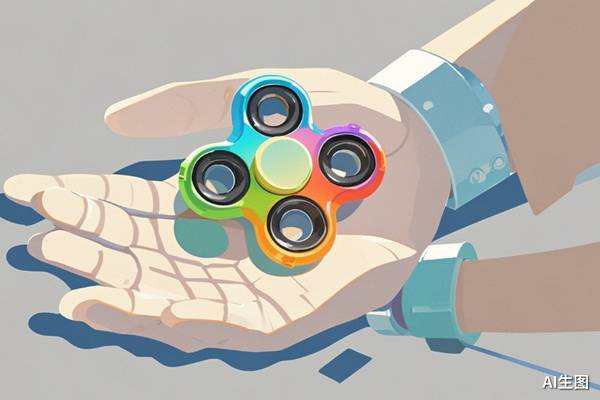
China’s Brain‑Tech Unicorn Unveils Robot Hand That Moves Like a Human
Hangzhou‑based BrainCo, best known for brain‑computer interfaces, has taken a bold step into robotics with its newest product, the Revo 3 dexterous hand. The prototype can pick up delicate objects, cut paper with scissors, solve a Rubik’s cube and even spin a fidget toy – feats that have left online viewers amazed and calling it “more flexible than a human hand.”
Revo 3 boasts 21 degrees of freedom, a direct‑drive design, full‑palm tactile sensing and fingertip visual‑tactile feedback, delivering up to 70 N of grip force. BrainCo says the hand is priced competitively and is ready for mass production after seven years of refining biomimetic hands for disabled users, where reliability and fine control are non‑negotiable.
The company recently secured a 2 billion‑yuan financing round led by IDG Capital and Walden International – the largest single investment in the global BCI field outside of Neuralink – and has quietly filed for an IPO in Hong Kong. Partnerships with firms such as Unitree and research institutes across China and Hong Kong are already testing the hand in medical, home‑care and industrial scenarios.
The real test now is whether BrainCo can scale up production and deliver stable performance in real‑world settings. If it succeeds, the Revo 3 could become the first commercially viable robot hand that bridges brain‑computer interfaces and embodied intelligence, paving the way for future brain‑controlled robots.
Read more
Ningbo Leads China’s Power‑Tech Revolution: From Data Centers to Green Energy
Ningbo’s Qianwan New Area is swapping out old‑fashioned factories for massive data‑center loads. The China Mobile Yangtze River Delta Computing Center, one of East China’s biggest, now powers more than 20 firms—including Alibaba, Tencent and Geely—drawing 15,000 users and consuming 319 million kWh in 2025, a 17% jump from the previous year. To keep the lights on, Ningbo Power Supply Co. is adding a new 220 kV substation, testing virtual power‑plant software and pioneering “electricity‑computing coordination” that lets power flow both ways between the grid and the servers.
The city’s green push goes beyond the data hub. Zhejiang’s Xiangshan No. 1 offshore wind farm is the province’s largest, while robots patrol cable tunnels to spot faults. Nationwide, China’s renewable capacity keeps soaring: offshore wind projects are breaking depth records, and the State Grid plans to add over 30 GW of pumped‑storage power by 2030, ensuring clean energy can be stored and used when needed.
New business models are emerging, too. Regions are trialling “green electricity direct‑connection” schemes that feed wind‑generated power straight to industrial parks, cutting costs and carbon footprints. One‑to‑many supply lines in Shenyang already show how factories can share clean power.
All this comes as China’s auto market rebounds, with March sales hitting 2.9 million vehicles and new‑energy cars accounting for 43% of the mix, signalling a broader shift toward a low‑carbon, tech‑driven economy.
Read more