Alibaba and DeepSeek Supercharge AI Agents with New Large‑Model Upgrades
In early April, two Chinese AI powerhouses rolled out major upgrades that put intelligent agents at the heart of the next AI wave. Alibaba unveiled Qwen 3.6‑Plus, a new large‑language model that dramatically improves an agent’s ability to write code, handle tools and perform complex tasks. Within days, DeepSeek launched its “Expert Mode,” a layered‑design feature that gives its models sharper reasoning and better agent performance.
Industry observers say 2026 marks a shift from a chaotic “thousand‑model” landscape to an era dominated by AI agents that can string together multiple tools and actions. Token usage – the basic unit of AI computation – has exploded: China’s daily token calls jumped from 100 billion in early 2024 to over 140 trillion by March 2026, a thousand‑fold increase. Nvidia’s Jensen Huang even called tokens the new currency of the AI economy.
The open‑source framework OpenClaw is also stepping up, announcing video‑generation capabilities and becoming the first to officially support Alibaba’s Qwen model. Experts stress that the focus now is less on raw model size and more on “harness engineering,” building robust environments that let agents work reliably in real‑world scenarios such as research, office automation and code assistance. These moves signal that AI agents, powered by upgraded large models, are set to become the primary way businesses and developers interact with artificial intelligence.
Read more
AI Turns Satellite Heat Snapshots into Real‑Time Ocean Current Maps
A team of researchers has taught a deep‑learning system to read the thermal images captured by weather satellites and instantly translate them into detailed, hourly maps of ocean currents. Traditionally, scientists have relied on sparse buoy data and costly ship‑based measurements to track how water moves across the globe, leaving large gaps in our understanding of marine dynamics. By feeding the AI thousands of satellite heat‑signatures—tiny temperature differences on the sea surface—into a model they call GOFLOW, the system learns the hidden patterns that indicate the speed and direction of underlying currents.
When tested against real‑world observations from buoys and autonomous floats, GOFLOW’s predictions matched measured flows with striking accuracy, often outperforming older models. The breakthrough means we can now monitor ocean circulation in near‑real time, a capability that could improve weather forecasts, help ships plot more efficient routes, and give marine biologists a better tool for tracking nutrient flows that support fish populations. Moreover, the method is cost‑effective, leveraging existing satellite infrastructure without the need for new hardware. As climate change continues to reshape the oceans, this AI‑driven approach offers a powerful new lens for scientists, policymakers, and anyone who depends on the health of our seas.
Read more
China Pushes Ahead with Space‑Based Supercomputers to Power the Digital Future
At the 2026 Space Computing Power Industry Conference, senior officials highlighted China’s drive to turn orbiting satellites into massive, green data centers. Deputy Minister Zhao Ce warned that the new sector must overcome hurdles such as radiation‑hard chips, laser links between satellites, power‑supply limits and heat‑dissipation tricks, while the government prepares a full‑stack standards system to guide development. By moving computing, storage and networking into low‑Earth orbit, space‑based platforms can process data in real time across the globe, sidestepping the high energy use, land constraints and cooling costs of terrestrial data farms. The move promises zero‑carbon, wide‑area AI crunching that could boost everything from real‑time remote‑sensing and emergency communications to the next generation of satellite internet. China has already begun building pilot constellations, testing AI chips that survive space radiation, and trialing inter‑satellite laser links. A new “Space Computing Power Professional Committee” was launched to shepherd the industry from lab tests to commercial scale, backed by a Beijing‑led research fund offering up to 10 million yuan per project. Officials say coordinated policy, targeted funding and a thriving ecosystem of specialized firms will turn space‑based supercomputing into a cornerstone of the digital economy.
Read more
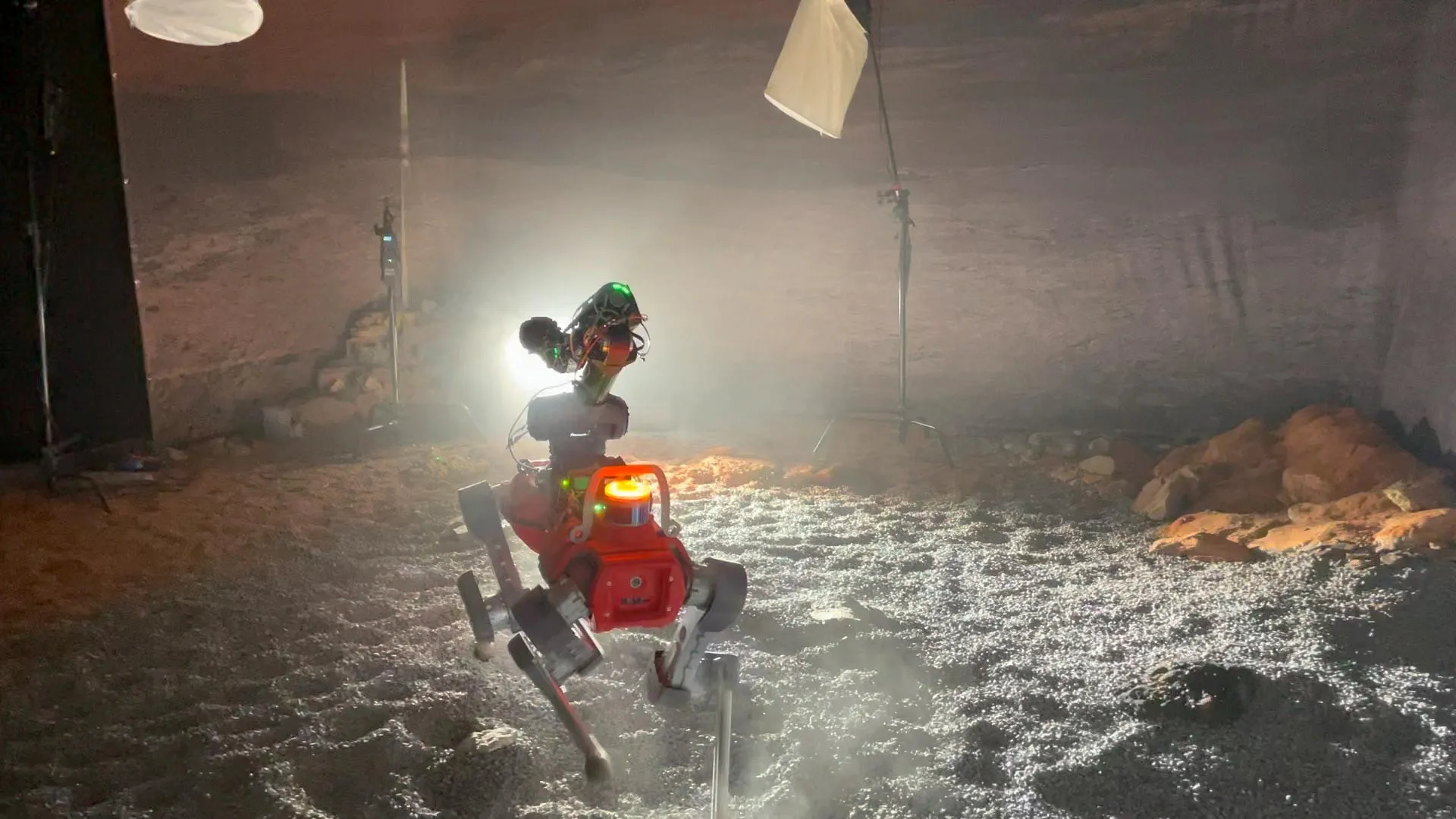
Meet the Walking Robot That Could Speed Up the Hunt for Life on Mars
A new four‑legged robot is showing how future space missions could scan rocks faster and more efficiently than ever before. Researchers equipped the agile robot ANYmal with a tiny robotic arm that carries two scientific tools: a microscopic imager called MICRO and a compact Raman spectrometer designed for the ESA‑ESRIC Space Resources Challenge. In a series of field tests, the robot moved on its own from one rock to the next, positioned its arm, captured high‑resolution images, and collected spectral data without waiting for instructions from a human operator. The team compared this semi‑autonomous approach with the traditional method where scientists manually guide a rover to a single target. The results were striking – the walking robot examined multiple samples in a fraction of the time, sending back clear evidence of mineral composition and potential biosignatures. By reducing reliance on bulky, complex equipment, such nimble machines could quickly identify the most promising sites for life‑searching or resource‑gathering missions on the Moon, Mars, and beyond. As space agencies plan the next generation of exploration, semi‑autonomous robots like ANYmal may become the eyes and hands that unlock the secrets of other worlds.
Read more
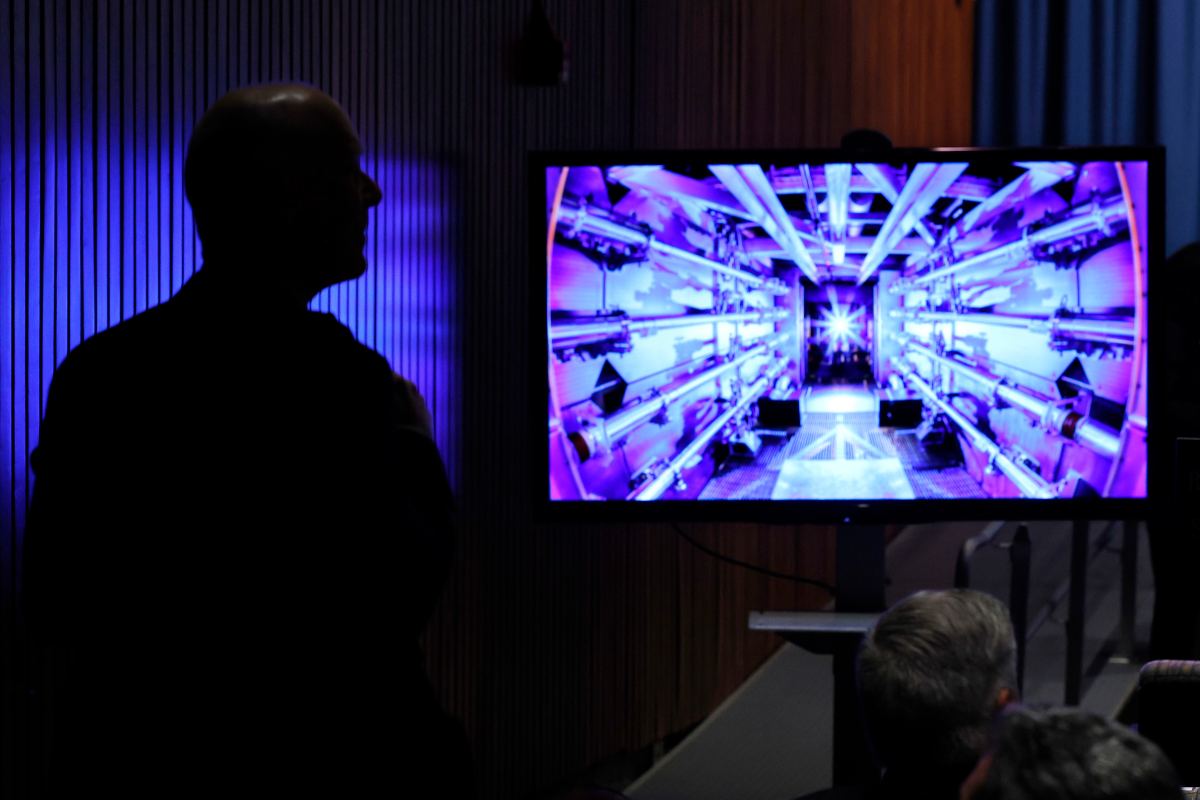
Startup Inertia Teams Up with Lawrence Livermore to Turn Laser Fusion Into Commercial Power
Fusion‑energy startup Inertia Enterprises announced a major partnership with the U.S. Department of Energy’s Lawrence Livermore National Laboratory (LLNL). The two groups have signed three agreements aimed at moving the laser‑driven fusion reactor, originally built at LLNL’s National Ignition Facility, out of the lab and into a commercial setting.
Unlike the more widely known magnetic‑fusion designs that trap super‑hot plasma with giant magnets, Inertia’s approach—called inertial confinement fusion—squeezes a tiny fuel pellet with intense laser bursts until the atoms fuse. The current lasers at NIF are based on technology from the 1990s, meaning they consume a lot of electricity just to fire. Inertia’s goal is to replace those aging lasers with newer, more efficient models that need less power to spark each reaction, bringing the overall energy balance closer to profitability. Several other startups, including Xcimer, Focused Energy and First Light, are also racing to commercialize this concept, hoping to build power plants that could deliver clean, carbon‑free electricity at scale. If successful, the new laser systems could lower the cost of each fusion “spark,” making it easier for the reaction to produce more energy than it consumes—a key step toward turning fusion from a scientific curiosity into a practical energy source for the grid. The collaboration marks a significant push toward turning one of the world’s most elaborate science experiments into a real‑world solution for climate‑friendly power.
Read more
Chinese Scientists Unveil Sodium‑Ion Battery That Stops Fires Before They Start
Researchers at the Chinese Academy of Sciences have announced a game‑changing sodium‑ion battery that can prevent the dreaded "thermal runaway" that makes batteries catch fire. The team, led by Hu Yongsheng, created a new polymerizable non‑flammable electrolyte (PNE) that does more than just resist flames – it actively cools the cell, protects the electrodes, and solidifies into a protective barrier when temperatures rise above 150 °C.
The PNE works like a built‑in safety net: its endothermic reaction absorbs heat, stopping the chain reaction that leads to overheating; a dual‑salt formula shields both the cathode and anode, extending the battery’s life; and when things get too hot, the electrolyte polymerises into a solid film that blocks further reactions and gas buildup. In lab tests the battery survived a needle puncture and a 300 °C oven, while still operating from –40 °C to 60 °C and delivering a high voltage of over 4.3 V.
This breakthrough, published in Nature Energy, could pave the way for safer, high‑performance sodium‑ion batteries in electric vehicles, grid storage and other renewable‑energy applications, addressing a long‑standing safety hurdle that has slowed the industry’s growth.
Read more

Huge ‘Superatoms’ May Unlock Stable, Scalable Quantum Computers
Researchers at Sweden’s Chalmers University of Technology have introduced a bold new idea that could tackle the biggest hurdle facing quantum computers: keeping fragile quantum bits (qubits) stable long enough to be useful. Their theory centers on “giant superatoms,” clusters of many atoms that behave as a single, larger quantum entity. By grouping atoms together, these superatoms can store and transmit quantum information while shielding it from the noisy environment that normally causes errors.
The team’s calculations show that giant superatoms can be entangled—linked in a way that changes to one instantly affect the other—allowing quantum data to be moved and shared across a processor with far less loss. This approach promises a more robust way to build qubits that stay coherent, operate at higher temperatures, and can be scaled up to the thousands or millions needed for real‑world applications.
If experimental work confirms the theory, giant superatoms could become the building blocks of the next generation of quantum machines, making them faster, more reliable, and easier to manufacture. The breakthrough adds a fresh direction to the race for practical quantum computing, complementing recent advances such as light‑based platforms and ultra‑efficient qubit amplifiers developed by the same group.
Read more
China’s Home‑Made Surgical Robots Get a Boost: New Policies and Cutting‑Edge Tech Drive Fast Growth
China’s surgical‑robot industry is entering a rapid expansion phase thanks to fresh government backing and a wave of new technology. Recent measures from Beijing’s medical insurance bureau and ten other agencies aim to speed the adoption of robots in hospitals, while Hunan province has clarified how hospitals can charge for robot‑assisted procedures. At the 93rd China International Medical Equipment Expo, domestic players such as MicroPort Robotics, Tuodao Medical and Jinfeng Medical showcased advanced laparoscopic and orthopedic robots that rival the global leader, Da Vinci, but at a lower cost.
MicroPort highlighted its remote‑surgery system that works over 5G and satellite links, enabling doctors to guide operations from afar—a capability already used on the hospital ship Peace Ark and in remote regions. Tuodao demonstrated a 5G‑enabled live‑surgery zone where visitors could experience low‑latency remote operations, and unveiled an integrated orthopedic robot that registers patients in just 72 seconds.
Industry analysts note that domestic robots now match international clinical data and are gaining traction overseas, with MicroPort’s revenue jumping 114% in 2025 and Jinfeng’s overseas sales exceeding half of its total. The global market, valued at $21.2 billion in 2024, is projected to hit $84.2 billion by 2033, and China’s low penetration rate suggests ample room for growth. While high upfront costs and the need for skilled staff remain challenges, policymakers are working on pricing guidelines and financing options to make the technology more accessible. The combined push of policy, price competitiveness, and innovative features is set to accelerate the arrival of surgical robots in Chinese operating rooms and beyond.
Read more
Scientists Keep Light Bouncing on a Chip Millions of Times—A Leap Toward Faster, Greener Tech
Researchers at Aalto University have found a way to make light bounce around on a tiny chip for millions of cycles, a breakthrough that could speed up future computers and cut energy use. The team used ultra‑thin, atom‑scale materials called van der Waals (vdW) layers, which are known for their strong interaction with light but have been hard to shape into useful devices. By coating these layers with a thin sheet of aluminum, they were able to carve out perfectly smooth microscopic disks without damaging the material’s crystal structure. These disks act like tiny mirrors that trap light, achieving an optical “quality factor” over one million – meaning the light can circle the disk millions of times before fading. This prolonged confinement dramatically boosts the material’s ability to change light’s color, a process called second‑harmonic generation, improving it by a factor of 10,000 compared to earlier attempts. The result is a chip that can process optical signals far more efficiently, opening the door to faster data transmission, low‑power photonic processors, and new kinds of sensors. In short, the work clears a major hurdle for next‑generation light‑based technology, bringing us closer to ultra‑fast, energy‑saving devices that could transform everything from internet infrastructure to wearable health monitors.
Read more