Breakthrough: New Lab Technique Could Spot Tiny Ripples in Space‑Time
Physicists have taken a big step toward solving one of science’s longest‑standing puzzles—how the world of tiny particles (quantum mechanics) meshes with the force that shapes galaxies (gravity). A team at the University of Warwick has unveiled a fresh, unified method for detecting the faint, random “wiggles” that may exist in the fabric of space‑time itself. These tiny distortions, called spacetime fluctuations, are predicted by many theories that try to blend quantum physics with Einstein’s gravity. Until now, researchers didn’t have a clear experimental target because different models suggested wildly different patterns. Dr. Sharmila Balamurugan, the study’s lead author, explains that the new approach gives scientists a concrete roadmap: by building smarter tabletop interferometers—compact devices that measure minute changes in light—researchers can now hunt for these subtle ripples. In the coming years, the technique could confirm or rule out competing ideas about quantum gravity, shed light on mysterious dark‑matter candidates, and even help detect a background hum of stochastic gravitational waves. In short, the work opens a practical window onto the hidden jitter of the universe, bringing us closer to a unified picture of the cosmos.
Read more
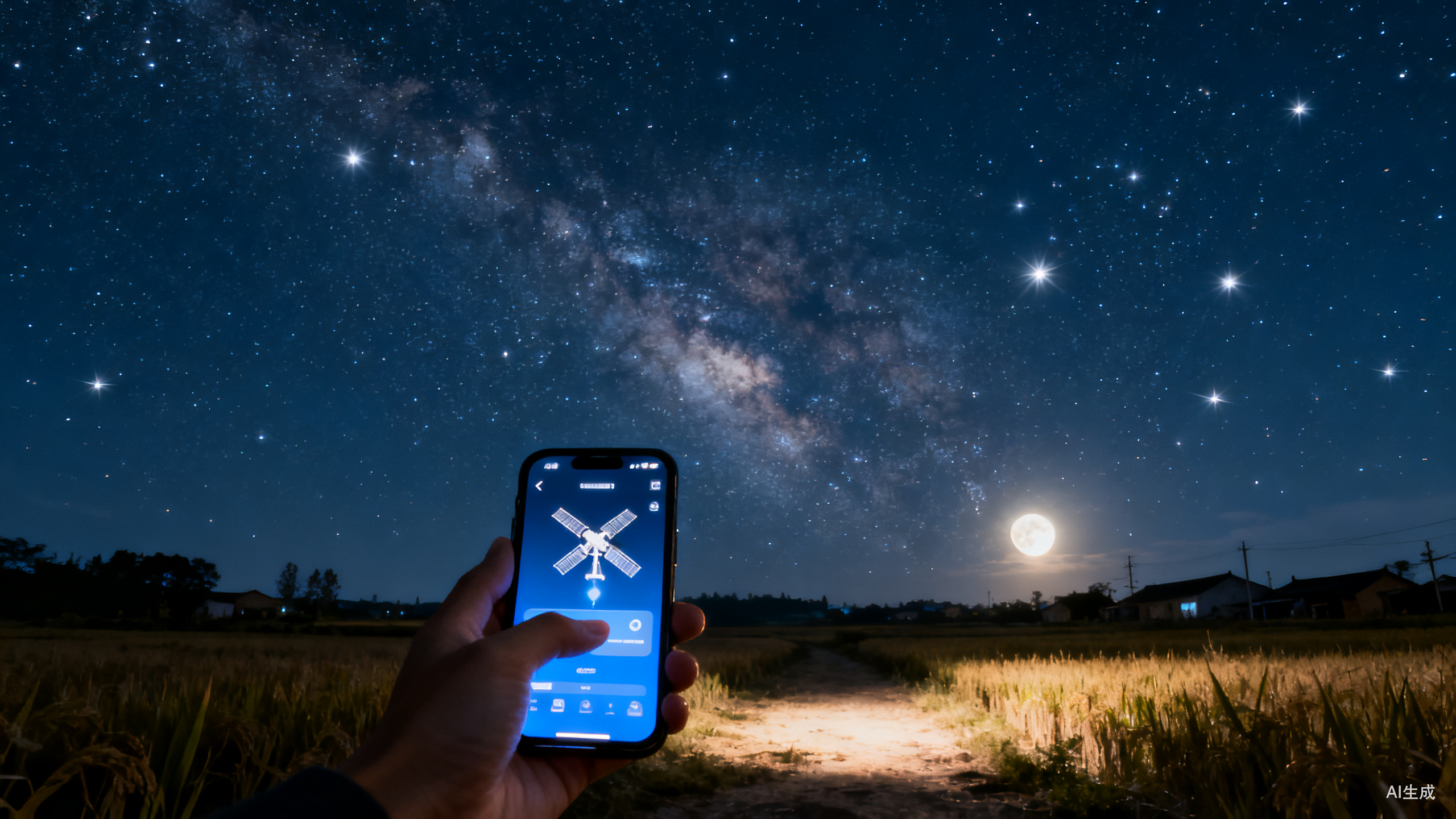
Satellites to Your Phone: How Direct‑to‑Device Tech Could Bridge the Digital Divide (And Its Big Hurdles)
A new GSMA Intelligence report looks at Direct‑to‑Device (D2D) satellite connectivity – a way for phones to talk straight to satellites without any ground towers. The technology can’t replace cellular networks, but it can plug the gaps that leave about 300 million people offline, especially in remote regions, oceans and sparsely populated tourist spots. Because the cost of building a base‑station for fewer than 20 people per square kilometre is prohibitive, D2D can deliver service at a very low marginal cost, reaching penetration rates above 10 % in those low‑density zones.
The study models two satellite constellations (15 000 and 42 000 satellites) and several spectrum allocations. With a massive 1 100 MHz band, a 42 000‑satellite system could serve roughly 12 % of the world’s population, climbing to 47 % in rural areas. In contrast, the more common 10 MHz solutions barely reach 0.2 % globally. Speed matters too: at 2 Mbps (3G‑like) the system works, but at 20 Mbps (4G‑like) penetration drops below 2 %.
The biggest obstacles are physics and hardware. A satellite 550 km away suffers about 110 000 times more free‑space path loss than a ground tower 1 km away, demanding far more power or larger antennas – neither practical for smartphones. Spot‑beam coverage is also huge; a single 25 km beam may have to share its capacity among tens or hundreds of thousands of users, limiting performance in dense areas.
Industry players such as Starlink, AST SpaceMobile and others are racing to commercialise D2D, but the GSMA warns that expectations should stay realistic: the technology is a valuable supplement for emergency communications and ultra‑low‑density regions, not a full‑scale replacement for terrestrial mobile networks.
Read more

Nature’s Hidden Rhythms: Jaw‑Dropping Photos Reveal the World’s Living Patterns
A new gallery of high‑definition photographs is turning the scientific community’s attention to the mesmerizing, ever‑changing patterns that animate the natural world. From the spiraling formations of sand dunes and the rippling choreography of ocean waves to the intricate lattice of frost on a winter leaf, each image captures a fleeting moment of order emerging from chaos. The collection, compiled by a team of photographers and researchers, showcases how simple physical forces—gravity, wind, water, and light—combine to produce striking visual symphonies that repeat across ecosystems. By pairing stunning visuals with concise explanations, the series helps readers see the underlying mathematics of growth rings in trees, the fractal branching of river networks, and the synchronized flashing of fireflies. The project aims to make complex scientific concepts accessible, inviting anyone with a curiosity for beauty to appreciate the hidden dynamics that shape our planet. Whether you’re a seasoned naturalist or just love a good picture, these photos remind us that the world is constantly in motion, painting patterns that are both scientifically profound and aesthetically awe‑inspiring.
Read more
China’s New Surgical Robot Performs First Heart‑Valve Procedure in Hong Kong
Scientists from the Chinese Academy of Sciences and tech firm Ningbo Jianshan have put a brand‑new medical robot into practice at Hong Kong’s Prince of Wales Hospital. The Robot‑Assisted Transcatheter Tricuspid Valve Replacement (TTVR) System helps surgeons replace a faulty tricuspid heart valve without opening the chest. Using ultra‑precise motion control, built‑in safety checks and intelligent navigation, the robot steadies the tiny replacement valve while the surgeon operates from a remote console. In the first clinical use, Dr. Su Zeyu’s team successfully implanted the valve in a patient with severe tricuspid regurgitation; post‑surgery scans showed the leak had vanished and the patient recovered well. Compared with traditional hand‑held tools, the robot eliminates even the smallest hand‑tremors, lowers the risk of complications, shortens operating time and shields the surgeon from harmful radiation by allowing remote control. Its master‑slave architecture also opens the door for doctors in different regions to collaborate on the same operation. The successful trial marks a major milestone for Chinese medical robotics and paves the way for broader adoption in hospitals worldwide.
Read more
Hidden Brain‑Boosting Nutrient Finally Unlocked: How a Tiny Molecule Shields Memory and Fights Cancer
After decades of mystery, researchers have identified how our bodies capture queuosine—a rare micronutrient that plays a vital role in brain health, memory, stress response, and cancer protection. An international team led by scientists at the University of Florida and Trinity College Dublin discovered the specific gene that acts as a transport channel, shuttling queuosine from the gut into every cell that needs it. The breakthrough, published in the Proceedings of the National Academy of Sciences, explains the missing link that has puzzled biologists for 30 years. "We’ve known queuosine influences critical processes like brain function, metabolism, and cancer, but we didn’t know how it gets into our cells," said Vincent Kelly, professor of Biochemistry and Immunology at Trinity College Dublin. By pinpointing the gene responsible, the study opens new avenues for nutritional therapies aimed at boosting cognitive performance, reducing stress, and enhancing the body’s natural cancer defenses. The findings could eventually lead to targeted supplements or drugs that ensure optimal queuosine levels, offering a simple yet powerful tool for protecting the brain and fighting disease.
Read more
China’s Quantum Leap: From Lab Breakthroughs to Real‑World Industries
In March, a research team at the University of Science and Technology of China set a new world record for time‑keeping accuracy, reaching an error of less than one second over 300 billion years. The achievement pushes the global clock standard into the optical era and opens the door to a host of high‑precision applications.
China is now turning quantum discoveries into market‑ready products across three core fields. In quantum computing, Origin Quantum’s "Wukong" processor—72 superconducting qubits—has run stably for two years, completing more than 80,000 tasks for users in 163 countries. In quantum communication, Guotai Quantum has built the world’s first 1,000‑km‑long secure‑link between Beijing and Shanghai and is expanding a space‑ground network that guarantees instant detection of eavesdropping. In quantum precision measurement, GuoYi Quantum unveiled a diamond‑based probe only 500 nm wide, enabling scientists to “listen” to single cells and molecules, and launched China’s first domestically produced X‑band electron‑paramagnetic‑resonance spectrometer.
Despite these advances, the industry still faces bottlenecks: reliance on imported high‑precision components, a shortage of cross‑disciplinary talent, and the need to move from prototype to mass production. Companies are adopting a “laying eggs along the way” strategy—turning each research milestone into a marketable product while continuing R&D. Experts say the next five to ten years will require sustained investment, stronger supply‑chain cooperation, and patient capital to transform China from a quantum‑technology heavyweight into a global leader.
Read more
China’s Coastlines Poised for a Renewable Energy Boom: New Study Shows Wind‑Solar‑Wave Combo Can Triple Power Output
A research team at the Chinese Academy of Sciences’ Guangzhou Institute of Energy Conversion has unveiled a fresh look at how offshore wind, solar and wave power can work together along China’s seas. Instead of studying each resource in isolation, the scientists built a grid‑scale model that checks where each energy type fits best, how stable the combined output is over time, and whether the mix makes economic sense. Their analysis of China’s maritime zones shows huge untapped potential. When wind and wave power are paired, the model predicts up to 2.8 times more installed capacity and almost the full (98%) power‑generation potential of wind alone, while using about 70% of the area suitable for wind farms. A wind‑solar mix also shines, delivering 1.7 times the capacity of wind‑only projects and covering roughly a third of wind‑friendly waters. Beyond sheer output, the combined systems smooth out the ups and downs of renewable generation: wind‑solar cuts power swings by 15% and cuts intermittency by 70%, while wind‑wave slashes intermittency by over 90%, though it may raise short‑term fluctuations a bit. The study, published in *Applied Energy*, offers policymakers a clear, data‑driven roadmap for turning China’s coastal waters into a powerhouse of clean, reliable energy.
Read more