When Machines Meet Minds: Redefining Originality in AI Writing
A fresh wave of research is reshaping how we think about creativity when humans and large language models (LLMs) work side‑by‑side. Recent studies reveal that many LLMs subtly favor human‑written text, showing an "authorship bias" that can skew originality scores. At the same time, courts are beginning to grapple with the legal gray area of AI‑generated content, as illustrated by the 2025 Munich I Regional Court case involving the GEMA‑OpenAI dispute.
In China, a national report on large‑model filing and launch services highlights a booming ecosystem, while companies like DeepSeek are rolling out open‑source models with transparent pricing to democratize access. Yet, the rise of AI‑generated prose has sparked concerns over plagiarism and authenticity. Tools such as GPTZero and Originality.ai have published white papers detailing detection techniques that aim to flag AI‑crafted text.
Philosophical debates, from the classic "Chinese Room" argument to modern discussions on machine consciousness, provide a deeper backdrop for these practical challenges. Together, these strands point toward a new collaboration paradigm: humans guide the creative direction, while machines handle the heavy lifting, all under a shared framework that respects originality, legal accountability, and ethical transparency. This emerging model promises to keep the spark of human imagination alive, even as AI becomes an ever‑more powerful writing partner.
Read more
Why This Chinese Scientist Swapped Yale for a ‘Train‑Track’ Discovery in Cells
Zhang Kai, a structural biologist who left a tenured post at Yale to join the University of Science and Technology of China, has become known for chasing the most puzzling questions rather than following safe, incremental research. In a paper published in Nature, his team overturned a decade‑old model of how the dynein motor complex—cellular “trains” that ferry cargo along microtubule tracks—assembles. While in‑test‑tube experiments showed a dismal 3 % assembly efficiency, Zhang’s group realized they were ignoring the role of the tracks themselves. By adding microtubules to the mix, assembly jumped to near‑physiological levels, revealing that the filaments act as a scaffold that drives 97 % of the process. This insight reshapes our understanding of intracellular transport and its link to diseases caused by transport failures. Zhang’s journey began with a fascination for cryo‑electron microscopy (cryo‑EM) during an undergraduate summer camp. He spent years building his own data‑collection pipelines, pioneering GPU‑accelerated image processing that cut analysis time from weeks to minutes and improved resolution. Those tools helped his group capture the first atomic‑scale view of a mitochondrial respiratory super‑complex, a feat reviewers called “ground‑breaking.” Now back in China, Zhang aims to map large‑scale cellular structures across health and disease, a pursuit he describes as “playing something more interesting” rather than ticking off routine experiments.
Read more

Former OpenAI Insiders Launch $100 Million Fund to Back the Next AI Wave
A close‑knit group of former OpenAI engineers and executives has quietly assembled a new investment vehicle that could total as much as $100 million. The fund, still under the radar, is being used to back early‑stage AI startups that the team believes have real, defensible technology – not just hype.
One of the partners, who prefers to stay out of the spotlight, says the group is especially interested in companies tackling practical problems like AI‑assisted coding and robotics. While many startups are touting “vibe coding” platforms that promise to write code from vague prompts, the investors are skeptical. They argue that the creators of these models will soon make subscription‑based coding assistants obsolete, rendering the hype short‑lived.
In the robotics arena, the fund’s members are wary of a flood of “ergo‑centric” video‑data startups that claim to teach robots by feeding them endless streams of footage. According to the investors, the gap between simulated embodiment and real‑world robot behavior is still huge, and no amount of video data will bridge it overnight.
Instead, the fund is looking for teams that combine solid engineering with clear pathways to market, betting that the next breakthrough will come from grounded, mission‑driven AI rather than buzz‑word‑driven projects.
Read more
Breakthrough: Scientists Capture the Elusive ‘Mid‑Reaction’ Snapshot of a Hydrogen Swap
In a landmark experiment, a team of chemists from the Dalian Institute of Chemical Physics, led by Academician Yang Xueming and researcher Xiao Chunlei, teamed up with theoretical experts headed by Academician Zhang Donghui and Liu Shu to pull back the curtain on one of chemistry’s most fleeting moments. They succeeded in directly observing the structure of the transition‑state region—the brief, high‑energy “mid‑point”—in the reaction where a hydrogen atom (H) collides with a vibrating hydrogen‑deuterium molecule (HD) to produce molecular hydrogen (H₂) and a free deuterium atom (D). Transition states exist for only a few quadrillionths of a second, making them notoriously hard to study, yet they dictate how fast and how efficiently reactions proceed. Using cutting‑edge laser spectroscopy and sophisticated computational modeling, the researchers mapped the arrangement of atoms and the energy landscape right at the moment the bonds break and reform. This direct glimpse not only validates long‑standing theoretical predictions but also opens new pathways for designing more efficient catalysts, improving fuel‑cell chemistry, and deepening our fundamental grasp of how molecules transform. The discovery marks a significant step toward visualizing chemistry in action, turning what was once an abstract concept into a measurable reality.
Read more

Why Fusion Reactors Dump Hot Particles One Way: The Spin That Solved a Decade‑Old Puzzle
For years, engineers working on tokamaks – the donut‑shaped machines that aim to harness the power of nuclear fusion – noticed a baffling pattern: escaping plasma particles slammed into one side of the exhaust system far more often than the opposite side. The imbalance didn’t match any computer simulations, leaving scientists scratching their heads.
A new study published in *Physical Review Letters* finally cracks the case. Researchers discovered that the plasma’s own spin, known as toroidal rotation, teams up with a sideways drift of particles to steer the escaping ions toward a single exit lane. When the rotation is factored into the models, the simulated particle distribution lines up perfectly with the real‑world measurements.
In simple terms, imagine a crowd of people moving around a circular track while also being nudged sideways. If the crowd spins faster, more people will drift toward one gate than the other. The same physics applies inside a tokamak, where the hot, charged gas (plasma) circles the reactor’s magnetic field while drifting across it.
This insight not only resolves a long‑standing mystery but also helps designers predict where wear and heat will concentrate in future fusion reactors, bringing us a step closer to reliable, clean fusion energy.
Read more

Nuclear Batteries Might Supercharge the Quest for Fusion Power
Imagine a power source that can turn the intense radiation from a tiny nuclear reaction directly into electricity. That’s the promise of a new kind of “nuclear battery,” and it could be the missing link that finally makes fusion power a practical reality.
Fusion reactors already create the same kind of high‑energy particles—called alpha particles—that nuclear batteries are designed to harvest. The challenge has been that those particles tend to damage reactor walls and other equipment, turning a potential energy source into a liability.
Avalanche Energy, a startup focused on advanced materials, believes it can capture those alpha particles before they cause harm and convert their energy into usable electricity. The company just secured a $5.2 million contract from DARPA to develop this technology, which it calls “radiovoltaics.” If successful, the approach could simplify the engineering of commercial fusion plants, cutting costs and speeding up deployment.
While Avalanche isn’t the only player exploring alpha‑particle‑based designs, its DARPA backing signals strong government interest in turning fusion’s by‑products into a clean, reliable power source. In short, nuclear batteries could turn a troublesome side‑effect of fusion into the very thing that makes the technology viable for everyday use.
Read more
Scientists Reveal How Phosphoric Acid Powers Nature’s ‘Proton Highway’
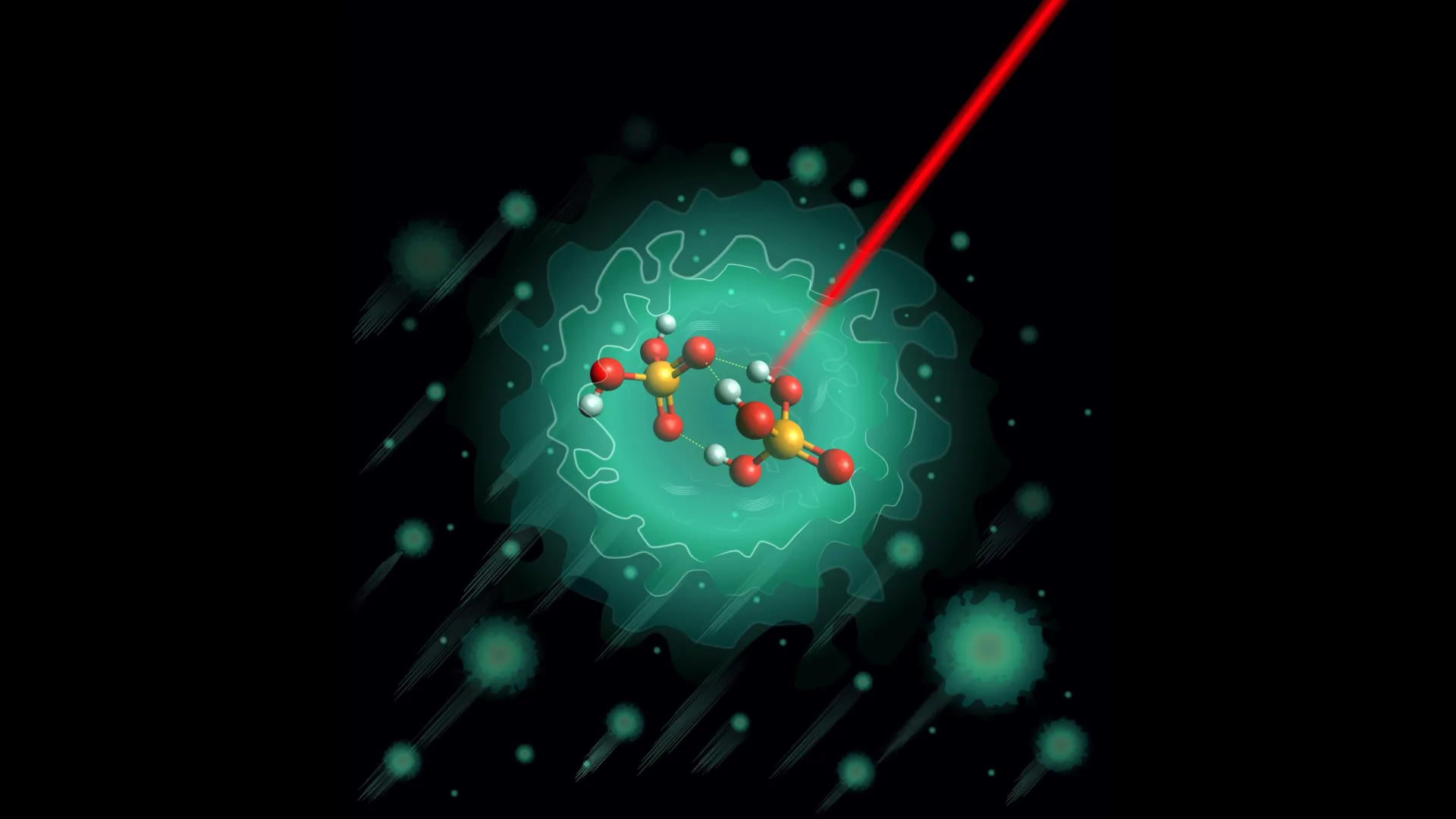
Researchers have finally uncovered why phosphoric acid can whisk electrical charges—protons—so effortlessly, a trick that nature uses in everything from cellular metabolism to high‑performance batteries. By zooming in at the molecular level, the team identified a single, well‑defined arrangement of two linked acid molecules (the anionic dimer H3PO4·H2PO4‑). This tiny structure forms a precise network of hydrogen bonds that act like stepping stones, allowing protons to hop rapidly from one spot to the next. The pattern matches what scientists have seen in other phosphoric‑acid‑based systems, suggesting a universal design that nature has refined over eons. Understanding this “proton highway” not only explains a fundamental biological process but also offers a blueprint for improving man‑made technologies such as fuel cells and next‑generation batteries, where efficient proton flow is crucial. In short, the discovery pinpoints the exact molecular scaffold that makes phosphoric acid such an excellent conductor, opening doors to smarter, greener energy solutions.
Read more